
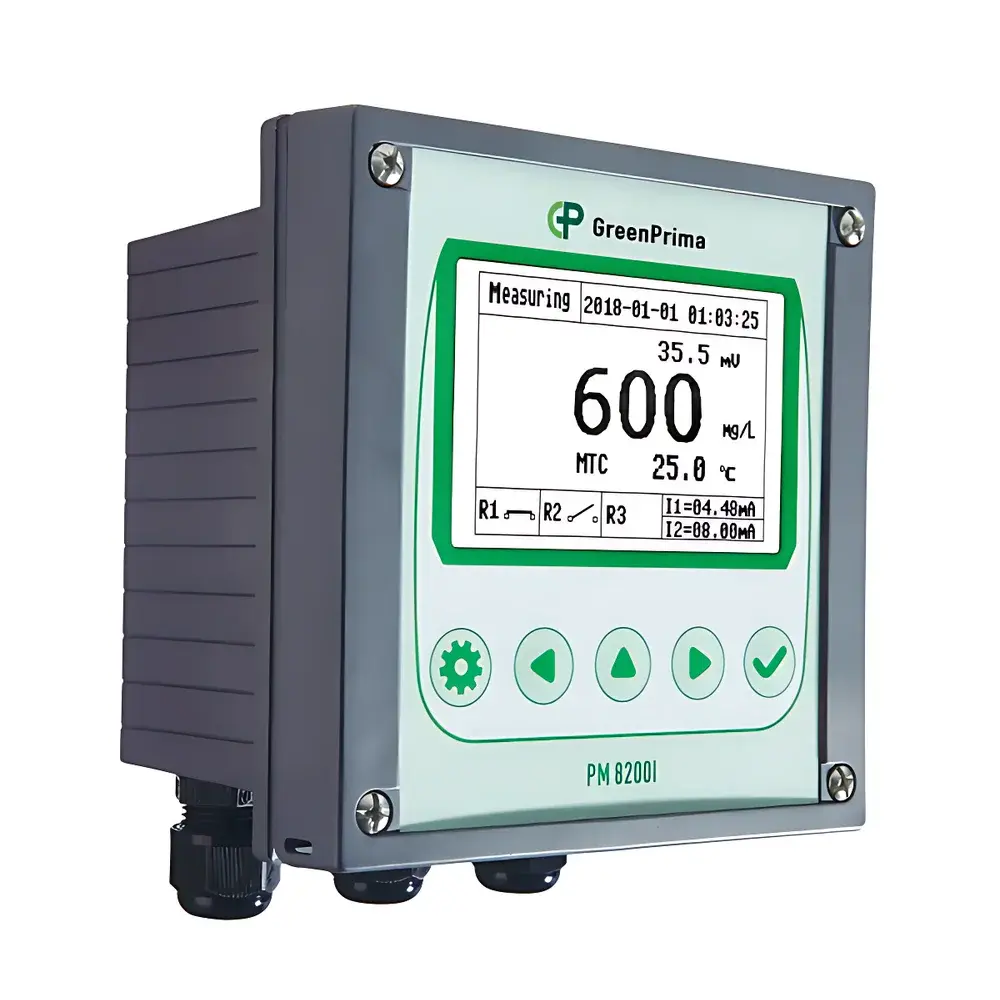
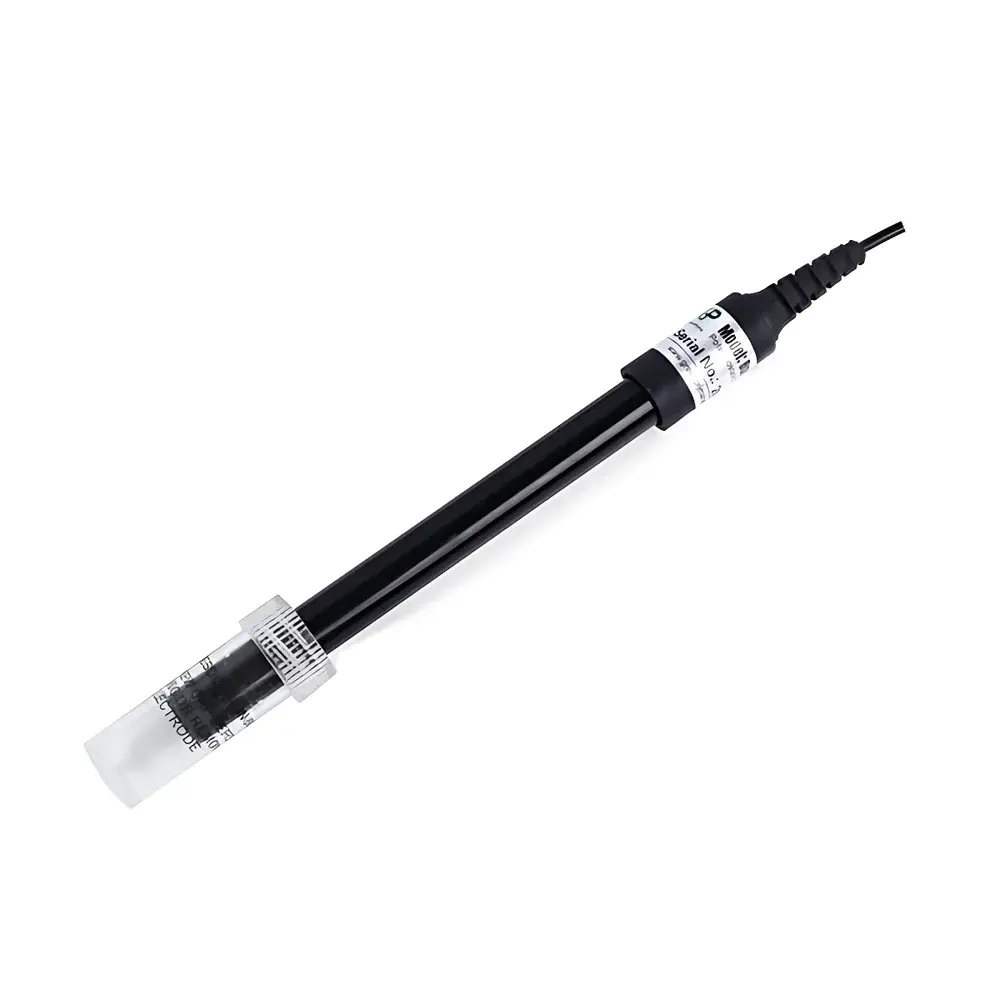
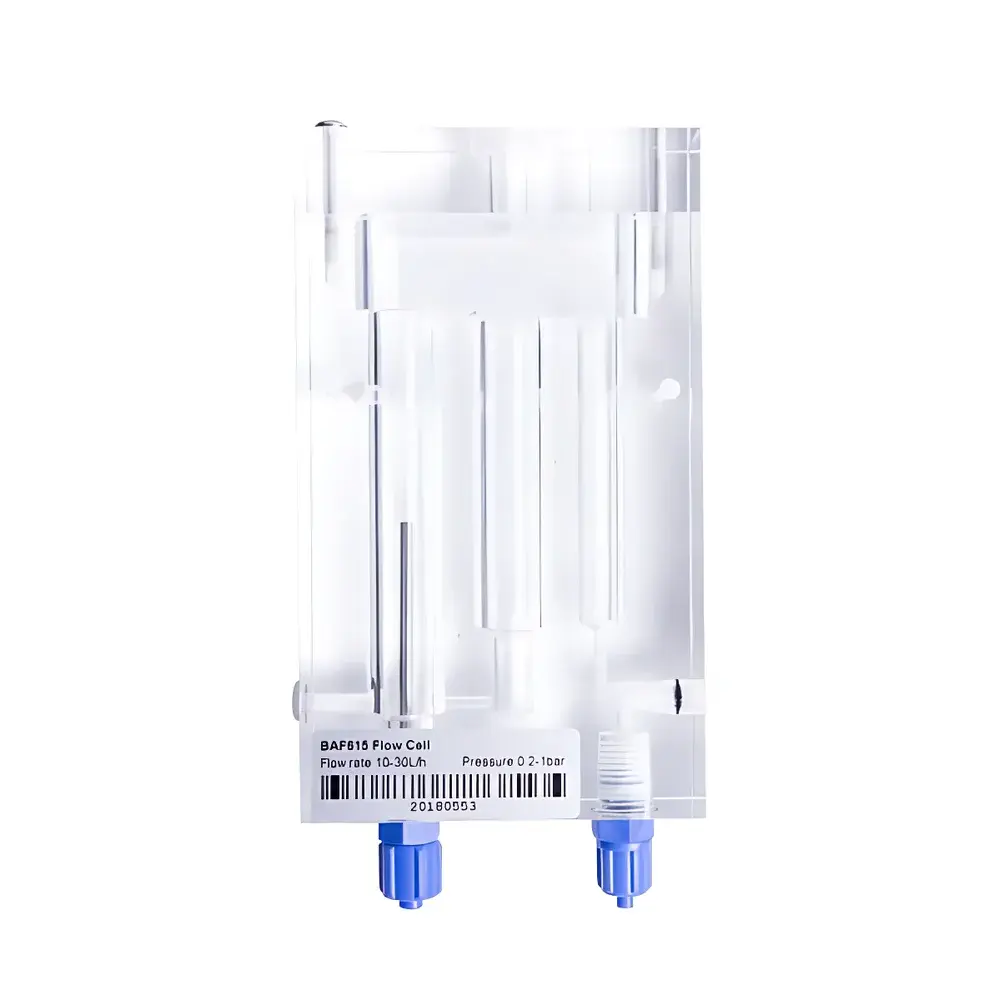
GreenPrima PM8200I Online Water Hardness Analyzer
| Brand | GreenPrima |
|---|---|
| Origin | United Kingdom |
| Manufacturer Type | OEM Manufacturer |
| Origin Category | Imported |
| Model | PM8200I |
| Measurement Range | 0.00–20,000 ppm (as CaCO₃) |
| Resolution | 0.01 / 0.1 / 1 ppm |
| Accuracy | ±0.01 / ±0.1 / ±1 ppm (depending on range) |
| Temperature Compensation | –10 to 130 °C (NTC10K or PT1000, manual/automatic) |
| Operating Temperature | 0 to 70.0 °C |
| Storage Temperature | –20 to 70.0 °C |
| Display | Backlit dot-matrix LCD with pH, temperature, time, relay status |
| Output | Dual isolated 4–20 mA (max. loop resistance 500 Ω, accuracy 0.1% F.S.) |
| Communication | RS485, MODBUS RTU protocol |
| Relay Output | 1 multifunctional relay (for cleaning, periodic alarm, fault alarm) |
| Data Logging | 600,000 records with query capability |
| Power Supply | 90–260 VAC, 50/60 Hz or optional 24 VDC |
| Enclosure Rating | IP65 |
| Installation Options | Wall-mount, pole-mount, panel-mount |
| Dimensions | 144 × 144 × 106 mm |
| Panel Cutout | 138 × 138 mm |
| Weight | 0.86 kg |
| Sensor Model | Bsens740 |
| Sensor Range | 0–40,000 mg/L (as CaCO₃) |
| Sensor Resolution | 0.01 mg/L |
| Sensor Accuracy | ±3% F.S. |
| Sensor Material | Polyphenylsulfone (PPS) |
| Sensor Operating Temp. | –5 to 70.0 °C |
| Max. Pressure Rating | 3.5 bar |
| Connection | PG13.5 fixed thread |
| Cable Length | 5 m |
Overview
The GreenPrima PM8200I Online Water Hardness Analyzer is an industrial-grade, continuous-monitoring instrument engineered for real-time quantification of total water hardness—expressed as calcium carbonate (CaCO₃) equivalence—in process and utility water streams. It employs a solid-state ion-selective electrode (ISE) principle, specifically optimized for selective detection of Ca²⁺ and Mg²⁺ ions in aqueous matrices without chemical reagents or consumables. Unlike colorimetric or titrimetric methods, the PM8200I eliminates peristaltic tubing, reagent dosing pumps, waste handling, and associated maintenance overhead. Its measurement architecture is based on potentiometric response calibration against standardized hardness standards, delivering stable, drift-resistant output under variable flow, pressure, and temperature conditions typical of boiler feedwater, pharmaceutical purified water (PW), clean steam condensate, and cooling tower recirculation systems.
Key Features
- Reagent-free operation using a high-stability, PPS-bodied ion-selective electrode (model Bsens740), rated for continuous immersion and compatible with aggressive industrial water chemistries.
- Dual isolated 4–20 mA analog outputs with full-scale programmability and 0.1% F.S. linearity, suitable for integration into DCS, PLC, or SCADA systems without signal conditioning.
- RS485 interface compliant with MODBUS RTU protocol, enabling bidirectional communication for remote configuration, data polling, and firmware updates via standard industrial serial infrastructure.
- IP65-rated sealed enclosure with backlit dot-matrix LCD display—providing simultaneous visibility of real-time hardness value, temperature, system status, relay activation state, and timestamp.
- Configurable cleaning cycle (0.1–1000 h interval; 1–1000 s duration) triggered via integrated relay output, supporting automated electrode surface maintenance in high-fouling applications.
- Onboard data logger storing up to 600,000 timestamped readings with chronological search, export-ready via MODBUS register mapping—supporting long-term trend analysis and regulatory audit readiness.
- Temperature compensation using either NTC10K or PT1000 sensors (user-selectable), with automatic or manual mode, ensuring measurement fidelity across thermal gradients from cold make-up water to high-temperature condensate.
Sample Compatibility & Compliance
The PM8200I is validated for use in low-conductivity (≥10 µS/cm) and moderate-TDS aqueous samples where ionic strength remains sufficient for reliable ISE potential development. It is routinely deployed in GMP-regulated environments—including pharmaceutical PW loops (USP , EP 2.2.42), boiler feedwater per ASME B31.1 and EN 12952-12, and HVAC cooling water per ASTM D511/D512. While not intrinsically certified for hazardous areas, its IP65 housing meets NEMA 4X requirements for indoor/outdoor mounting in non-explosive zones. The instrument supports GLP/GMP traceability through time-stamped logs, relay event history, and MODBUS-accessible configuration parameters—facilitating 21 CFR Part 11 compliance when paired with validated supervisory software.
Software & Data Management
Data acquisition and system management are executed entirely via MODBUS RTU registers—no proprietary drivers or cloud dependencies required. All operational parameters—including measurement range scaling, temperature compensation mode, relay logic thresholds, cleaning schedule, and display language (English or Chinese)—are modifiable over serial link. Logged hardness values include embedded timestamps (RTC-backed), temperature, and sensor status flags (e.g., “electrode dry”, “signal timeout”). Export formats are raw register dumps compatible with Excel, PI System, Ignition, or custom SCADA HMI templates. No firmware updates require physical access; remote field upgrades are supported via MODBUS write commands to designated flash memory addresses.
Applications
- Pharmaceutical water systems: Continuous monitoring of purified water (PW) and water for injection (WFI) hardness at storage tank outlets and distribution loop return points.
- Power generation: Feedwater and condensate hardness surveillance upstream of high-pressure boilers to prevent scale-induced tube failure per EPRI guidelines.
- Food & beverage processing: Verification of softening efficiency in RO pretreatment trains and post-treatment polishing stages.
- Electroplating and anodizing lines: Control of rinse water hardness to avoid metallic salt precipitation on coated substrates.
- Commercial HVAC: Real-time tracking of cooling tower cycles of concentration and blowdown optimization to mitigate CaCO₃ scaling.
- Marine engineering: Steam boiler feedwater hardness verification aboard vessels operating closed-loop freshwater generators.
FAQ
Does the PM8200I require daily calibration?
No. The Bsens740 electrode exhibits low drift (<0.5% F.S./week under stable conditions); calibration is recommended only after sensor replacement, exposure to extreme pH (10), or sustained fouling events—typically every 1–3 months depending on application severity.
Can it measure hardness in seawater or brackish water?
Not recommended. High ionic strength (>50,000 µS/cm) and competing ions (Na⁺, K⁺, SO₄²⁻) interfere with Ca²⁺/Mg²⁺ selectivity; use dedicated conductivity-based salinity analyzers instead.
Is the sensor compatible with chlorinated water?
Yes. The PPS body and solid-contact ISE membrane resist oxidative degradation up to 5 ppm free chlorine at pH 6–8; prolonged exposure above this level may accelerate reference junction aging.
How is temperature compensation applied?
The instrument accepts either NTC10K or PT1000 input; compensation follows the empirical equation defined in ISO 9963-1, dynamically adjusting mV-to-ppm conversion based on real-time sensor temperature.
What maintenance is required beyond electrode cleaning?
Annual verification of analog output linearity and relay contact integrity; biannual inspection of PG13.5 cable gland seal; no electrolyte refills, membrane replacements, or internal recalibration are needed during normal service life.







