
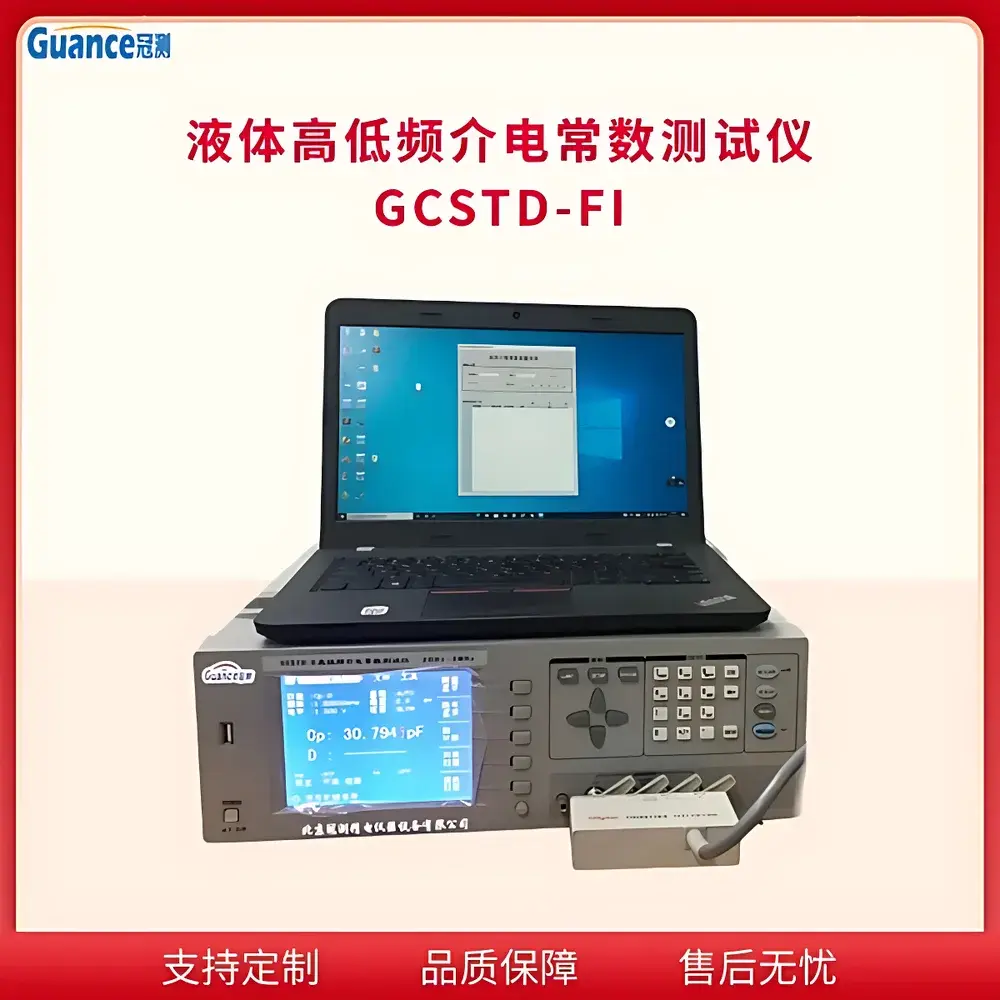
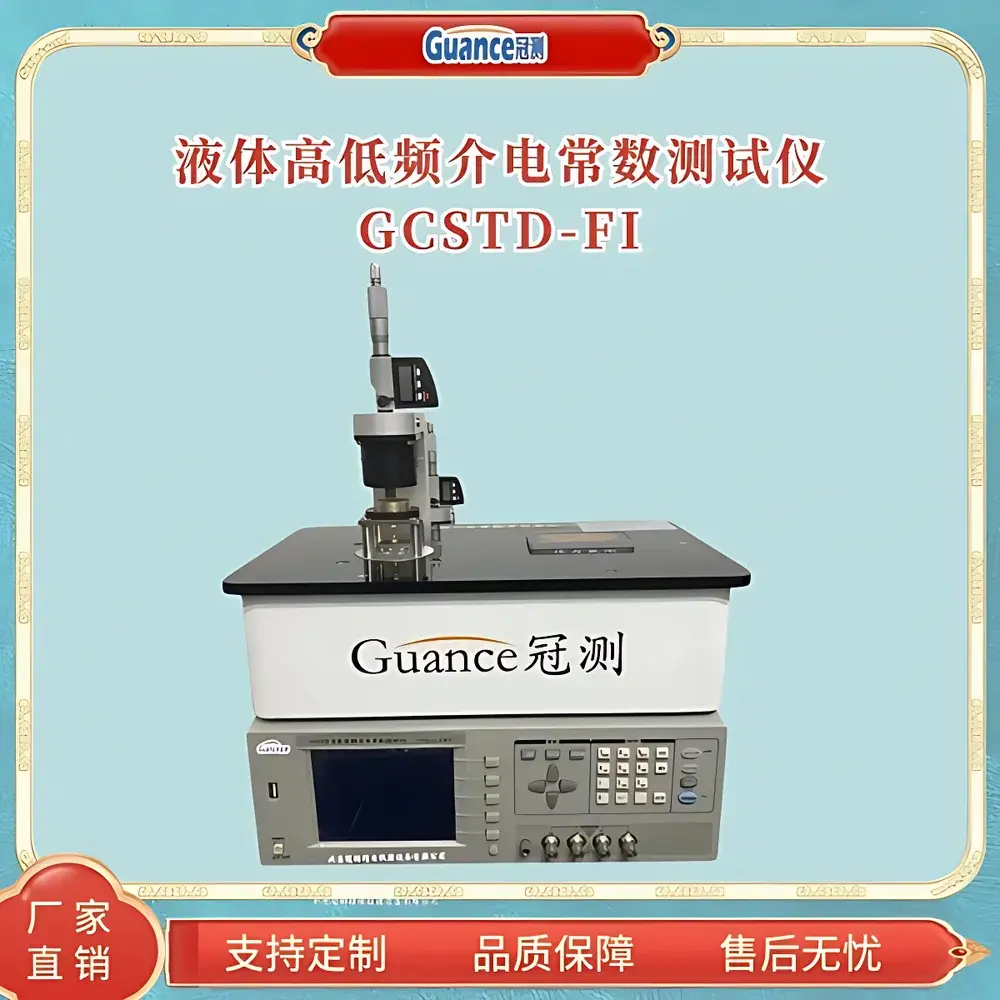
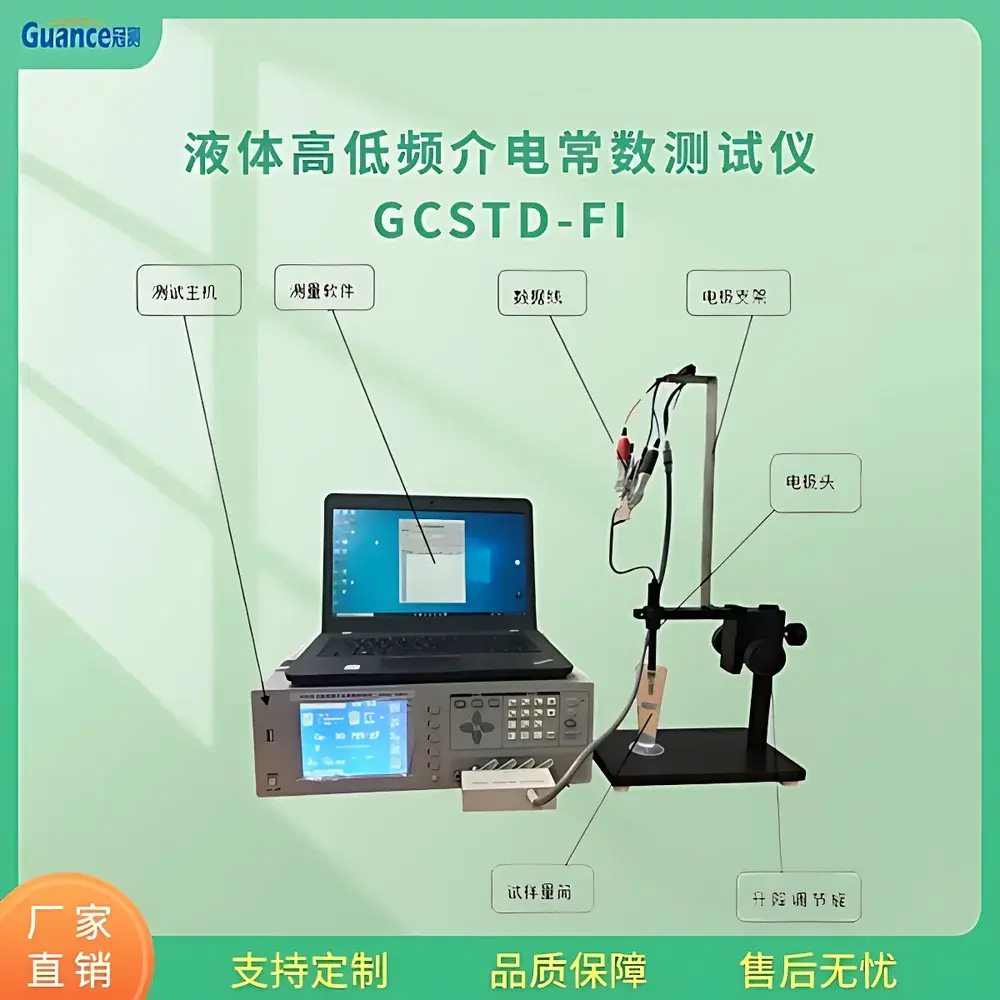
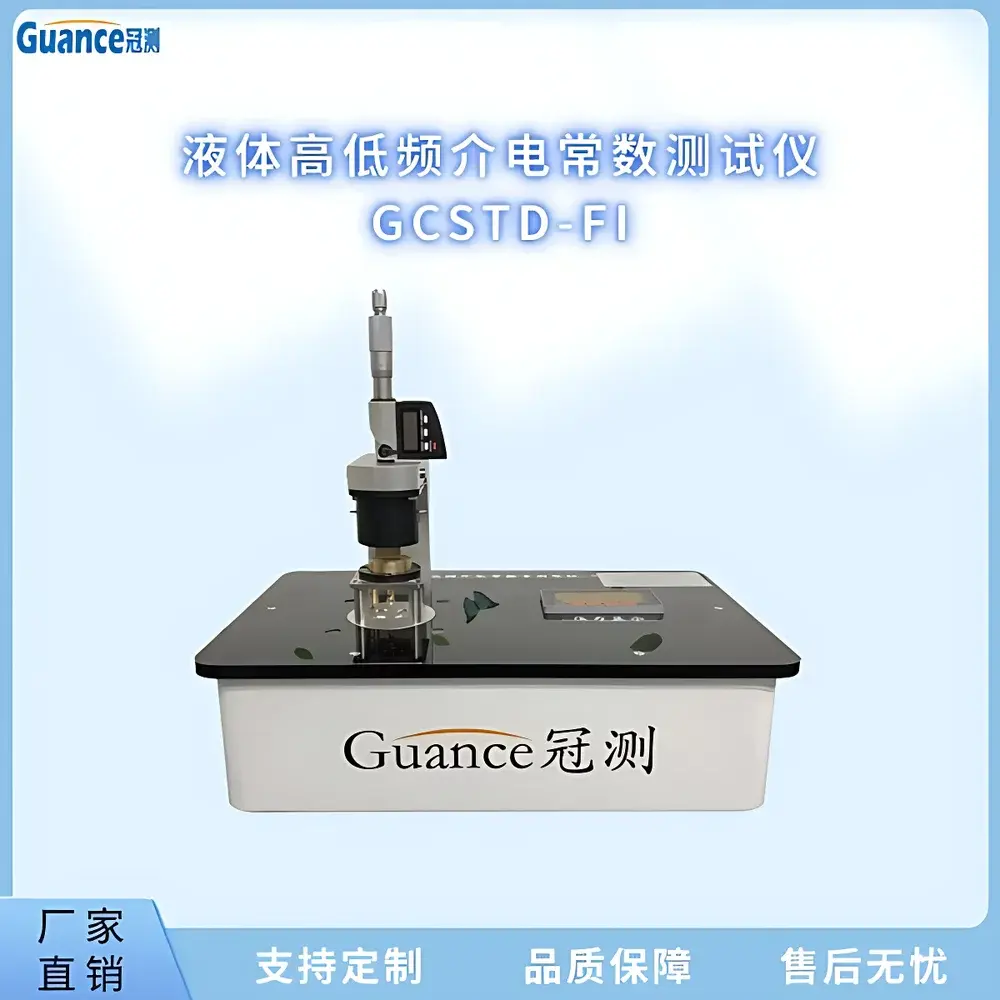
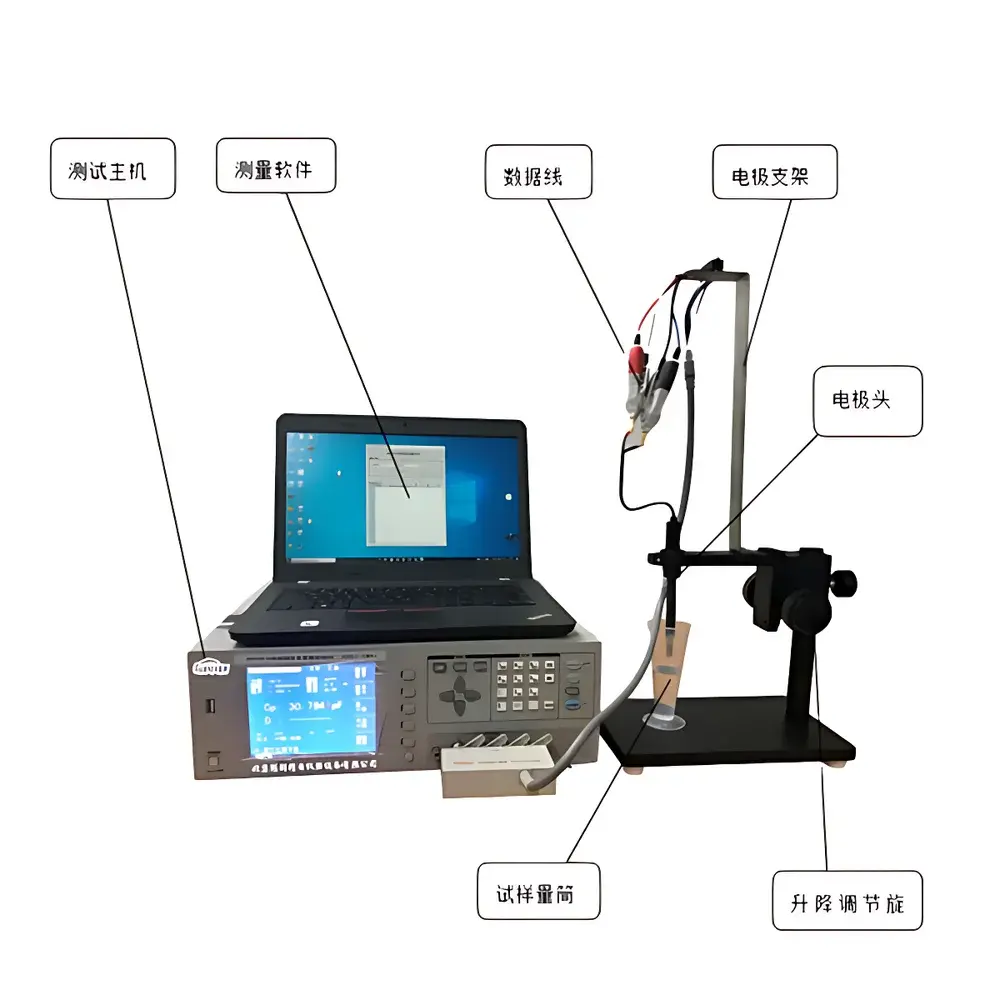
GuanCe GCSTD-FI3 Liquid Dielectric Constant Analyzer (High- and Low-Frequency)
| Brand | GuanCe Instruments |
|---|---|
| Origin | Beijing, China |
| Manufacturer Type | Authorized Distributor |
| Regional Classification | Domestic (PRC) |
| Model | GCSTD-FI3 |
| Price | USD 1,900 (FOB Beijing) |
Overview
The GuanCe GCSTD-FI3 Liquid Dielectric Constant Analyzer is a precision impedance-based instrument engineered for the accurate determination of relative permittivity (dielectric constant, εr) and dissipation factor (tan δ) of liquid dielectrics across a defined low-frequency range. It operates on the principle of parallel-plate (cylindrical coaxial) capacitance measurement under sinusoidal excitation at 10 kHz, enabling stable, reproducible characterization of insulating and polar liquids—including transformer oils, silicone fluids, hydrocarbon solvents, and functional electrolytes. Unlike broadband spectrometers or resonant cavity systems, the GCSTD-FI3 employs a fixed-frequency, two-terminal admittance method compliant with established national standards for industrial and quality control laboratories where traceable, routine measurements are prioritized over spectral resolution.
Key Features
- Fixed-frequency excitation at 10 kHz with RMS output amplitudes of ~7 V (range 1–20) and ~0.7 V (range 1–200), optimized to minimize electrode polarization and interfacial charge accumulation in conductive or viscous media.
- Open-structure coaxial cylindrical electrode assembly fabricated from 316 stainless steel, with precise inter-electrode spacing maintained by six non-conductive nylon screws—designed for mechanical stability and ease of solvent-based cleaning without disassembly.
- Two calibrated measurement ranges (1–20 and 1–200) supporting broad εr coverage typical of non-polar hydrocarbons (εr ≈ 1.8–2.4) to highly polar solvents (e.g., ethylene glycol, εr ≈ 37–40).
- Measurement accuracy better than ±2% full-scale, with repeatability and linearity优于 ±0.2%—validated against NIST-traceable reference liquids per ISO/IEC 17025-aligned internal calibration protocols.
- Electrode materials (316 SS, PTFE, nylon) are chemically inert toward common organic solvents (acetone, ethanol, chloroform, heptane), permitting ultrasonic cleaning without degradation of geometric integrity.
Sample Compatibility & Compliance
The GCSTD-FI3 is validated for use with electrically insulating and moderately conductive liquids meeting the scope of GB/T 5654–2007 (liquid insulating materials), GB/T 1409–2006 (capacitance and loss factor at power/audio frequencies), and GB/T 21216–2007 (conductivity and capacitance-derived tan δ). It supports QC workflows in transformer oil testing labs, battery electrolyte R&D, and polymer precursor formulation—where compliance with ASTM D924 (standard test method for dielectric dissipation factor of electrical insulating oils) and IEC 60247 is required. The instrument does not meet Class I safety requirements for direct high-voltage immersion; samples must be pre-conditioned to 23 ± 2 °C and degassed if volatile. Measurement data may be incorporated into GLP-compliant reports when paired with timestamped manual logging or external LIMS integration.
Software & Data Management
The GCSTD-FI3 operates as a standalone hardware unit with analog/digital front-end signal conditioning and LED-display readout. No proprietary software is bundled; however, raw output (voltage, current phase, calculated εr/tan δ) is accessible via 0–5 V analog outputs compatible with third-party DAQ systems (e.g., National Instruments USB-6009, Keysight 34972A). Users may implement custom Python/Matlab scripts for automated batch reporting, statistical process control (SPC) charting, and audit-trail generation. For regulated environments requiring 21 CFR Part 11 compliance, integration with validated ELN platforms (e.g., LabArchives, Benchling) is supported through CSV export and metadata tagging (operator ID, sample ID, temperature, date/time stamp).
Applications
- Quality assurance of mineral and synthetic transformer oils per IEC 60429 and DL/T 995.
- Batch-to-batch consistency verification of lithium-ion battery electrolytes (LiPF6 in EC/DMC) during manufacturing.
- Research on dielectric aging mechanisms in silicone dielectric fluids under thermal stress.
- Screening of bio-based lubricants and green solvents for εr-driven separation efficiency in electrostatic precipitators.
- Educational laboratory instruction in dielectric spectroscopy fundamentals, electrode geometry effects, and frequency-domain material response.
FAQ
Can the electrode be disassembled for cleaning?
No. Disassembly will alter the critical inter-cylinder spacing and invalidate calibration. Only solvent immersion and ultrasonic cleaning of the intact probe are permitted.
What is the maximum allowable conductivity of tested liquids?
For reliable εr measurement, bulk conductivity should remain below 100 pS/m. Higher values induce significant series resistance error; users should consult GB/T 5654–2007 Annex B for correction procedures.
Is temperature control integrated?
No. The instrument requires external thermostatic bath immersion (±0.5 °C stability) for temperature-dependent studies. A PT100 input port is not provided.
Does the system support automatic calibration?
No. Calibration is performed manually using certified reference liquids (e.g., air, cyclohexane, distilled water) per GB/T 1409–2006 Section 8. Calibration certificates are issued upon request.
What documentation is supplied with shipment?
User manual (English/Chinese bilingual), factory calibration report, GB-compliance declaration, CE-marked power adapter, and electrode cleaning protocol—all delivered in PDF and printed form.



