
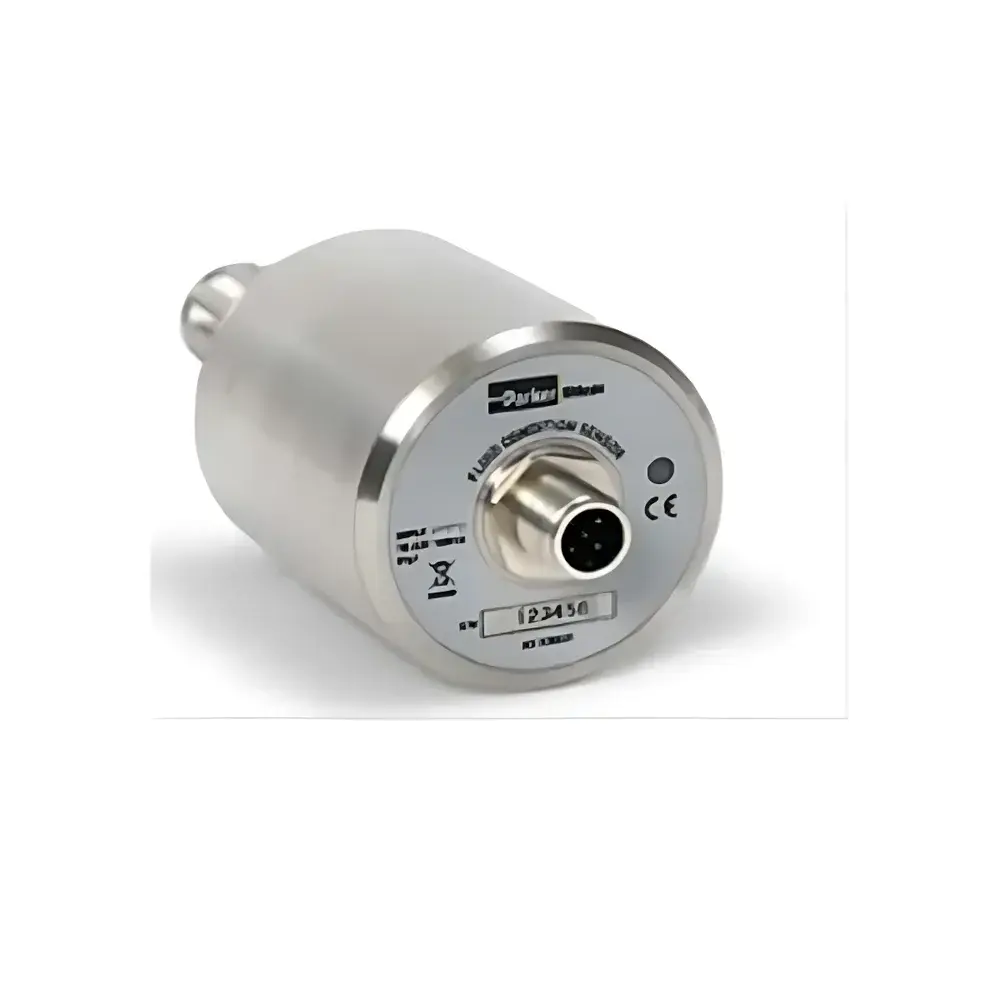
Kittiwake FSC Fluid Condition Sensor
| Brand | Kittiwake |
|---|---|
| Origin | United Kingdom |
| Manufacturer Type | Authorized Distributor |
| Origin Category | Imported |
| Model | Custom-Selected Based on Application Requirements |
| Price | Contact for Quotation |
Overview
The Kittiwake FSC Fluid Condition Sensor is an industrial-grade, in-line monitoring device engineered for continuous, real-time assessment of lubricant and hydraulic fluid health in critical rotating machinery systems. Operating on a multi-parameter electrochemical and thermophysical sensing principle, the FSC simultaneously measures dielectric constant (relative permittivity), electrical conductivity, temperature, humidity (in oil-gas interface or headspace analysis mode), and pressure — all within a single compact, intrinsically safe probe assembly. Unlike periodic lab-based oil analysis, the FSC delivers dynamic, trendable data that reflects actual in-service fluid degradation mechanisms — including oxidation, additive depletion, water ingress, soot loading, and particle-induced conductivity shifts. Its core architecture adheres to the physical principles defined in ASTM D6810 (Standard Test Method for Determining Dielectric Breakdown Voltage of Insulating Oils) and ISO 17359 (Condition Monitoring — General Principles), enabling predictive maintenance strategies grounded in empirical fluid behavior rather than fixed time-based intervals.
Key Features
- Multi-parameter synchronous acquisition: Simultaneous real-time measurement of dielectric constant (εr), conductivity (µS/cm), temperature (°C), relative humidity (%RH, via integrated headspace sensor), and pressure (bar)
- Patented temperature-compensated dielectric algorithm: Minimizes thermal drift across operating ranges (–20 °C to +120 °C), ensuring long-term baseline stability and high inter-sample reproducibility
- Robust 316 stainless steel wetted parts with IP68/NEMA 4X-rated housing: Certified for continuous submersion in mineral, synthetic, and bio-based lubricants
- 4–20 mA analog output + RS-485 Modbus RTU digital interface: Enables seamless integration into existing SCADA, DCS, or CMMS platforms without gateway dependency
- No consumables or reagents required: Solid-state sensing elements ensure >5-year operational lifetime under typical industrial duty cycles
- ATEX/IECEx Zone 1 and UL Class I Div 1 certified: Approved for installation in hazardous locations adjacent to gearboxes, turbines, compressors, and hydraulic power units
Sample Compatibility & Compliance
The FSC is validated for use with a broad spectrum of industrial fluids, including but not limited to turbine oils (ISO VG 32–100), engine oils (SAE 10W–40, 15W–40), hydraulic fluids (HL, HM, HVLP), gear oils (EP formulations), and transformer insulating oils (mineral and ester-based). It complies with EN 61000-6-2 (immunity) and EN 61000-6-4 (emissions), and its measurement methodology supports alignment with ISO 4406 (particle contamination), ISO 11171 (calibration standards), and ASTM D971 (interfacial tension correlation). For regulated environments — such as pharmaceutical manufacturing or food-grade hydraulics — the sensor meets FDA-compliant material declarations (3-A Sanitary Standards compliant wetted surfaces) and supports 21 CFR Part 11 audit trails when paired with Kittiwake’s certified software suite.
Software & Data Management
Kittiwake’s FluidWatch™ desktop and cloud platform provides secure, role-based access to FSC time-series data. The software applies adaptive baseline normalization, calculates rate-of-change derivatives for early fault detection, and generates automated condition reports aligned with ISO 55001 asset management frameworks. All raw sensor data is timestamped, digitally signed, and stored with full metadata (including calibration history, firmware version, and environmental context). Audit logs meet GLP/GMP requirements, supporting traceability during regulatory inspections. Optional API integration allows direct ingestion into enterprise analytics tools (e.g., Power BI, Tableau, or custom Python-based anomaly detection models).
Applications
- Wind turbine gearbox oil health monitoring — detecting micro-water ingress before emulsion formation
- Nuclear plant auxiliary lubrication systems — ensuring dielectric integrity of insulating oils per IEEE C57.106
- Marine main engine lube oil circuits — trending additive depletion rates to extend drain intervals beyond OEM recommendations
- Steel mill rolling mill hydraulic systems — correlating conductivity spikes with coolant leakage events
- Offshore platform compressors — remote monitoring of moisture saturation levels in synthetic PAO-based lubricants
FAQ
Does the FSC require field calibration?
No — factory-calibrated with NIST-traceable reference fluids; zero-point verification only required annually per ISO 17025-accredited procedures.
Can it be installed in pressurized systems?
Yes — rated for continuous operation up to 25 bar (360 psi) static pressure; optional high-pressure variants available for 100 bar applications.
How does humidity measurement work in oil?
The FSC uses a dual-chamber design: one chamber samples oil-phase dielectric properties, while a secondary micro-capillary channel monitors headspace vapor-phase RH adjacent to the oil surface — enabling indirect water activity estimation per ISO 15380 Annex C.
Is third-party system integration supported?
Yes — Modbus RTU register maps and OPC UA companion specifications are publicly documented and tested with Siemens Desigo, Emerson DeltaV, and Honeywell Experion PKS.
What is the recommended mounting orientation?
Vertical installation is preferred to minimize air entrapment; however, the sensor maintains accuracy in horizontal or angled configurations due to internal flow-guiding geometry and self-purging electrode design.




