
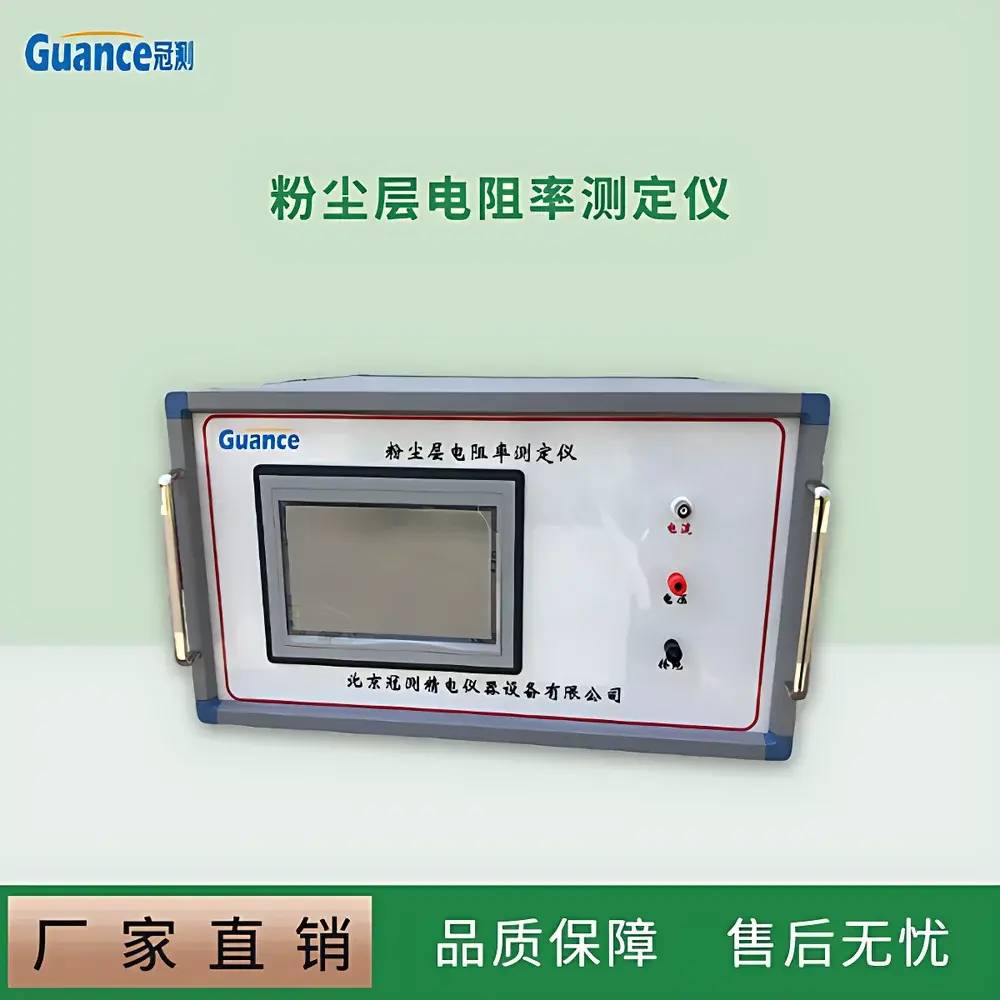
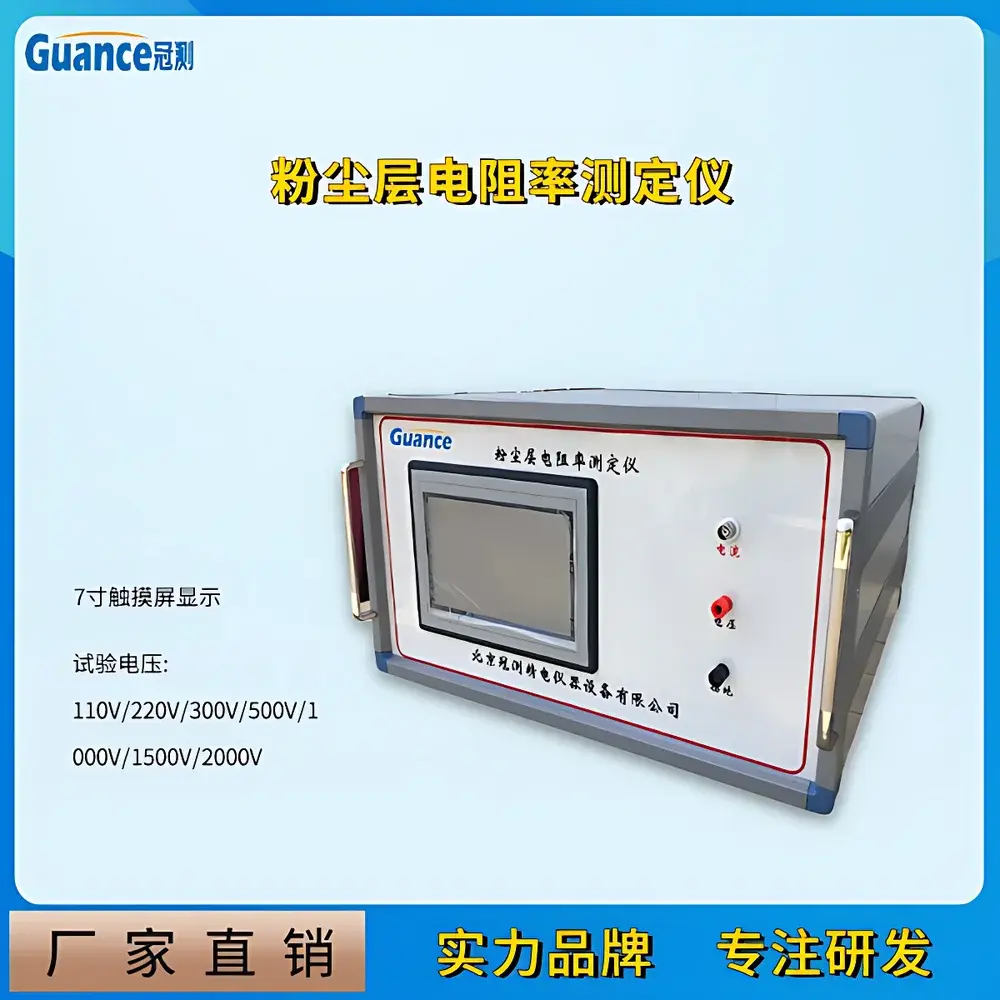
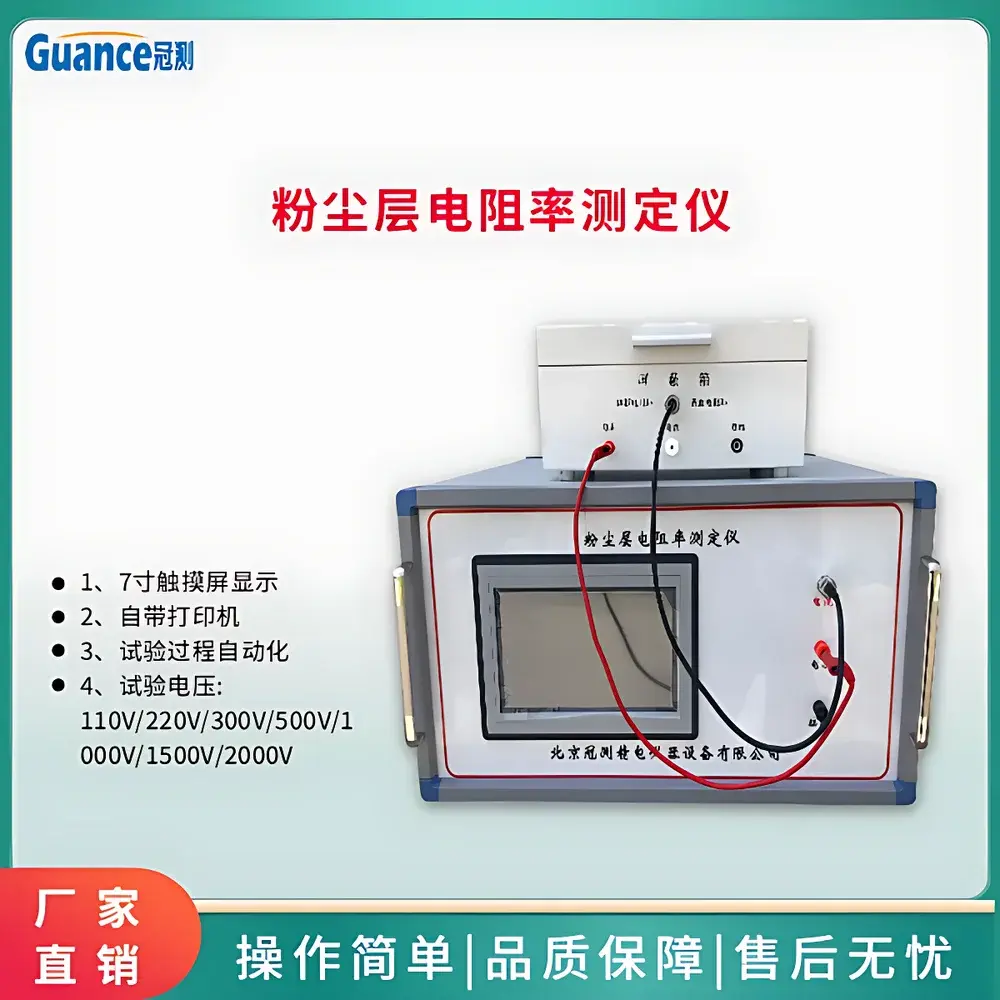
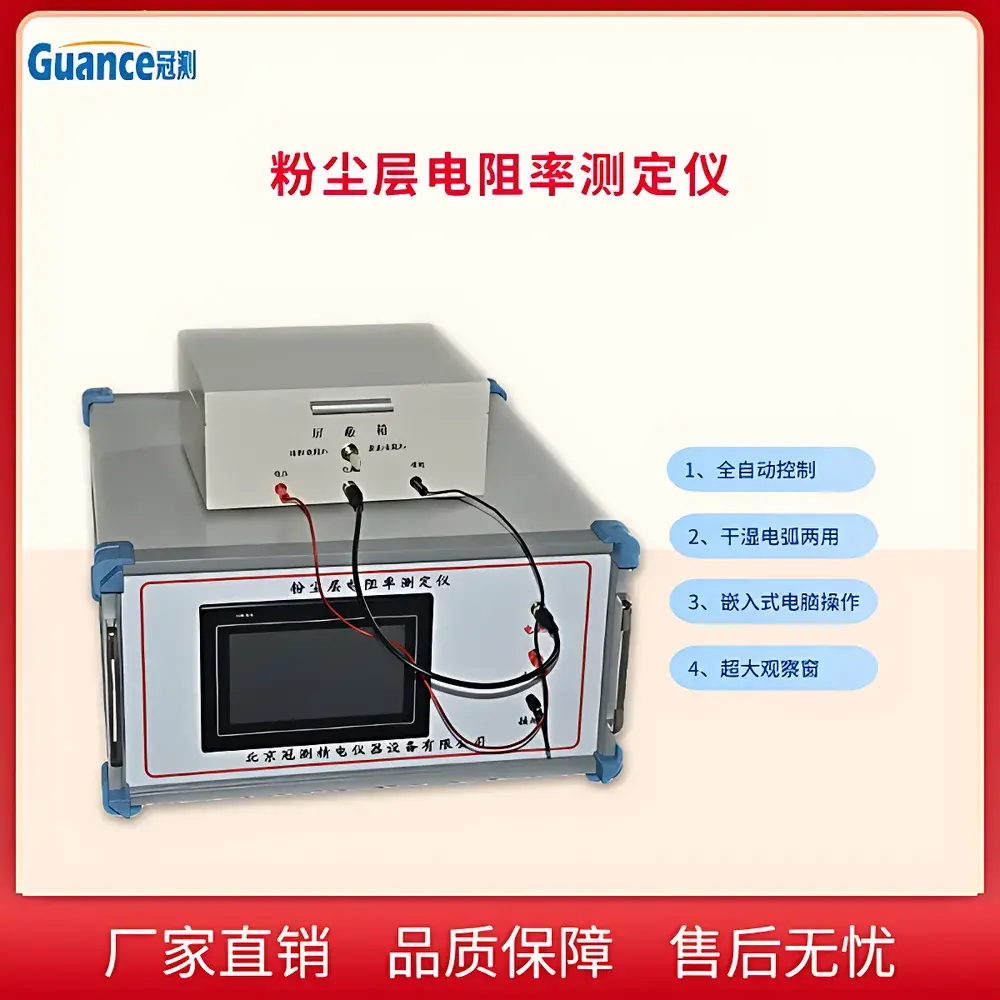
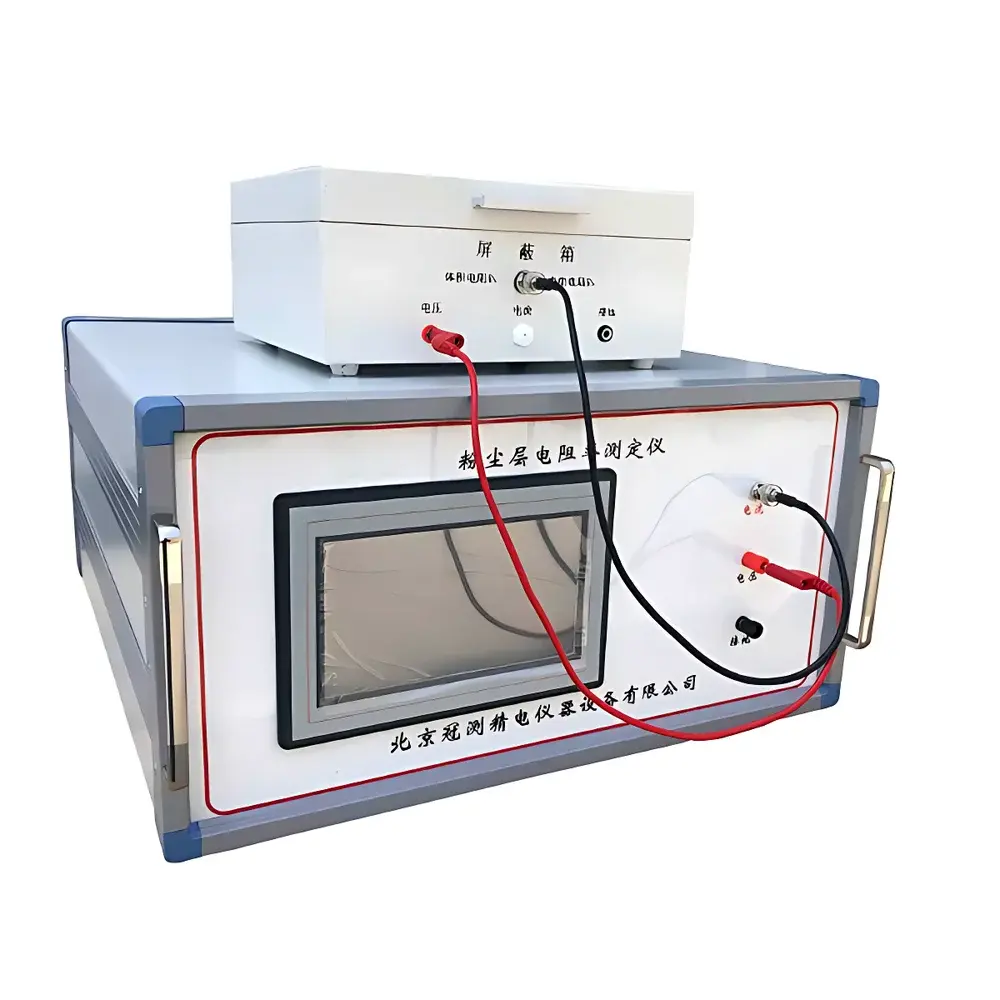
GuanCe GEST-126T Fully Automated Dust Layer Resistivity Tester
| Brand | GuanCe Instruments |
|---|---|
| Origin | Beijing, China |
| Manufacturer Type | Authorized Distributor |
| Country of Origin | China |
| Model | GEST-126T* |
| Test Voltages | DC 110 V, 220 V, 300 V, 500 V, 1000 V, 1500 V, 2000 V |
| Series Resistor | 10 kΩ |
| Maximum Breakdown Current | 200 mA |
| Electrode Material | Stainless Steel |
| Measurement Accuracy | ±1% |
| Compliance | GB/T 12476.9–2010, GB/T 16427–2018 |
Overview
The GuanCe GEST-126T Fully Automated Dust Layer Resistivity Tester is an engineered solution for quantifying the electrical resistivity of consolidated dust layers under controlled compression and applied DC voltage conditions. Designed in strict accordance with GB/T 12476.9–2010 (“Electrical apparatus for use in combustible dust atmospheres — Part 9: Test methods — Determination of dust layer resistivity”) and GB/T 16427–2018 (“Determination of dust layer resistivity”), this instrument implements a standardized two-electrode configuration to measure the minimum resistance across a defined cross-sectional area and inter-electrode spacing—yielding resistivity values (in Ω·m) critical for classifying combustible dusts as conductive (ρ ≤ 10³ Ω·m) or non-conductive (ρ > 10³ Ω·m). The system operates on the principle of Ohm’s law applied to bulk particulate media, where resistivity ρ is calculated as ρ = R × (A / d), with R being measured resistance, A the electrode contact area, and d the separation distance. Its fixed stainless-steel electrode geometry, programmable voltage selection, and integrated current-limiting circuitry ensure repeatable, traceable measurements essential for hazard classification, explosion protection design, and compliance documentation in process safety management systems.
Key Features
- Seven selectable DC test voltages (110 V to 2000 V) enabling evaluation across operational voltage ranges relevant to electrostatic ignition risk assessment
- Precision-machined stainless-steel parallel-plate electrodes with defined surface area and fixed 1 mm inter-electrode gap per GB/T 16427–2018
- Integrated 10 kΩ series resistor limiting maximum fault current to 200 mA, ensuring operator safety and preventing uncontrolled arcing during high-resistivity or breakdown events
- Calibrated measurement circuit with ±1% full-scale accuracy, verified against NIST-traceable standards for resistivity determination
- Automated sequence control minimizing manual intervention: voltage ramping, dwell time, resistance acquisition, and auto-zero compensation are preconfigured per standard protocols
- Robust mechanical architecture with calibrated dust compaction fixture to maintain consistent layer density (critical for reproducible resistivity values)
Sample Compatibility & Compliance
The GEST-126T accommodates dry, free-flowing combustible dusts—including metal powders (e.g., aluminum, magnesium), organic dusts (e.g., sugar, flour, wood), and polymer granules—provided they meet particle size specifications outlined in GB/T 16427–2018 (typically < 500 µm). Samples are loaded into a standardized cylindrical cell, compacted using a calibrated weight, and leveled prior to electrode placement. The instrument supports classification per IEC/EN 60079-0 and NFPA 499 frameworks by delivering resistivity data used to determine whether a dust layer qualifies as conductive or non-conductive—a key input for selecting appropriate enclosure types (e.g., “dust-tight” vs. “pressurized”) and grounding strategies. All test procedures align with GLP-aligned documentation requirements, including timestamped measurement logs and operator identification fields.
Software & Data Management
The GEST-126T includes embedded firmware supporting local data storage and USB export of raw resistance, voltage, and calculated resistivity values in CSV format. While no proprietary PC software is bundled, exported datasets are compatible with common analytical platforms (e.g., Excel, MATLAB, LabVIEW) for statistical analysis, trend tracking, and report generation. Measurement records include test voltage, elapsed time, ambient temperature/humidity (if externally logged), and pass/fail status relative to the 10³ Ω·m threshold. For regulated environments, users may integrate the instrument into validated electronic lab notebook (ELN) systems via manual data import; audit trails, user access controls, and electronic signatures must be implemented at the ELN level to satisfy FDA 21 CFR Part 11 or ISO/IEC 17025 requirements.
Applications
- Hazardous area classification in chemical, pharmaceutical, food processing, and additive manufacturing facilities
- Design validation of explosion-proof enclosures and static-dissipative flooring systems
- Root cause analysis of electrostatic ignition incidents involving accumulated dust layers
- Quality control of antistatic additives in powder formulations
- Supporting DSEAR (UK), ATEX (EU), and OSHA Combustible Dust National Emphasis Program (NEP) compliance audits
- Academic and industrial research on charge decay dynamics in particulate systems
FAQ
What dust particle size range is recommended for testing?
Per GB/T 16427–2018, particles should pass through a 500 µm sieve and be retained on a 75 µm sieve unless otherwise specified by the application standard.
Is calibration certification included with shipment?
Yes—the instrument ships with a factory calibration certificate referencing traceable resistance standards; annual recalibration is recommended per ISO/IEC 17025 guidelines.
Can the GEST-126T be used for wet or agglomerated dust samples?
No—only dry, de-aerated, and freely pourable powders meeting the moisture content limits (< 0.1% w/w) specified in Clause 6.2 of GB/T 16427–2018 are valid for compliant testing.
Does the system support automatic resistivity calculation?
Yes—resistivity (Ω·m) is computed in real time using the pre-programmed electrode geometry (A = 1.0 × 10⁻⁴ m², d = 1.0 × 10⁻³ m) and displayed alongside raw resistance and voltage values.
What safety protections prevent operator exposure during high-voltage testing?
The unit features interlocked front-panel shielding, automatic voltage discharge after test completion, and audible/visual alerts preceding voltage application—all compliant with GB/T 4793.1–2007 (Safety requirements for electrical equipment for measurement, control, and laboratory use).



