
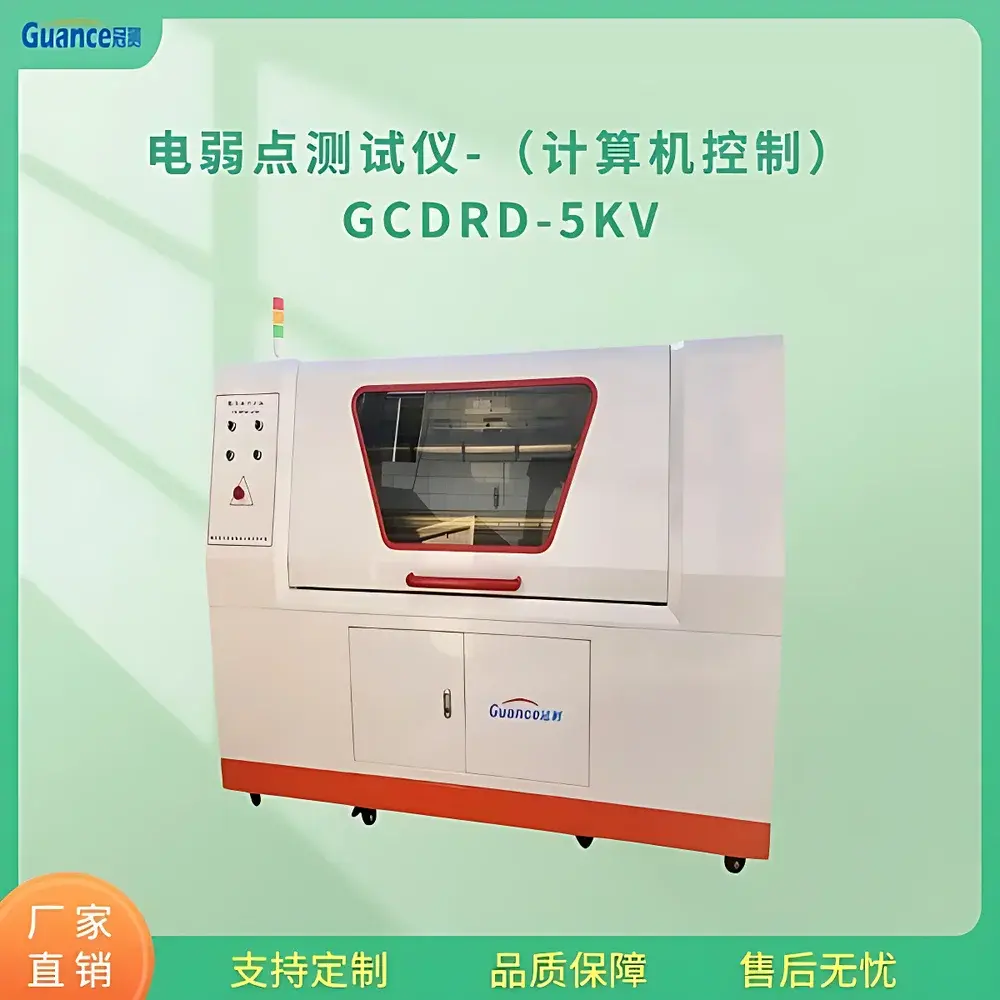
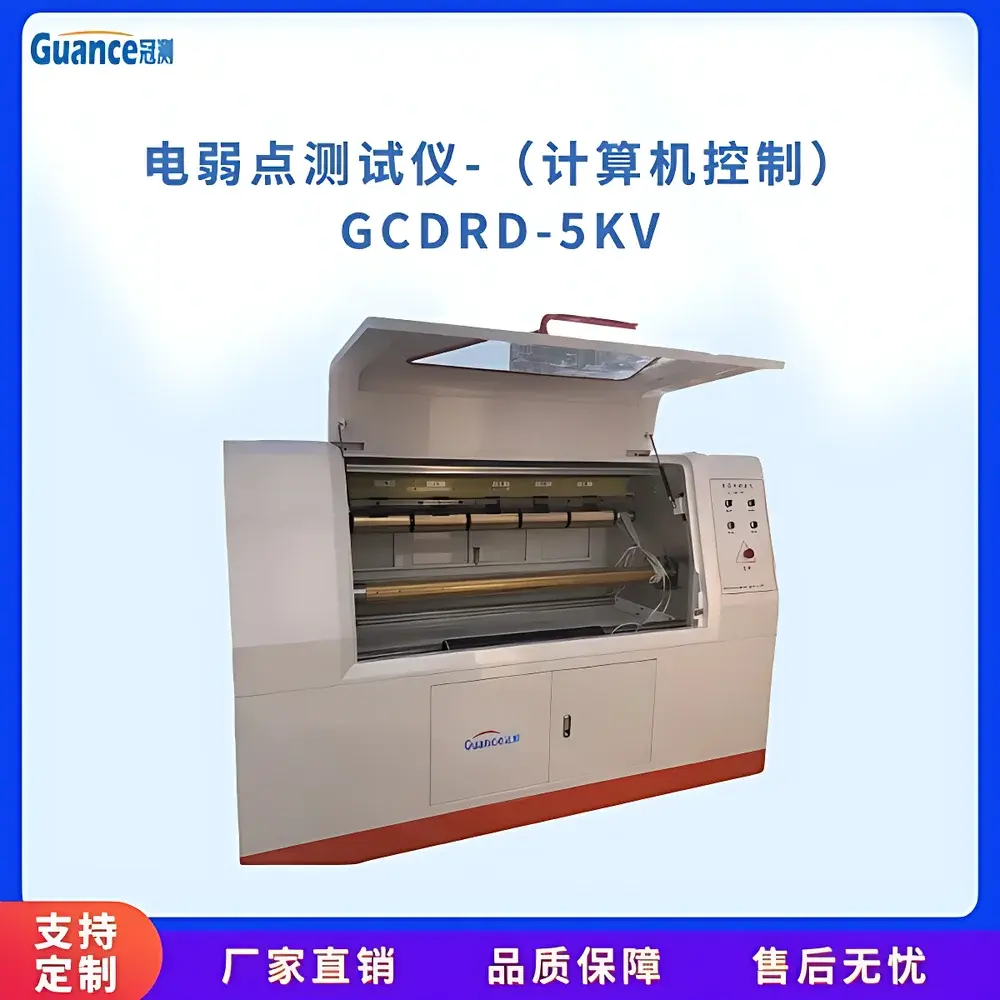
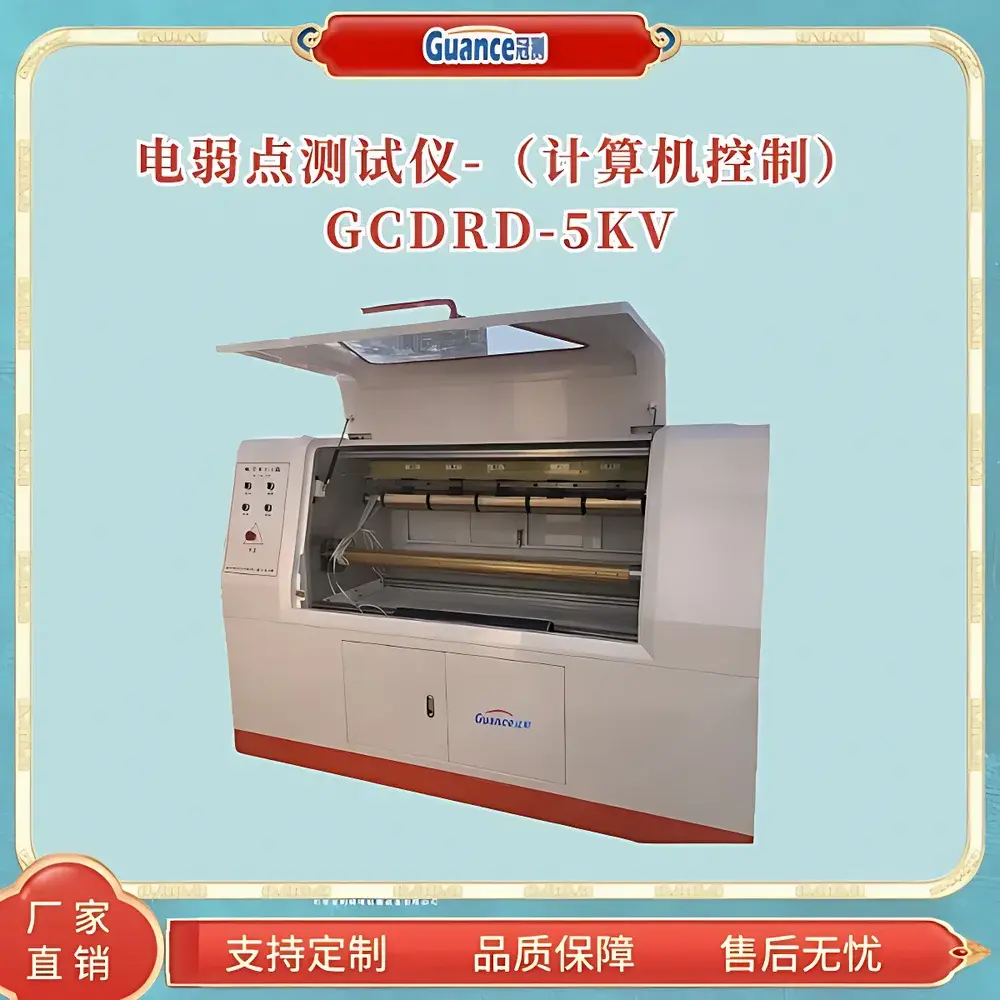
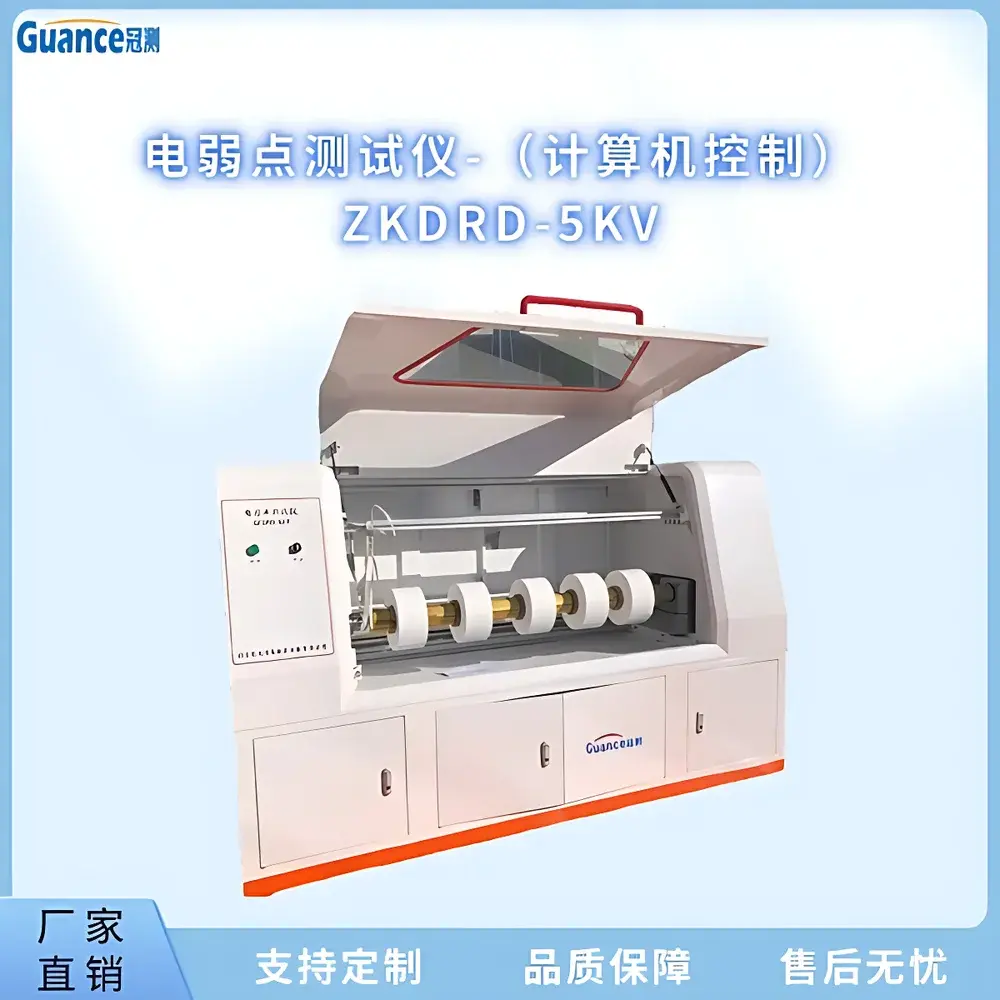
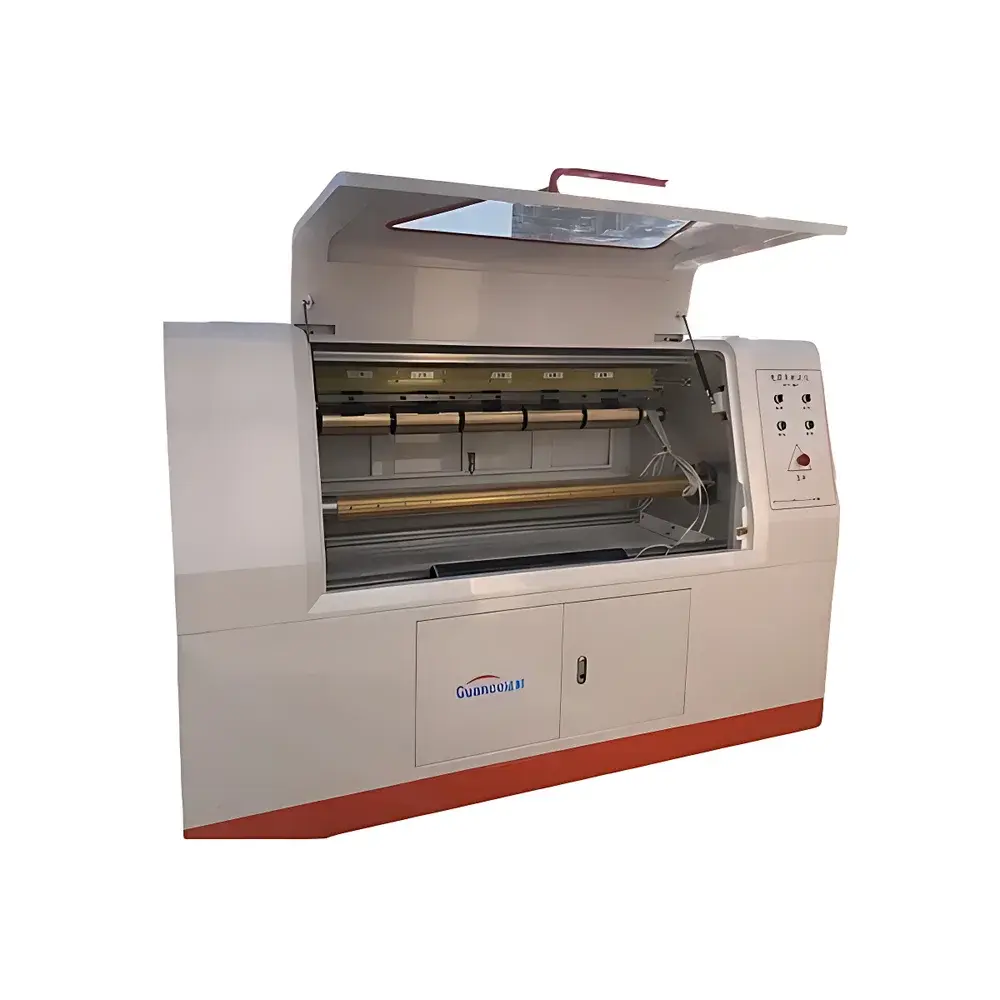
GuanCe Instruments GCDRD-5KV Electrical Weak Point Tester for Insulating Films
| Brand | GuanCe Instruments |
|---|---|
| Origin | Beijing, China |
| Manufacturer Type | Distributor |
| Country of Origin | China |
| Model | GCDRD-5KV |
| Price | USD 1,700 (approx.) |
| Voltage Range | 0–5 kV DC |
| Test Standard Compliance | GB/T 13542.2–2009, IEC 60674-2:1988 |
| Sample Form | Roll-type polymer films |
| Motion Control | Motorized unwind/re-wind with adjustable linear speed |
| Data Output | Breakdown point count per m², weak-line count, real-time V/I logging, auto-zeroing post-test |
| Automation Level | Fully microprocessor-controlled with PC-based software interface |
Overview
The GuanCe Instruments GCDRD-5KV Electrical Weak Point Tester is a dedicated high-voltage DC dielectric integrity evaluation system engineered for quantitative assessment of electrical weak points in flexible insulating polymer films. It operates on the principle of controlled ramped DC voltage application across a continuously moving film sample under standardized test conditions, enabling statistical mapping of localized dielectric failures—commonly referred to as “electrical weak points” or “pinholes”—per unit area (m²). Unlike conventional breakdown testers that identify only the first failure voltage, the GCDRD-5KV captures *all* discrete breakdown events occurring within the specified voltage window (0–5 kV), making it essential for quality assurance in manufacturing of capacitor-grade polypropylene (PP), polyester (PET), polyimide (PI), and polyurethane (PU) films. Its design aligns with the physical test methodology defined in GB/T 13542.2–2009 and its international counterpart IEC 60674-2:1988, both of which specify procedures for evaluating the electrical weakness distribution in thin dielectric films used in energy storage and high-reliability electronic applications.
Key Features
- Programmable DC voltage ramp: Linear or stepwise voltage rise from 0 to 5 kV at user-defined rates (e.g., 0.1–5 kV/s), ensuring repeatability across laboratories and production shifts.
- Motor-driven film transport system: Precision-controlled unwinding and rewinding mechanism with adjustable linear speed (typically 0.1–5 m/min), maintaining consistent tension and registration during testing.
- Real-time acquisition: Simultaneous monitoring and logging of applied voltage, leakage current, and timestamped breakdown event triggers with ≥1 ms resolution.
- Automated defect quantification: On-the-fly identification and spatial tagging of each breakdown location; post-test computation of weak point density (points/m²) and weak line frequency (linear defects per meter).
- Integrated safety architecture: Interlocked enclosure, emergency stop circuitry, automatic discharge after test completion, and residual voltage detection prior to sample handling.
- PC-based control & analysis software: Windows-compatible application supporting test parameter configuration, live waveform visualization, data export (CSV, Excel), and GLP-compliant audit trail generation (user login, parameter changes, result modifications).
Sample Compatibility & Compliance
The GCDRD-5KV is optimized for roll-form thermoplastic and thermoset dielectric films with thicknesses ranging from 2 µm to 250 µm and widths up to 300 mm. Compatible materials include biaxially oriented polypropylene (BOPP), polyethylene terephthalate (PET), polyimide (PI), and aliphatic/aromatic polyurethane (PU) films—common substrates in metallized film capacitors, flexible printed circuits, and high-voltage insulation layers. The instrument satisfies mechanical and procedural requirements outlined in GB/T 13542.2–2009 (Chinese national standard equivalent to IEC 60674-2) and supports traceability under ISO/IEC 17025-accredited testing environments. While not inherently 21 CFR Part 11 compliant out-of-the-box, its software architecture allows configuration for electronic signature support and audit log retention when deployed in regulated QC labs adhering to GMP/GLP practices.
Software & Data Management
The proprietary test management software provides a calibrated, menu-driven interface for defining test protocols—including start/stop voltages, ramp rate, dwell time, film speed, electrode gap, and pass/fail thresholds. All raw measurement data (voltage, current, time, position index) are stored in a structured binary format with embedded metadata (operator ID, date/time stamp, instrument serial number, calibration due date). Export functions support CSV, XLSX, and PDF report generation with customizable templates. Audit trails record every critical action: parameter edits, test initiation, manual intervention, and result finalization—enabling full reconstructability during internal audits or regulatory inspections. Calibration verification routines are integrated and documented per ISO 9001 Clause 7.1.5.
Applications
- Quality control of capacitor dielectric films during incoming inspection and final release testing.
- Process validation and troubleshooting in film extrusion, metallization, and surface treatment lines.
- R&D evaluation of new polymer formulations or surface modification techniques (e.g., corona treatment, plasma coating) aimed at improving dielectric homogeneity.
- Comparative assessment of aging effects (thermal, UV, humidity) on weak point density over time.
- Supporting technical documentation for IECQ QC080000 or AEC-Q200 qualification submissions.
FAQ
What standards does the GCDRD-5KV directly support?
It implements the test methodology specified in GB/T 13542.2–2009 and IEC 60674-2:1988 for electrical weak point determination in insulating films.
Can the instrument test non-roll samples such as cut sheets or laminates?
No—it is mechanically configured exclusively for continuous web testing; static sheet testing requires alternative equipment (e.g., ASTM D877-compliant dielectric strength testers).
Is firmware or software update capability available remotely?
Yes—GuanCe provides versioned software updates via secure download portal; firmware updates require local USB deployment with technician guidance.
What electrode configuration is used, and is it user-replaceable?
A fixed parallel-plate electrode assembly with 25 mm diameter active area and adjustable gap (0.5–5 mm); electrodes are stainless steel and field-replaceable using standard torque tools.
Does the system include calibration certification?
Each unit ships with a factory calibration certificate traceable to CNAS-accredited primary standards; annual recalibration is recommended and supported by authorized service centers.



