
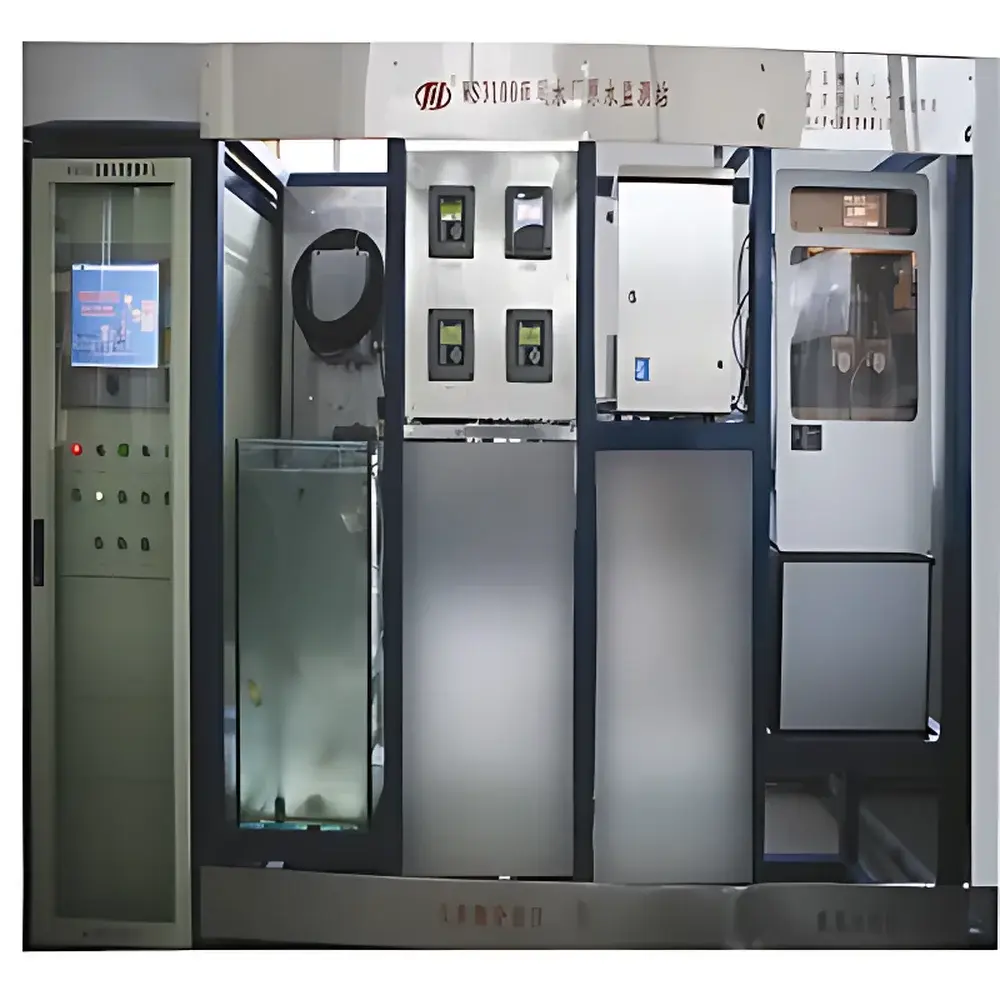
HACH Hach Raw Water Monitoring System
| Brand | HACH |
|---|---|
| Origin | Imported |
| Manufacturer Type | Manufacturer |
| Model | Raw Water Monitoring System |
| Pricing | Available Upon Request |
| Measurement Parameters | Dissolved Oxygen (LDO): 0–20.0 mg/L |
| Turbidity (SOLITAX sc) | 0–100 NTU |
| pH | 0–14 |
| Conductivity | 0–1000 mS/cm |
| Temperature | Standard ambient-to-water range |
| Ammonia-N (AMTAX sc) | 0.05–20.0 mg/L |
| Permanganate Index (CODMn) | 0–20 mg/L or 0–2000 mg/L |
| Chlorophyll-a | 0–500 µg/L |
| Phycocyanin (Blue-Green Algae) | 100–2,000,000 cells/mL |
| Total Phosphorus | 0.01–5.0 mg/L |
| Total Nitrogen | 0–2 mg/L or 0–200 mg/L |
Overview
The HACH Raw Water Monitoring System is an integrated, modular online water quality monitoring platform engineered for continuous, real-time surveillance of raw water sources—including rivers, lakes, reservoirs, and intake channels—prior to municipal or industrial water treatment. Built upon HACH’s validated sensor architecture and field-proven analytical modules, the system employs multi-parameter electrochemical, optical, and spectrophotometric measurement principles to deliver high-reproducibility data under variable hydraulic and environmental conditions. Core sensing technologies include luminescent dissolved oxygen (LDO) detection, near-infrared turbidity measurement via SOLITAX sc, differential pH and conductivity electrodes with temperature compensation, and flow-cell-based photometric analysis for nutrients and organic indices. Designed for unattended operation in outdoor kiosks or intake structures, the system supports both 24/7 autonomous data acquisition and event-triggered sampling protocols aligned with regulatory early-warning frameworks.
Key Features
- Modular sensor architecture enabling configuration flexibility: users select from a validated portfolio of HACH analyzers—including AMTAX sc (ammonia-nitrogen), PHOSPHAX sc (total phosphorus), NITRATAX sc (nitrate/nitrogen), CODMn (permanganate index), and handheld or submersible variants of LDO, turbidity, pH, and conductivity sensors.
- Integrated data acquisition unit with dual SD card logging, 4–20 mA analog outputs, Modbus RTU/TCP, and optional cellular or Ethernet telemetry for remote SCADA integration.
- Automated self-diagnostic routines including sensor drift verification, cleaning cycle scheduling (for turbidity and optical sensors), and calibration status flagging compliant with ISO 5667-22 and ASTM D5119 practices.
- Onboard alarm logic engine supporting configurable threshold-based alerts (e.g., rapid turbidity rise >5 NTU/min, DO drop <3 mg/L), multi-level alert escalation (email/SMS), and automatic triggering of auxiliary actions such as pump shutdown or backup sampling activation.
- Ruggedized NEMA 4X enclosure rated for outdoor deployment; operating temperature range: −20 °C to +50 °C; IP66 ingress protection for sensor housings and junction boxes.
Sample Compatibility & Compliance
The system is validated for use with natural surface waters exhibiting variable suspended solids (0–1000 mg/L TSS), organic load (COD < 200 mg/L), and algal biomass (Chl-a up to 500 µg/L). All primary analyzers comply with relevant international standards: LDO sensors meet ISO 5814:2012; turbidity measurements conform to ISO 7027-1:2016; pH and conductivity modules adhere to ISO 10523:2012 and ISO 7888:1993, respectively. Nutrient analyzers (AMTAX sc, PHOSPHAX sc) are certified to EN ISO 11908:2015 (ammonia) and EN ISO 11909:2015 (phosphorus). The entire platform supports audit-ready data integrity per EPA Method 1600 series requirements and aligns with EU Drinking Water Directive (2020/2184) Annex I monitoring frequency guidelines for raw water risk assessment.
Software & Data Management
HACH DataSuite™ software provides centralized configuration, visualization, and reporting for distributed monitoring nodes. It enables time-series trending, cross-parameter correlation analysis (e.g., Chl-a vs. turbidity vs. DO), and automated report generation in PDF or CSV formats compliant with GLP documentation requirements. Data export supports OPC UA and MQTT protocols for integration into utility-wide asset management systems (e.g., GE Digital Predix, Siemens Desigo CC). Audit trails record all user actions, calibration events, and firmware updates with timestamped, non-erasable logs satisfying FDA 21 CFR Part 11 electronic record requirements when deployed in regulated water supply operations.
Applications
- Early detection of algal blooms and cyanobacterial toxin precursors via synchronized phycocyanin and chlorophyll-a monitoring.
- Dynamic optimization of coagulant dosing and chlorine demand forecasting using real-time TOC surrogates (CODMn, UV254) and ammonia-N trends.
- Source water vulnerability indexing through multivariate anomaly detection—e.g., sudden conductivity spikes indicating saline intrusion or wastewater discharge.
- Regulatory compliance reporting for national water quality monitoring networks (e.g., China’s “National Surface Water Environmental Quality Assessment Methods”, US EPA STORET, or EU WISE database submission).
- Supporting ISO 22000-aligned hazard analysis in food/beverage facilities reliant on surface water abstraction.
FAQ
Can the system operate without continuous power or network connectivity?
Yes—integrated battery backup (72-hour runtime) and local SD card storage ensure uninterrupted data capture during outages. Data syncs automatically upon connection restoration.
Is remote calibration possible for all parameters?
Standard calibration (pH, conductivity, turbidity) supports remote zero/span verification. Wet-chemistry analyzers (AMTAX sc, PHOSPHAX sc) require manual reagent replacement and on-site standardization per ISO 17025 metrological traceability protocols.
How does the system handle biofouling in long-term deployments?
All optical sensors feature ultrasonic cleaning cycles (programmable interval), while flow-through cells incorporate backflush capability. Optional antifouling coatings (e.g., silicone-based hydrophobic layers) are available for turbidity and LDO probes.
Does HACH provide validation support for regulatory submissions?
Yes—HACH offers site-specific Performance Qualification (PQ) documentation packages, including uncertainty budgets per GUM (JCGM 100:2008), method detection limit (MDL) studies, and third-party verification reports from accredited labs (ISO/IEC 17025 certified).
What cybersecurity measures are implemented?
Firmware includes TLS 1.2 encryption for data transmission, role-based access control (RBAC), secure boot, and periodic security patch updates aligned with IEC 62443-3-3 SL2 requirements for industrial control systems.
Related Products







