
HACH MS5100 Multi-Parameter Online Water Quality Analyzer
| Brand | HACH |
|---|---|
| Origin | Imported |
| Manufacturer Status | Manufacturer |
| Model | MS5100 |
| Pricing | Upon Request |
Overview
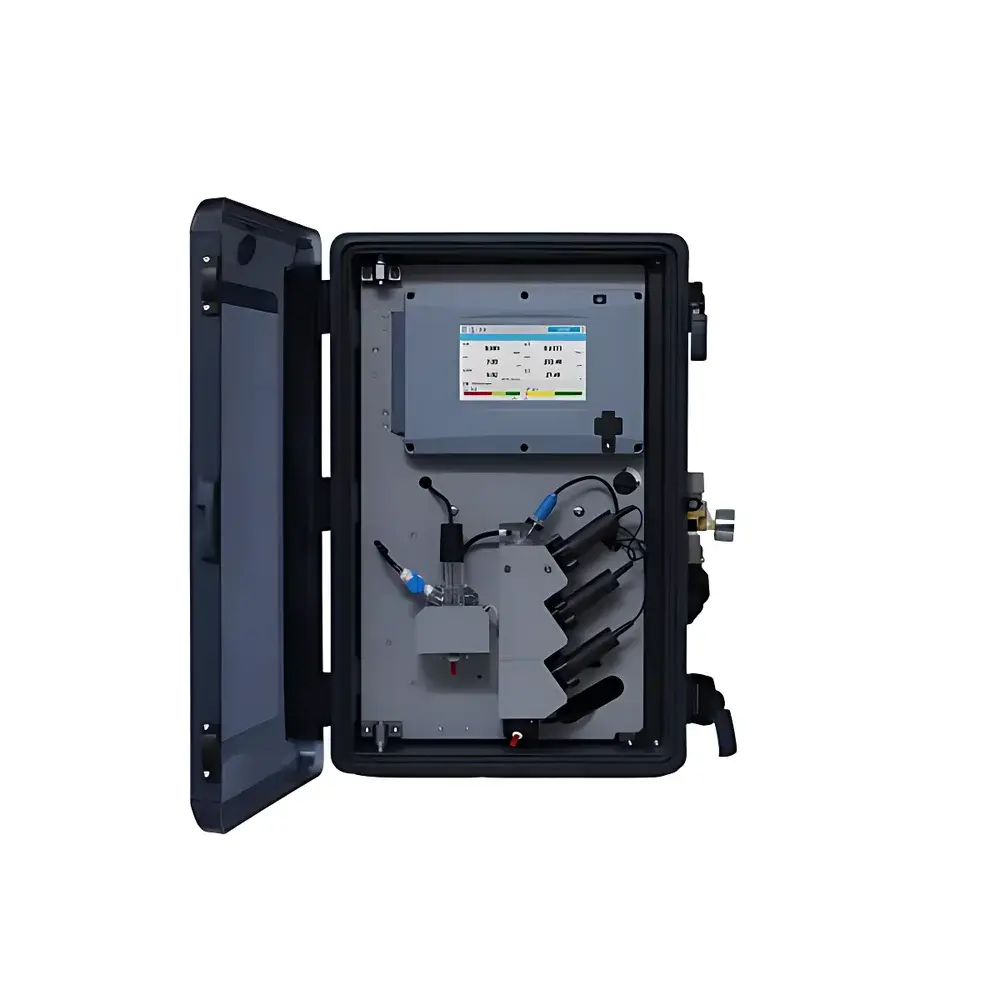
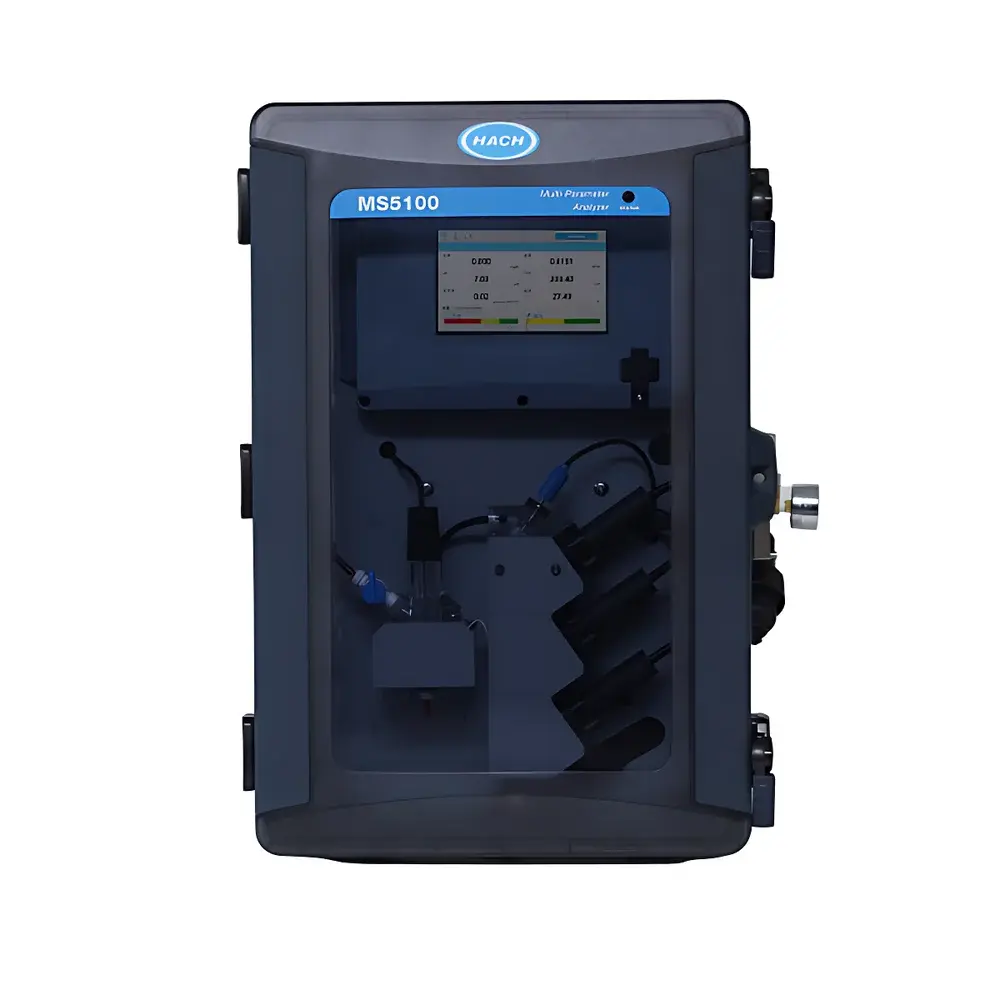
The HACH MS5100 Multi-Parameter Online Water Quality Analyzer is an integrated, industrial-grade continuous monitoring system engineered for real-time, simultaneous measurement of critical water quality parameters—including free chlorine (or chlorine dioxide), turbidity, pH, oxidation-reduction potential (ORP), and conductivity—in drinking water distribution systems, wastewater treatment effluent streams, and process water loops. Its architecture follows a modular sensor-cartridge design mounted within a ruggedized stainless-steel analyzer housing, enabling stable operation under variable flow, pressure, and temperature conditions typical of municipal and industrial online applications. The instrument operates on fundamental electrochemical and optical principles: free chlorine and chlorine dioxide are quantified via membraneless amperometric detection; turbidity is determined by 90° scattered-light photometry per ISO 7027-1:2016; pH and ORP rely on potentiometric glass and Ag/AgCl reference electrode pairs with automatic temperature compensation (ATC); and conductivity is measured using a two-electrode conductometric cell calibrated to traceable standards. Designed for unattended 24/7 deployment, the MS5100 meets functional requirements aligned with EPA Method 334.0 (chlorine), ASTM D6508 (turbidity), and ISO 10523 (pH) for routine compliance monitoring.
Key Features
- Modular, field-replaceable sensor cartridges—each parameter module is independently calibrated and validated, minimizing cross-interference and simplifying maintenance.
- Integrated bubble removal system for turbidity measurement: multi-stage baffle chamber ensures complete degassing prior to optical path exposure, eliminating scattering artifacts from entrained air.
- Membrane-free amperometric chlorine sensor with extended service life (>12 months typical), low drift (<±0.02 mg/L Cl₂/day), and built-in pH compensation logic to correct for speciation shifts between HOCl and OCl⁻ across pH 4–8.
- Self-diagnostic firmware with real-time sensor health monitoring, including electrode impedance checks, signal noise analysis, and calibration status flagging.
- IP66-rated enclosure with optional hazardous-area certification (ATEX/IECEx Zone 2), suitable for outdoor or wet-location installation without additional weatherproofing.
- Support for both 4–20 mA analog outputs and Modbus RTU/TCP digital communication protocols, enabling seamless integration into SCADA, DCS, and PLC-based control infrastructures.
Sample Compatibility & Compliance
The MS5100 is validated for use with potable water, filtered surface water, secondary-treated wastewater effluent, and low-salinity process streams (conductivity < 2,000 µS/cm). It complies with key regulatory frameworks governing automated water quality instrumentation, including US EPA Guidance for Continuous Monitoring Systems (CMS) under the Safe Drinking Water Act (SDWA), EU Directive 98/83/EC Annex I parametric limits, and ISO/IEC 17025:2017 requirements for measurement traceability. All sensor calibrations are documented with NIST-traceable reference standards, and audit trails meet FDA 21 CFR Part 11 data integrity criteria when configured with HACH’s compliant software package. The system supports GLP/GMP-aligned operational qualification (OQ) protocols and provides full calibration history export in CSV or PDF format.
Software & Data Management
The MS5100 interfaces natively with HACH’s INsite™ Web Server—a secure, browser-accessible platform supporting remote configuration, real-time trend visualization, alarm threshold management, and automated report generation (daily/weekly/monthly). Data logging is performed at user-selectable intervals (1 sec to 60 min), with onboard memory retaining ≥30 days of high-resolution time-series data. Historical datasets can be exported in standard formats (CSV, XML) for third-party statistical analysis or LIMS ingestion. Optional cloud connectivity enables predictive maintenance alerts based on sensor degradation models and calibration drift trends. All software modules undergo annual penetration testing and adhere to OWASP Top 10 security standards.
Applications
- Drinking water disinfection control at chlorination contact tanks and clearwells.
- Wastewater disinfection verification prior to discharge (e.g., UV/chlorine contact basins).
- Monitoring of membrane filtration integrity via turbidity breakthrough detection.
- pH and conductivity tracking in boiler feedwater or cooling tower make-up systems.
- Regulatory compliance reporting for state-certified labs operating under TNI (The NELAC Institute) standards.
- Process optimization in food & beverage production where water quality directly impacts product consistency.
FAQ
What maintenance intervals are recommended for the MS5100 sensor modules?
Chlorine and pH/ORP electrodes require quarterly cleaning and biannual calibration; turbidity optics should be inspected monthly and cleaned as needed using HACH-recommended isopropyl alcohol wipes. Conductivity cells are typically verified annually.
Can the MS5100 operate in seawater or brackish water environments?
No—the system is rated for freshwater applications only. Conductivity measurement range is optimized for 0–2,000 µS/cm; salinities above 500 mg/L NaCl may cause accelerated electrode fouling and turbidity interference due to high ionic scattering.
Is the MS5100 compatible with third-party data historians such as OSIsoft PI or Wonderware Historian?
Yes—via native Modbus TCP or OPC UA (with optional gateway), enabling bidirectional data exchange and alarm forwarding without proprietary middleware.
Does the analyzer support automatic temperature compensation for all parameters?
Yes—integrated Pt1000 RTD provides continuous temperature input for pH, ORP, conductivity, and chlorine measurements, applying algorithmic corrections per ISO 10523, ASTM D1125, and USP .
How is calibration traceability documented for regulatory audits?
Each calibration event is timestamped, digitally signed, and stored with metadata including standard lot numbers, expiration dates, operator ID, and environmental conditions—exportable as tamper-evident PDF reports compliant with ISO/IEC 17025 clause 7.7.
Related Products







