
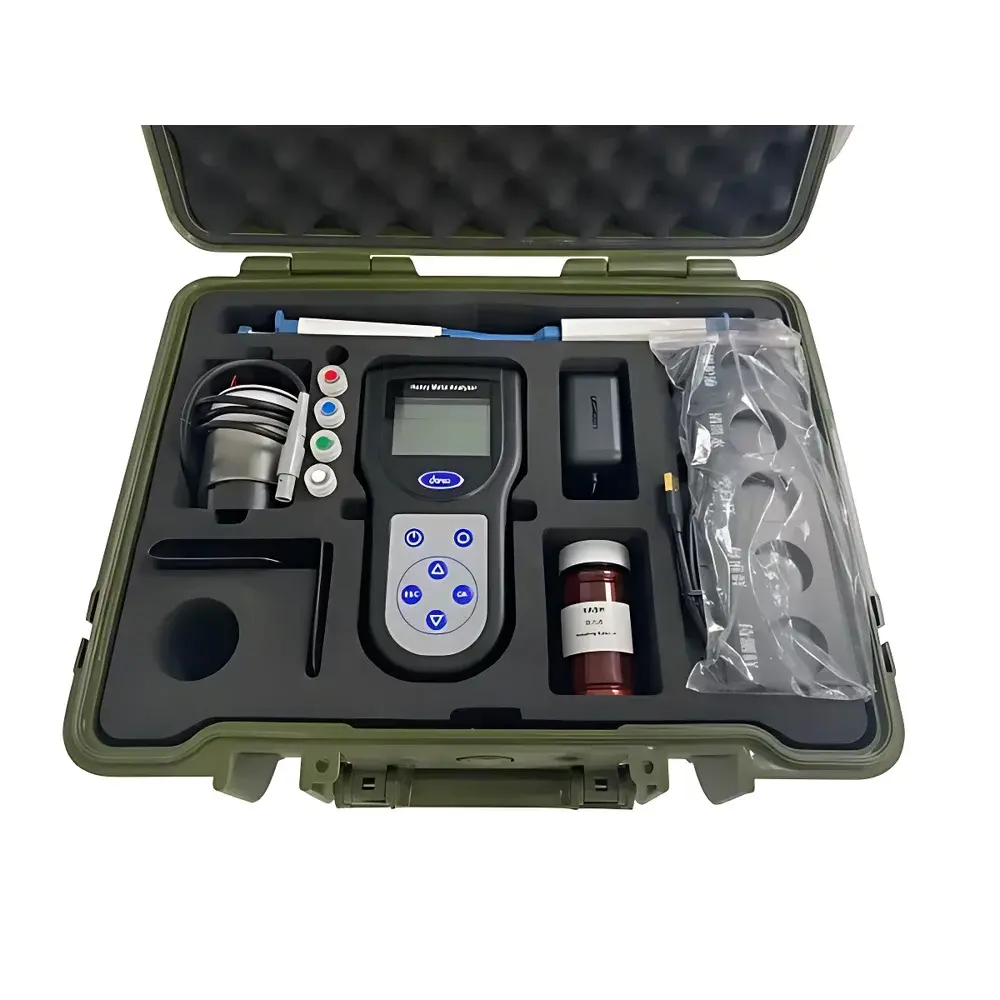
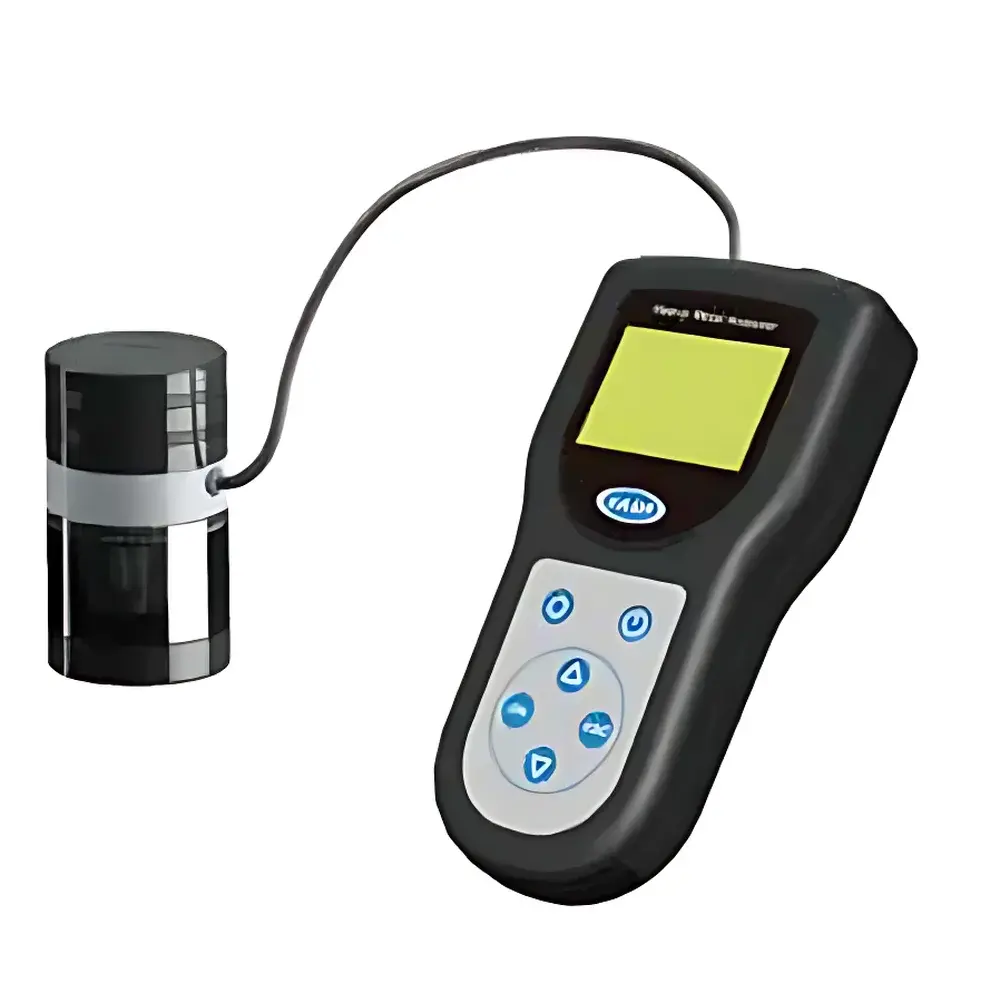
Hach Portable-200M Field-Deployable Heavy Metal Analyzer for Water — Dual-Mode Voltammetric & Colorimetric Detection System
| Origin | Beijing, China |
|---|---|
| Manufacturer Type | Authorized Distributor |
| Origin Category | Domestic (PRC) |
| Model | Portable-200M |
| Price Range | USD 7,000–14,000 |
| Detection Principle | Anodic Stripping Voltammetry (ASV) + Spectrophotometric Colorimetry |
| Measured Elements | Cu, Cd, Pb, Zn, As, Hg, Tl, Mn, Sb, Ni (expandable) |
| ASV Detection Range | 0.1 µg/L to tens of mg/L |
| Colorimetric Range | 0.01–5 mg/L (for Cu, Cr(VI), Ni, Pb, Zn, Fe, Co, Mn) |
| Repeatability (RSD) | ≤2% (Cd at 50 µg/L) |
| Accuracy (Bias) | ≤±10% |
| LOD | ≤0.5 µg/L |
| Compliance | ASTM D3559, ISO 11969, EPA Method 7063 (ASV), EPA Method 7196A (Cr(VI)) |
Overview
The Hach Portable-200M is a field-deployable, dual-mode analytical instrument engineered for rapid, on-site quantification of heavy metals in aqueous matrices. It integrates two complementary electrochemical and optical detection modalities: anodic stripping voltammetry (ASV) for ultra-trace metal speciation (e.g., Cd, Pb, Hg, As), and standardized spectrophotometric colorimetry for redox-active or complex-forming elements (e.g., Cr(VI), Ni, Mn). Unlike benchtop ICP-MS or AAS systems, the Portable-200M eliminates the need for acid digestion, inert gas purging, or high-voltage plasma sources—enabling direct analysis of unfiltered, low-turbidity water samples with minimal pretreatment. Its architecture adheres to the fundamental principles of controlled-potential electrolysis (for ASV) and Beer–Lambert law-based absorbance measurement (for colorimetry), ensuring traceability to NIST-traceable reference standards and alignment with regulatory method frameworks used by environmental laboratories worldwide.
Key Features
- Modular dual-sensor platform: Interchangeable ASV electrode cartridge (glassy carbon working electrode with mercury-film or bismuth-film plating) and integrated LED-based photometer with pre-calibrated cuvette holders.
- Field-optimized hardware: Ruggedized IP65-rated enclosure, internal rechargeable Li-ion battery (≥8 h continuous operation), built-in GPS geotagging, and ambient light-compensated optical path.
- Regulatory-grade calibration: Factory-preloaded calibration curves validated per ASTM D3559 (lead in water) and EPA Method 7063 (cadmium by ASV); user-accessible calibration verification using certified multi-element standard solutions.
- Real-time quality control: On-board calculation of spike recovery, blank subtraction, and drift correction; automatic flagging of out-of-spec results based on configurable RSD and bias thresholds.
- Low-maintenance design: Disposable electrode kits, dry-reagent pouches for colorimetric assays, and no moving parts in fluidic pathways—reducing downtime and technician dependency.
Sample Compatibility & Compliance
The Portable-200M is validated for direct analysis of surface water, groundwater, seawater (with salinity compensation), drinking water, treated wastewater, and industrial effluents—with turbidity < 20 NTU and chloride < 2,000 mg/L (ASV mode). For Cr(VI) and Ni assays, samples are stabilized with pH-adjusted buffers prior to colorimetric reaction. Instrument performance meets data quality objectives outlined in ISO 11969 (water quality — determination of heavy metals — electrochemical methods) and supports GLP-compliant workflows through audit-trail-enabled firmware (21 CFR Part 11-ready configuration available). All test protocols align with national monitoring programs including China’s “Environmental Monitoring Technical Specifications for Surface Water and Wastewater” (HJ/T 91–2002) and the U.S. EPA’s National Environmental Laboratory Accreditation Program (NELAP) criteria for field instrumentation.
Software & Data Management
The embedded Hach FieldLink™ OS provides intuitive touchscreen navigation, multilingual UI (English, Spanish, French, Mandarin), and secure Bluetooth/Wi-Fi data export to LIMS or cloud platforms (AWS IoT Core, Microsoft Azure IoT Hub). Raw voltammograms and absorbance spectra are stored with metadata (time stamp, GPS coordinates, operator ID, temperature, pH). Software includes automated peak deconvolution for overlapping ASV signals (e.g., Pb/Cd/Zn), background subtraction algorithms, and linear/nonlinear curve fitting with residual diagnostics. Export formats include CSV, PDF reports (per ISO/IEC 17025 template), and XML for integration with EPA’s STORET database schema.
Applications
This system serves as a primary screening tool for environmental emergency response (e.g., post-spill reconnaissance, landfill leachate plume mapping), routine compliance monitoring at water treatment facilities, source water vulnerability assessments, and academic field studies. It is routinely deployed by provincial environmental monitoring centers, municipal water authorities, public health laboratories, and industrial EHS teams to verify adherence to WHO Guidelines for Drinking-water Quality (2022), EU Directive 2020/2184 (drinking water), and China’s GB 5749–2022 standard. Validated use cases include real-time tracking of Pb/Cd hotspots downstream of mining operations, Cr(VI) verification in chromate-treated cooling towers, and Mn monitoring in distribution system stagnation zones.
FAQ
Does the Portable-200M require laboratory validation before field deployment?
No—each unit ships with factory-certified calibration and a full validation report per ISO/IEC 17025 Annex A. Users perform only a 3-point field verification using traceable standards prior to first use.
Can ASV and colorimetric modules operate simultaneously?
No—the modules are sequential but share a common sample port; switching requires <60 s and is software-guided.
Is mercury film plating mandatory for all ASV analyses?
Bismuth-film electrodes are standard for Cd/Pb/Zn; mercury-film cartridges are optional for enhanced As/Hg sensitivity and require separate handling per local hazardous material regulations.
How is data integrity ensured during offline field operation?
All measurements are timestamped, digitally signed, and stored redundantly on internal flash memory and microSD card—with SHA-256 hash verification upon upload.
What maintenance intervals are recommended for sustained accuracy?
Electrode cartridges: replace after 200 ASV scans or 6 months (whichever comes first); photometer LED: rated for 50,000 h; annual firmware updates include method refinements aligned with latest EPA/ISO revisions.





