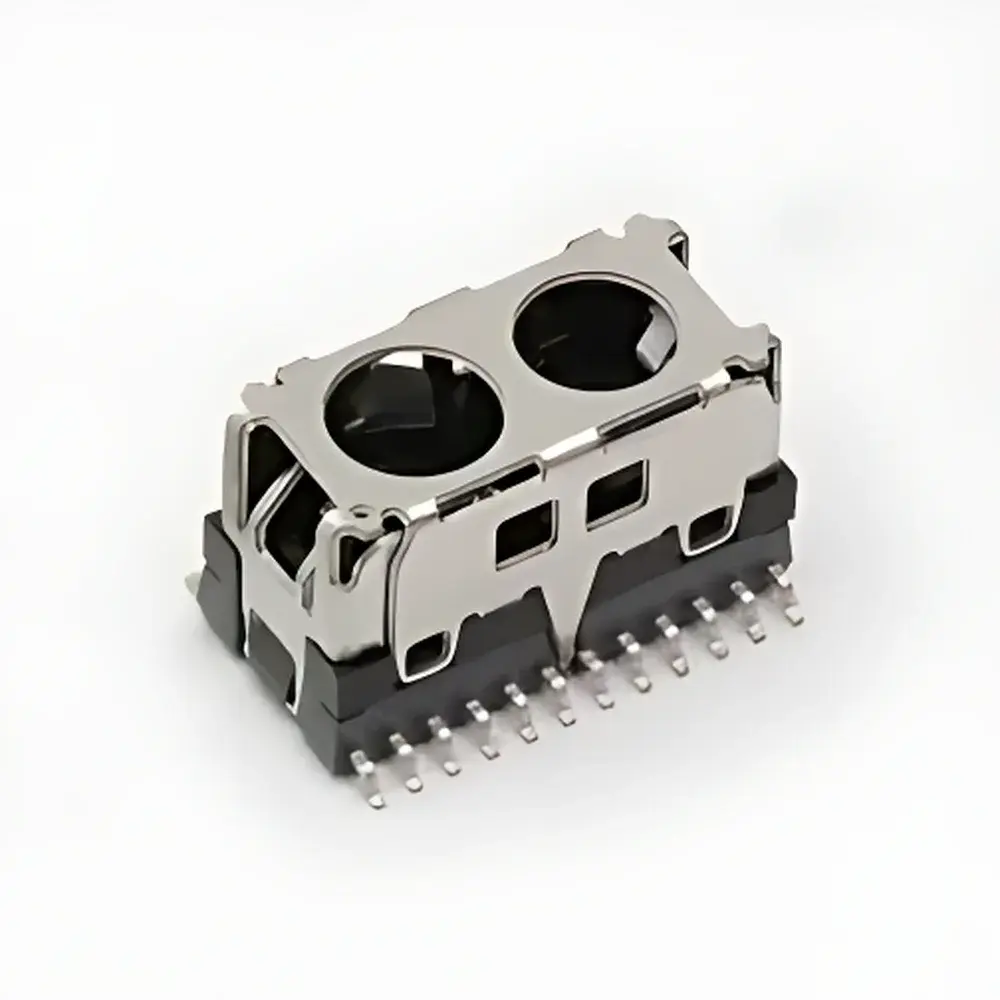
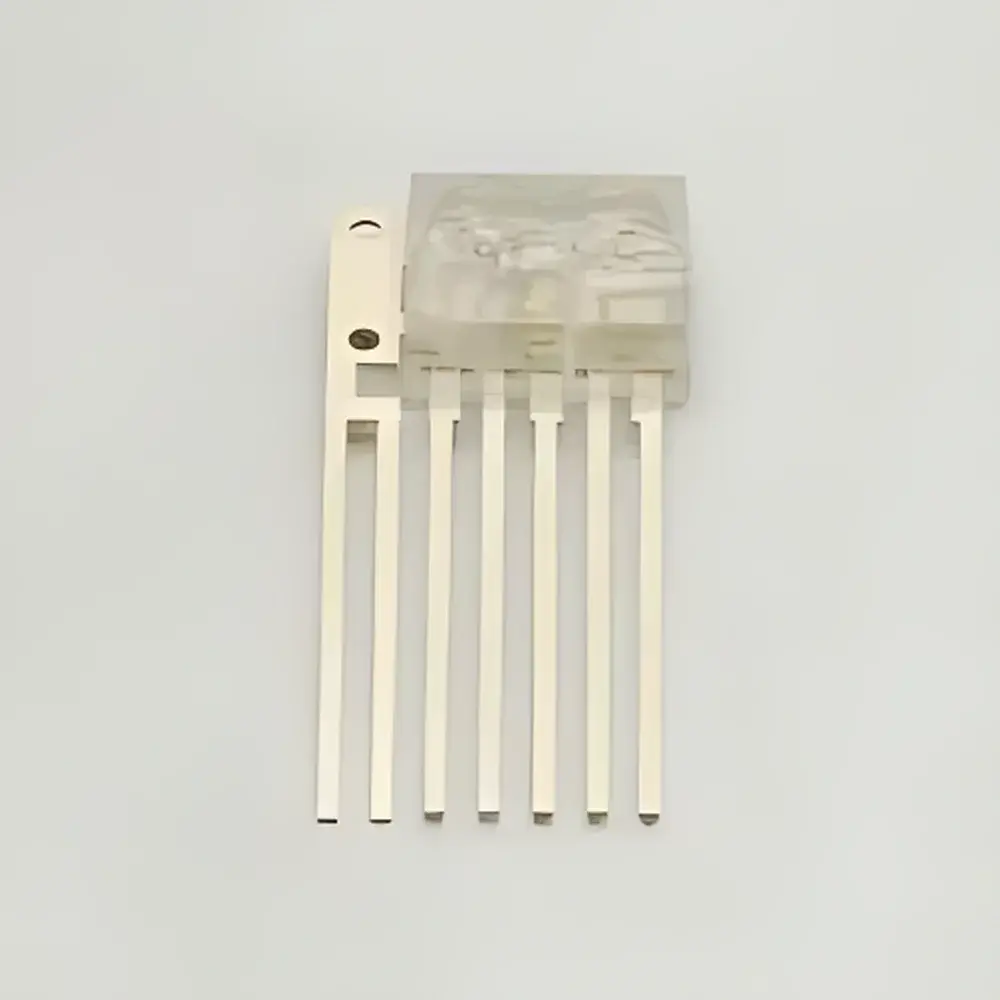
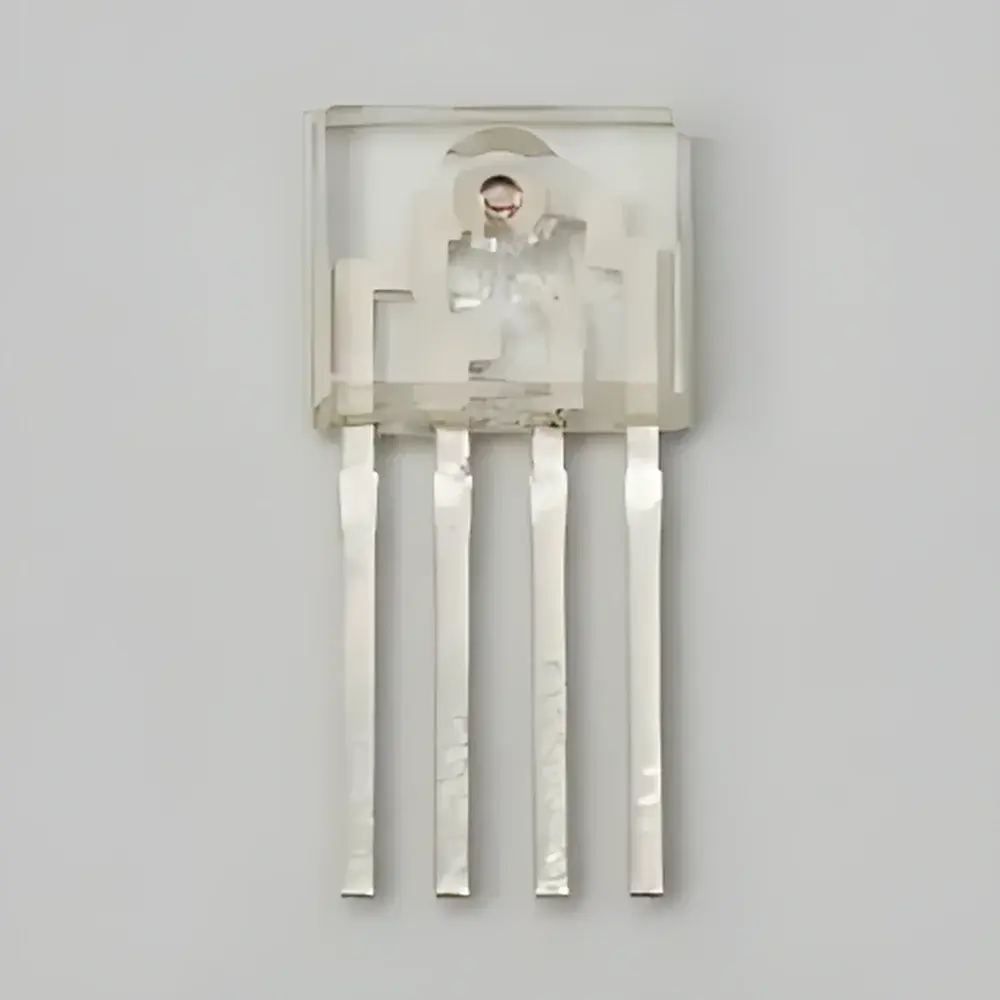
Hamamatsu Optical IC Transmitters, Receivers & LEDs for Plastic Optical Fiber (POF) Communication
| Brand | Hamamatsu |
|---|---|
| Origin | Japan |
| Manufacturer Type | Original Equipment Manufacturer (OEM) |
| Import Category | Imported |
| Model Range | Multiple Industrial-Grade Models |
| Component Type | Optoelectronic Integrated Components |
| Data Rate Support | DC to 156 Mbps |
| Compliance | AEC-Q100 Qualified (for automotive variants), RoHS 3 Compliant, JEDEC J-STD-020 Moisture Sensitivity Level (MSL) 3 |
Overview
Hamamatsu’s optical IC transmitters, receivers, and high-efficiency red LEDs are engineered for reliable, low-jitter data transmission in plastic optical fiber (POF) communication systems. These components operate on the principle of optoelectronic conversion—transmitters convert electrical signals into modulated light (typically at 650 nm wavelength), while receivers perform reverse conversion with integrated photodiodes, transimpedance amplifiers (TIAs), and signal conditioning circuitry. Designed specifically for POF-based networks—including automotive MOST (Media Oriented Systems Transport) architectures, industrial control links, and short-reach consumer data interconnects—they deliver robust performance under mechanical vibration, thermal cycling, and electromagnetic interference (EMI) typical in embedded environments. Unlike glass-fiber solutions, POF systems benefit from lower installation cost, easier termination, and higher bend tolerance—making Hamamatsu’s POF-optimized optoelectronics ideal for applications where ruggedness, rapid deployment, and cost-effective bandwidth (up to 156 Mbps) are prioritized over ultra-long-haul transmission.
Key Features
- Monolithic integration: Transmitter ICs combine VCSEL or LED drivers with precision current control; receiver ICs integrate PIN photodiodes, TIAs, limiters, and digital output stages—all within a single surface-mount package (e.g., SOP-8, SSOP-16).
- Wavelength optimization: Red-emitting LEDs (650 nm) matched to peak POF transmission window (600–670 nm), minimizing attenuation (< 0.2 dB/m at 650 nm in PMMA-based POF).
- Automotive-grade reliability: Select models (e.g., L11354-01/S11355-01 series) qualified per AEC-Q100 Grade 2 (−40 °C to +105 °C ambient operation) and validated for 2,000+ hours HTOL (High-Temperature Operating Life) testing.
- Low-power architecture: Typical supply voltage of 3.3 V or 5 V; standby current < 10 µA; active-mode power dissipation ≤ 120 mW per channel.
- Timing integrity: Guaranteed rise/fall times < 2.5 ns (typ.) and jitter < 150 ps RMS (at 150 Mbps), supporting NRZ and Manchester-encoded protocols without external equalization.
- ESD resilience: Human-body model (HBM) rating ≥ ±8 kV on I/O pins; machine model (MM) ≥ ±400 V—critical for automated PCB assembly and field serviceability.
Sample Compatibility & Compliance
These optoelectronic components are mechanically and optically optimized for 980 µm core / 1000 µm cladding step-index PMMA POF cables (e.g., Mitsubishi Eska® GH-4000, Toray T-POF®). Coupling efficiency exceeds 75% using standard lensed TO-can or surface-mount chip-on-board (COB) configurations. All devices comply with IEC 61000-4-2 (ESD immunity), IEC 61000-4-4 (EFT), and ISO 11452-2 (automotive radiated immunity). Automotive variants meet ISO/TS 16949 manufacturing requirements and support full traceability per PPAP Level 3 documentation. RoHS 3 (2015/863/EU) and REACH SVHC declarations are available upon request. No hazardous substances per Directive 2011/65/EU Annex II.
Software & Data Management
While these are hardware-level optoelectronic components—not standalone instruments—they interface seamlessly with industry-standard bit-error-rate testers (BERTs), oscilloscopes (e.g., Keysight Infiniium series), and protocol analyzers (e.g., Teledyne LeCroy Summit series) for system-level validation. Hamamatsu provides comprehensive SPICE models (including parasitic capacitance, thermal resistance, and nonlinear LED IV curves), IBIS models for driver/receiver I/O behavior, and application notes covering eye-diagram optimization, impedance matching (50 Ω differential routing recommended), and EMI suppression techniques (e.g., ferrite beads, ground-plane stitching vias). Design files (Gerber, ODB++) and footprint recommendations align with IPC-7351B standards. Traceability data—including wafer lot ID, burn-in logs, and binning results—is retained for 15 years per GLP-aligned archival policy.
Applications
- Automotive infotainment networks: MOST 25/50/150 physical layer implementation in head units, amplifier modules, and camera links.
- Industrial automation: Real-time sensor data aggregation over POF in factory-floor PLC-to-I/O-module backplanes.
- Medical device interconnects: EMI-immune data transfer between imaging subsystems and display consoles (IEC 60601-1 compliant system integration).
- Consumer audio/video: Digital S/PDIF over POF in high-end AV receivers and soundbars.
- Educational labs: Hands-on POF communication experiments—modulation analysis, BER vs. distance characterization, and dispersion measurement using time-domain reflectometry (TDR) setups.
FAQ
Are Hamamatsu POF transceivers compatible with glass optical fiber?
No—these components are optically and electrically optimized for PMMA-based plastic optical fiber (core NA ≈ 0.5, numerical aperture mismatch with silica fiber). Use only with specified POF cables.
Do you provide evaluation boards for rapid prototyping?
Yes—Hamamatsu offers EVK-POF-1xx series evaluation kits, including configurable biasing, AC-coupled outputs, SMA fiber pigtails, and USB-controlled pattern generators (PRBS7/PRBS15).
What is the maximum supported cable length at 156 Mbps?
Up to 45 meters with Eska® GH-4000 POF under standard 25 °C ambient conditions; derate by 0.8 m per °C above 40 °C.
Can these ICs be used in space-constrained wearable devices?
Yes—SSOP-16 and DFN-10 packages (2.5 × 3.0 mm footprint) support high-density layout; thermal resistance (θJA) is characterized per JEDEC JESD51-2.
Is FDA 21 CFR Part 11 compliance applicable?
Not directly—these are Class 1 electronic components, not regulated software or medical devices. However, design history files and test records support FDA audit readiness for end-product OEMs.