
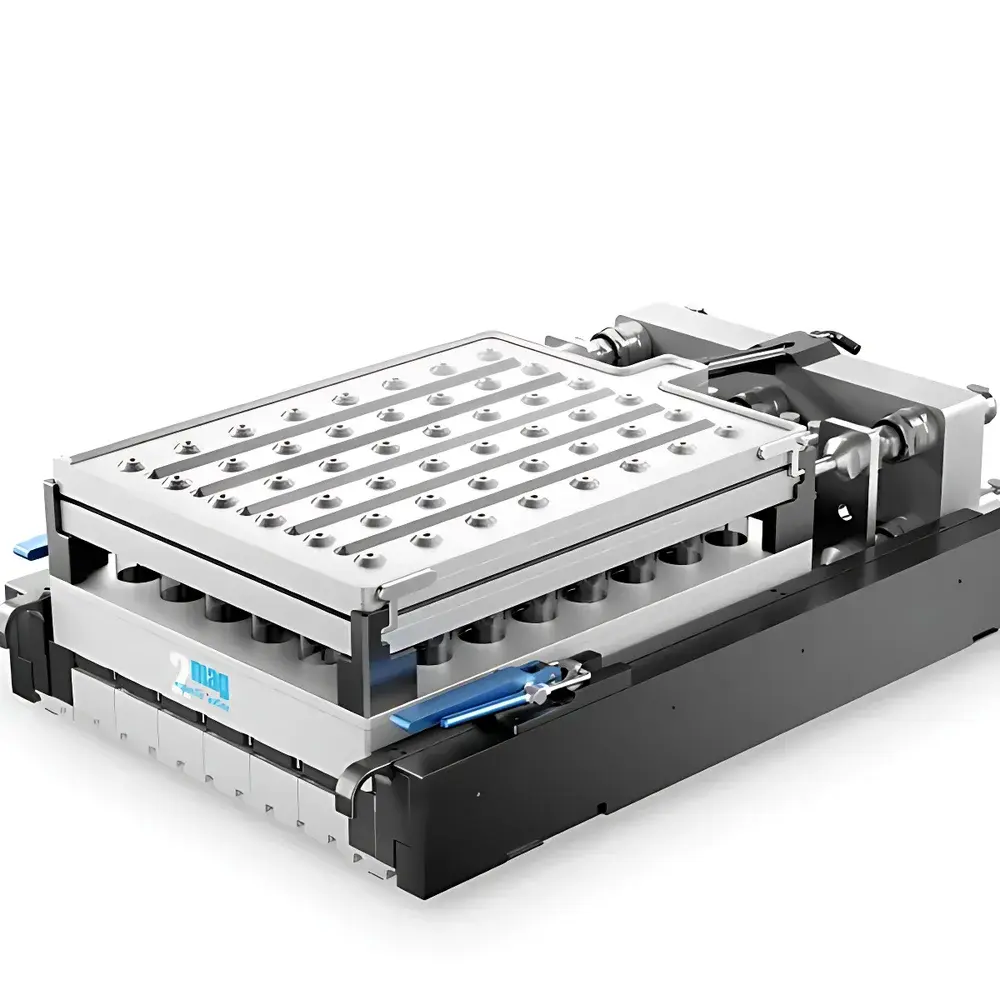
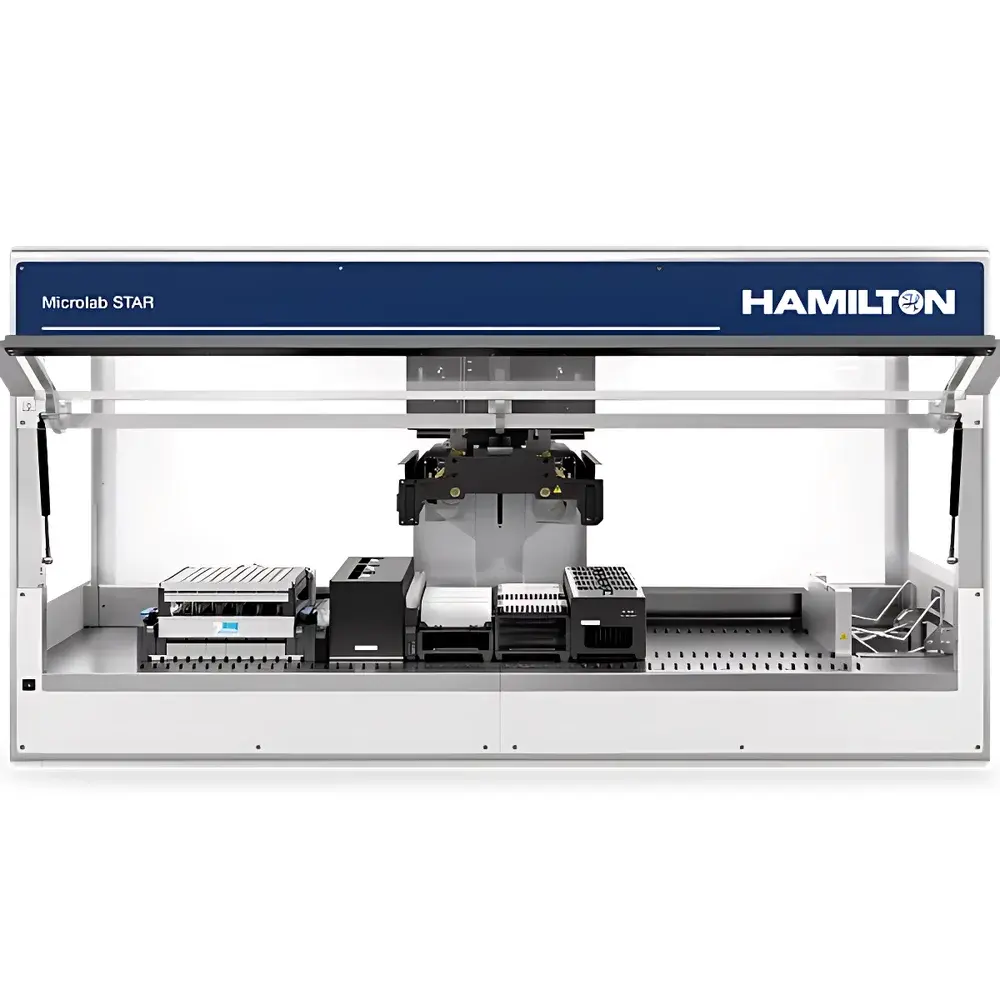
Hamilton STARlet-based 2mag bioREACTOR 48 Bioreactor System
| Brand | Hamilton |
|---|---|
| Origin | Switzerland |
| Manufacturer Type | Original Equipment Manufacturer (OEM) |
| Product Category | Imported Instrument |
| Model | 2mag bioREACTOR 48 |
| Plate Positions | 25–45 |
| Liquid Handling Precision | ±1% CV |
| Liquid Handling Range | 1–5000 µL |
| Sample Throughput | 96 samples per run |
| Dimensions (W×D×H) | 1664 × 781 × 903 mm |
Overview
The Hamilton STARlet-based 2mag bioREACTOR 48 is an integrated, benchtop-scale parallel bioreactor system engineered for high-fidelity microbial and mammalian cell culture process development. Leveraging Hamilton’s proven STARlet liquid handling platform and 2mag’s proprietary magnetic drive technology, the system implements a modular, scalable architecture for up to 48 independently controlled micro-bioreactors (working volumes: 10–50 mL). Each reactor employs contactless magnetic stirring with real-time torque monitoring, enabling precise shear control and reproducible mixing dynamics essential for aerobic fermentation, fed-batch cultivation, and strain screening workflows. The system operates on core bioprocess principles—namely, mass transfer optimization (via DO-controlled gas blending), thermal regulation (Peltier-based ±0.2 °C stability), and pH feedback control (using sterilizable ISFET or glass electrodes)—to maintain physiological relevance across parallel runs.
Key Features
- Parallel operation of up to 48 miniature bioreactors with independent control of temperature, agitation speed (100–1200 rpm), dissolved oxygen (DO), and pH
- Integrated Hamilton STARlet liquid handler with 8-channel pipetting arm, supporting automated media exchange, feed addition, and sampling (1–5000 µL range, ±1% CV at ≥100 µL)
- Contactless magnetic stirring with real-time motor current monitoring for adaptive agitation adjustment and foam detection
- Onboard sensor suite: sterilizable pH and DO probes with automatic calibration routines; optional integrated CO₂ and off-gas O₂/CO₂ analyzers
- Modular plate carrier design accommodating standard SBS-format deep-well plates (96-well compatible) and custom bioreactor vessels
- Robust mechanical architecture compliant with ISO 13485 design controls and CE marking for laboratory use under IEC 61010-1 safety standards
Sample Compatibility & Compliance
The bioREACTOR 48 supports a broad range of biological systems including Escherichia coli, Saccharomyces cerevisiae, Pichia pastoris, CHO, and HEK293 cultures. Vessels are autoclavable and chemically resistant to common fermentation additives (e.g., antifoam agents, ethanol, HCl/NaOH titrants). All wetted materials meet USP Class VI and FDA-compliant biocompatibility requirements. The system supports audit-ready data integrity practices aligned with FDA 21 CFR Part 11, including electronic signatures, role-based access control, and immutable audit trails for all process parameters and liquid handling events. It is validated for GLP and early-stage GMP process characterization per ICH Q5D and Q8(R2) guidelines.
Software & Data Management
Control and monitoring are executed via Hamilton Method Editor and 2mag BioControl Suite—a unified interface supporting method scripting, real-time multivariate visualization (pH/DO/T/Agitation overlay), and alarm-triggered intervention protocols. All sensor and actuator data are timestamped and stored in HDF5 format with metadata tagging (sample ID, operator, protocol version). Export options include CSV, Excel, and direct integration with LIMS platforms via OPC UA or RESTful API. Data archives comply with ALCOA+ principles (Attributable, Legible, Contemporaneous, Original, Accurate, Complete, Consistent, Enduring, Available) for regulatory submissions.
Applications
- High-throughput strain and media optimization for recombinant protein expression
- Scale-down model development for upstream process transfer from benchtop to pilot bioreactors
- Design of Experiments (DoE)-driven parameter space mapping (e.g., pH setpoint vs. feed rate interactions)
- Bioprocess robustness assessment under variable oxygen transfer rates (kLa modulation)
- Accelerated stability studies for cell line evaluation under stress conditions (e.g., nutrient limitation, pH drift)
- Education and training in bioprocess engineering fundamentals and automation integration
FAQ
Is the system suitable for anaerobic cultivations?
Yes—gas blending modules support N₂/CO₂/air mixtures with programmable sparging profiles; optional anaerobic chamber integration is available.
Can third-party sensors be connected?
The system provides analog/digital I/O ports and Modbus RTU support for integrating external analyzers (e.g., glucose, lactate, viable cell density probes).
What validation documentation is provided?
Factory acceptance testing (FAT) reports, IQ/OQ protocols, and sensor calibration certificates (traceable to NIST standards) are included with shipment.
How is sterility maintained during automated sampling?
The liquid handling arm features integrated tip ejection, UV-C decontamination between runs, and positive-pressure HEPA-filtered enclosures for critical zones.
Does the system support remote monitoring?
Yes—secure web-based dashboard access is enabled via TLS 1.2 encrypted connection; mobile alerts for critical deviations are configurable.



