
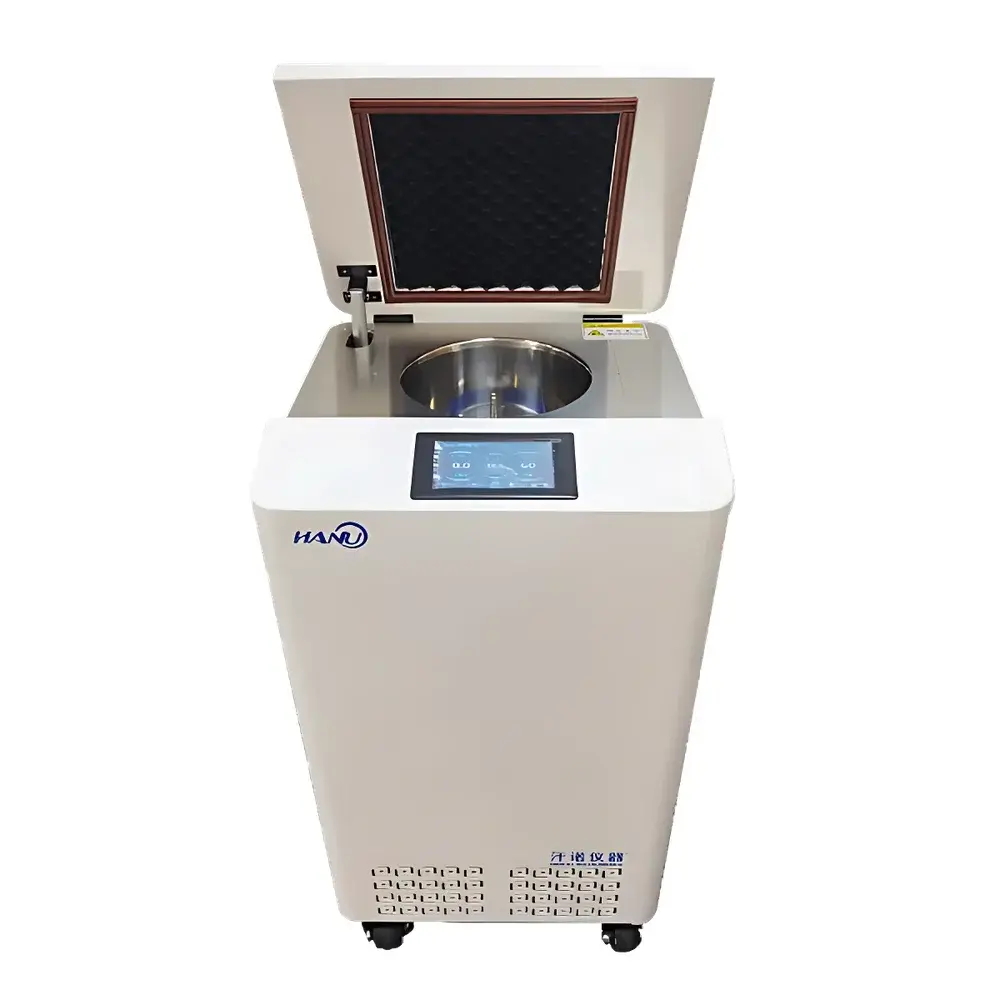
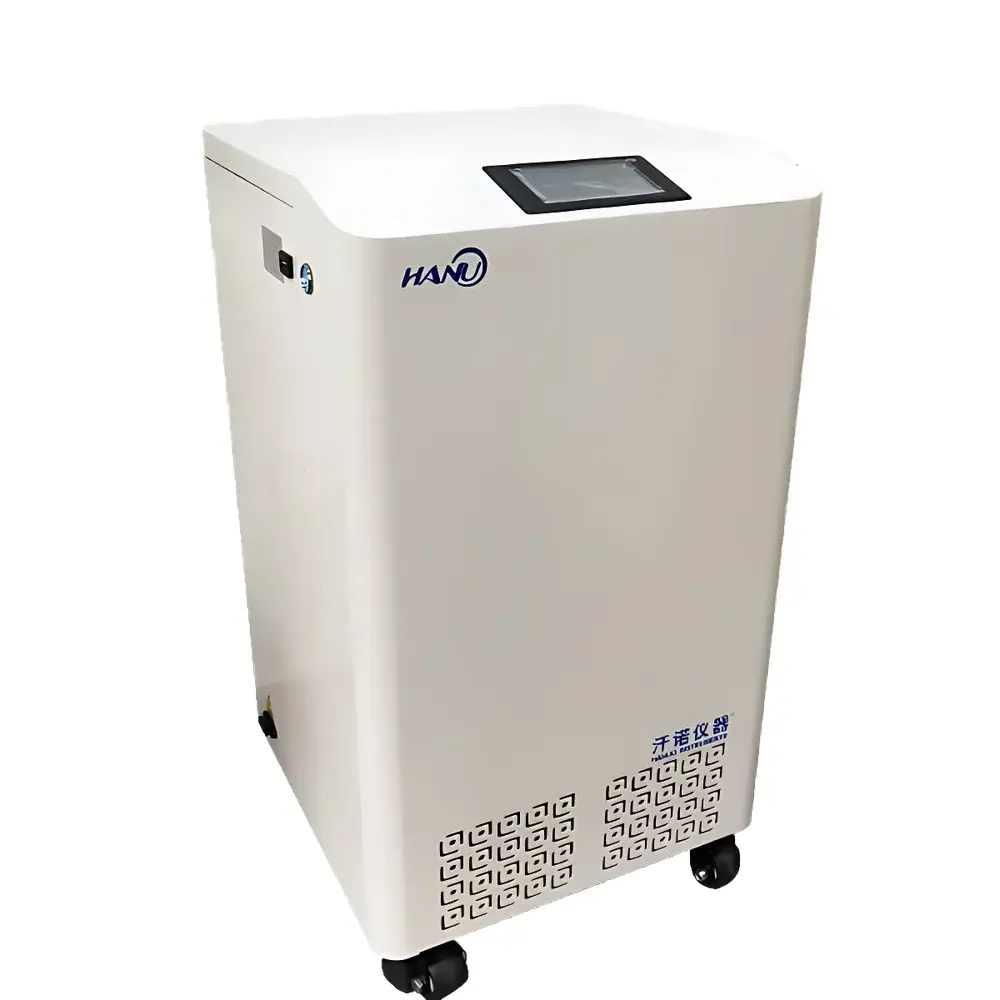
Hanuo Daxluot-96C Cryogenic High-Speed High-Throughput Tissue Grinder and Homogenizer
| Brand | Hanuo |
|---|---|
| Origin | Shanghai, China |
| Model | Daxluot-96C |
| Throughput | Up to 192 samples per run |
| Temperature Range | –50 °C to ambient |
| Frequency Range | 0–70 Hz |
| Processing Time | 0 s–99 min (user-programmable) |
| Final Particle Size | ~5 µm |
| Sample Capacity | 96 × 0.2–0.5 mL, 96 × 2 mL, 12 × 5 mL, 8 × 7–15 mL, 2 × 25 mL, 2 × 50 mL |
| Grinding Media Diameter | 0.1–30 mm |
| Grinding Media Materials | Stainless steel, chrome steel, zirconia, tungsten carbide, quartz sand |
| Acceleration/Deceleration | ≤2 s to max/min speed |
| Noise Level | <55 dB(A) |
| Drive Mechanism | Vertical reciprocating vibration with auto-centering clamping |
| Safety Features | Interlocked lid, self-locking grinding jar fixation, real-time thermal monitoring |
Overview
The Hanuo Daxluot-96C is a cryogenic high-throughput tissue grinder engineered for reproducible, scalable mechanical lysis of biological and environmental samples under precisely controlled low-temperature conditions. Utilizing vertical reciprocating vibration—rather than orbital or horizontal motion—the instrument delivers uniform energy transfer across all sample positions, eliminating inter-row variability inherent in arc-driven systems. Its integrated compressor-based cooling system maintains chamber temperatures from –50 °C to ambient, enabling brittle fracture of tough tissues (e.g., bone, plant lignin, fungal cell walls) while suppressing enzymatic degradation of nucleic acids and labile proteins. Designed for laboratories performing large-scale genomics, transcriptomics, metabolomics, and microbiome studies, the Daxluot-96C supports unattended batch processing of up to 192 samples per run using standardized or custom-configured adapter blocks.
Key Features
- Vertical Vibration Architecture: Ensures consistent kinetic energy delivery across all sample wells—critical for inter-batch comparability in multi-omics workflows.
- Cryogenic Capability: Compressor-cooled grinding chamber sustains stable sub-zero temperatures (–50 °C minimum), preventing heat-induced RNA degradation and preserving epigenetic marks during homogenization.
- Modular Sample Adapters: Compatible with standard microtubes (0.2–0.5 mL, 2 mL), cryovials (5 mL), and larger containers (7–15 mL, 25 mL, 50 mL); custom adapters available for specialized tube geometries.
- Precision Parameter Control: Touchscreen interface enables independent programming of frequency (0–70 Hz), duration (0 s–99 min), and ramp profiles—essential for method development and SOP compliance.
- Secure Mechanical Fixation: Auto-centering clamping system with dual-stage locking prevents jar displacement during high-frequency operation; integrated safety interlock halts motion if lid is opened mid-cycle.
- Material Compatibility: Grinding media options include stainless steel, chrome steel, zirconia, tungsten carbide, and quartz—selected based on sample hardness, contamination sensitivity, and downstream assay requirements (e.g., PCR-inhibitor-free zirconia for DNA extraction).
Sample Compatibility & Compliance
The Daxluot-96C processes diverse matrices without cross-contamination risk when using single-use tubes or rigorously cleaned reusable vessels. Validated applications include fibrous plant tissues (rice husk, wheat straw, cotton fiber), mineralized animal tissues (cortical bone, dental enamel), microbial biomass (Gram-positive bacteria, yeast, fungal spores), and environmental samples (soil aggregates, sediment cores). All grinding protocols align with ISO 17025-accredited laboratory practices for sample preparation prior to nucleic acid isolation (per ISO 20387:2018 biobanking standards) and protein extraction (per ASTM E2982-21 guidelines for tissue homogenization consistency). The instrument’s closed-system design minimizes aerosol generation, supporting biosafety level 2 (BSL-2) containment when used with appropriate PPE and ventilation.
Software & Data Management
While the Daxluot-96C operates via embedded firmware rather than PC-dependent software, its touchscreen interface logs timestamped run parameters—including frequency, duration, set temperature, and user ID—for traceability. Exportable CSV reports (via USB port) support integration into LIMS environments compliant with 21 CFR Part 11 when paired with validated electronic signature workflows. Method templates can be saved and recalled, reducing operator-dependent variability and facilitating audit-ready documentation for GLP/GMP-regulated studies involving clinical or pharmaceutical sample cohorts.
Applications
- RNA/DNA co-extraction from flash-frozen human tumor biopsies with minimized RNase activity
- High-yield genomic DNA isolation from lignocellulosic plant material for NGS library prep
- Simultaneous homogenization of 96 soil microcosms for metagenomic sequencing
- Cell wall disruption of Mycobacterium tuberculosis and Candida albicans for proteomic analysis
- Preparation of homogeneous suspensions from calcified tissues (e.g., osteosarcoma specimens) for elemental analysis by ICP-MS
- Standardized grinding of reference materials for proficiency testing in food authenticity labs (e.g., meat species identification)
FAQ
What is the maximum recommended sample volume per tube for optimal lysis efficiency?
For 2 mL tubes, fill no more than 70% (≤1.4 mL) to ensure sufficient grinding bead mobility and energy transfer.
Can the Daxluot-96C be used for non-biological samples such as polymers or pharmaceutical tablets?
Yes—provided appropriate grinding media (e.g., tungsten carbide beads) and cryogenic stabilization are applied to prevent thermal degradation of thermolabile compounds.
Is liquid nitrogen required for operation?
No. The built-in compressor achieves –50 °C without LN₂; however, optional LN₂-compatible adapters (12- and 24-position) are available for ultra-low-temperature applications.
How is calibration verified for regulatory submissions?
Frequency accuracy is factory-verified against NIST-traceable tachometers; temperature stability is confirmed via calibrated PT100 sensors with ±0.5 °C tolerance across the operating range.
What maintenance intervals are recommended for long-term reliability?
Compressor oil inspection every 12 months; vibration motor bearing lubrication every 24 months; full system performance validation annually per ISO/IEC 17025 Clause 6.4.10.



