
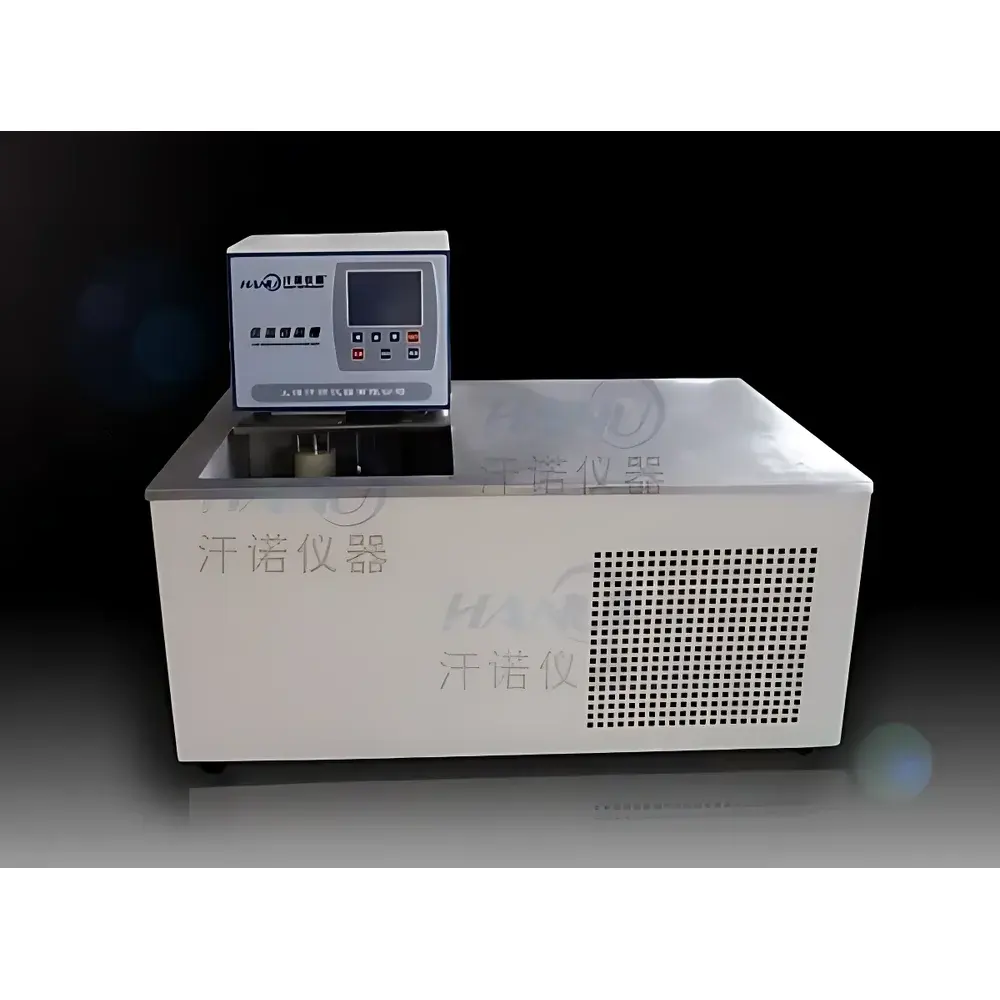
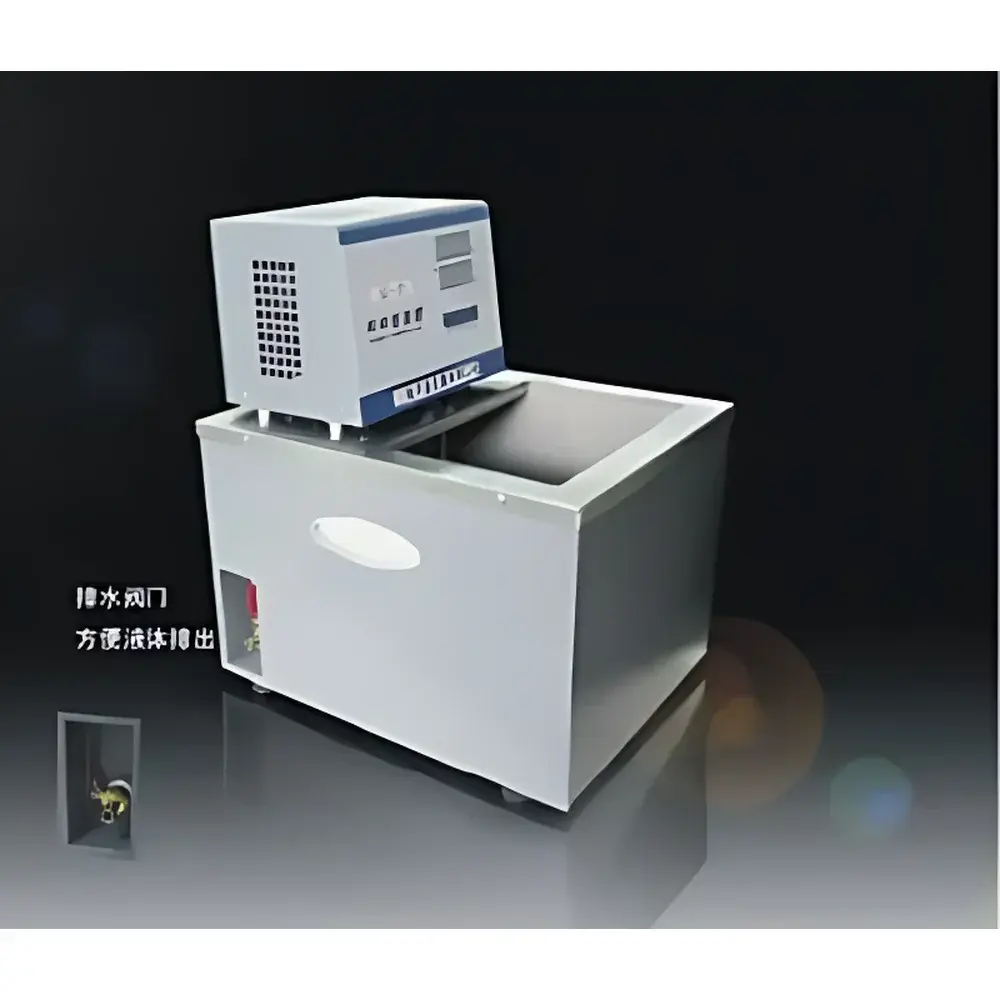
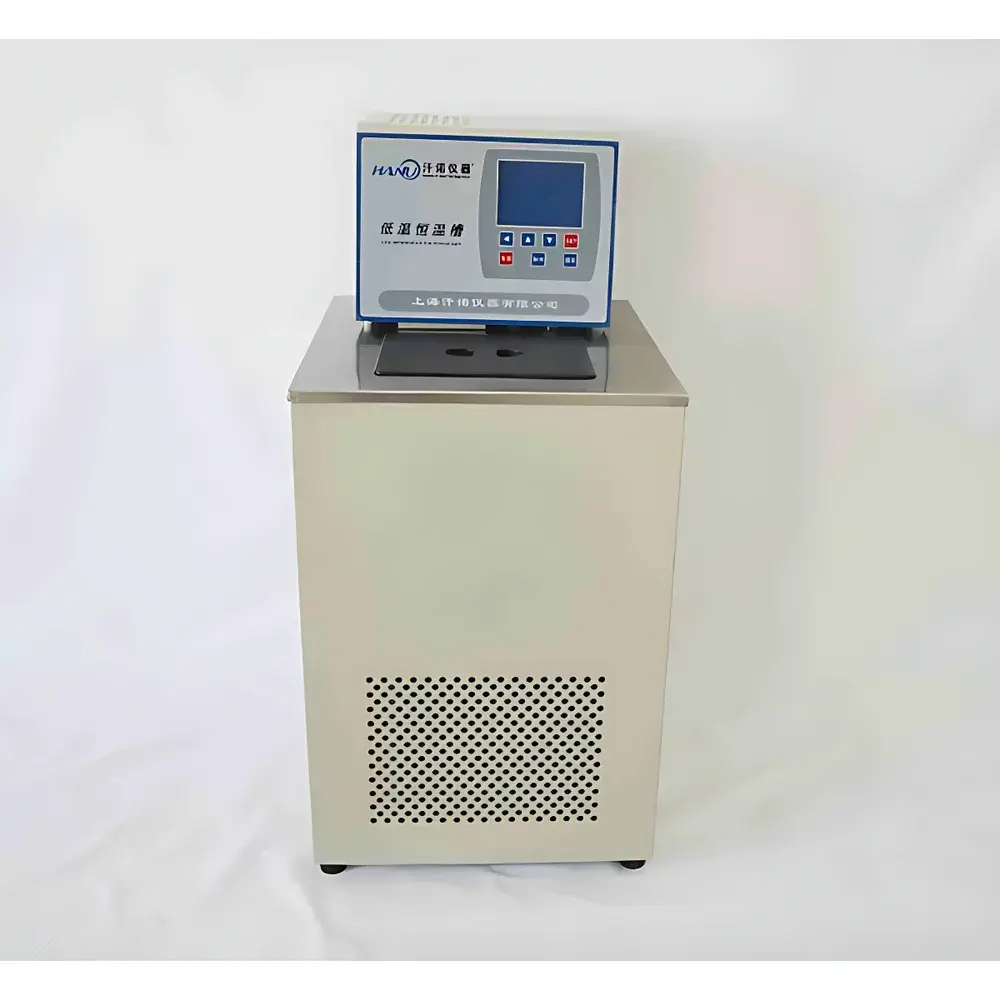
Hanuo GDH-3006 High-Precision Refrigerated Circulating Bath
| Brand | Hanuo |
|---|---|
| Origin | Shanghai, China |
| Model | GDH-3006 |
| Type | Refrigerated/Heating Circulating Bath |
| Bath Volume | 6 L |
| Temperature Range | −30 °C to +100 °C |
| Temperature Stability | ±0.02 °C |
| Control System | Digital PID |
| Circulation | Internal & External |
| Construction | Full Stainless Steel Interior and Deck |
| Refrigeration | Hermetically Sealed Compressor |
| Safety Protections | Over-Temperature & Over-Current Protection |
| Display | Digital LED |
| Resolution | 0.001 °C |
| External Port Dimensions | 180 mm × 140 mm |
| Bath Cavity Dimensions | 250 mm × 200 mm × 150 mm |
| Flow Rate | 6 L/min |
Overview
The Hanuo GDH-3006 High-Precision Refrigerated Circulating Bath is an engineered thermal management system designed for laboratory environments requiring stable, controllable, and reproducible temperature conditions across a broad operational range (−30 °C to +100 °C). It operates on the principle of forced convection via a dual-mode refrigeration–heating cycle, utilizing a hermetically sealed compressor for low-temperature performance and a precision resistive heating element for rapid warm-up and fine-tuning. The unit maintains thermal uniformity through continuous internal circulation and optional external fluid transfer—enabling both direct sample immersion and remote temperature control of auxiliary equipment (e.g., spectrophotometer jackets, reaction calorimeters, or viscometer thermostats). Its architecture supports ISO/IEC 17025-aligned calibration practices and meets baseline requirements for GLP-compliant thermal validation protocols in analytical and quality control laboratories.
Key Features
- Full stainless steel bath chamber and deck—resistant to corrosion from water, ethanol, ethylene glycol, and other common heat-transfer fluids.
- Digital PID temperature controller with 0.001 °C resolution and real-time setpoint display; programmable ramp-soak profiles available via optional firmware upgrade.
- ±0.02 °C temperature stability under static load conditions (verified per ASTM E1137 / ISO 17025 Annex A), ensuring high reproducibility in kinetic studies and material property testing.
- Integrated dual-pump system supporting simultaneous internal recirculation (6 L/min) and external fluid delivery—enabling closed-loop cooling of external instrumentation or parallel thermal conditioning of multiple vessels.
- Comprehensive safety architecture including compressor overheat protection, current-limiting circuitry, dry-run detection, and automatic shutdown upon sensor failure or temperature deviation beyond user-defined thresholds.
- Compact footprint (W250 × D200 × H150 mm internal cavity) optimized for benchtop integration; external port dimensions (180 × 140 mm) accommodate standard tubing and quick-connect fittings compliant with DIN 12878 and ASTM D3409 specifications.
Sample Compatibility & Compliance
The GDH-3006 accommodates a wide variety of sample containers—including glass jacketed reactors (up to 2 L), rotary evaporator condensers, UV-Vis cuvette holders, and microplate thermal blocks—without compromising thermal homogeneity. Its non-reactive stainless steel construction ensures compatibility with aqueous buffers, organic solvents (e.g., acetone, methanol, chloroform), and aqueous–glycol mixtures commonly used in cryogenic applications. The unit complies with IEC 61010-1:2010 for electrical safety in laboratory equipment and supports traceable temperature verification using NIST-traceable PT100 probes. When operated within validated parameter envelopes, it satisfies temperature uniformity and stability criteria referenced in USP , ISO 13485 Annex C (for medical device QC), and ASTM D5276 (for polymer melt viscosity testing).
Software & Data Management
While the base GDH-3006 operates via standalone digital interface, optional RS485/Modbus RTU or USB-to-serial adapters enable integration into LabVIEW, MATLAB, or SCADA-based monitoring systems. Logged temperature data (timestamped at 1-second intervals) can be exported in CSV format for post-processing in statistical analysis packages. Audit trails—including setpoint changes, alarm events, and power-cycle timestamps—are retained in non-volatile memory for up to 30 days, supporting FDA 21 CFR Part 11 compliance when paired with validated electronic signature modules. Remote monitoring via Ethernet-enabled controllers (sold separately) permits centralized fleet management across multi-instrument lab networks.
Applications
- Calibration of thermistors, RTDs, and infrared sensors against traceable reference standards.
- Controlled-rate cooling/heating in polymer crystallization kinetics and phase transition studies (DSC pre-conditioning).
- Thermal stabilization of optical components in spectroscopy and interferometry setups.
- Temperature-dependent viscosity measurements using rotational or capillary viscometers.
- Long-duration stability testing of pharmaceutical formulations per ICH Q5C guidelines.
- Support of low-temperature enzymatic assays and protein folding experiments requiring sub-zero incubation without freezing.
FAQ
What is the minimum operating temperature with water as the bath medium?
Water freezes at 0 °C, so for sub-zero operation, a mixture of deionized water and ethylene glycol (e.g., 30:70 v/v) is required. The GDH-3006 has been validated for stable operation down to −30 °C using such mixtures.
Can the unit maintain temperature stability during external flow demand?
Yes—the dual-pump design and oversized condenser ensure ≤ ±0.05 °C deviation under sustained 4 L/min external flow at −20 °C, provided inlet fluid temperature remains within ±5 °C of setpoint.
Is third-party calibration documentation available?
Factory calibration certificates (including as-found/as-left data against Fluke 1523 reference standards) are supplied with each unit. UKAS-accredited calibration services are available through authorized Hanuo service partners.
Does the GDH-3006 support programming of multi-step temperature ramps?
The standard controller supports single-setpoint operation only. Ramp-soak functionality requires the optional GDH-PC software suite and USB interface module.
What maintenance intervals are recommended for the refrigeration system?
Compressor oil and filter-drier replacement is advised every 24 months under continuous operation; annual inspection of refrigerant charge integrity and pump seal integrity is recommended per ISO 5171 maintenance guidelines.



