
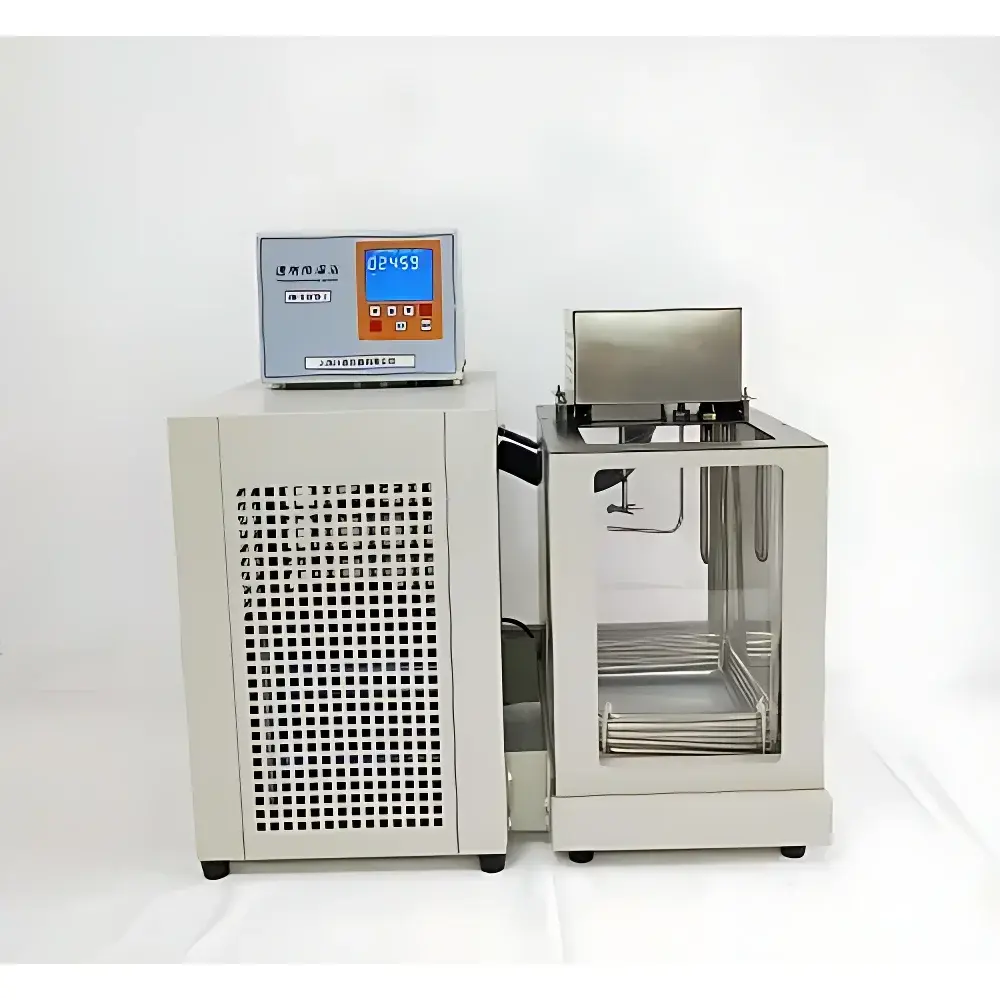
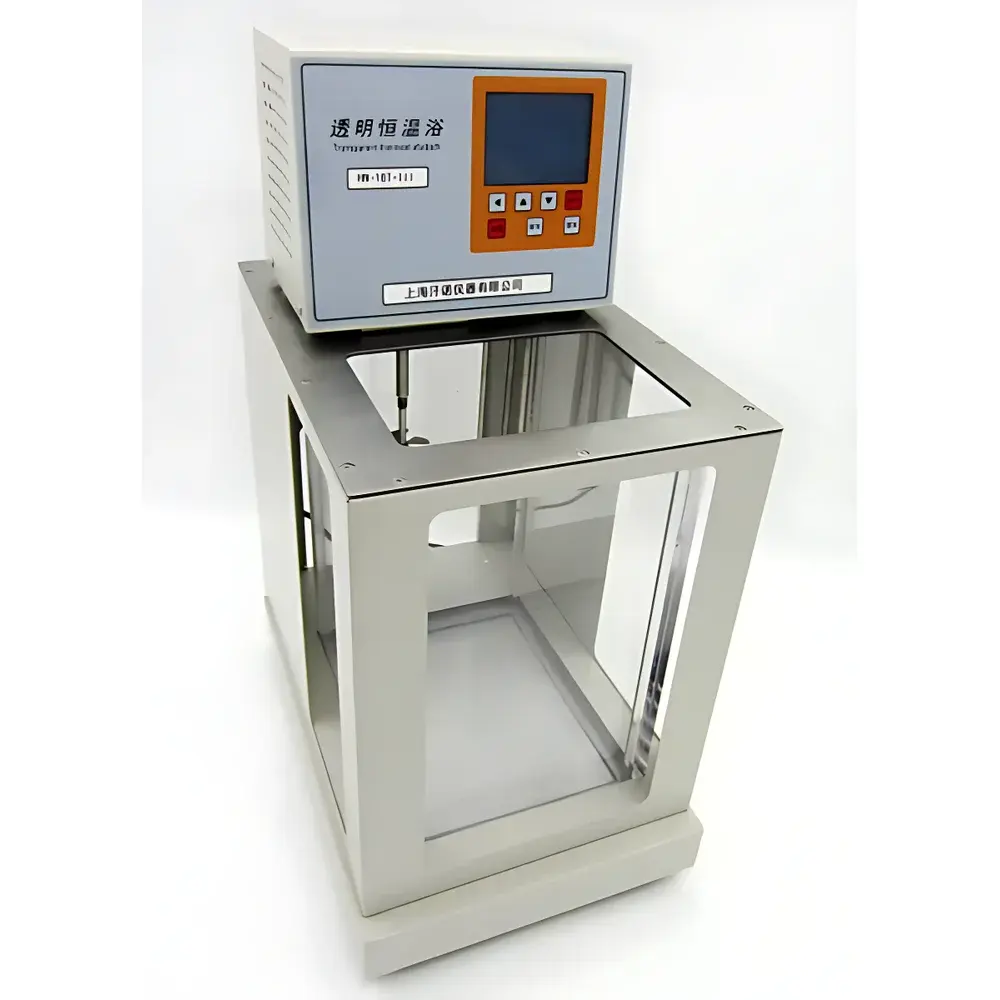
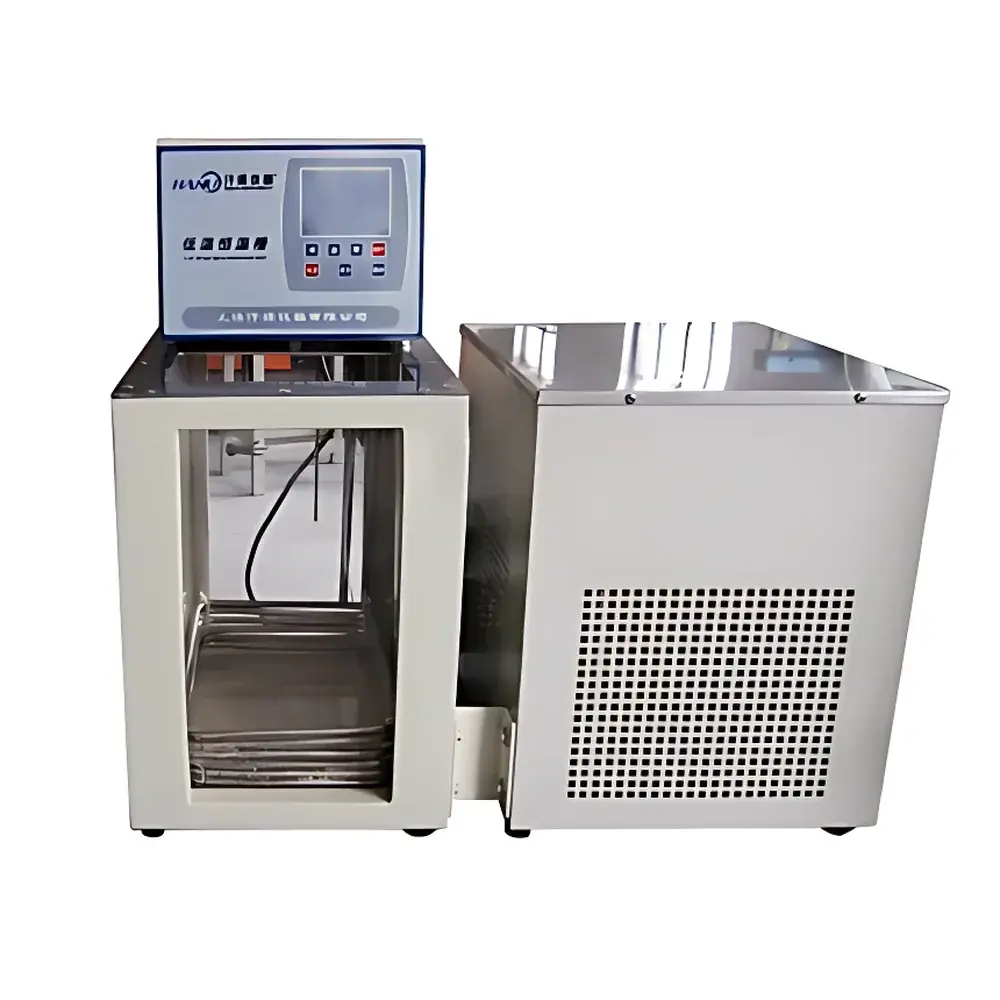
Hanuo HN-010TD-I Precision Low-Temperature Transparent Circulating Bath
| Brand | Hanuo |
|---|---|
| Origin | Shanghai, China |
| Model | HN-010TD-I |
| Bath Volume | 10 L |
| Temperature Range | 0–80 °C |
| Temperature Stability | ±0.1 °C |
| Control Mode | PID |
| Circulation Type | Internal Recirculation |
| Display Resolution | 0.1 °C |
| Tank Dimensions (W×D×H) | 250×200×200 mm |
| Depth | 200 mm |
| Opening Size | 198×140 mm² |
| Construction | Triple-Side Transparent Acrylic Viewing Panels |
Overview
The Hanuo HN-010TD-I Precision Low-Temperature Transparent Circulating Bath is an engineered thermal management system designed for laboratories requiring high-fidelity temperature control and real-time visual monitoring of sample behavior. Operating on a dual-mode thermoelectric/compressor-based refrigeration and resistive heating architecture, it maintains setpoint stability within ±0.1 °C across its full 0–80 °C operating range. Its defining feature is the triple-side transparent acrylic bath chamber—constructed from optically clear, chemically resistant polymethyl methacrylate (PMMA)—which enables unobstructed optical access for reaction observation, colorimetric analysis, flow visualization, and in-situ instrumentation calibration. Unlike conventional opaque baths, this design supports applications where visual confirmation of homogeneity, phase transitions, precipitate formation, or fluid dynamics is integral to experimental validity. The unit is intended for benchtop use in analytical, pharmaceutical, materials science, and biophysical laboratories where spatial constraints and observational fidelity are critical.
Key Features
- Triple-side transparent PMMA bath chamber with UV-stabilized, low-birefringence clarity for consistent optical transmission and minimal thermal distortion
- PID-controlled dual-mode thermal regulation (refrigeration + heating) ensuring rapid equilibration and minimal overshoot during setpoint transitions
- Integrated internal recirculation pump delivering uniform temperature distribution (<0.1 °C spatial gradient across 10 L volume) without external plumbing or risk of contamination
- High-resolution digital display (0.1 °C resolution) showing both real-time bath temperature and user-defined setpoint, with programmable ramp-hold profiles
- Compact footprint (250 × 200 × 200 mm) optimized for limited bench space while accommodating standard immersion probes, cuvettes, and small reactors
- Chemically inert wetted components (stainless steel 304 reservoir, silicone-free seals, non-leaching tubing) compatible with aqueous, buffered, and mild organic media
- Over-temperature and low-level fluid protection circuits compliant with IEC 61010-1 safety standards for laboratory equipment
Sample Compatibility & Compliance
The HN-010TD-I accommodates a broad spectrum of sample configurations—including glassware (e.g., test tubes, Erlenmeyer flasks, jacketed reactors), optical cells, sensor probes, and calibration standards—without compromising thermal uniformity or visual access. Its open-top design (198 × 140 mm aperture) permits easy insertion and positioning of instrumentation while maintaining stable thermal coupling. The bath meets essential regulatory expectations for lab-grade thermal equipment: it supports GLP-compliant temperature verification protocols per ASTM E2251 and ISO/IEC 17025; its digital interface allows manual logging traceability required under FDA 21 CFR Part 11 for non-electronic record environments; and its stable thermal output satisfies USP requirements for thermometer calibration baths used in pharmaceutical QC labs. No hazardous refrigerants (R134a-free operation) and RoHS-compliant construction ensure safe integration into environmentally controlled facilities.
Software & Data Management
While the HN-010TD-I operates as a standalone instrument with intuitive front-panel controls, it includes an RS232 serial port (optional USB-to-serial adapter) enabling integration with third-party data acquisition systems. Users may log temperature readings at user-defined intervals (1–60 s) using generic terminal software or custom Python/LabVIEW scripts. Though no proprietary software is bundled, the device transmits ASCII-formatted temperature data (e.g., “T=25.34rn”) with checksum validation, facilitating automated compliance reporting and audit-ready CSV export. All firmware updates and configuration backups are performed via serial command protocol documented in the technical manual—ensuring reproducibility and version control in regulated workflows.
Applications
- Real-time monitoring of enzymatic kinetics, protein denaturation, and polymer gelation under controlled thermal conditions
- Calibration and verification of liquid-in-glass thermometers, RTDs, thermistors, and infrared sensors per ISO 17025-accredited procedures
- Thermal conditioning of optical components prior to interferometric or spectroscopic measurement
- Stabilization of electrophoresis tanks, viscometers, and densitometers requiring vibration-free, optically accessible thermal environments
- Support of ASTM D2857 (FTIR cell temperature control), ASTM D445 (kinematic viscosity bath), and ISO 3104 (petroleum products testing)
- Pre-conditioning of reference standards for metrology labs performing inter-laboratory comparisons
FAQ
What materials are in contact with the bath fluid?
The wetted surfaces consist of 304 stainless steel (reservoir base and heater/refrigeration plate), food-grade silicone-free elastomeric seals, and chemically inert PMMA viewing panels. No copper, brass, or zinc components are present.
Can this bath be used with ethanol or glycol-water mixtures?
Yes—provided the mixture’s freezing point remains above 0 °C and viscosity does not exceed 20 cP at operating temperature. Avoid chlorinated solvents or strong oxidizers due to PMMA compatibility limits.
Is external circulation possible?
No—the HN-010TD-I is configured exclusively for internal recirculation. For external loop applications, consider the HN-010TD-X series with dual-port manifold options.
How often should temperature uniformity be verified?
Per ISO/IEC 17025, quarterly verification using three calibrated PT100 probes at top/mid/bottom positions is recommended; documentation templates are provided in the user manual.
Does the unit support remote setpoint adjustment?
Setpoint can be modified remotely via RS232 commands (e.g., “S25.0” to set 25.0 °C), but no analog voltage or Ethernet interface is available in this model variant.



