Hanuo HN-500 High-Intensity Ultrasonic Cell Disruptor & Nanomaterial Homogenizer
| Brand | Hanuo |
|---|---|
| Origin | Shanghai, China |
| Model | HN-500 |
| Ultrasonic Output Power | 500 W |
| Operating Frequency | 20–25 kHz |
| Temperature Control Range | −5 to 100 °C |
| Maximum Sample Volume | 500 mL |
| Probe Material | Titanium Alloy (Grade 5) |
| Control Interface | 4.3″ TFT Touchscreen |
| Programmable Memory | 20 Presets |
| Pulse Mode Interval | 0.1–99.9 s Adjustable |
Overview
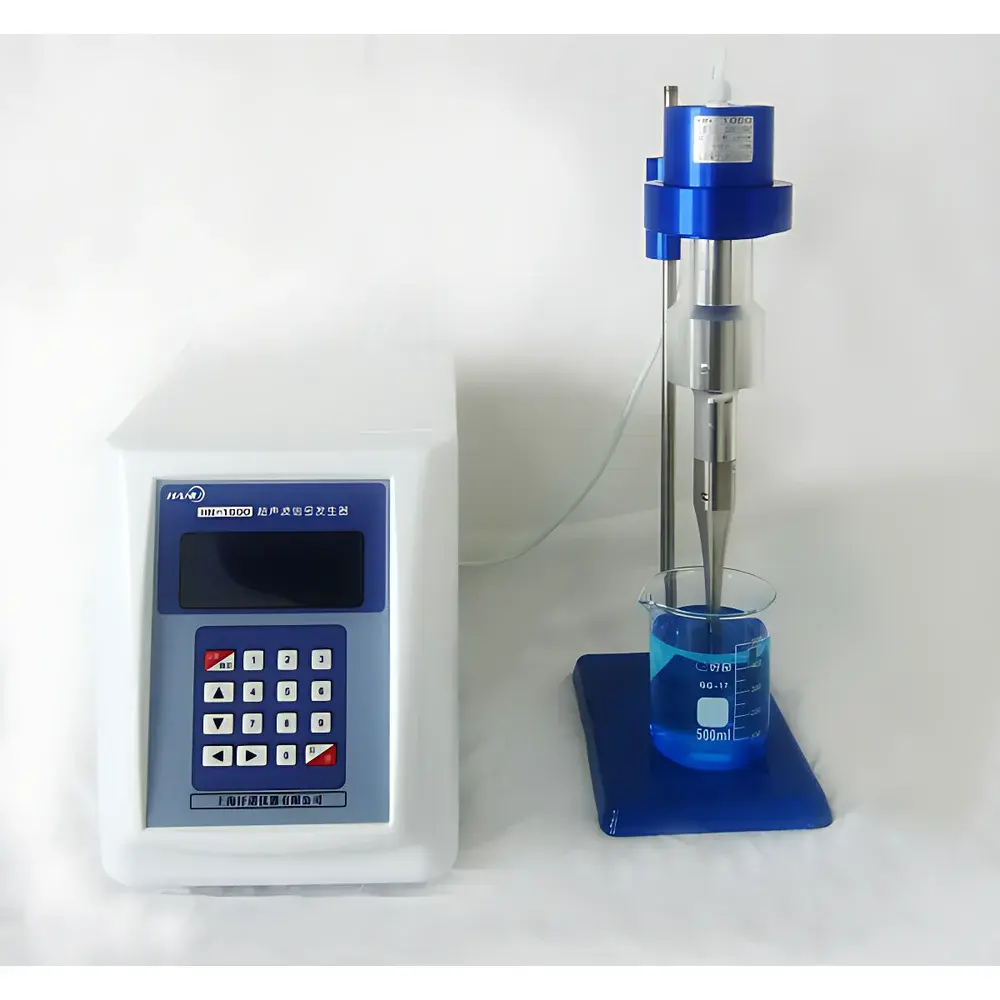
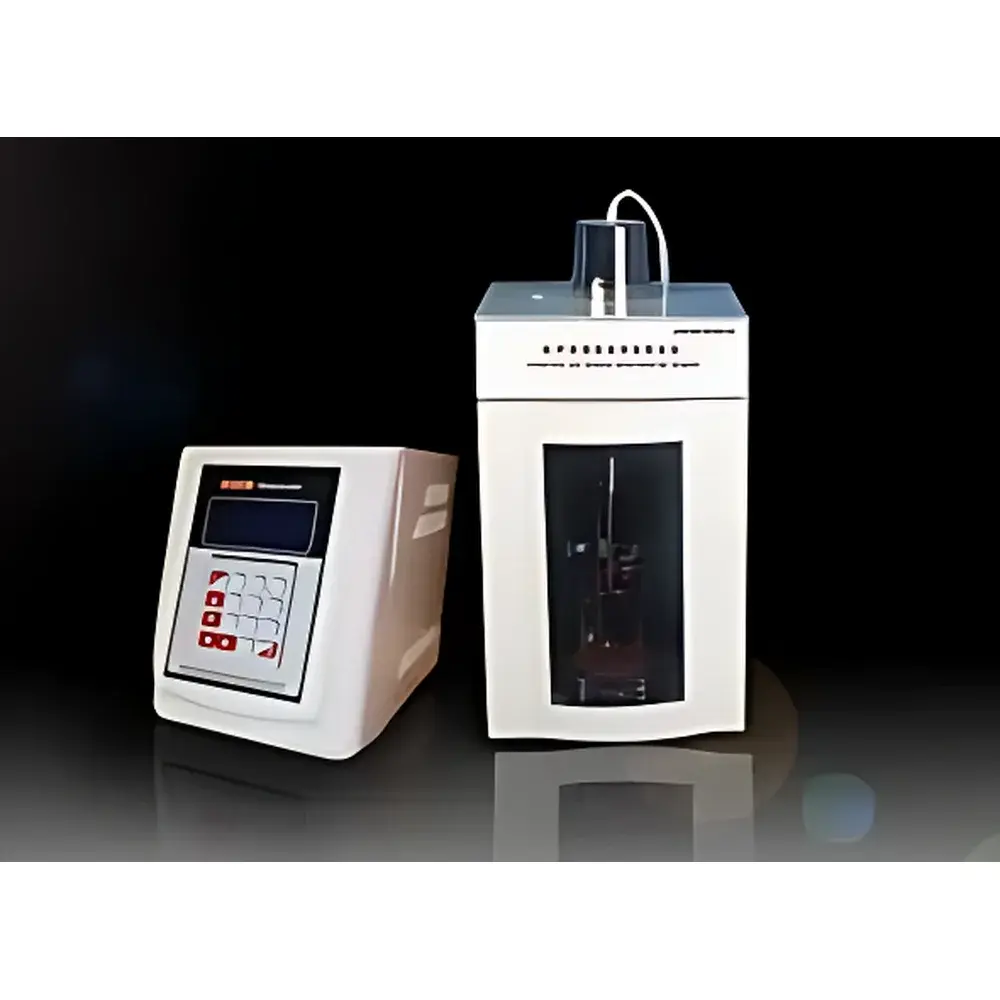
The Hanuo HN-500 is a high-intensity, microprocessor-controlled ultrasonic cell disruptor engineered for reproducible lysis, emulsification, dispersion, and homogenization of biological and nanomaterial samples. It operates on the principle of acoustic cavitation—where high-frequency mechanical vibrations (20–25 kHz) generate transient microbubbles in liquid media that collapse violently, producing localized shockwaves, shear forces, and extreme transient conditions (up to ~5,000 K and ~1,000 atm). This physical mechanism enables efficient disruption of cell membranes, bacterial walls, and aggregated nanoparticles without chemical additives or thermal degradation—critical for preserving labile biomolecules (e.g., enzymes, nucleic acids, exosomes) and maintaining colloidal stability in nanosuspensions.
Key Features
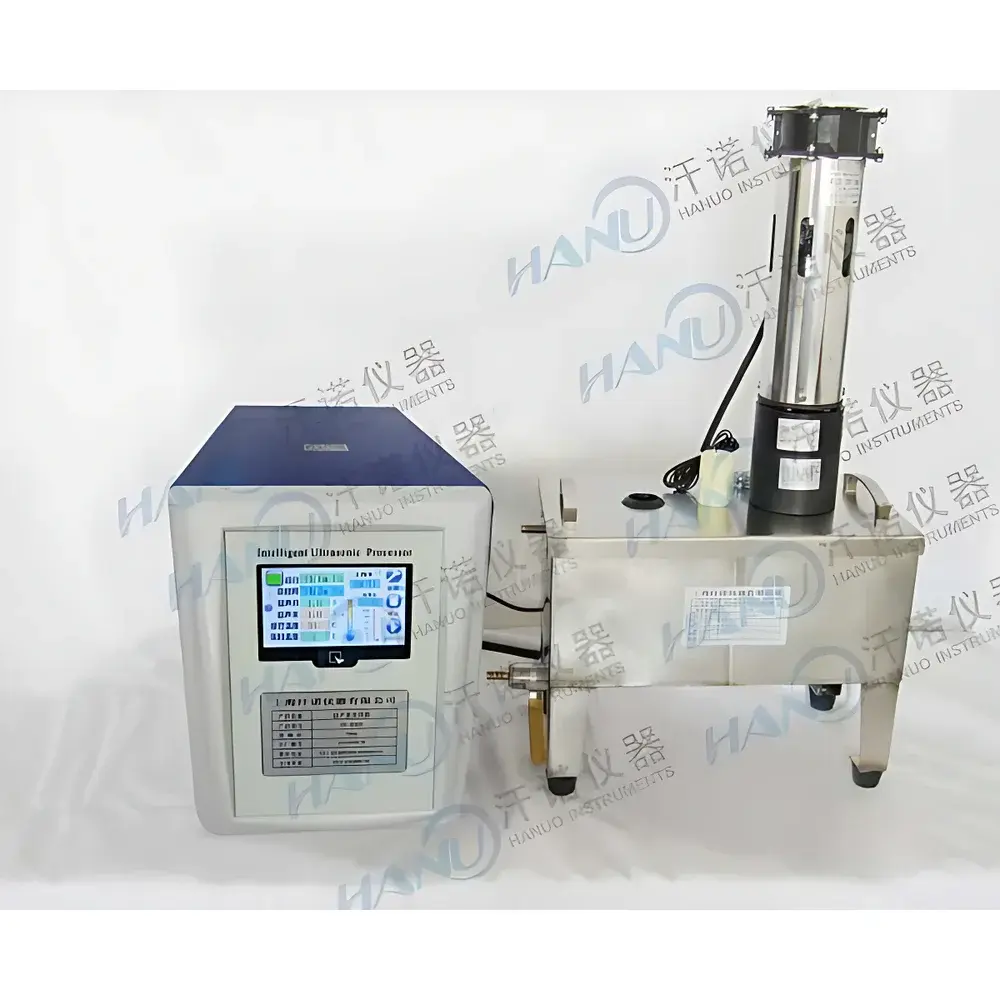
- 4.3-inch full-color TFT touchscreen interface with intuitive icon-based navigation and real-time parameter feedback (power %, temperature, elapsed time, pulse cycle)
- Titanium alloy (Ti-6Al-4V) probe with precision-machined horn geometry—resistant to erosion, corrosion, and thermal fatigue under sustained high-amplitude operation
- Digitally regulated ultrasonic output (0–100% in 1% increments), enabling precise energy dosing across diverse sample viscosities and volumes
- Intelligent frequency auto-tracking circuitry maintains resonance stability despite load variation (e.g., viscosity shifts during lysis or emulsification)
- Programmable pulse mode with adjustable on/off intervals (0.1–99.9 s), minimizing thermal accumulation while maximizing cavitation efficiency
- Integrated Pt100 temperature sensor with closed-loop monitoring; optional external chiller interface supports active temperature regulation from −5 to 100 °C
- 20-user-configurable protocols stored with password protection—supports GLP-compliant workflow standardization and operator accountability
- Self-diagnostic firmware with audible/visual alerts for overtemperature, transducer impedance mismatch, and power supply anomalies
Sample Compatibility & Compliance
The HN-500 accommodates aqueous, organic, and mixed-phase suspensions ranging from 0.2 mL (microcentrifuge tube) to 500 mL (jacketed reactor vessel). Compatible sample types include mammalian and microbial cells (E. coli, yeast, CHO), plant tissues, liposomes, polymeric nanoparticles (PLGA, chitosan), carbon nanotubes, and metal oxide dispersions (TiO₂, SiO₂). The system meets essential electrical safety standards (IEC 61010-1) and electromagnetic compatibility requirements (EN 61326-1). When operated with validated SOPs and audit-trail-enabled software (optional USB data logging), it supports compliance with ISO/IEC 17025, USP , and FDA 21 CFR Part 11 for regulated environments.
Software & Data Management
While the base unit features embedded firmware with local protocol storage, an optional USB data logger enables timestamped export of all operational parameters (power, temperature, duration, pulse profile) to CSV format for traceability. For laboratories requiring electronic records management, Hanuo provides a Windows-compatible PC application (HN-Control Suite v3.2) supporting remote control, multi-step method sequencing, automated report generation (PDF/Excel), and role-based user access control—facilitating alignment with GMP/GLP documentation practices. All data files are cryptographically signed and append-only, satisfying ALCOA+ principles (Attributable, Legible, Contemporaneous, Original, Accurate, Complete, Consistent, Enduring, Available).
Applications
- Cell disruption: Efficient release of intracellular proteins, organelles, and genomic DNA from Gram-negative and Gram-positive bacteria, fungi, and cultured mammalian cells
- Nanomaterial processing: Deagglomeration of carbon nanotubes, graphene oxide, and quantum dots; preparation of stable nanoemulsions for drug delivery
- Extraction optimization: Enhanced solvent penetration and mass transfer in phytochemical isolation (e.g., curcumin, resveratrol) and natural product purification
- Homogenization & dispersion: Uniform suspension of insoluble APIs, ceramic precursors, and catalyst nanoparticles in polymer matrices or aqueous carriers
- Surface functionalization: Accelerated silanization and ligand grafting on nanoparticle surfaces via cavitation-driven surface activation
- Cleaning & degassing: Removal of adsorbed gases and microcontaminants from sensitive optics, microfluidic channels, and electrode surfaces
FAQ
What is the maximum recommended continuous operating time per cycle?
For optimal transducer longevity and thermal management, continuous operation is limited to 5 minutes at full power (500 W); extended protocols should use pulsed mode (e.g., 5 s on / 5 s off) to maintain probe temperature below 60 °C.
Can the HN-500 be integrated with a jacketed reactor or flow cell?
Yes—the unit supports external temperature feedback loops and offers analog I/O (0–10 V) for synchronization with third-party chillers, peristaltic pumps, or reactor control systems.
Is calibration traceable to national standards?
Ultrasonic power output is calibrated using radiation force balance (ISO 17991:2016) at the factory; users receive a certificate of conformance with uncertainty budget. Annual recalibration services are available through Hanuo’s ISO/IEC 17025-accredited service center in Shanghai.
How does amplitude stabilization work under variable load conditions?
The system employs real-time impedance monitoring and adaptive duty-cycle modulation to maintain consistent peak-to-peak displacement amplitude (±3% deviation) regardless of sample density, viscosity, or volume changes during processing.
Are there regulatory restrictions on exporting this instrument?
The HN-500 contains no EAR99-listed dual-use components; however, shipment to embargoed jurisdictions requires prior authorization under China’s Export Control Law and end-user verification per OECD guidelines.