
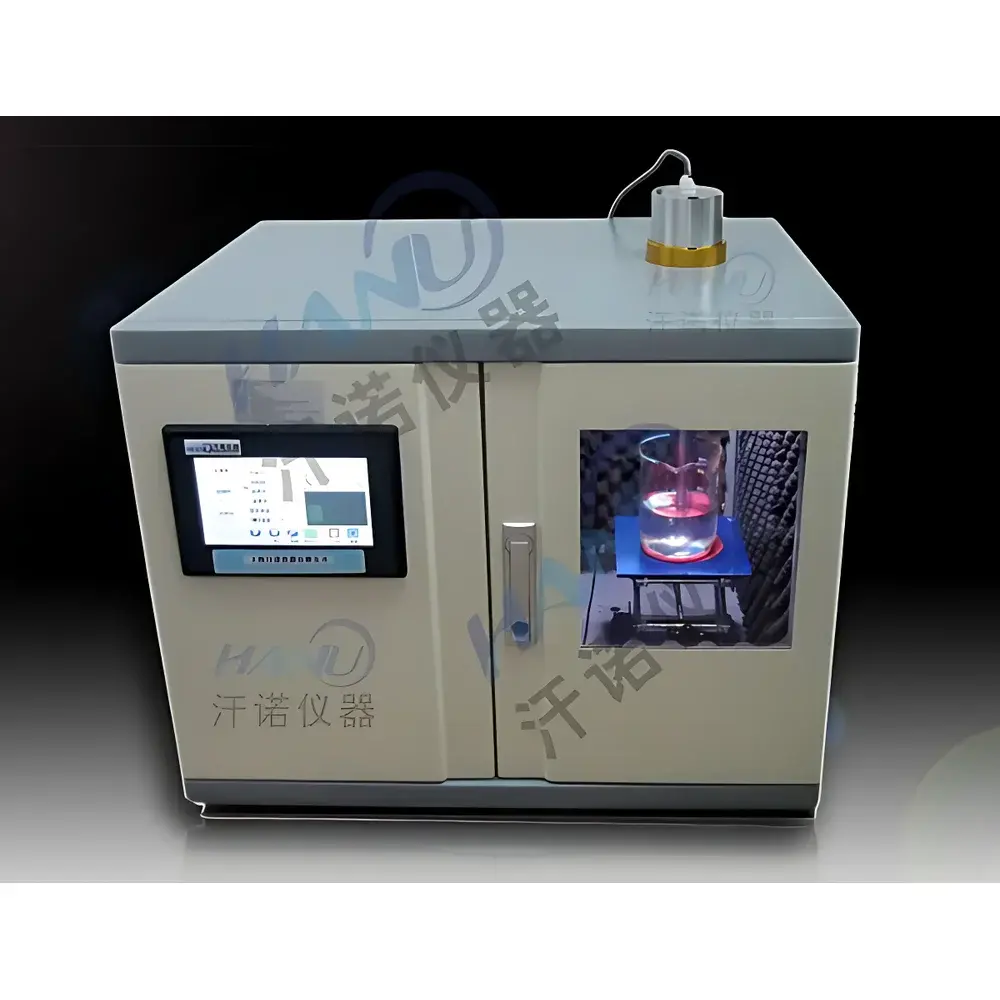
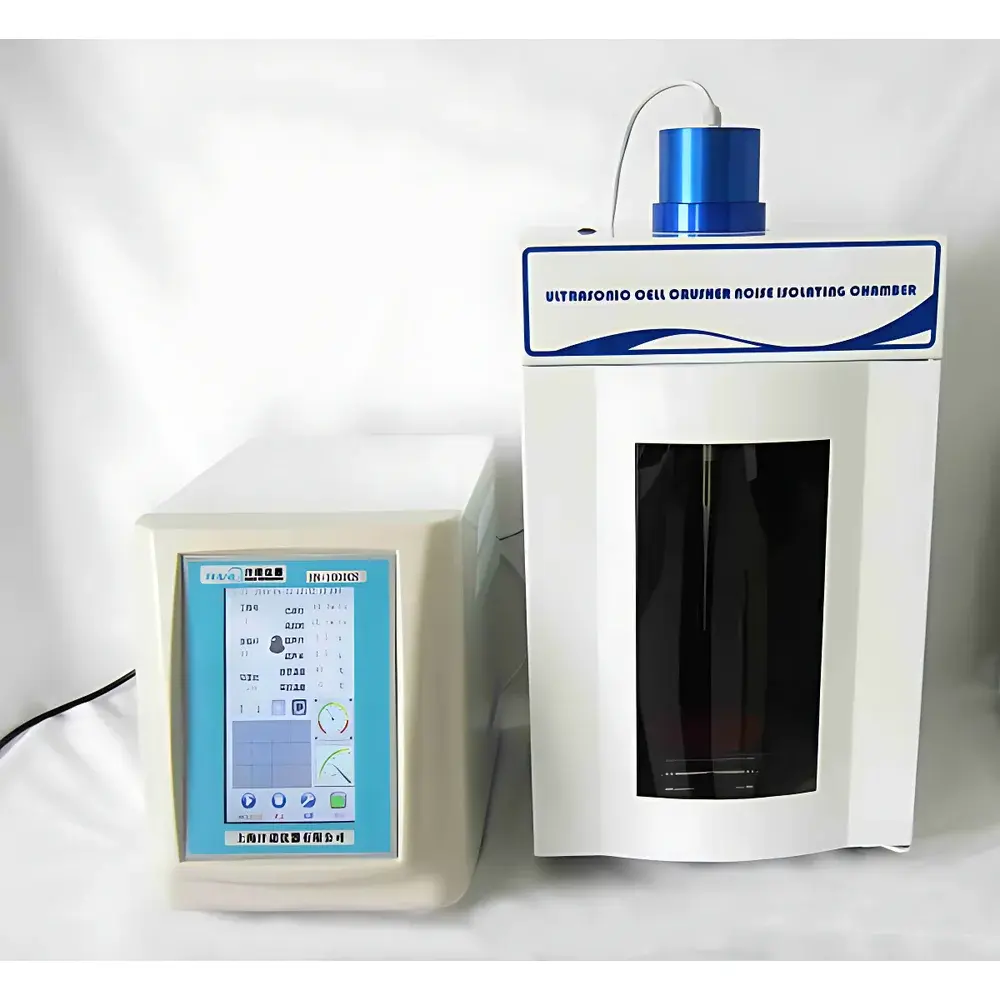
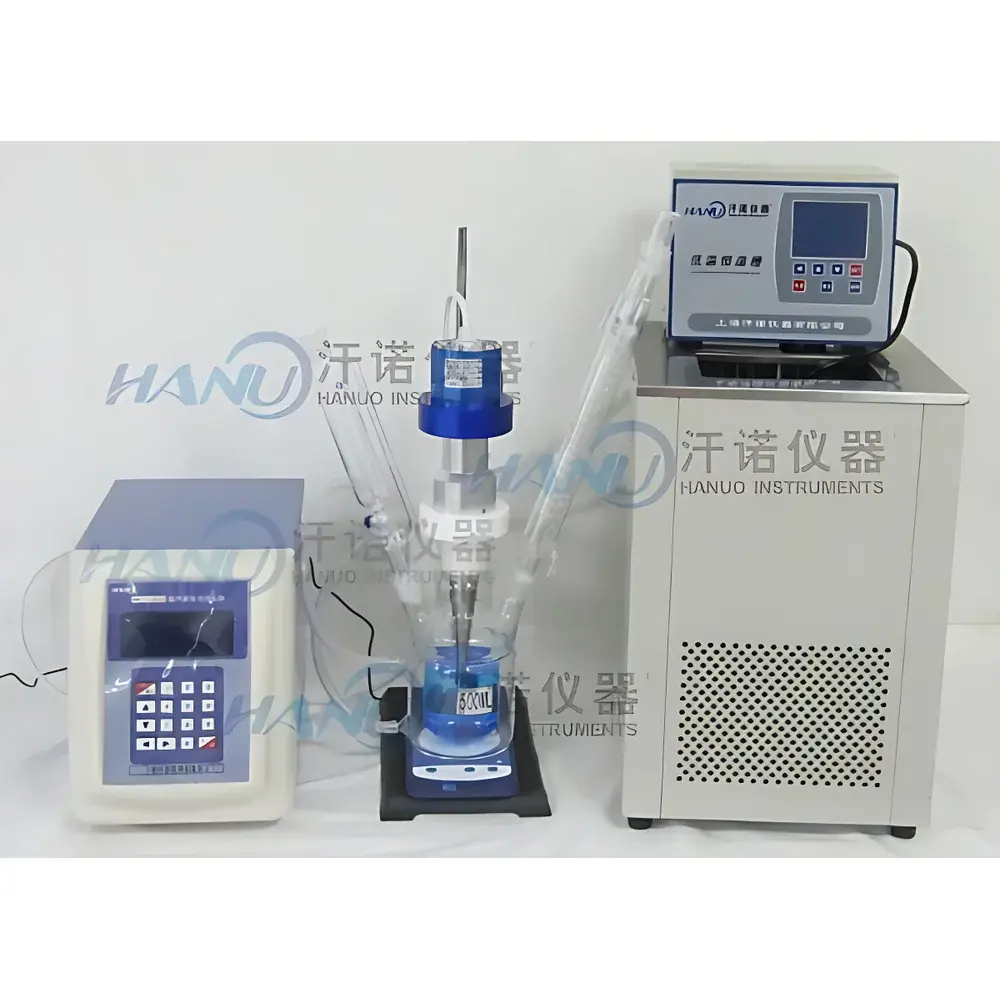
Hanuo HN-2000CT Benchtop Temperature-Controlled Ultrasonic Extractor
| Brand | Hanuo |
|---|---|
| Origin | Shanghai, China |
| Model | HN-2000CT |
| Ultrasonic Power Range | 200–2000 W (adjustable) |
| Ultrasonic Frequency | 20–30 kHz (auto-frequency tracking) |
| Temperature Control Range | −5 to 99.9 °C |
| Effective Extraction Volume | 1–2 L (borosilicate glass or stainless steel vessel) |
| Transducer Diameter Options | 10, 15, 20, 22, 25, or 28 mm |
| Display | 7-inch full-color touchscreen |
| Control System | PLC or microcontroller-based |
| Safety Protections | Overtemperature, fault, and password-protected operation |
| Compliance | Designed for GLP-compliant lab environments |
Overview
The Hanuo HN-2000CT Benchtop Temperature-Controlled Ultrasonic Extractor is an engineered solution for precise, reproducible solid-liquid extraction in research and quality control laboratories. It operates on the principle of high-intensity ultrasonic cavitation—where controlled acoustic energy generates transient microbubbles in the solvent medium, whose implosive collapse delivers localized shear forces, microstreaming, and enhanced mass transfer across solid matrix interfaces. Unlike conventional heating-based extraction methods, this system decouples energy input from thermal load by enabling real-time temperature regulation within the extraction chamber (−5 to 99.9 °C), thereby preserving thermolabile compounds such as glycosides, alkaloids, polyphenols, and volatile oils commonly found in botanicals, fungi, and marine biomass. Its benchtop footprint, modular transducer configuration, and closed-vessel architecture make it suitable for method development, reference standard preparation, and small-batch analytical sample conditioning under ISO/IEC 17025 and USP compliant workflows.
Key Features
- Programmable temperature control with ±0.3 °C stability across the full −5 to 99.9 °C range, achieved via Peltier cooling and resistive heating integration
- Adjustable ultrasonic power output (200–2000 W) with real-time dynamic waveform monitoring displayed on a 7-inch capacitive touchscreen interface
- Auto-frequency tracking circuitry maintains optimal resonance at 20–30 kHz, compensating for load-dependent impedance shifts during prolonged extractions
- Interchangeable ultrasonic probes (10–28 mm diameter) allow optimization for viscosity, particle size distribution, and matrix density—enabling both focused (probe-type) and bath-coupled configurations
- PLC-based control architecture supports up to 99 programmable protocols, each with independent ramp/hold segments for power, temperature, and duration
- Built-in data logging records timestamped parameters (power, temp, time, frequency) to internal memory or external USB storage, with optional password protection for GLP/GMP traceability
- Safety interlocks include overtemperature cutoff, probe immersion detection, and automatic shutdown upon lid opening or coolant failure
Sample Compatibility & Compliance
The HN-2000CT accommodates a broad spectrum of solid matrices—including dried herbs, powdered roots, fermented mycelia, algae biomass, and synthetic polymer composites—as well as both volatile (e.g., ethanol, acetone, ethyl acetate) and non-volatile (e.g., water, glycerol, propylene glycol) solvents. Its borosilicate glass or 316L stainless steel extraction vessels meet ASTM E438 Type I Class A chemical resistance standards. The system is designed to support compliance with pharmacopeial monographs (USP , EP 2.8.27, ChP 0701), ISO 17025 method validation requirements, and FDA 21 CFR Part 11 when paired with validated software extensions. Optional sterilization cycles (121 °C, 15 psi, 20 min) enable reuse in microbiological or cell-based assay prep workflows.
Software & Data Management
Data acquisition and protocol management are handled through an embedded Linux-based firmware platform. All operational parameters—including instantaneous RMS power, junction temperature, cavitation intensity index (derived from acoustic emission spectral analysis), and cumulative energy delivery—are logged at user-defined intervals (1–60 s). Export formats include CSV and XML, compatible with LIMS integration (via RS-232, USB, or optional Ethernet module). Audit trail functionality records operator ID, timestamp, parameter changes, and system events—meeting ALCOA+ principles for data integrity. Remote monitoring and protocol synchronization are achievable using Hanuo’s optional LabLink™ desktop application (Windows/macOS), which also supports calibration certificate import and version-controlled method archiving.
Applications
- Quantitative extraction of marker compounds (e.g., berberine, curcumin, ginsenosides) for HPLC/UHPLC calibration and potency assays
- Accelerated leaching studies for heavy metal speciation in soil and sediment samples (EPA Method 3050B adaptation)
- Preparation of plant-derived nanoemulsions and micellar dispersions for bioavailability enhancement screening
- Cell lysis and intracellular metabolite recovery from microbial cultures without enzymatic or mechanical shearing artifacts
- Method transfer from R&D to QC labs under ICH Q5A and Q5D guidelines for biopharmaceutical raw material characterization
- Development of green extraction protocols aligned with ISO 14040 life cycle assessment frameworks
FAQ
What is the maximum allowable solvent volume for continuous operation?
The recommended working volume is 1–2 L in the standard vessel. For extended runs (>60 min), maintain liquid level between 30% and 80% of total capacity to ensure consistent cavitation field distribution and thermal homogeneity.
Can the system be integrated into an automated sample preparation line?
Yes—RS-232 and optional Ethernet interfaces support SCPI command sets for triggering, pausing, and status polling. Custom I/O modules enable pneumatic lid actuation and peristaltic pump synchronization.
Is validation documentation available for GxP environments?
Hanuo provides IQ/OQ templates, factory calibration certificates (traceable to NIST standards), and a risk-based URS alignment report. Full PQ support requires site-specific protocol execution under qualified personnel supervision.
How does frequency auto-tracking improve extraction reproducibility?
As solvent composition, temperature, or suspended solids change during extraction, the acoustic impedance of the medium drifts. Auto-tracking continuously adjusts the drive frequency to sustain resonant coupling—minimizing standing wave nodes and ensuring uniform energy deposition across heterogeneous samples.
What maintenance is required for long-term reliability?
Quarterly inspection of transducer mounting torque, annual recalibration of temperature sensors and power meters, and replacement of O-rings every 12 months (or after 500 cycles) are recommended. No routine lubrication or consumable parts are required beyond probe tips under normal usage.



