
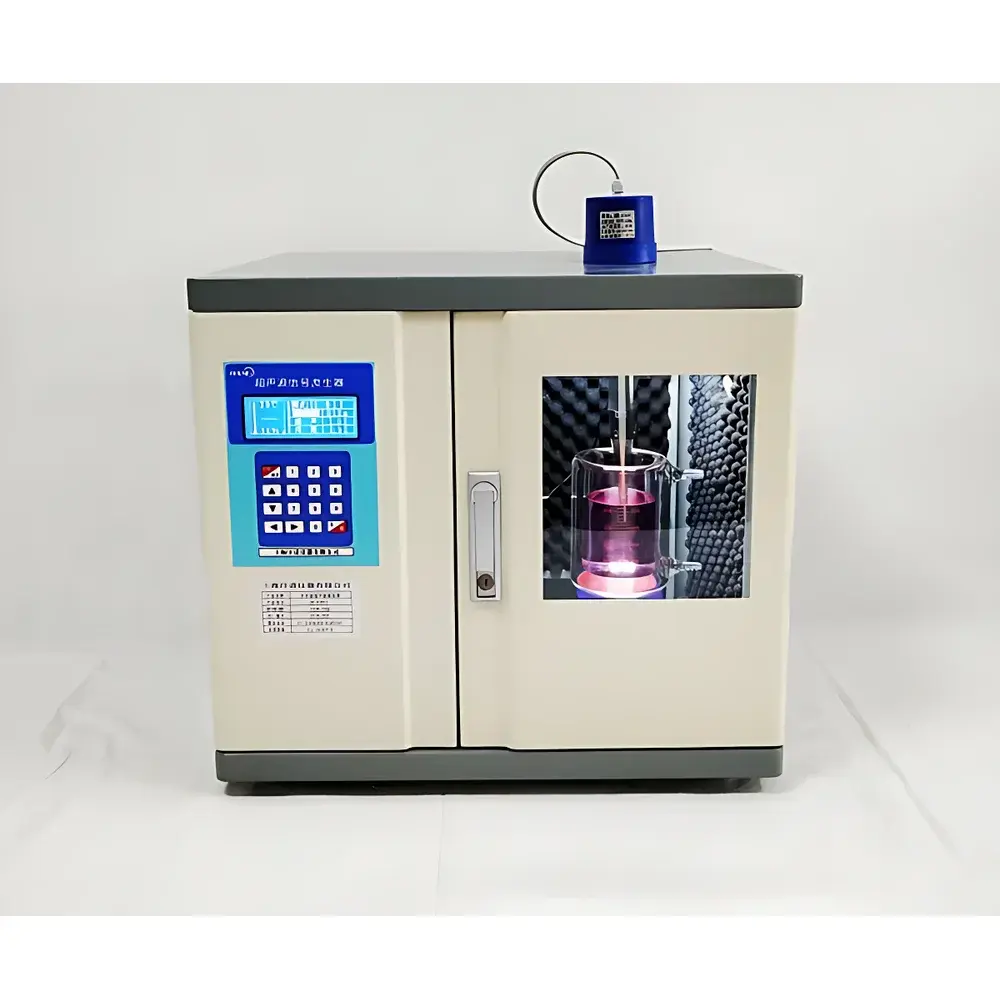
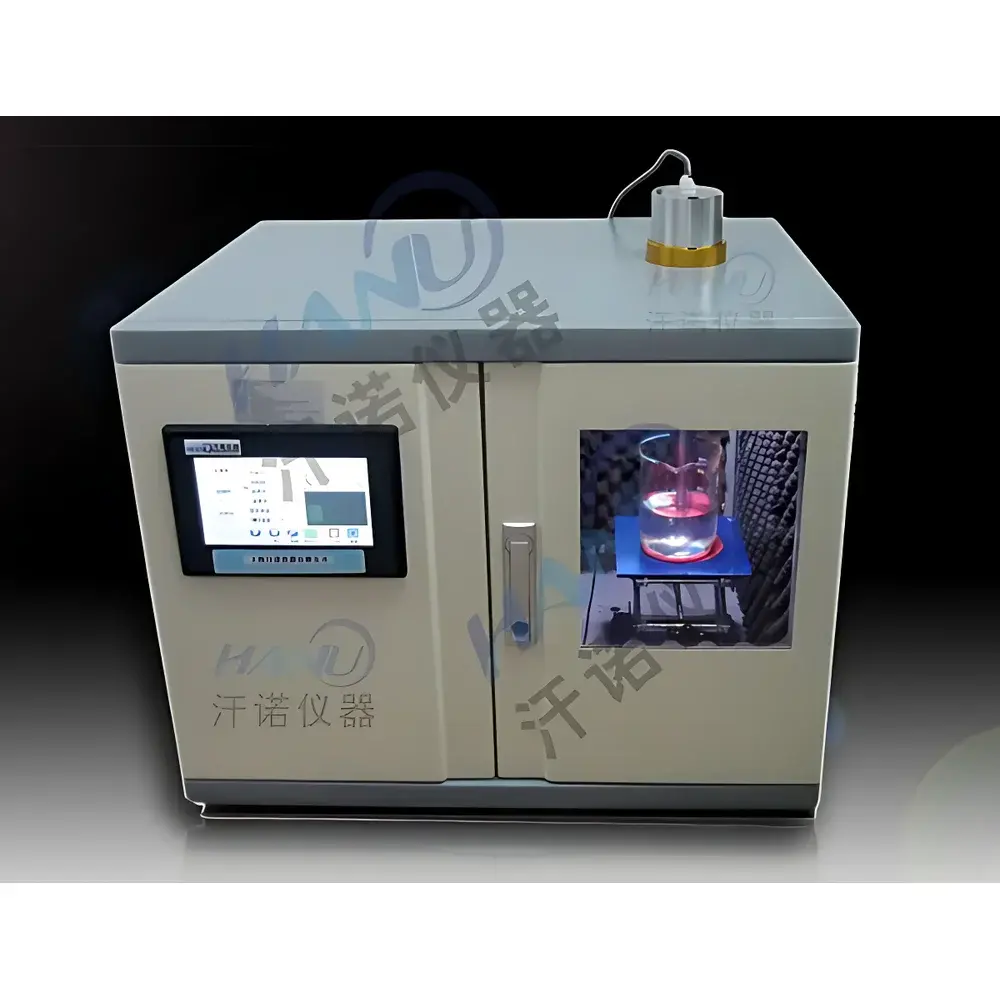
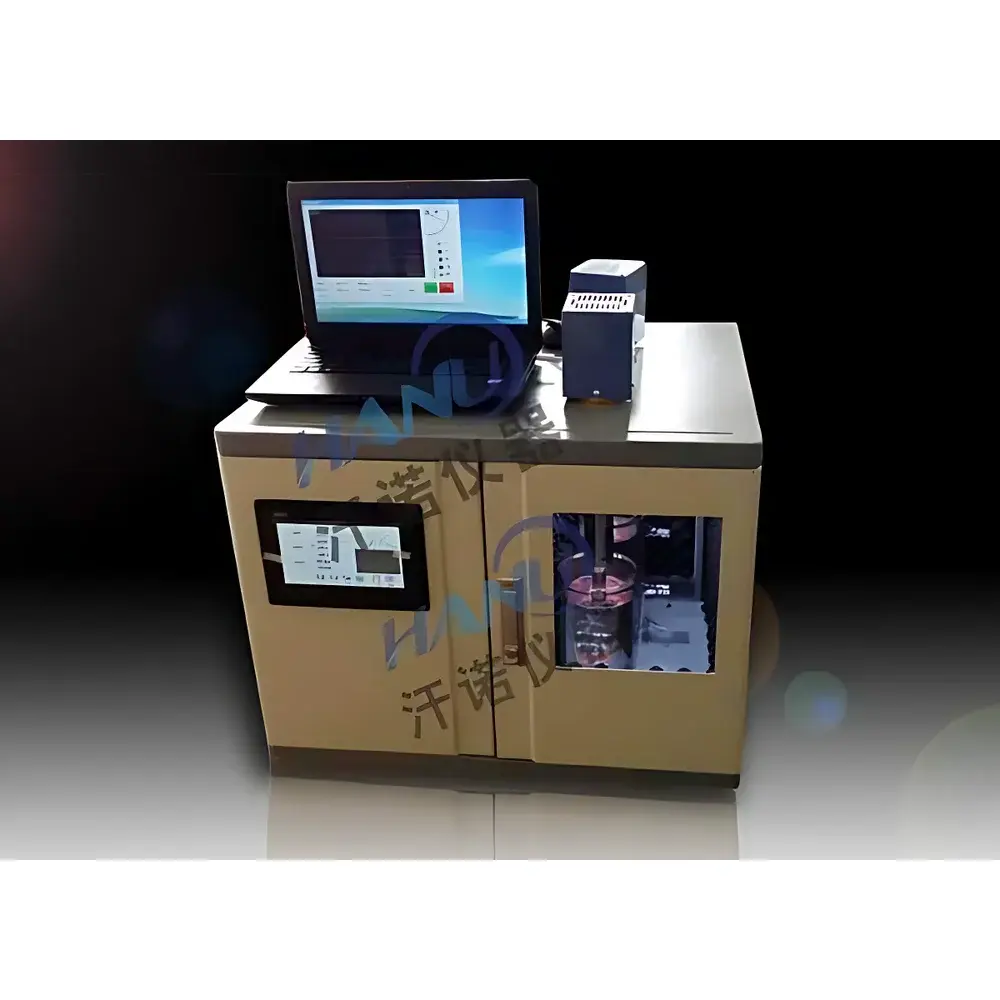
Hanuo HN-4000CT Benchtop Temperature-Controlled Ultrasonic Extractor
| Brand | Hanuo |
|---|---|
| Origin | Shanghai, China |
| Model | HN-4000CT |
| Ultrasonic Power | 4 kW (adjustable 0.5–4 kW) |
| Ultrasonic Frequency | 20 kHz (auto-tracking, 20–30 kHz range) |
| Heating Power | 2 kW |
| Temperature Range | −5 to 99.9 °C |
| Chamber Capacity | 5 L (borosilicate glass or stainless steel vessel) |
| Display | 7-inch full-color touchscreen |
| Control System | PLC-based microprocessor controller with password-protected program storage |
| Safety Features | Overtemperature protection, fault diagnostics, LED illumination, integrated cooling jacket interface |
| Optional | Magnetic stirring (bottom-mounted), ultrasonic stirring, sterilization module, external PC communication (RS485/USB) |
Overview
The Hanuo HN-4000CT Benchtop Temperature-Controlled Ultrasonic Extractor is an engineered solution for precise, reproducible solid–liquid extraction in academic, pharmaceutical, and natural product research laboratories. It operates on the principle of high-intensity ultrasonic cavitation—where controlled acoustic energy generates transient microbubbles in the solvent medium, collapsing violently to disrupt cell walls, enhance mass transfer, and accelerate solute release from botanical, microbial, or tissue matrices. Unlike conventional heating-based extraction methods, the HN-4000CT decouples thermal input from ultrasonic energy delivery, enabling independent regulation of temperature (−5 to 99.9 °C) and acoustic intensity (0.5–4 kW). This dual-parameter control is critical for thermolabile compounds—such as polyphenols, alkaloids, enzymes, and volatile oils—where uncontrolled thermal buildup during sonication can degrade structural integrity and compromise analytical validity. The system’s compact benchtop footprint (W × D × H: 580 × 420 × 620 mm), combined with its modular vessel design (5 L borosilicate glass or 316L stainless steel), supports method development, small-batch optimization (1–5 L), and GLP-aligned sample preparation workflows.
Key Features
- Programmable PLC-based control architecture with real-time dynamic ultrasound waveform visualization on a 7-inch capacitive touchscreen interface
- Adjustable ultrasonic power output (0.5–4 kW) and auto-frequency tracking (20–30 kHz) to maintain optimal cavitation efficiency across varying solvent viscosities and temperatures
- Precision temperature regulation via Peltier-assisted cooling and resistive heating, achieving ±0.3 °C stability over the full −5 to 99.9 °C range
- Integrated safety protocols including overtemperature cutoff, ultrasonic transducer overload detection, and automatic shutdown upon lid-open or coolant flow interruption
- Password-protected method storage (up to 99 user-defined protocols) with timestamped audit trails compliant with basic data integrity requirements under FDA 21 CFR Part 11 Annex 11 principles
- Modular transducer configuration: dual 20 mm or 22 mm titanium alloy probes (standard); optional probe diameters (10, 15, 25, 28 mm) for scalability across sample volume and viscosity ranges
Sample Compatibility & Compliance
The HN-4000CT accommodates both volatile (e.g., ethanol, acetone, ethyl acetate) and non-volatile (e.g., water, glycerol, propylene glycol) extraction solvents without requiring solvent-specific hardware modifications. Its chemically inert borosilicate glass chamber (DIN ISO 3585) or electropolished 316L stainless steel vessel ensures compatibility with acidic, alkaline, and oxidative media used in phytochemical isolation (e.g., acidified methanol for anthocyanin extraction per AOAC 2005.02). The system meets CE electromagnetic compatibility (EMC Directive 2014/30/EU) and low-voltage safety (LVD Directive 2014/35/EU) requirements. While not certified for GMP manufacturing environments, its programmable parameters, error logging, and protocol locking support method validation per ICH Q2(R2) guidelines and internal SOPs for QC/QA labs conducting USP , EP 2.4.24, or ISO 17025-accredited analyses.
Software & Data Management
The embedded firmware supports local data retention of all operational logs—including start/stop timestamps, setpoints, actual temperature/power readings, and fault codes—for minimum 30 days. Export is enabled via USB flash drive in CSV format for traceability and integration into LIMS or ELN platforms. Optional RS485 or USB-to-PC connectivity allows remote monitoring and scripting via Modbus RTU or custom Python-based automation (e.g., triggering extraction cycles synchronized with HPLC autosamplers). No cloud dependency or proprietary software installation is required; all configuration remains self-contained within the unit’s industrial-grade ARM Cortex-M7 controller.
Applications
- Standardized extraction of bioactive constituents from herbal matrices (e.g., curcumin from turmeric, ginsenosides from Panax ginseng) per Chinese Pharmacopoeia 2020 Edition and European Pharmacopoeia 10.0 monographs
- Pre-analytical sample preparation for LC-MS/MS quantification of mycotoxins, pesticide residues, or cannabinoids in food and environmental samples
- Cell lysis and protein solubilization for proteomics workflows where thermal denaturation must be minimized
- Accelerated leaching studies for metal recovery from spent catalysts or electronic waste under controlled redox conditions
- Method scouting for green extraction processes targeting reduced solvent consumption and energy input relative to Soxhlet or reflux techniques
FAQ
What is the maximum allowable solvent volume for continuous operation?
The 5 L chamber supports sustained operation at full 4 kW power only when filled between 2 L and 4.5 L. Volumes below 1.5 L require reduced power (≤2 kW) to prevent transducer overheating and cavitation erosion.
Can the system operate under inert atmosphere (e.g., N₂ or Ar)?
Yes—when equipped with the optional sealed vessel lid and gas inlet port, the HN-4000CT maintains positive pressure up to 0.2 MPa, suitable for oxygen-sensitive extractions such as flavonoid stabilization.
Is calibration traceable to national standards?
Temperature sensors are factory-calibrated against NIST-traceable RTDs; users may perform field verification using certified reference thermometers per ISO/IEC 17025 Clause 6.5. Ultrasonic power calibration requires third-party acoustic power metering (e.g., calorimetric method per ASTM E2884-13) and is not user-serviceable.
Does the unit comply with electrical safety standards for laboratory use in the EU and North America?
It carries CE marking per EN 61010-1:2010 and conforms to UL 61010-1:2012 requirements for laboratory equipment; however, it lacks CSA certification for Canadian installations and is not listed for Class I Division 1 hazardous locations.
What maintenance intervals are recommended for long-term reliability?
Transducer tip inspection every 500 operating hours; cooling fluid replacement annually; touchscreen calibration biannually; full functional verification per manufacturer’s PQ checklist every 12 months.
Related Products



