
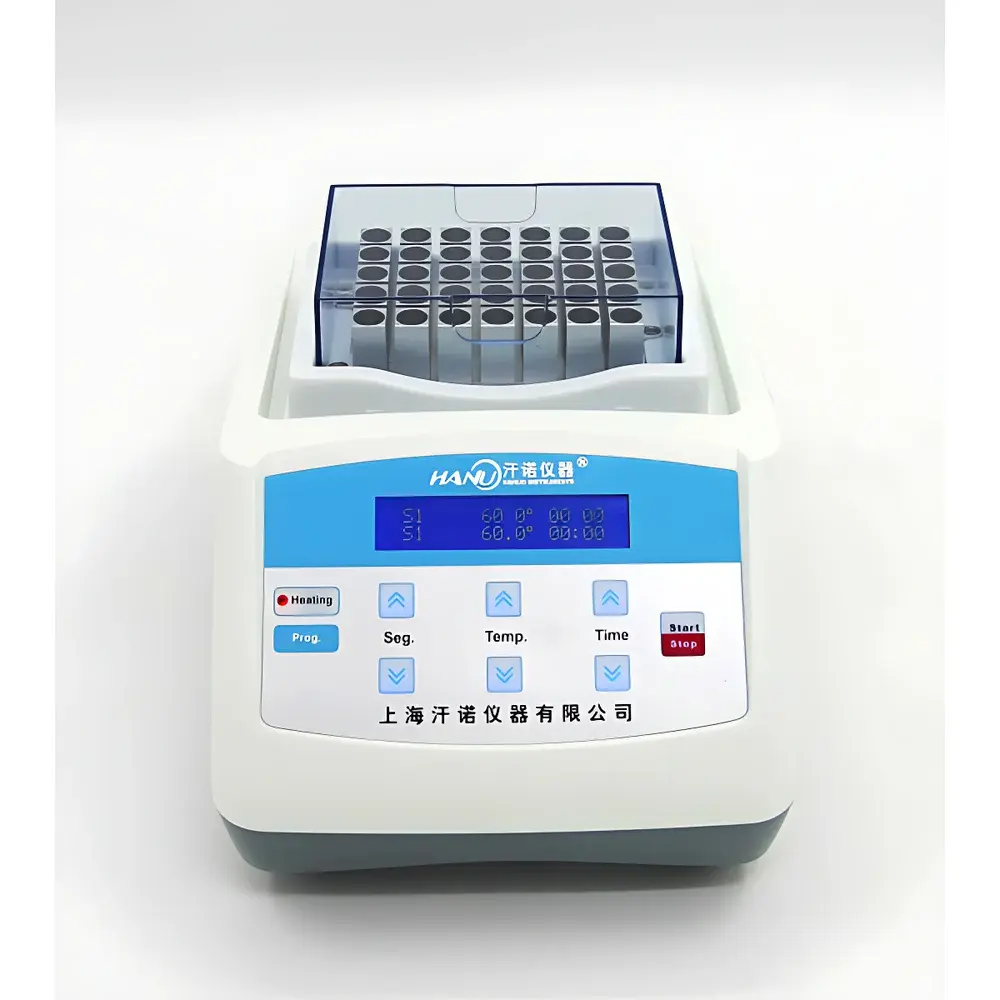
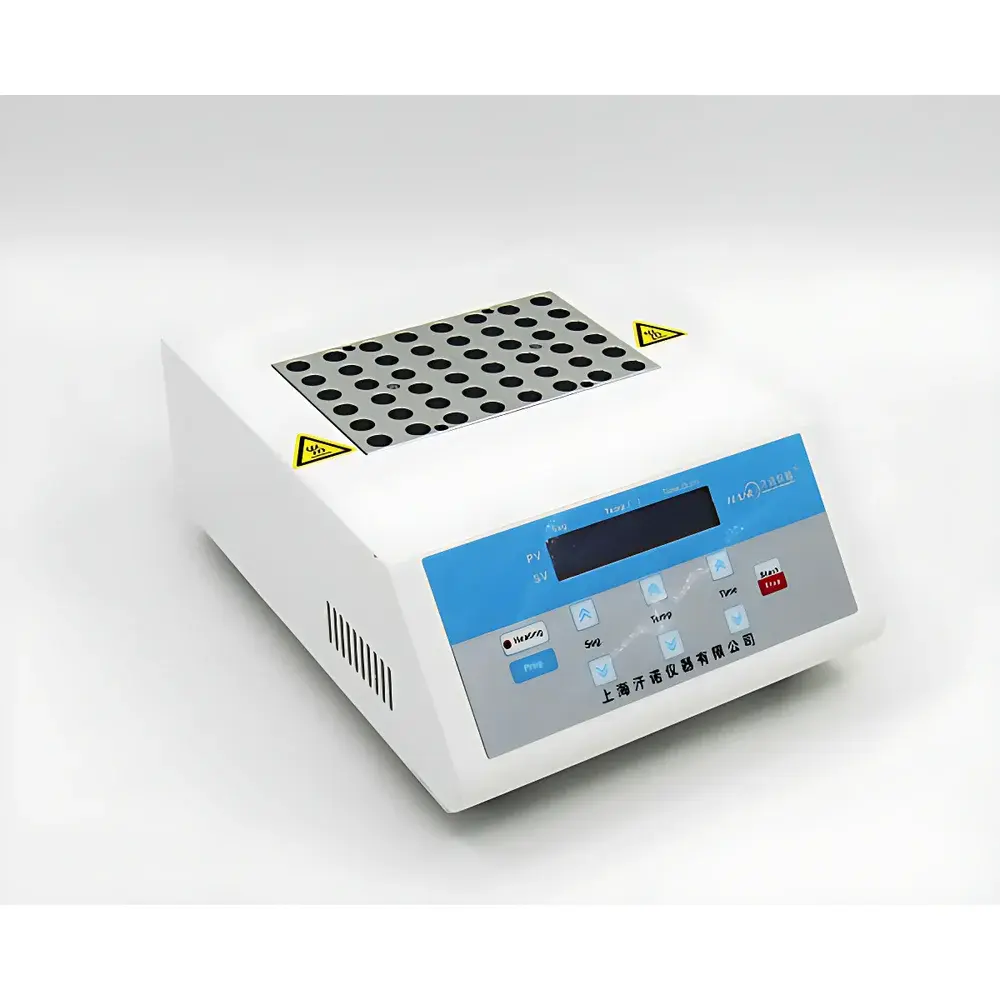
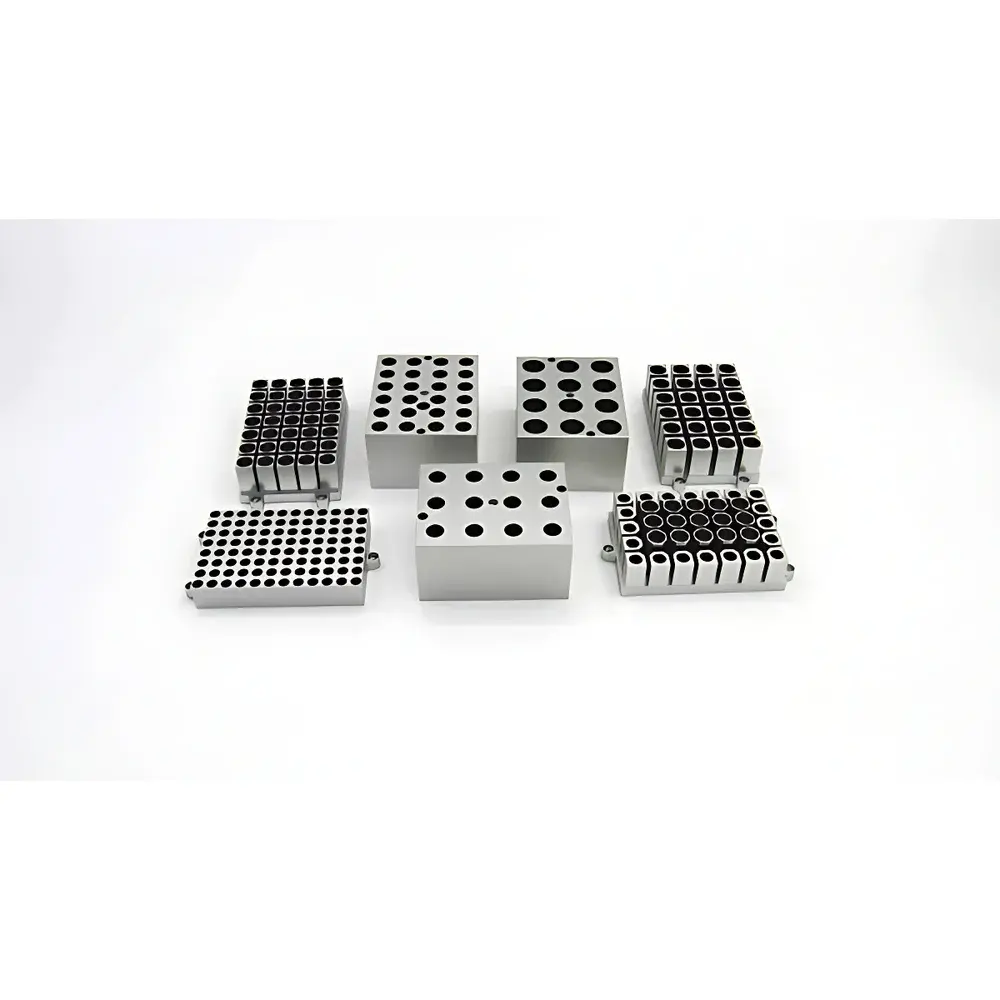
Hanuo HNDTH-100 Dry Block Heater
| Brand | Hanuo |
|---|---|
| Origin | Shanghai, China |
| Model | HNDTH-100 |
| Temperature Range | Ambient +5°C to 100°C |
| Temperature Accuracy | ±0.1°C (display resolution) |
| Temperature Stability @100°C | ≤±0.5°C |
| Block Uniformity @40°C | ≤±0.3°C |
| Heating Time | ≤15 min (20°C → 100°C) |
| Dimensions | 270 × 190 × 170 mm |
| Net Weight | 2.2 kg |
| Power | 150 W |
| Timer Range | 0–99 h 59 min |
| Standard Block | 35 × 2.0 mL tubes |
| Programmable Steps | Up to 5 temperature/time segments |
| Display | LCD with touch keys |
| Safety | Over-temperature protection, self-diagnostic alarm, calibration offset adjustment |
Overview
The Hanuo HNDTH-100 Dry Block Heater is a microprocessor-controlled, compact metal block thermal incubator engineered for precise, reproducible heating of small-volume samples in molecular biology, clinical diagnostics, and quality control laboratories. Unlike water baths—whose thermal inertia, contamination risk, and evaporation limitations hinder protocol consistency—the HNDTH-100 employs solid aluminum heating blocks with high thermal conductivity and low thermal mass to deliver rapid, uniform heat transfer directly to sample vessels. Its operating principle relies on Peltier-free resistive heating combined with PID feedback control, ensuring stable setpoint maintenance across the full range from ambient +5°C to 100°C. Designed for routine use in PCR prep, serum coagulation assays, enzyme inactivation, and nucleic acid denaturation, the unit meets functional requirements aligned with ISO/IEC 17025-compliant laboratory practices where traceable temperature control and minimal inter-run variability are critical.
Key Features
- High-resolution LCD display with intuitive touch-key interface showing real-time temperature and countdown timer
- Multi-step programmable protocol capability: up to five sequential temperature/time segments for unattended operation
- Self-diagnostic system with audible alarm and on-screen fault indication for heater failure, sensor disconnect, or over-temperature events
- User-accessible temperature offset calibration to correct for minor block-to-sensor drift—essential for GLP/GMP-aligned workflows requiring documented instrument verification
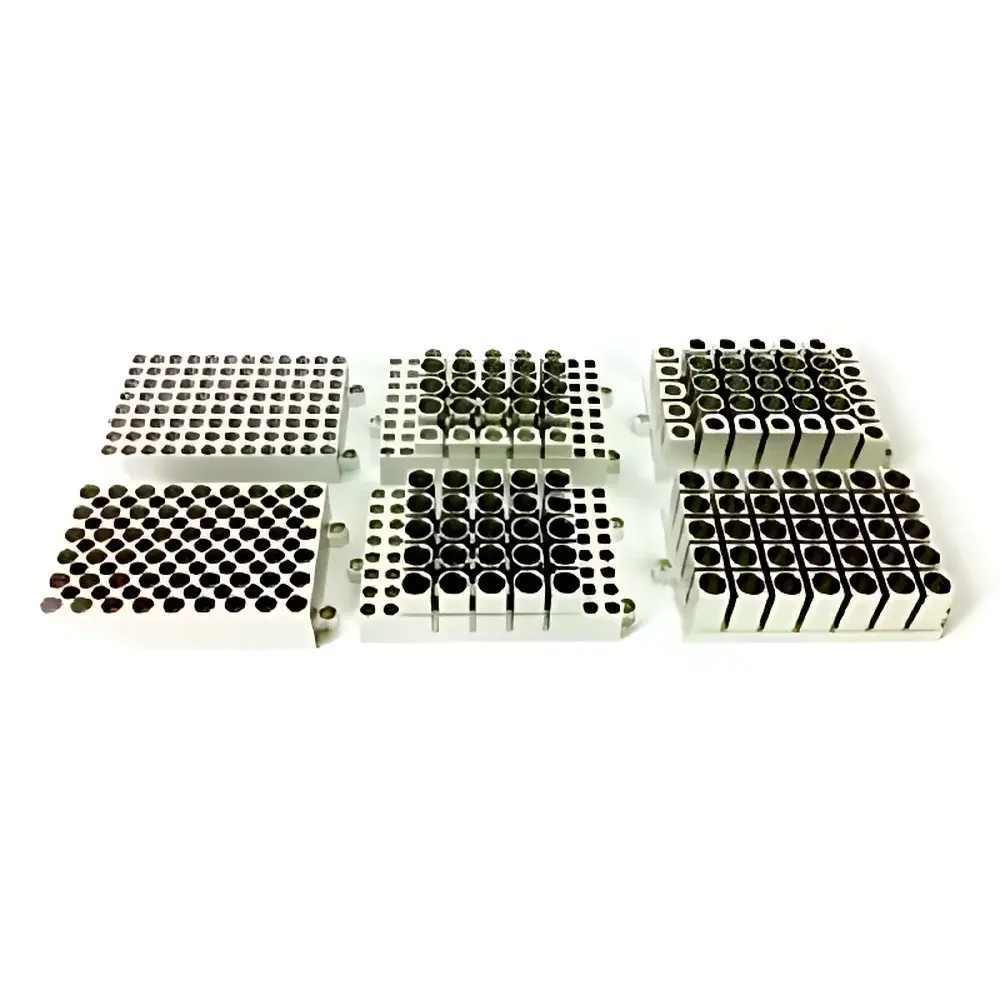
- Quick-release, tool-free block interchange mechanism enabling rapid decontamination and cross-application flexibility
- Dual-stage thermal safety architecture: independent mechanical over-temperature cutoff plus electronic limit monitoring
- Compact footprint (270 × 190 × 170 mm) and lightweight design (2.2 kg) optimized for benchtop deployment in space-constrained cleanrooms or mobile lab carts
Sample Compatibility & Compliance
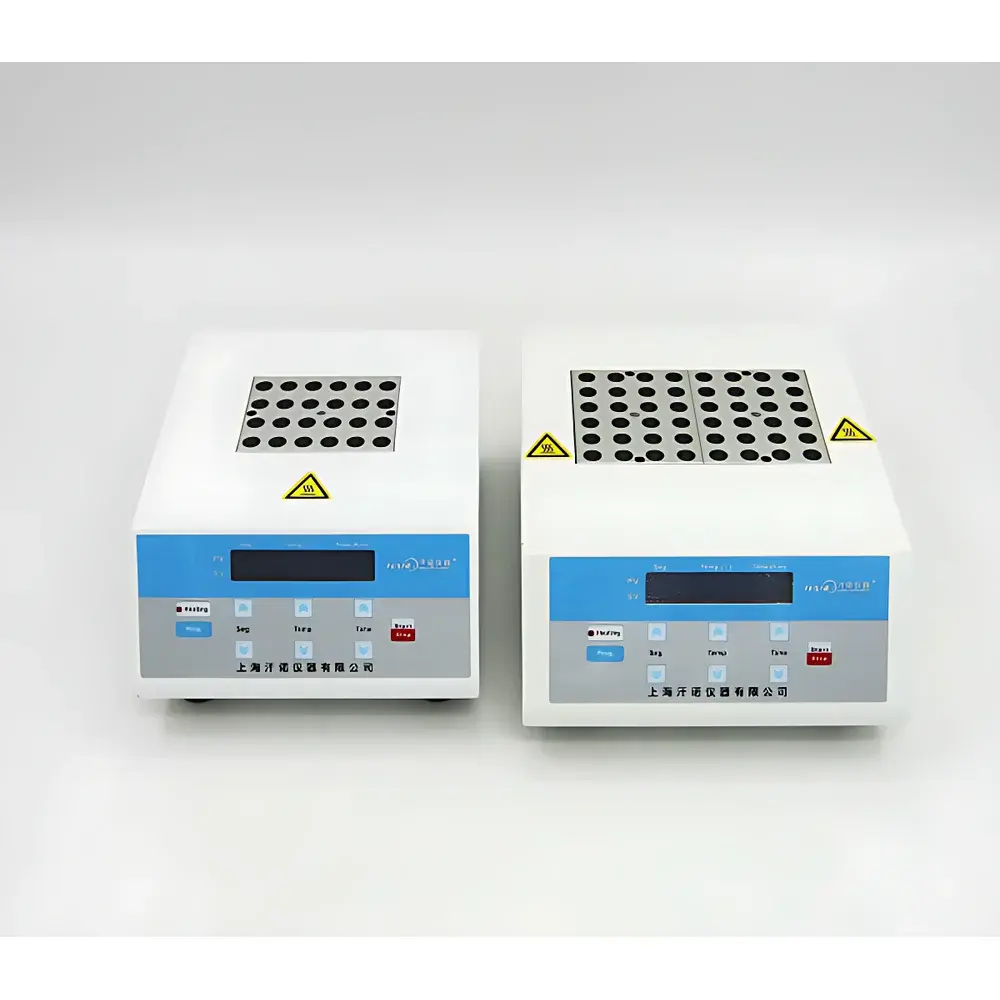
The HNDTH-100 accommodates standardized tube formats via interchangeable aluminum blocks—including 35 × 2.0 mL centrifuge tubes (standard), 96-well PCR plates, 0.2 mL strip tubes, and custom geometries such as square wells (103 × 67 × 30 mm) or mixed-capacity configurations. All blocks maintain ≤±0.3°C uniformity at 40°C and ≤±0.5°C stability at 100°C—performance metrics validated per ASTM E2202-18 guidelines for dry block heater qualification. The device operates without consumables or fluids, eliminating biological carryover risk and supporting ISO 15189-accredited pathology labs’ requirements for non-aqueous thermal platforms. While not certified to IEC 61010-1 or UL 61010B out-of-the-box, its electrical architecture complies with Class I, Pollution Degree 2 specifications when used with grounded outlets in controlled environments.
Software & Data Management
The HNDTH-100 operates as a standalone instrument with no proprietary software dependency. All configuration and logging occur locally via the front-panel interface. Temperature setpoints, timer values, and active program steps are retained in non-volatile memory during power cycling. Though it lacks USB or Ethernet connectivity, the unit supports manual audit trail generation: users may record calibration offsets, block IDs, and operational logs in lab notebooks compliant with FDA 21 CFR Part 11 Annex 11 principles for paper-based systems. For integration into LIMS or ELN ecosystems, external data loggers (e.g., calibrated thermocouple arrays with timestamped output) can be deployed alongside the unit to satisfy traceability requirements in regulated QC/QA settings.
Applications
- Pre-PCR thermal denaturation (95°C for 5 min) and hot-start polymerase activation
- Serum clotting assays requiring strict 37°C incubation for defined durations
- Enzyme inactivation post-reaction (e.g., restriction digests terminated at 65°C)
- Standard curve preparation in ELISA and immunoassays using heated plate warmers
- Stability testing of reference standards under accelerated thermal conditions (40–85°C)
- Cell lysis buffer pre-warming prior to RNA extraction protocols
FAQ
What is the maximum recommended continuous operating temperature?
The HNDTH-100 is rated for sustained operation up to 100°C; prolonged use above 95°C may accelerate thermal aging of the aluminum block surface.
Can the unit be used for cooling applications?
No—it is a heating-only device with no active cooling or Peltier elements.
Is the temperature calibration traceable to NIST standards?
The factory calibration is performed against reference thermometers calibrated to national metrology institutes; end-user recalibration requires an external Class A PT100 probe and documented procedure.
Are replacement blocks available with custom well geometries?
Yes—Hanuo offers OEM block fabrication services for non-standard tube diameters, multi-format layouts, or specialized well depths upon technical specification submission.
Does the device support password-protected parameter locking for shared lab environments?
No—this model does not include user-level access control; physical key switches or procedural SOPs are recommended for multi-user integrity management.



