
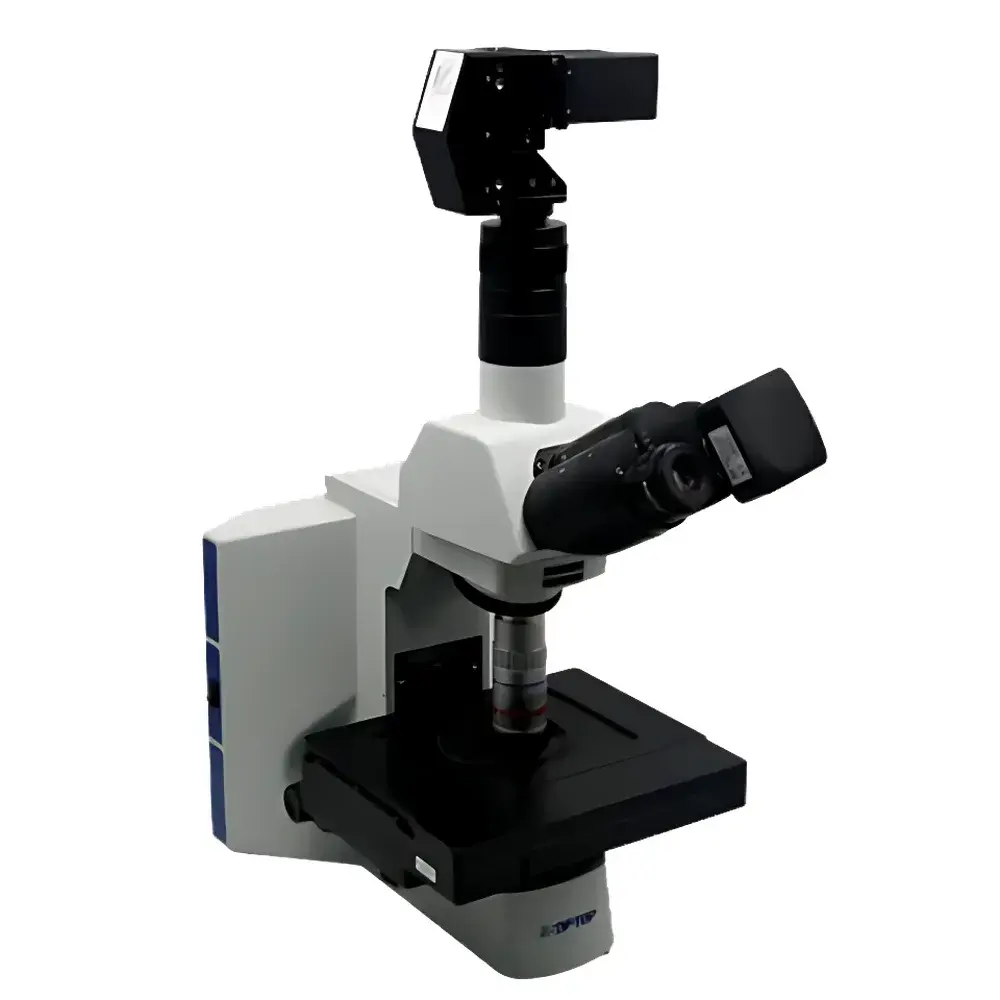
HeadWall HSM Visible-Near Infrared Hyperspectral Microscopic Imaging System
| Brand | HeadWall |
|---|---|
| Origin | USA |
| Manufacturer Status | Authorized Distributor |
| Product Origin | Imported |
| Model | HSM |
| Price Range | USD 55,000 – 138,000 (FOB) |
| Operating Principle | Push-broom Scanning |
| Deployment Environment | Benchtop / Laboratory Ground-based |
Overview
The HeadWall HSM Visible-Near Infrared Hyperspectral Microscopic Imaging System is a precision-engineered benchtop instrument designed for spatially resolved spectral analysis at the microscopic scale. It integrates a high-fidelity push-broom scanning hyperspectral imager with an inverted or upright optical microscope platform—enabling pixel-level spectral acquisition across contiguous wavelength bands. The system operates on the fundamental principle of spatial-spectral separation: as the sample stage translates under controlled motion, the imaging spectrometer captures line-by-line spectral data along a single spatial dimension while dispersing light across the detector array in the spectral dimension. This yields a three-dimensional data cube (x, y, λ), where each voxel contains a full reflectance, transmittance, or fluorescence spectrum. With dual-band configuration options—400–1000 nm (VNIR) and 900–1700 nm (SWIR)—the HSM supports both electronic transition-based contrast (e.g., hemoglobin, melanin, chlorophyll) and vibrational overtone/combination band detection (e.g., C–H, O–H, N–H bonds), making it suitable for label-free chemical mapping in heterogeneous biological and pharmaceutical specimens.
Key Features
- Modular architecture with physically decoupled optical, spectroscopic, and motion-control subsystems—facilitating field-upgradable firmware, sensor replacement, and integration with third-party microscopes or environmental chambers.
- High optical throughput and spectral fidelity enabled by HeadWall’s patented holographic transmission gratings and aberration-corrected fore-optics, minimizing stray light and spectral smile.
- Standard spectral sampling intervals of ≤2.5 nm (FWHM) in VNIR and ≤5 nm (FWHM) in SWIR, calibrated against NIST-traceable standards prior to shipment.
- Motorized XYZ translation stage with sub-micron repeatability (±0.5 µm) and programmable scan velocity (0.1–10 mm/s), synchronized precisely with camera exposure and line rate via hardware triggering.
- Embedded real-time preview mode with spectral index calculation (e.g., NDVI, PRI, tNIR) for rapid region-of-interest selection prior to full-cube acquisition.
Sample Compatibility & Compliance
The HSM accommodates standard microscope slides (1″ × 3″), petri dishes (35–100 mm), tissue sections (4–20 µm thickness), cultured monolayers, and thin-film substrates without requiring vacuum or cryogenic handling. It complies with IEC 61000-6-3 (EMC emissions) and IEC 61000-6-2 (immunity), and its optical path meets ISO 10110-7 surface quality specifications for transmitted wavefront error (<λ/4 @ 633 nm). Data acquisition workflows support audit-trail generation per FDA 21 CFR Part 11 requirements when operated with validated software modules. The system is routinely deployed in GLP-compliant histopathology labs and GMP-aligned formulation development environments for raw material verification and blend uniformity assessment.
Software & Data Management
Acquisition and processing are managed through HeadWall’s SpectralView™ v5.x software suite, which runs natively on Windows 10/11 (64-bit) and supports direct interfacing with MATLAB, Python (via HDF5 and ENVI-compatible BIL/BIP formats), and ENVI Classic/SWIR. The software includes spectral library matching (USGS, ECOSTRESS, custom), endmember extraction (VCA, N-FINDR), supervised classification (SVM, Random Forest), and quantitative unmixing (MCR-ALS). All raw and processed datasets are stored with embedded metadata—including instrument configuration, calibration timestamps, stage coordinates, and illumination parameters—in HDF5 format compliant with the HDF Group’s Scientific Data Model (SDM) v1.12.
Applications
- Label-free histological differentiation of tumor margins in frozen-section pathology using spectral signatures of collagen cross-linking and nuclear-to-cytoplasmic ratio.
- In-process monitoring of tablet coating thickness and API distribution in pharmaceutical solid dosage forms via SWIR absorption mapping (1450 nm, 1940 nm).
- Subcellular localization of metabolites (e.g., NADH, FAD) in live-cell imaging under physiological illumination conditions (≤1 mW/cm² irradiance).
- Identification and quantification of microplastics (PET, PE, PP) in environmental tissue digests using second-derivative spectral matching in the 1600–1750 nm range.
- Quality control of monoclonal antibody aggregates in bioprocess intermediates via VNIR-based scattering anisotropy analysis.
FAQ
What microscope platforms is the HSM compatible with?
The HSM interfaces with major OEM inverted and upright microscopes (Olympus IX series, Zeiss Axio Observer, Nikon Eclipse Ti) via C-mount or tube-lens coupling; custom optical adapters are available upon request.
Does the system support real-time spectral classification during acquisition?
Yes—SpectralView™ supports GPU-accelerated on-the-fly classification using pre-trained models; latency is typically <150 ms per frame at 1024×1024 spatial resolution.
Can spectral calibration be performed in-house?
Yes—users may perform wavelength and radiometric recalibration using optional NIST-traceable tungsten-halogen and mercury-argon lamp kits, with validation reports exportable in CSV and PDF.
Is remote operation supported for multi-user lab environments?
The system supports secure RDP and VNC access over LAN; concurrent acquisition and analysis sessions are managed via role-based user accounts with configurable permissions.
What maintenance is required for long-term spectral stability?
Annual verification of spectral registration and photometric linearity is recommended; HeadWall provides certified service visits with full traceability to NIST SRM 2035 and 2036.






