
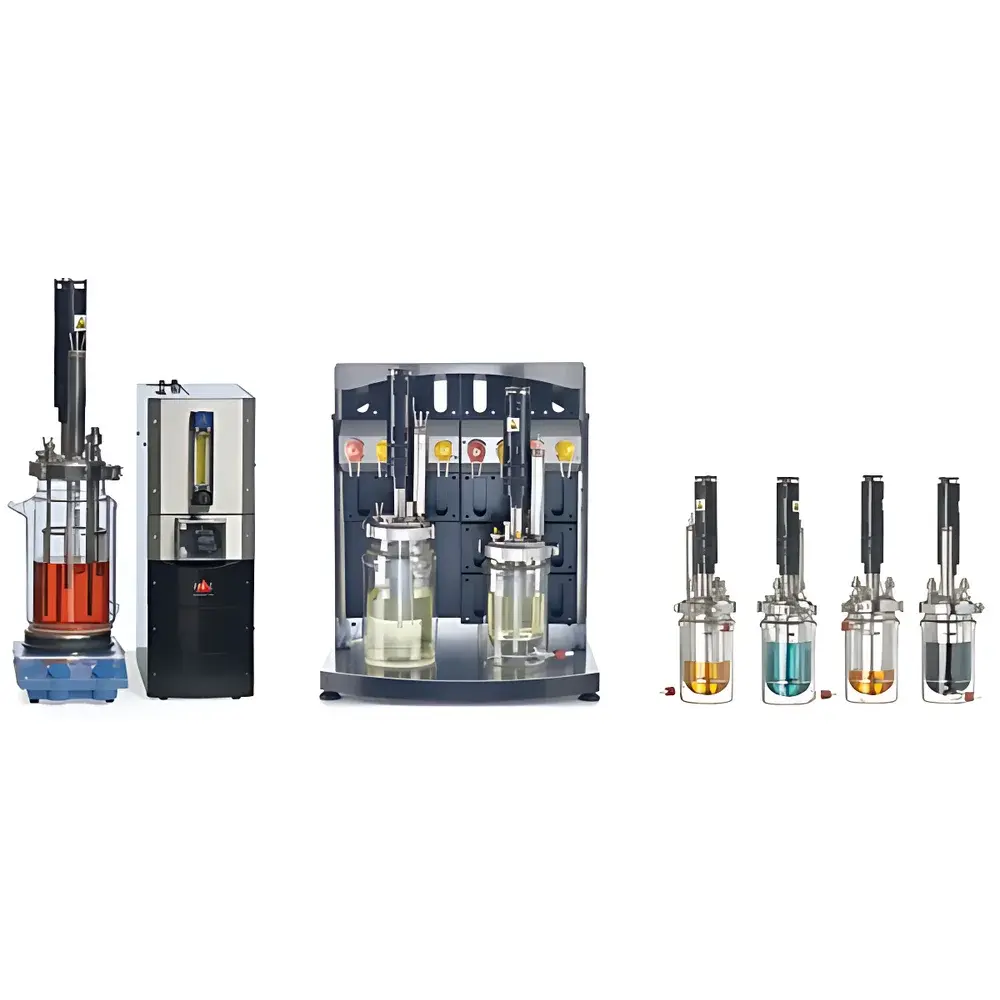
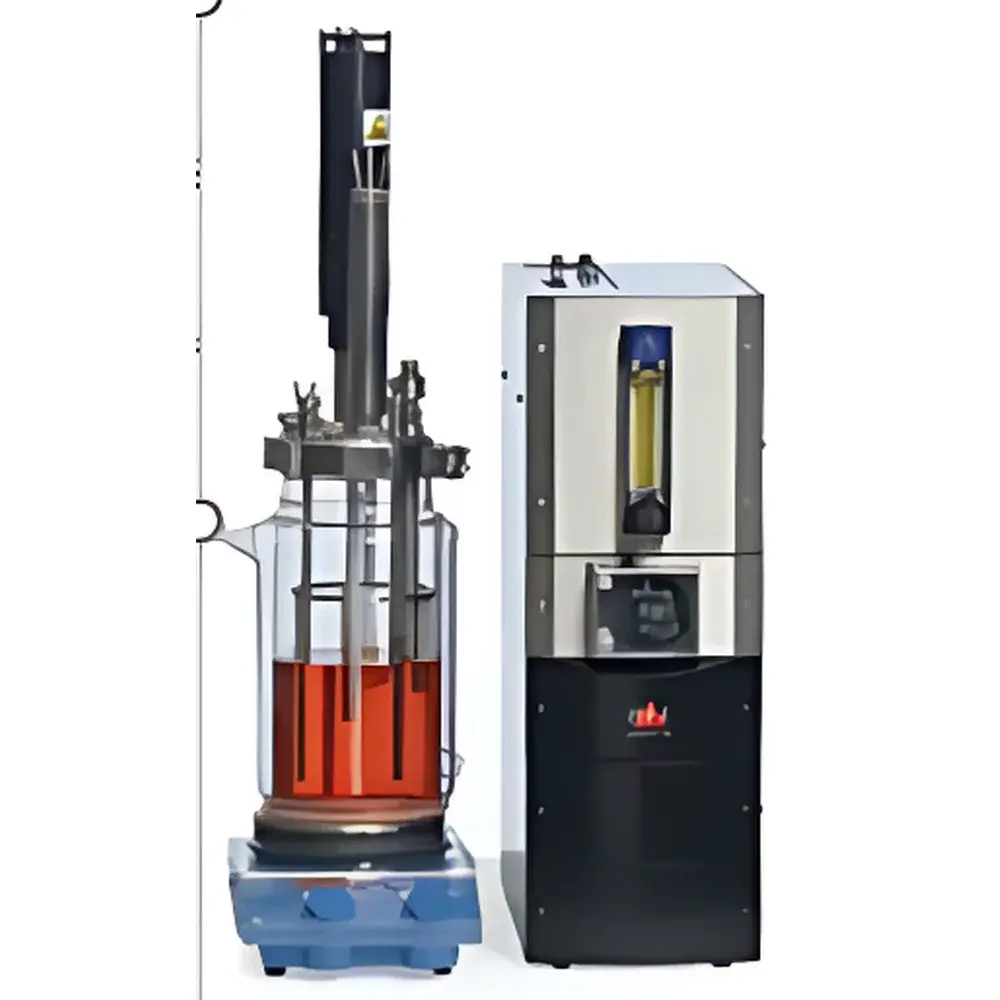
HEL BioXplorer 5000 Benchtop Parallel Bioreactor System
| Brand | HEL |
|---|---|
| Origin | United Kingdom |
| Manufacturer Type | Authorized Distributor |
| Origin Category | Imported |
| Model | BioXplorer 5000 |
| Reactor Type | Jacketed Glass Vessel |
| Working Volume | 5 L |
| Operating Pressure | Low-Pressure (0–1 MPa Vacuum Range) |
| Construction Material | Borosilicate Glass (DIN/ISO Compliant) |
| Temperature Range | 25–60 °C |
| Agitation | Electromagnetic (200–1200 rpm) or Top-Drive Mechanical (50–1500 rpm) |
| pH & Redox Monitoring | Integrated In-Line Sensors |
| Sterilization Compatibility | Autoclavable Sensors & Vessels |
| Parallel Operation Capacity | Up to 4 × 5 L Vessels |
| Control Architecture | Fully Independent Channel Management |
| Software Modules | Entry-Level Simulation, Programmable Multi-Step Sequencing, Full Logic-Based Execution |
Overview
The HEL BioXplorer 5000 is a modular, benchtop parallel bioreactor system engineered for scalable microbial, mammalian, and enzymatic process development. It operates on a fundamentally integrated platform architecture—combining jacketed glass reactor vessels, real-time physicochemical sensing, and channel-isolated control logic—to support rigorous experimental design from early-stage screening through to pilot-scale parameter mapping. Unlike monolithic fermentation systems, the BioXplorer 5000 implements a true parallel architecture: each reactor vessel functions as an autonomous unit with independent temperature regulation, agitation control, gas blending, pH/redox feedback, and data acquisition—enabling statistically robust comparative studies under identical environmental conditions. Its core measurement principles include potentiometric pH monitoring (±0.02 pH unit accuracy), redox potential tracking (±5 mV), optical turbidity detection (850 nm LED source), and calibrated torque-based power input calculation for metabolic activity inference. Designed in accordance with ISO 13485-aligned manufacturing practices and validated for GLP-compliant workflows, the system meets foundational requirements for upstream bioprocess qualification per ICH Q5D and USP .
Key Features
- Fully independent multi-channel control: Each of up to four 5 L reactors maintains discrete setpoints for temperature, agitation, gas flow, pH, and feeding—no cross-talk or shared actuator dependency.
- Modular vessel interchangeability: Standardized flange interfaces (DIN 1511) allow rapid swap between 0.5 L, 1 L, 2 L, 5 L, and 10 L jacketed borosilicate glass vessels without recalibration or mechanical reconfiguration.
- Dual agitation architecture: Electromagnetic coupling (200–1200 rpm) for vessels ≤2 L; top-driven mechanical stirring (50–1500 rpm) with magnetic or dynamic seal options for ≥5 L configurations—both compatible with autoclave cycles (121 °C, 20 min).
- Integrated sensor suite: Factory-calibrated pH and redox electrodes, optional in-line turbidity probe (Nephelometric Units), and pressure-rated gas mass flow controllers (air, O₂, N₂, CO₂) with PID-based pH modulation via CO₂ sparging.
- Thermal management: Peltier-assisted heating and external recirculating chiller integration (−10 to +80 °C coolant range) enable precise thermal ramping (±0.2 °C stability) and exotherm capture during high-density cultivation.
Sample Compatibility & Compliance
The BioXplorer 5000 accommodates aerobic and microaerobic cultivations across bacterial (E. coli, Bacillus spp.), yeast (S. cerevisiae, P. pastoris), and suspension-adapted mammalian cell lines (CHO, HEK293). All wetted parts—including vessel bodies, sampling ports, and sensor housings—are constructed from ASTM E438 Type I, Class A borosilicate glass (3.3), compliant with ISO 3585 and USP . Sensors are certified for repeated steam sterilization (EN 285) and validated per FDA 21 CFR Part 11 for electronic records integrity, including full audit trail logging, user role-based access control, and digital signature capability. The system supports compliance documentation packages aligned with ISO 9001:2015, ISO/IEC 17025, and EU GMP Annex 11 requirements.
Software & Data Management
HEL’s BioControl™ software comprises three interoperable modules: (1) Simulate—single-step protocol modeling with thermodynamic and kinetic boundary inputs; (2) Program—multi-stage sequencing with conditional branching (e.g., “if DO < 30% → increase agitation by 100 rpm”); and (3) Execute—full logic-based automation with real-time dashboard visualization, alarm escalation, and export to CSV, HDF5, or LIMS-compatible XML. All data streams—including timestamped sensor readings, actuator states, and manual annotations—are stored in encrypted SQLite databases with SHA-256 hashing. Remote monitoring is enabled via TLS 1.2-secured WebSocket connections, supporting 24/7 access from validated endpoints with session timeout and certificate pinning.
Applications
- Strain selection and media optimization under controlled pH, DO, and feeding regimes.
- Scale-down model validation for commercial bioreactors (e.g., correlation of kLa, mixing time, and shear stress metrics).
- Process characterization per ICH Q5B: assessment of glycosylation profiles under varying temperature-pH-gas interplay.
- Enzyme kinetics studies requiring precise substrate gradient generation and real-time turbidity-coupled product formation tracking.
- Regulatory filing support: generation of consistent, auditable datasets for IND/IMPD submissions.
FAQ
Is the BioXplorer 5000 suitable for sterile mammalian cell culture?
Yes—vessels, sensors, and gas lines are fully autoclavable; the system supports aseptic sampling, inoculation, and harvest via sterile diaphragm valves and validated filter housings.
Can I integrate third-party analytical devices (e.g., inline Raman or HPLC) with the BioControl™ software?
Yes—the software provides OPC UA and Modbus TCP interfaces for bidirectional communication with external analyzers and peripheral hardware.
What level of validation support does HEL provide for GMP environments?
HEL supplies IQ/OQ documentation templates, traceable calibration certificates (NIST-traceable standards), and on-site installation/commissioning services compliant with ASTM E2500 and Annex 15.
Does the system support fed-batch and perfusion modes?
Yes—programmable peristaltic pumps with gravimetric feedback, coupled with real-time biomass estimation algorithms, enable adaptive feed strategies and continuous bleed-control logic.
How is temperature uniformity maintained across multiple vessels during parallel operation?
Each vessel employs independent PID-controlled heating jackets and dedicated coolant loop routing—validated to ±0.3 °C inter-vessel deviation at steady state (per ASTM E2234).



