
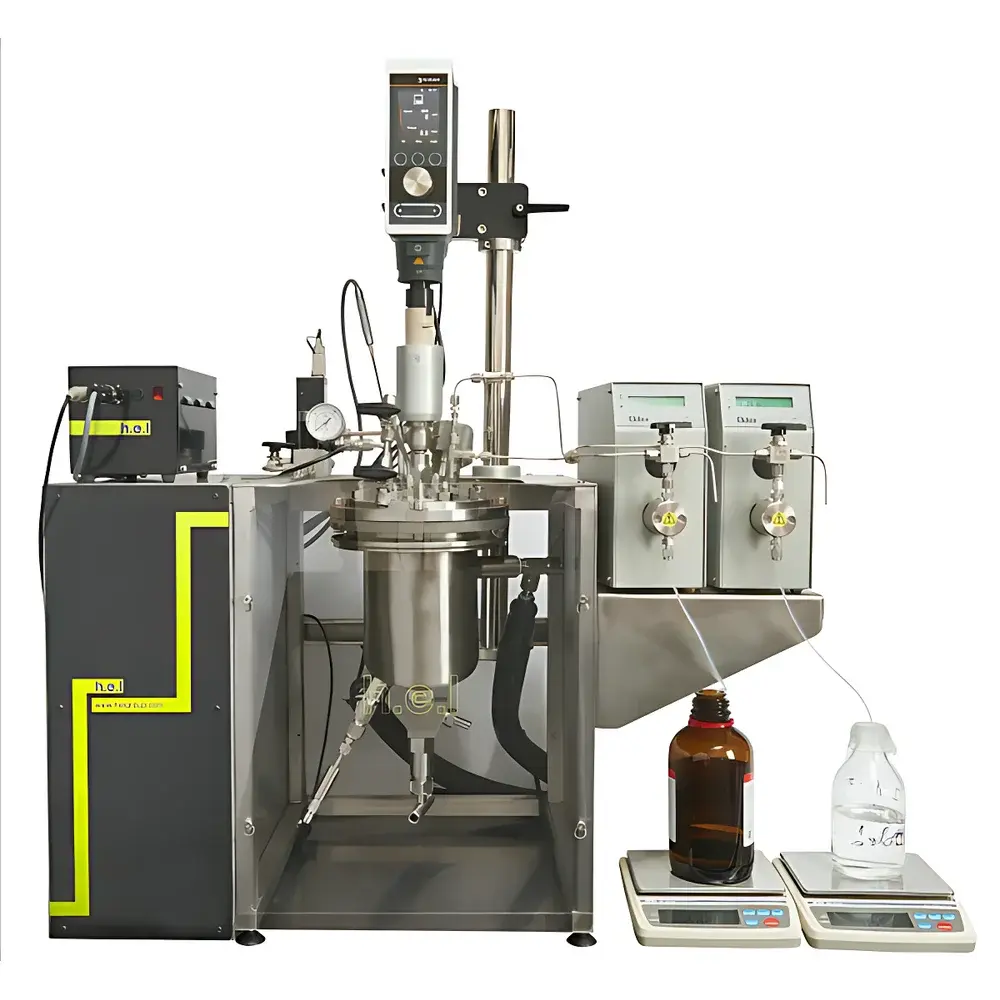
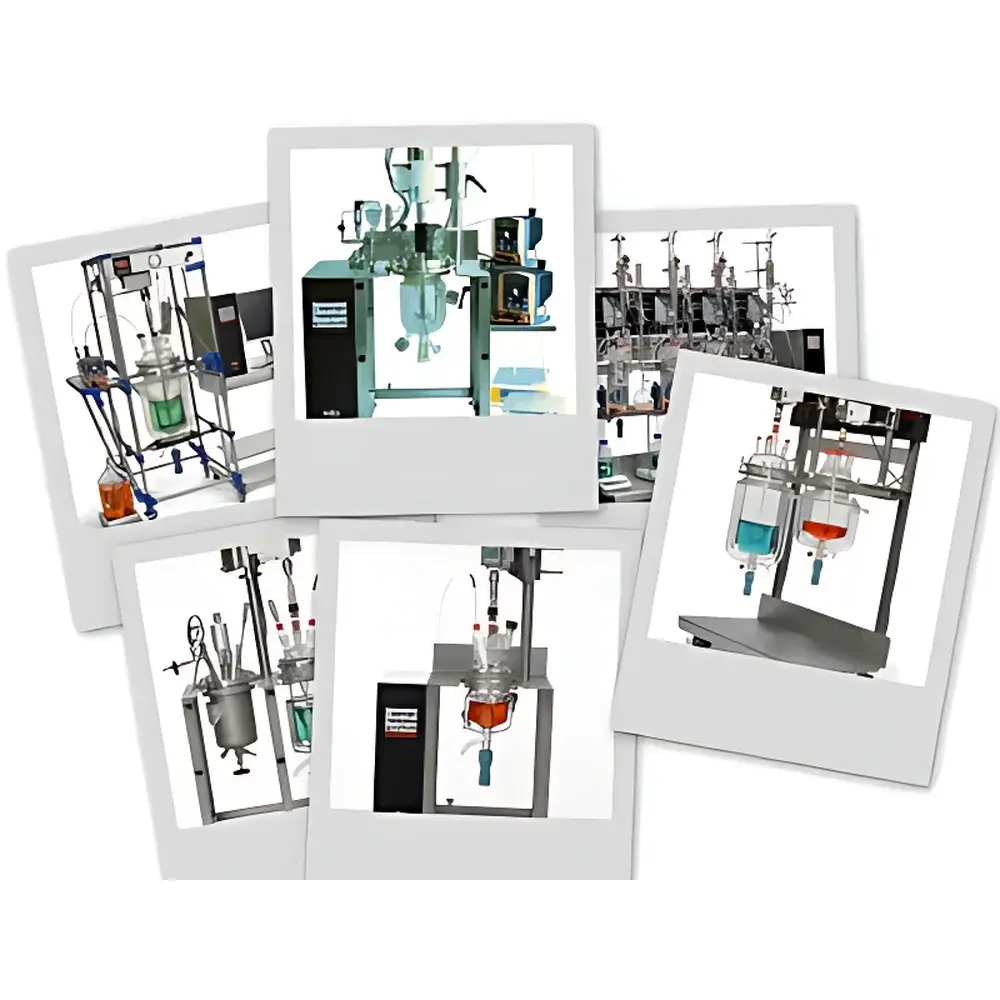
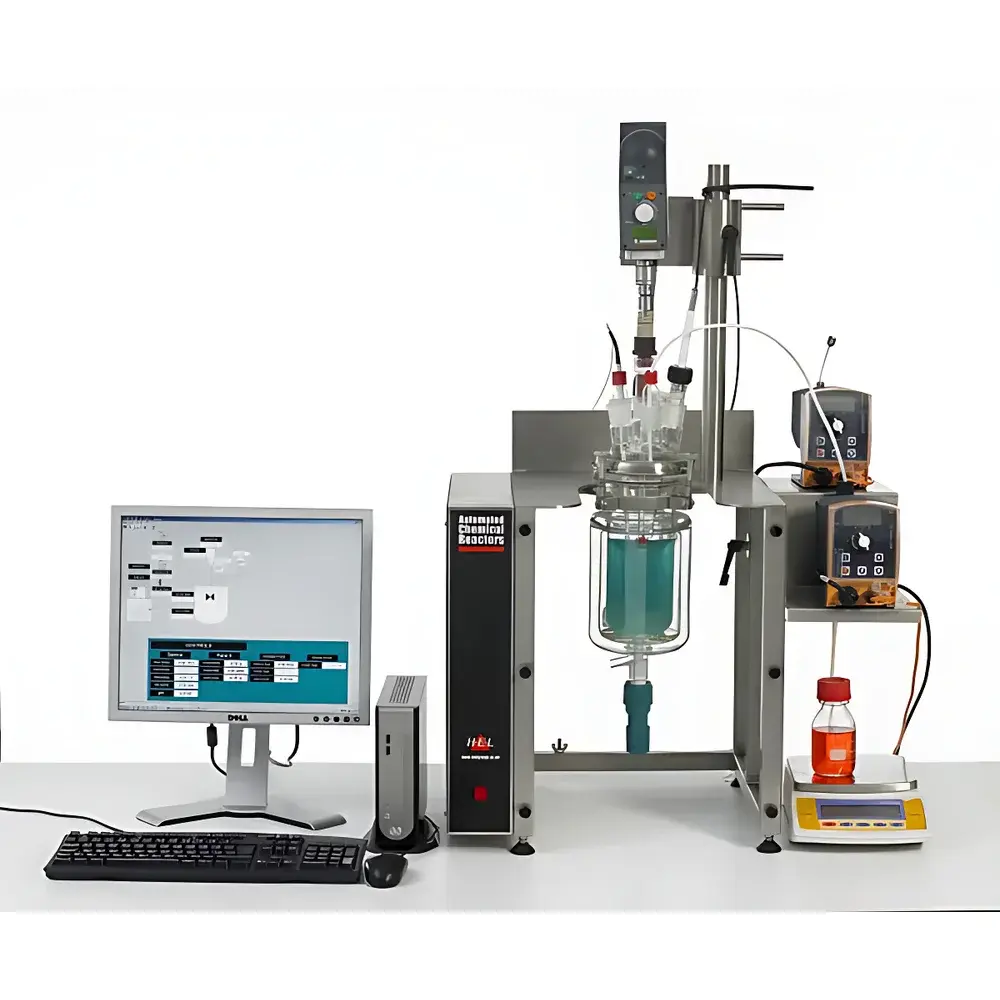
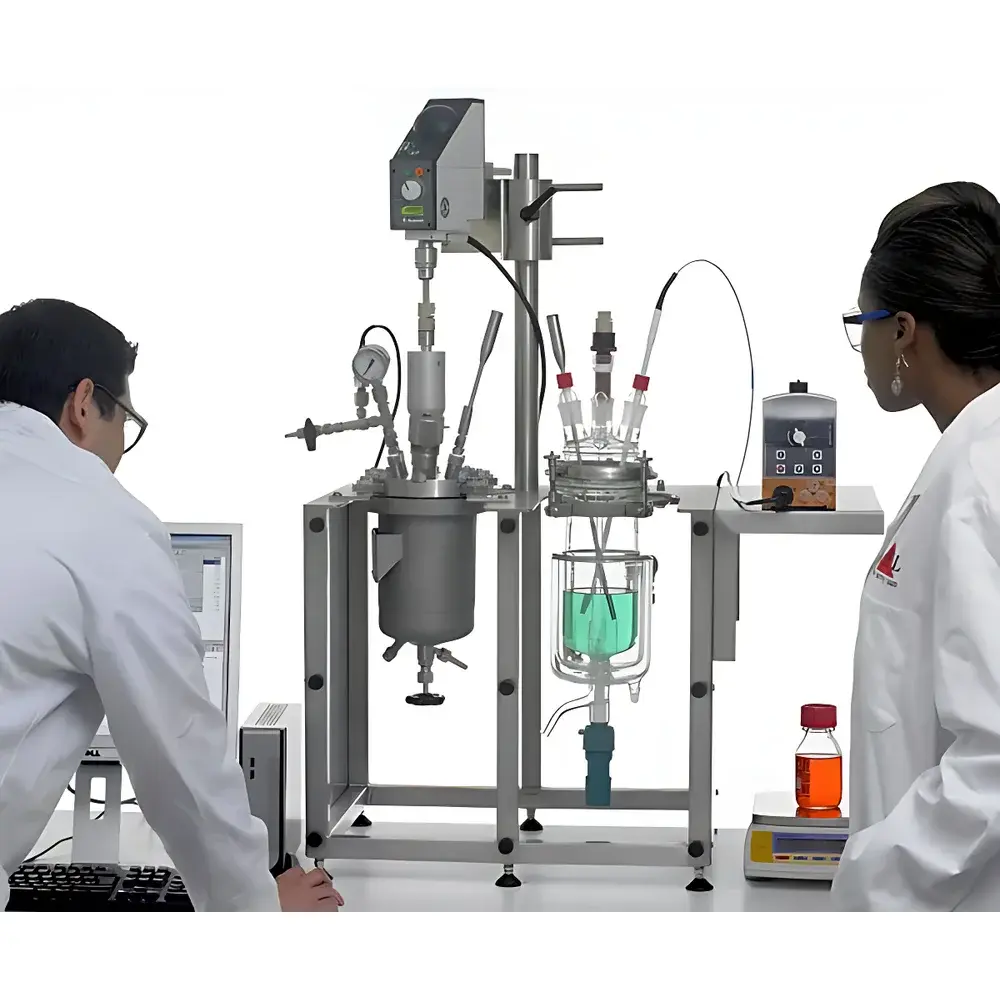
HEL SIMULAR Automated Reaction Calorimeter
| Brand | HEL |
|---|---|
| Origin | UK |
| Model | SIMULAR |
| Instrument Type | Reaction Calorimeter |
| Measurement Mode | Isothermal Calorimeter |
| Temperature Range | −80 to 350 °C |
| Temperature Resolution | 0.001 K |
| Precision | ±0.1% |
| Single-Sample Test Duration | 300 min |
| Heat Capacity | 10,000 J |
| External Water Bath Volume | 1000 mL |
| Internal Water Bath Volume | 1000 mL |
Overview
The HEL SIMULAR Automated Reaction Calorimeter is a high-precision, modular benchtop system engineered for quantitative thermal analysis of chemical reactions under controlled process-relevant conditions. It implements three complementary calorimetric principles—heat flow calorimetry, reflux calorimetry, and HEL’s proprietary power compensation calorimetry (direct measurement of electrical power required to maintain isothermal conditions)—enabling rigorous thermodynamic and kinetic characterization across diverse reaction chemistries. Unlike conventional differential scanning or adiabatic calorimeters, the SIMULAR operates in true isothermal mode with active temperature stabilization, delivering real-time heat flow data (dQ/dt), cumulative reaction enthalpy (ΔHr), heat capacity (Cp), and thermal accumulation profiles with traceable metrological integrity. Its design prioritizes scalability from lab-scale screening to pilot-scale process development, supporting seamless transfer of thermal safety and kinetics data to process simulation tools (e.g., gPROMS, Aspen Custom Modeler) and regulatory submissions.
Key Features
- Triple-mode calorimetry: Simultaneous or selective deployment of heat flow, reflux, and power compensation methods—each validated per ASTM E698 and ISO 11357-4 for reproducible enthalpy quantification.
- Modular reactor architecture: Standard 1 L atmospheric glass vessel; configurable reactor volumes from 0.2 L to 20 L; pressure rating up to 200 bar using Hastelloy C-276, Inconel 625, or custom-lined stainless steel.
- Extended thermal operating range: −80 °C to +350 °C via integrated heating/cooling circulators with ±0.1 °C accuracy and 0.001 K resolution—validated against NIST-traceable Pt100 sensors.
- Automated material handling: Integrated liquid dosing (peristaltic, syringe, and pressurized reservoir pumps), gas mass flow control (MFC), and HEL’s patented screw-based solid dosing system for precise, contamination-free powder addition.
- In situ sampling capability: Optional automated sampling module compliant with GLP guidelines, enabling timed extraction of reaction aliquots for offline HPLC/GC analysis without manual intervention.
- Compact footprint & ventilation compatibility: Designed for installation within standard fume hoods; requires only single-phase 230 V AC power and deionized water cooling loop.
Sample Compatibility & Compliance
The SIMULAR accommodates heterogeneous, multiphase, and highly exothermic reactions—including nitration, hydrogenation, Grignard formation, polymerization, and crystallization—across organic, pharmaceutical, and fine chemical synthesis. Reactor materials are selected per ICH Q5A/Q5D biocompatibility requirements and corrosion resistance standards (ASTM G31, NACE MR0175). All thermal data acquisition meets FDA 21 CFR Part 11 compliance when paired with HEL’s validated software suite, including full electronic audit trails, user access controls, and data integrity logging. System validation documentation supports IQ/OQ/PQ execution per GMP Annex 15 and ISO/IEC 17025 laboratory accreditation requirements.
Software & Data Management
Control and analysis are performed via HEL’s proprietary iCIRUS software—a Windows-based platform featuring intuitive workflow-driven experiment setup, real-time visualization of heat flow, temperature, pressure, and dosing profiles, and automated calculation of reaction onset, adiabatic temperature rise (ΔTad), time-to-maximum-rate (TMR), and thermal accumulation factor (φ). Raw data export is available in CSV, ASCII, and HDF5 formats; metadata tagging conforms to ISA-88/ISA-95 object models for MES integration. Software validation packages include test scripts, URS verification reports, and cybersecurity hardening aligned with IEC 62443-3-3.
Applications
- Process safety assessment: Determination of thermal runaway potential, MTSR, and criticality classes per CCPS Guidelines and EU REACH Annex VII.
- Kinetic modeling: Extraction of Arrhenius parameters and reaction order via model-fitting of calorimetric heat flow curves.
- Scale-up support: Correlation of lab-scale heat transfer coefficients (U-value) and mixing efficiency with pilot plant data using dimensionless number analysis (Re, Fr, Nu).
- Crystallization process understanding: Quantification of latent heat evolution during nucleation and growth phases under controlled supersaturation.
- Catalyst screening: Comparative evaluation of catalyst activity and selectivity through enthalpy profiling across temperature and concentration gradients.
- Regulatory dossier preparation: Generation of thermodynamic datasets compliant with ICH Q1E, Q5C, and FDA Guidance for Industry on Process Validation.
FAQ
What calorimetric methods does the SIMULAR support, and how do they differ?
The SIMULAR uniquely integrates heat flow calorimetry (measuring temperature gradient across reactor wall), reflux calorimetry (quantifying vapor condensation enthalpy), and power compensation calorimetry (direct electrical power measurement to maintain isothermality). Each method addresses specific reaction characteristics—e.g., power compensation excels for low-heat-capacity systems, while reflux is optimal for volatile solvent systems.
Can the SIMULAR operate under vacuum or high-pressure conditions?
Yes. Standard configurations support vacuum (−1 bar gauge) and pressures up to 60 bar with stainless steel reactors; custom-engineered vessels achieve 200+ bar with alloy-specific mechanical certification per PED 2014/68/EU.
Is solid dosing truly automated and gravimetrically verified?
HEL’s screw-based solid dosing system provides programmable mass delivery (±1 mg repeatability) with integrated load-cell feedback; optional inline NIR monitoring enables real-time composition verification during addition.
How is data integrity ensured for regulated environments?
iCIRUS software includes role-based authentication, immutable audit trails, electronic signatures, and backup encryption—fully compliant with ALCOA+ principles and auditable under FDA, EMA, and PMDA inspections.
What level of technical support and service coverage is available globally?
HEL provides 24/7 remote diagnostics, on-site engineering support within 72 hours in EMEA/APAC, and certified calibration services traceable to UKAS-accredited laboratories—with documented turnaround times and SLA-backed response commitments.



