
HengaoDe H18321 Paraffin Light Stability Tester with Digital PID Temperature Control
| Brand | HengaoDe |
|---|---|
| Origin | Beijing, China |
| Manufacturer Type | Authorized Distributor |
| Product Origin | Domestic (China) |
| Model | H18321 |
| Price | USD 1,050 (FOB Beijing) |
| Applicable Standard | SH/T 0404–2008 |
| Temperature Control Range | Ambient to 90 °C |
| Temperature Accuracy | ±1 °C |
| Temperature Controller | Fuji Electric Dual-Channel Digital PID Controller with PT100 Sensor |
| Light Source | 375 W High-Pressure Mercury Lamp (365 nm, 140 mm arc length) |
| UV Irradiance Range | 0–100 mW/cm² (adjustable, digital display) |
| Air Agitation | All-Metal Axial-Flow Fan |
| Observation Window | UV-Blocking Safety Glass |
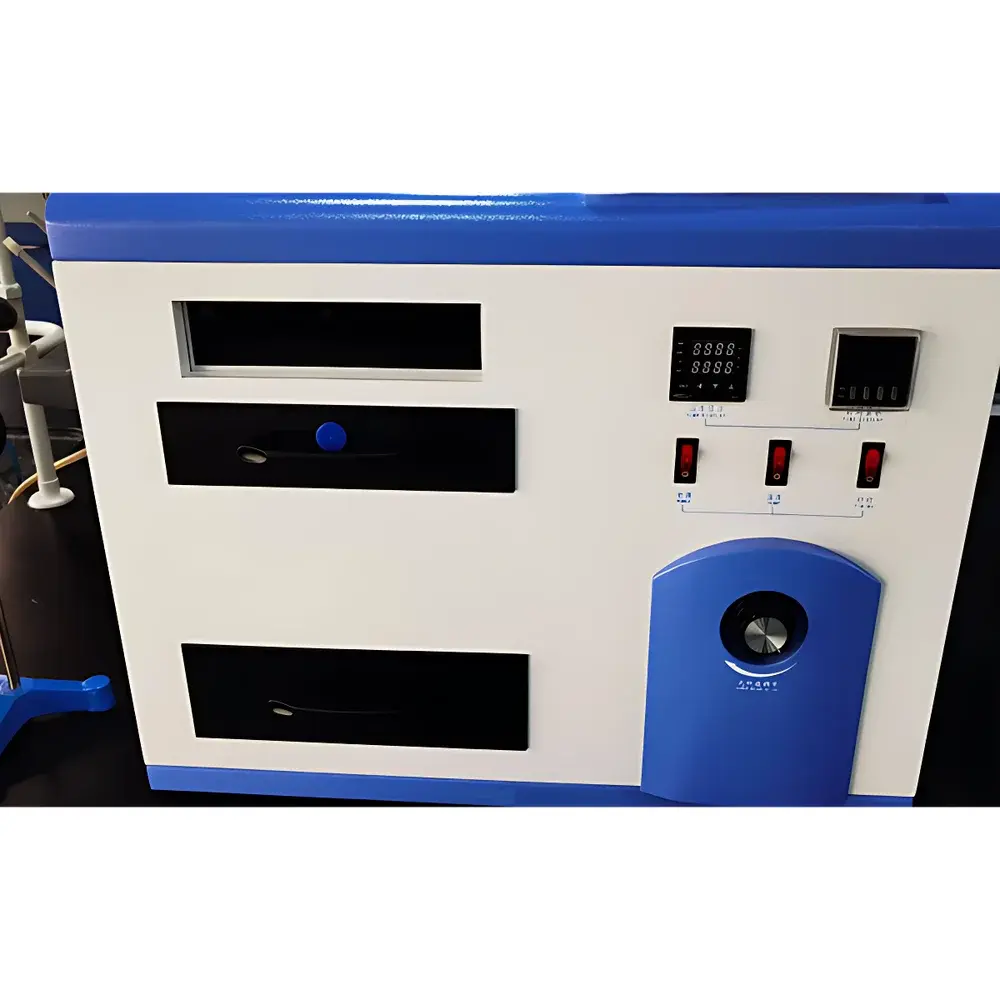
| Enclosure Material | 10 mm Anodized Aluminum Alloy (sandblasted finish) |
| Power Supply | AC 220 V ±10%, 50 Hz |
| Total Power Consumption | 0.5 kW |
| Operating Environment | 0–45 °C, ≤80% RH |
Overview
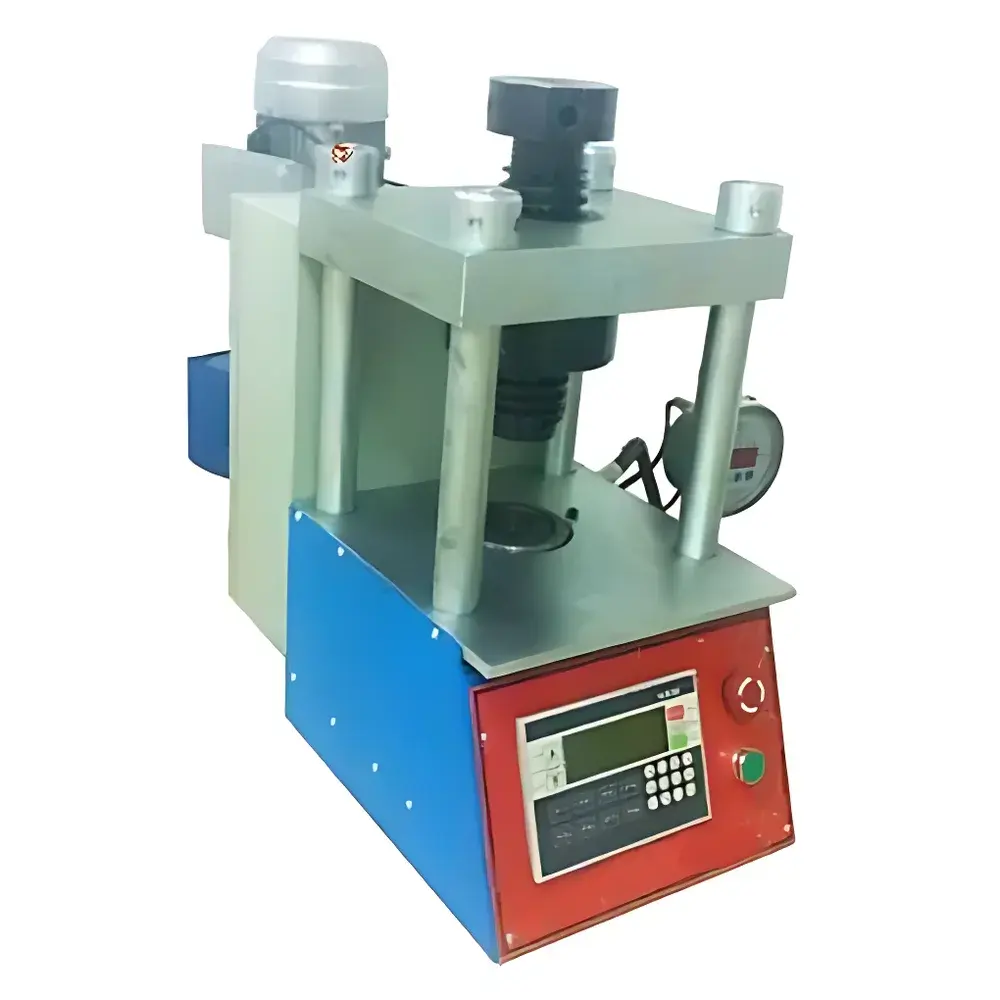
The HengaoDe H18321 Paraffin Light Stability Tester is a precision laboratory instrument engineered for evaluating the photo-oxidative resistance of paraffin waxes under controlled ultraviolet irradiation and thermal conditions. Designed in strict accordance with SH/T 0404–2008 — the Chinese national standard equivalent to ASTM D5108 and ISO 4629-2 for light stability assessment of petroleum waxes — this tester enables quantitative evaluation of color change, surface cracking, or haze formation following standardized exposure protocols. The system operates on the principle of accelerated photodegradation: samples are subjected to calibrated UV radiation (365 nm peak emission) while maintaining precise temperature control via a dual-loop Fuji PID controller and PT100 feedback sensor. Its left-right modular architecture physically isolates the sample chamber from the electronic control unit, minimizing thermal cross-talk and ensuring long-term calibration stability. This configuration supports GLP-compliant operation in quality control laboratories across food-grade wax production, candle manufacturing, and pharmaceutical excipient development.
Key Features
- High-fidelity UV exposure using a 375 W high-pressure mercury lamp (365 nm dominant wavelength, 140 mm arc length), mounted in a drawer-style aluminum housing for rapid lamp replacement and optical alignment verification.
- Dual-channel Fuji digital PID temperature controller with independent setpoint and monitoring capability; achieves ±1 °C accuracy across 0–90 °C range using class A PT100 sensors embedded in the aluminum sample chamber walls.
- Robust 10 mm-thick anodized aluminum enclosure fabricated via CNC machining and finished with industrial sandblasting — corrosion-resistant, non-outgassing, and easily sanitized between runs.
- UV-blocking observation window constructed from laminated borosilicate glass with certified 99.9% UVC attenuation (λ < 400 nm), enabling real-time visual inspection without operator exposure risk.
- Integrated timing circuit with audible alarm and automatic shutdown upon completion of preset exposure duration — supports unattended operation for up to 24 h.
- Full-metal axial-flow fan ensures uniform air circulation within the sample chamber, eliminating thermal stratification and meeting SH/T 0404–2008 airflow homogeneity requirements.
- Modular drawer design for both sample trays and lamp assembly — facilitates cleaning, calibration verification, and traceable maintenance per ISO/IEC 17025 documentation practices.
Sample Compatibility & Compliance
The H18321 accommodates standard paraffin test specimens as defined in SH/T 0404–2008: cylindrical samples (typically 30 mm diameter × 10 mm height) cast in stainless steel or aluminum molds. It is validated for food-grade paraffin (GB 10443), fully refined paraffin (GB/T 2539), and semi-refined paraffin (GB/T 2540). The instrument’s thermal and photometric performance has been verified against NIST-traceable reference materials and meets the repeatability criteria (<2 ΔE units for CIELAB color difference) specified in the standard. Its mechanical design complies with IEC 61010-1:2010 for electrical safety in laboratory equipment, and its UV shielding satisfies EN 62471:2006 (Photobiological Safety of Lamps) Category 3 (High Risk) containment requirements. Full compliance documentation — including factory calibration certificates, lamp spectral output reports, and temperature uniformity maps — is provided with each unit.
Software & Data Management
While the H18321 operates as a stand-alone hardware platform without embedded microprocessor-based data logging, it integrates seamlessly into regulated laboratory workflows through its analog and digital interfaces. The UV irradiance meter outputs a 0–5 V DC signal proportional to measured intensity (0–100 mW/cm²), compatible with third-party data acquisition systems supporting IEEE 1451.2 transducer electronic data sheets (TEDS). Temperature readings from the PT100 sensor are accessible via 4–20 mA current loop output, enabling connection to PLC-based environmental monitoring systems compliant with FDA 21 CFR Part 11 Annex 11 audit trail requirements. Users may configure external software (e.g., LabVIEW, MATLAB, or ELN platforms such as LabArchives or Benchling) to record timestamped irradiance, temperature, and elapsed time — generating raw data packages suitable for IQ/OQ/PQ validation protocols. Calibration records and maintenance logs are maintained manually per GLP Annex 13 guidelines.
Applications
- Quality assurance testing of food-contact paraffin used in cheese wrapping, confectionery coatings, and fruit preservation.
- R&D screening of antioxidant formulations (e.g., hindered phenols, phosphites) for paraffin-based phase-change materials (PCMs) in thermal energy storage applications.
- Stability qualification of pharmaceutical-grade paraffin used as tablet coating agents or ointment bases per USP and Ph. Eur. 2.2.42.
- Comparative aging studies of candle wax blends (paraffin–soy–beeswax) under simulated daylight exposure conditions.
- Regulatory submission support for REACH Annex XVII compliance where UV-induced degradation products (e.g., aldehydes, ketones) require quantification.
- Teaching laboratories demonstrating principles of photochemistry, polymer degradation kinetics, and ASTM/ISO standard method execution.
FAQ
Does the H18321 comply with international standards beyond SH/T 0404–2008?
Yes — its optical and thermal performance aligns with ASTM D5108 (Standard Test Method for Light Stability of Petroleum Waxes) and ISO 4629-2 (Plastics — Polyethylene — Determination of Light Stability), though formal certification requires user-conducted interlaboratory validation per ISO/IEC 17025.
Can the UV irradiance be calibrated traceably to NIST standards?
Absolutely — the integrated digital UV radiometer is supplied with a factory calibration certificate referencing NIST SRM 2241 (Ultraviolet Radiometric Standard), and recalibration services are available through accredited metrology labs.
Is the instrument suitable for GMP-regulated environments?
It supports GMP operations when deployed with documented IQ/OQ protocols, controlled access to calibration parameters, and integration into electronic batch records via its analog outputs — full 21 CFR Part 11 compliance depends on the connected data system.
What maintenance intervals are recommended for the mercury lamp and fan assembly?
Lamp output degrades ~15% after 500 hours; replacement is advised at 400-hour intervals for critical QC work. The axial fan requires biannual inspection for dust accumulation and bearing lubrication per ISO 13374 condition monitoring guidelines.
Are custom sample holders available for non-standard paraffin geometries?
Yes — HengaoDe offers CNC-machined aluminum fixtures for rectangular slabs, thin films, or multi-cavity arrays; lead time is typically 3 weeks with dimensional drawings provided by the customer.





