
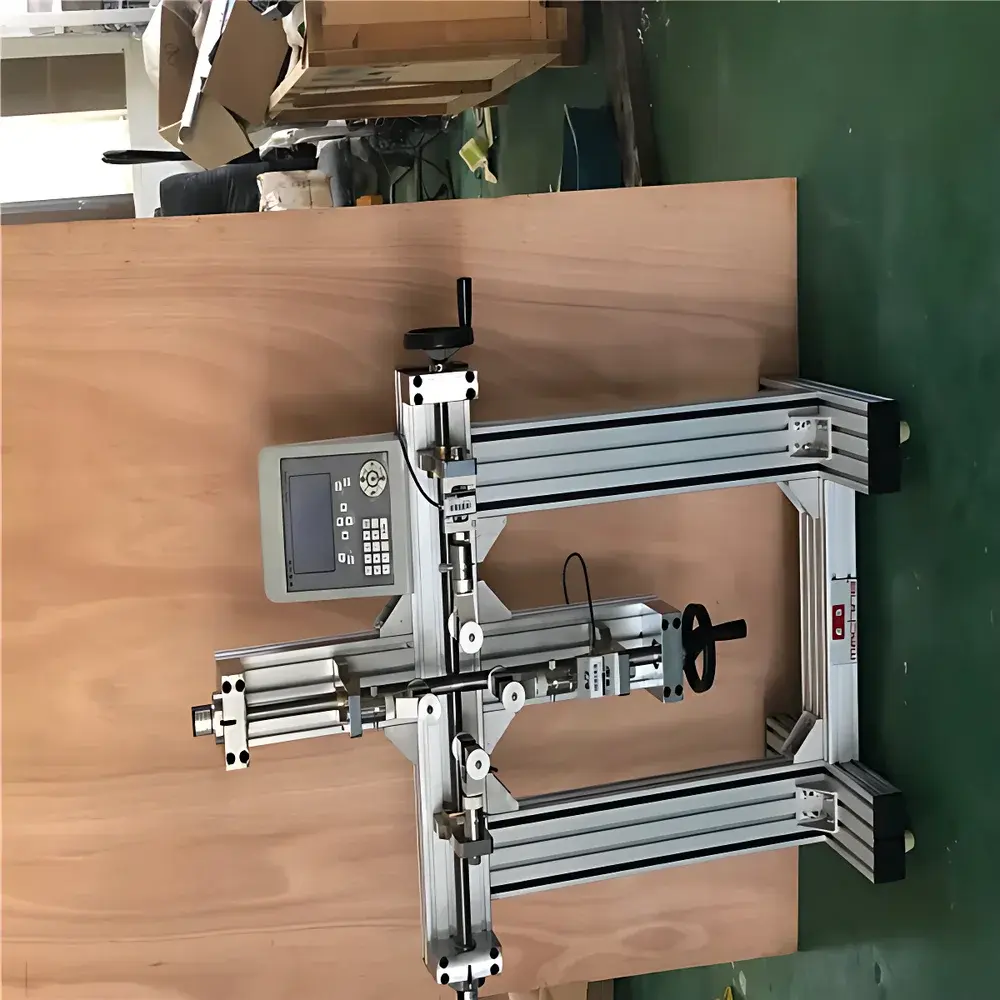
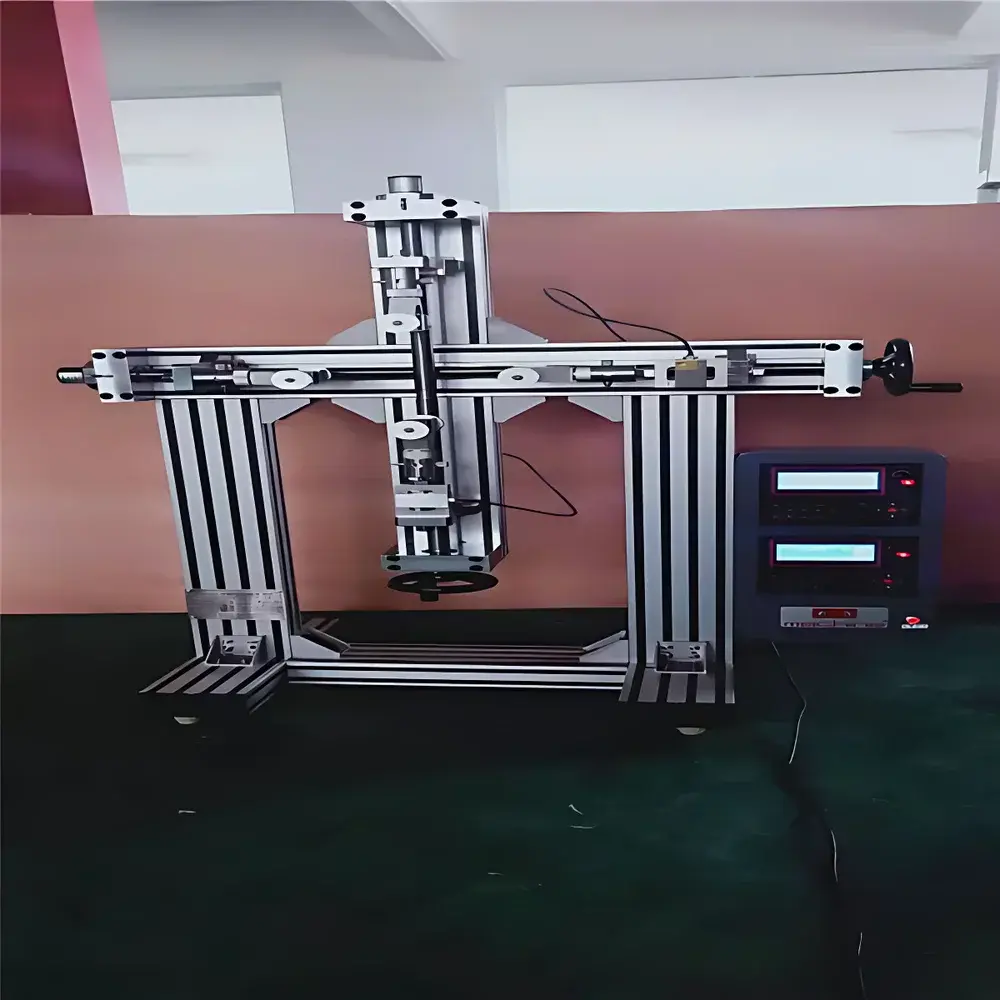
Hengyi HY-0130YUHH Biaxial Tensile Testing System for Thin Films
| Brand | Hengyi / Hengyitest |
|---|---|
| Origin | Shanghai, China |
| Manufacturer Type | Direct Manufacturer |
| Country of Origin | China |
| Model | HY-0130YUHH |
| Quotation | Available Upon Request |
| Load Capacity | 1000 N |
| Force Accuracy Class | 0.5 |
| Effective Force Measurement Range | 0.1–99.9999% of full scale |
| Force Resolution | ±500,000 counts (no internal range switching, constant resolution throughout) |
| X-Axis Test Space | 300 mm |
| Y-Axis Test Space | 300 mm |
| Test Speed Range | 0.001–300 mm/min (adjustable in real time) |
| Speed Accuracy | ±0.5% of indicated value |
| Displacement Measurement Accuracy | ±0.5% of indicated value |
| Strain Measurement Accuracy | ±0.5% of indicated value |
| Stress Control Rate Range | 0.005–6% FS/s |
| Stress Control Accuracy | ±1% (for rates <0.05% FS/s), ±0.5% (for rates ≥0.05% FS/s) |
| Strain Control Rate Range | 0.002–6% FS/s |
| Strain Control Accuracy | ±2% (for rates <0.05% FS/s), ±0.5% (for rates ≥0.05% FS/s) |
| Constant-Load/Displacement/Strain Holding Range | 0.5–99.999% FS |
| Holding Accuracy | ±1% (for setpoints <10% FS), ±0.1% (for setpoints ≥10% FS) |
| Crosshead Movement | Dual-speed (fast/slow) with jog control |
| Safety Protection | Electronic travel limit switches |
| Return Mode | Manual high-speed or automatic post-test return |
| Termination Triggers | Time-based, deformation-based, or load-based stop |
| Overload Protection | Activates at >110% of rated capacity |
| Self-Diagnostic Function | Real-time monitoring of force sensor, actuator, and drive system for overvoltage, overcurrent, overload, and pressure anomalies |
| Power Consumption | 400 W |
| Net Weight | 80 kg |
| Dimensions (W×D×H) | 800 × 800 × 800 mm |
| Input Voltage | 220 V AC, single-phase |
Overview
The Hengyi HY-0130YUHH Biaxial Tensile Testing System is an electromechanical test platform engineered for precise, synchronized mechanical characterization of thin-film materials under simultaneous biaxial loading conditions. Unlike conventional uniaxial tensile testers, this system applies controlled, independent tensile forces along two orthogonal axes (X and Y), enabling measurement of true planar stress–strain behavior, anisotropic response, yield surface mapping, and strain localization phenomena critical to polymer film processing, metallized substrate development, and flexible electronics substrate qualification. The system operates on servo-controlled linear actuators with closed-loop feedback from high-resolution load cells and optical encoders, ensuring traceable force application and displacement tracking per ISO 7500-1 and ASTM E4 compliance. Its rigid monolithic cast-iron “frame-in-frame” architecture minimizes parasitic deformation during high-force biaxial loading—essential for maintaining measurement fidelity across low-to-moderate modulus films (e.g., PET, PP, PI, aluminum foil, and nanocomposite laminates).
Key Features
- Monolithic cast-iron frame in a closed-loop “square-in-square” geometry—designed to achieve axial stiffness >2.5 × 10⁶ N/mm, reducing frame compliance below 0.02% of total system deflection under full 1000 N biaxial load.
- Dual-axis independent actuation with synchronized motion control: each axis features a brushless servo motor, precision ball screw, and linear guide assembly capable of sub-micron positioning repeatability (±0.5 µm) and real-time speed regulation from 0.001 to 300 mm/min.
- High-fidelity force measurement: dual 1000 N load cells calibrated to ISO 376 Class 0.5 accuracy, with digital resolution of ±500,000 counts and no internal range switching—ensuring consistent signal-to-noise ratio across the entire dynamic range (0.1% to 100% FS).
- Integrated multi-mode control architecture supporting force-, displacement-, and strain-controlled tests—including ramp-hold, cyclic biaxial tension, and programmed stress/strain rate profiles compliant with ASTM D882, ISO 1184, and EN 14372.
- Real-time safety interlocks: electronic end-of-travel limits, hardware-based overload cutoff (>110% FS), thermal monitoring of drive electronics, and autonomous diagnostic routines that verify sensor linearity, amplifier gain stability, and encoder pulse integrity before each test cycle.
- Modular gripping interface compatible with pneumatic, wedge, and custom vacuum chucks—enabling secure clamping of specimens as thin as 5 µm without edge slippage or premature failure.
Sample Compatibility & Compliance
The HY-0130YUHH accommodates specimens up to 300 mm × 300 mm active area, supporting standard dog-bone, cruciform, and circular biaxial geometries per ISO 16842 and ASTM D5617. It is routinely deployed for quality assurance of BOPP, BOPET, CPP, metallized polyester, barrier-coated cellulose, and stretch-formed lithium-ion battery separator films. All control firmware and data acquisition modules are designed to support audit-ready operation under GLP and GMP environments: test logs include timestamped metadata (operator ID, calibration certificate IDs, environmental temperature/humidity), digital signatures, and immutable audit trails aligned with FDA 21 CFR Part 11 requirements when paired with validated third-party software. Mechanical compliance adheres to ISO 7500-1 (static calibration), ISO 5893 (dynamic testing), and JJG 475 (Chinese national metrology verification regulations).
Software & Data Management
Control and analysis are performed via Hengyi’s proprietary TestMaster™ v4.x software suite, delivered on Windows 10 IoT Enterprise with TLS 1.2 encrypted communication. The software provides real-time biaxial stress contour visualization, Lankford coefficient (r-value) calculation, true biaxial yield locus generation, and export of raw ASCII/CSV datasets with synchronized X/Y force, displacement, and calculated engineering/true stress–strain columns. All test parameters—including control mode, ramp rates, hold durations, and termination criteria—are stored in XML-based configuration files for version control and SOP enforcement. Data archives support hierarchical project-folder structures, role-based access permissions (admin/operator/viewer), and optional integration with LIMS platforms via RESTful API or OPC UA protocol.
Applications
- Characterization of thermoforming behavior and draw ratio limits in packaging films (e.g., heat-seal strength prediction under multiaxial strain).
- Quantification of mechanical anisotropy in roll-to-roll coated substrates used in OLED lighting and flexible photovoltaics.
- Validation of finite element models for microvoid formation and crazing onset in polymeric dielectric layers.
- Accelerated aging studies correlating biaxial creep compliance with humidity-temperature cycling exposure.
- Development of stretchable conductive composites where piezoresistive response depends on directional strain coupling.
- ISO 1184-compliant biaxial burst testing of medical pouch laminates under simulated sterilization conditions.
FAQ
What standards does the HY-0130YUHH comply with for biaxial testing?
It meets the mechanical and metrological requirements of ISO 7500-1 (force measurement), ISO 5893 (tensile testing machines), ASTM E4 (load verification), and supports test execution per ISO 1184, ASTM D5617, and EN 14372.
Can the system perform sequential or asynchronous biaxial loading?
Yes—software-defined control sequences allow independent ramping, holding, or cycling on X and Y axes, including phase-shifted sinusoidal waveforms for viscoelastic characterization.
Is third-party calibration certification included?
A factory-issued ISO/IEC 17025-accredited calibration report (covering load cells, encoders, and controller timing) is provided with shipment; annual recalibration services are available through Hengyi’s Shanghai metrology lab.
What specimen mounting options are supported?
Standard configurations include pneumatic side-action grips (for films ≥25 µm) and vacuum chucks (for ultra-thin films down to 5 µm); custom fixtures for cruciform or ring-tensile geometries can be supplied upon request.
Does the system support automated batch testing?
Yes—TestMaster™ supports script-driven batch execution with pass/fail logic based on user-defined thresholds for peak load, elongation at break, or biaxial modulus ratio, generating PDF reports with embedded pass/fail stamps.



