
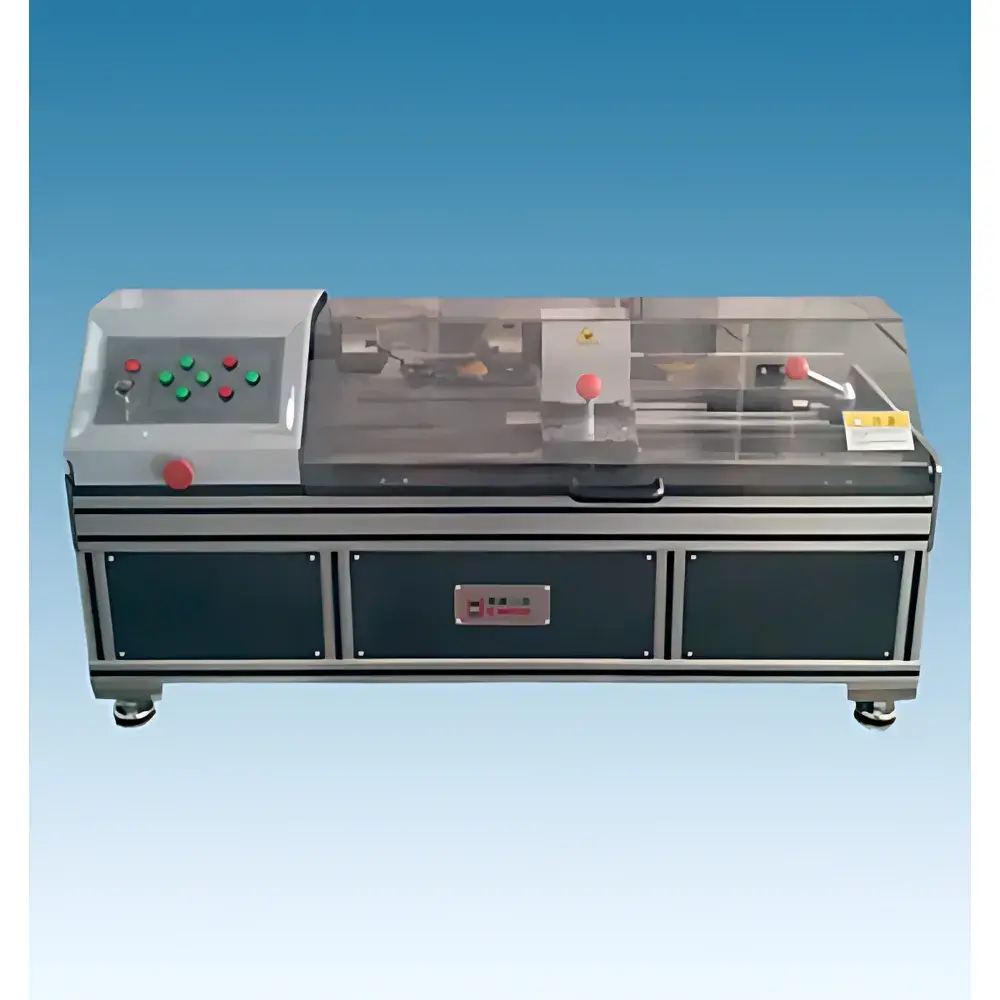
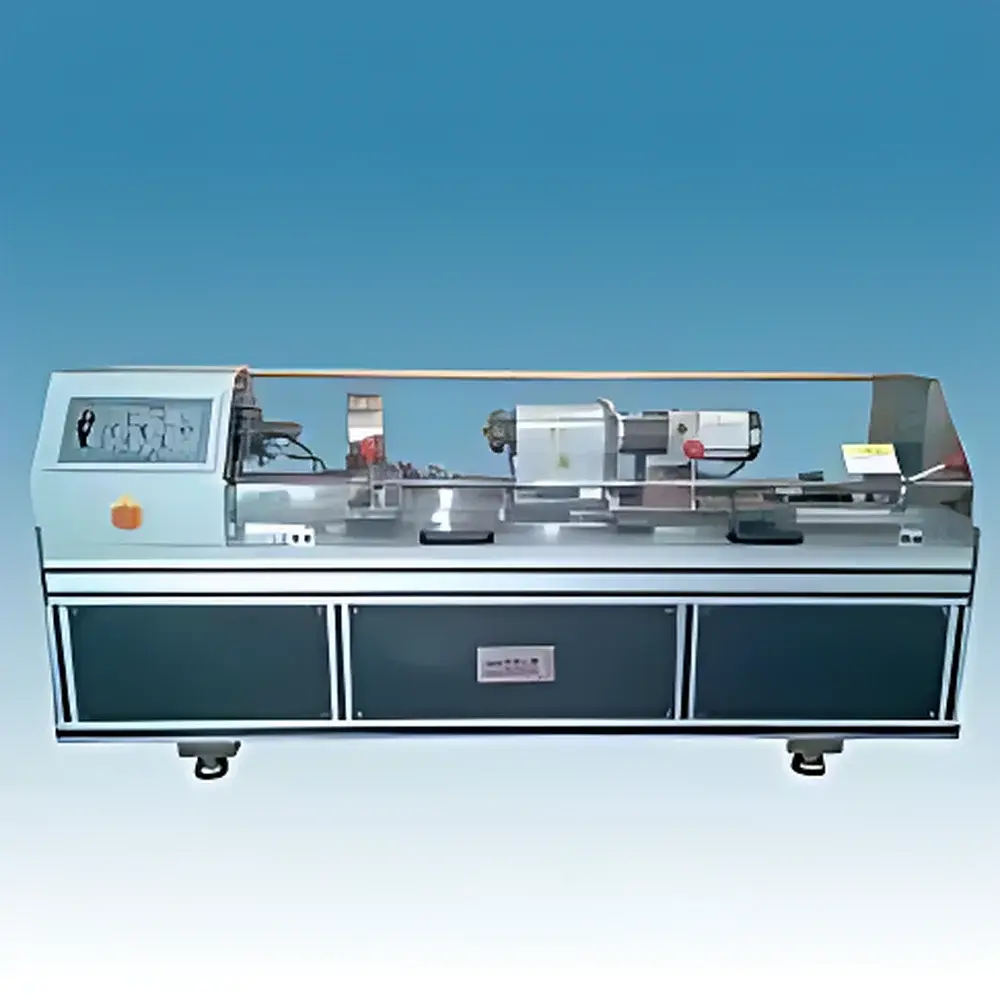
Hengyi HY-100N·m Polyurethane Adhesive Torsion Testing Machine
| Brand | Hengyi (Hengyitest) |
|---|---|
| Origin | Shanghai, China |
| Manufacturer Type | Direct Manufacturer |
| Product Origin | Domestic (China) |
| Model | HY-100N·mTGY |
| Max Torque | 100 N·m |
| Torque Measurement Range | 0.1–100 N·m |
| Torque Resolution | 0.001 N·m |
| Twist Angle Measurement Range | 0–100,000° (or continuous rotation) |
| Motor Power | 0.4 kW |
Overview
The Hengyi HY-100N·m Polyurethane Adhesive Torsion Testing Machine is a precision-engineered electromechanical system designed for quantitative mechanical characterization of adhesive bonds under torsional loading. Unlike uniaxial tensile or shear tests, torsional evaluation provides critical insight into the interfacial integrity, cohesive strength, and energy dissipation behavior of cured adhesive joints—particularly relevant for structural bonding applications in automotive, aerospace, and medical device assembly where rotational stresses dominate service conditions. The instrument operates on a closed-loop servo-controlled architecture, applying controlled angular displacement or torque while simultaneously measuring real-time response via high-fidelity torque transducers and optical rotary encoders. Its core measurement principle conforms to standardized torsional mechanics frameworks defined in ISO 15116 (adhesives — determination of torsional strength), ASTM D3927 (standard test method for torsional strength of adhesive bonds), and GB/T 10128–2007 (metallic materials — room temperature torsion testing). The system supports both static and dynamic torsional protocols—including quasi-static ramp-to-failure, stepwise torque hold, and cyclic twist-reversal sequences—enabling full mapping of torque–twist hysteresis, yield onset, plastic deformation thresholds, and ultimate torsional fracture energy.
Key Features
- Full-scale torque capacity of 100 N·m with calibrated range from 0.1 N·m to 100 N·m, delivering ±0.5% accuracy per GB/T 10128–2007 and JJG 269 verification standards
- High-resolution torque sensing with 0.001 N·m resolution and 1/500,000 full-scale digital resolution
- Precision angular measurement up to 100,000° (±0.5% relative error; 0.0045° encoder resolution) with bidirectional rotation capability
- Programmable torsion rate from 0.01°/min to 1000°/min, with speed stability within ±0.5% of setpoint
- Dual-mode control architecture supporting torque-controlled, angle-controlled, and rate-controlled test profiles
- Modular chuck system accommodating cylindrical specimens from Φ1 mm to Φ5 mm; optional custom fixtures available for non-standard geometries
- Integrated electronic load frame with rigid aluminum alloy base and low-inertia servo motor (0.4 kW, 200 kg total mass)
- Compliance with JB/T 9370–1999 (Technical Requirements for Torsion Testing Machines) and GLP-aligned data traceability architecture
Sample Compatibility & Compliance
The HY-100N·m platform is validated for torsional evaluation of a broad spectrum of adhesive formulations including polyurethane, epoxy, anaerobic, phenolic, urea-formaldehyde, and cyanoacrylate systems—typically configured as lap-shear, butt-joint, or helical-wrap bonded substrates. It accommodates metallic (e.g., stainless steel, aluminum 6061-T6), polymeric (e.g., PC, PEEK, PMMA), and composite substrates per ASTM D3163 and ISO 4587 specifications. All test configurations adhere to ISO/IEC 17025–2017 documentation requirements when operated under laboratory quality management systems. Data acquisition meets FDA 21 CFR Part 11 criteria for electronic records and signatures when paired with validated software modules, including audit trail logging, user access controls, and immutable raw-data archiving.
Software & Data Management
The system ships with Hengyi TorsionTest v3.2—a Windows-based control and analysis suite compliant with IEC 62304 Class B software safety standards. Real-time visualization includes synchronized torque–time, angle–time, and torque–angle Lissajous plots. Automated curve fitting applies ASTM E1823–22-defined failure point detection algorithms (e.g., 5% offset method for torsional yield). Export formats include CSV, XML, and PDF reports conforming to ISO 14644–1 cleanroom documentation templates. Raw datasets retain full metadata (operator ID, calibration certificate IDs, environmental ambient logs) and support post-hoc reprocessing without loss of fidelity. Optional integration with LIMS platforms (e.g., Thermo Fisher SampleManager, LabVantage) is available via OPC UA and RESTful API interfaces.
Applications
- Quantification of torsional bond strength in polyurethane-based structural adhesives used in EV battery module bonding
- Evaluation of anaerobic threadlocker performance under vibrational loosening conditions (ISO 15482)
- Comparative aging studies: hydrothermal, thermal, and UV exposure effects on epoxy–metal interfacial torsional durability
- Biomedical validation of bone–implant adhesive interfaces using synthetic cortical bone analogs (ASTM F2345)
- Quality control release testing for aerospace-grade phenolic film adhesives per MIL-A-25463C
- Development of ISO 15116-compliant torsional fatigue protocols for wind turbine blade root bonding systems
FAQ
Does this machine support ASTM D3927-compliant torsional testing of adhesive lap joints?
Yes—the fixture geometry, torque calibration traceability, and data reporting structure fully satisfy ASTM D3927 Annex A1 requirements for adhesive bond torsional strength assessment.
Can the system be configured for high-cycle torsional fatigue testing?
While primarily optimized for static and quasi-static protocols, optional high-duty-cycle servo amplifiers and thermal management upgrades enable up to 10⁵ cycles at ≤10 Hz with ±0.2° positional repeatability.
Is torque calibration traceable to national metrology institutes?
All factory calibrations are performed using NIST-traceable torque standards (Fluke 6200 series), with certificates issued per ISO/IEC 17025 and included with shipment.
What environmental conditions are recommended for optimal measurement stability?
Operation within 23 ± 2°C and 40–60% RH is advised; thermal drift compensation algorithms mitigate ambient fluctuations up to ±5°C deviation.
Does the software support multi-user role-based access control for regulated environments?
Yes—administrator, technician, and reviewer roles enforce separation of duties, with electronic signature workflows aligned with 21 CFR Part 11 Subpart B requirements.



