
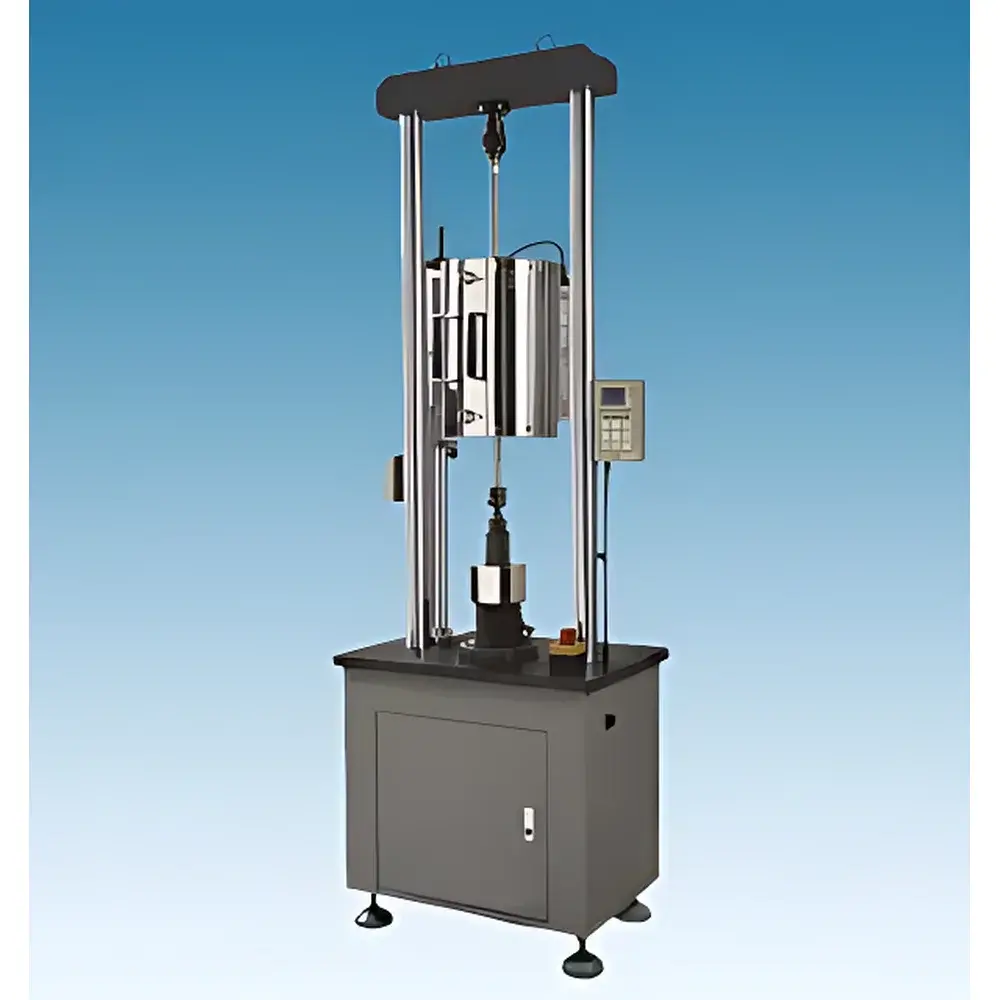
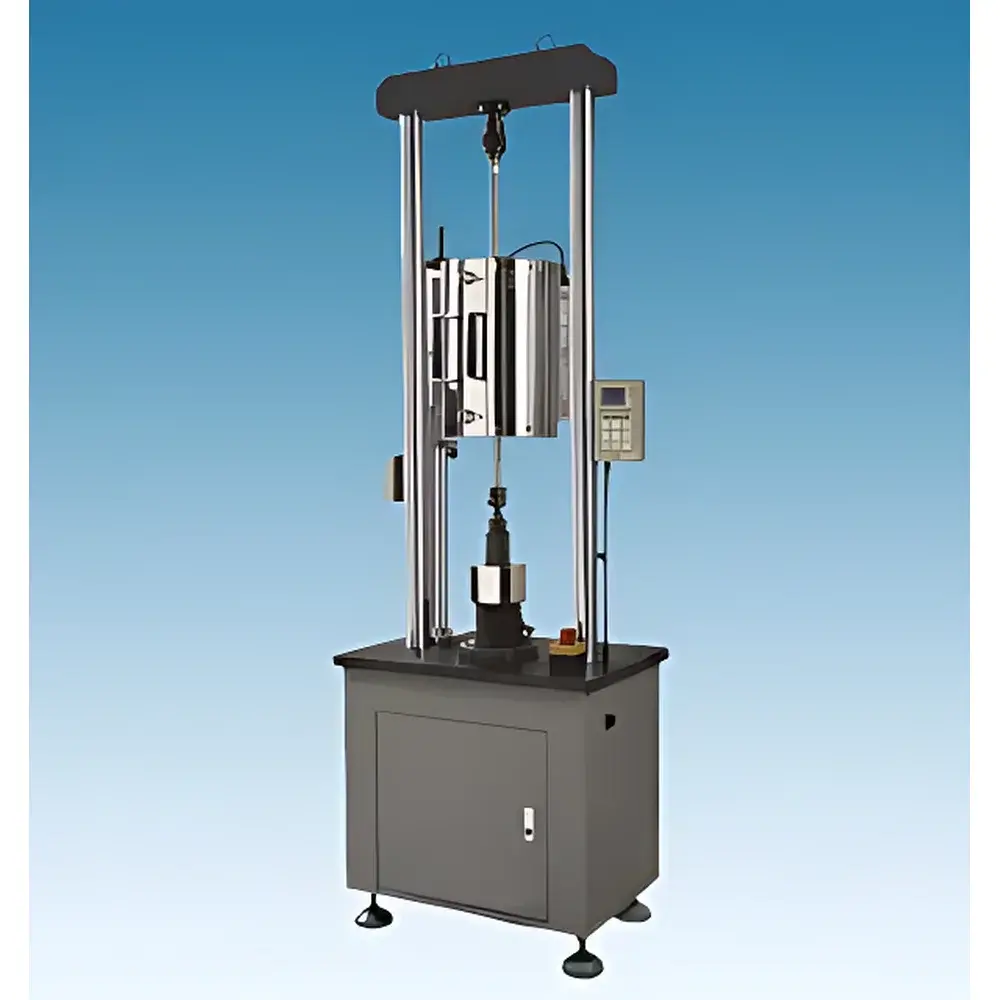
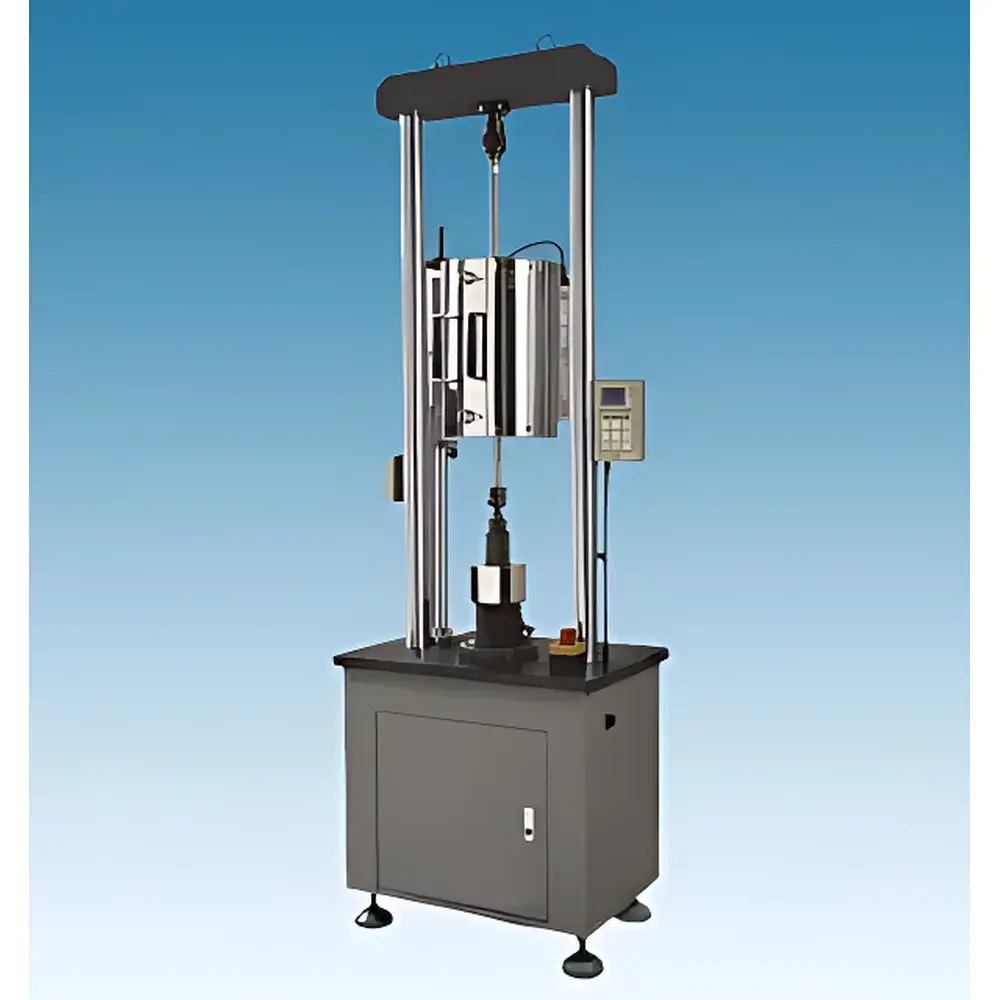
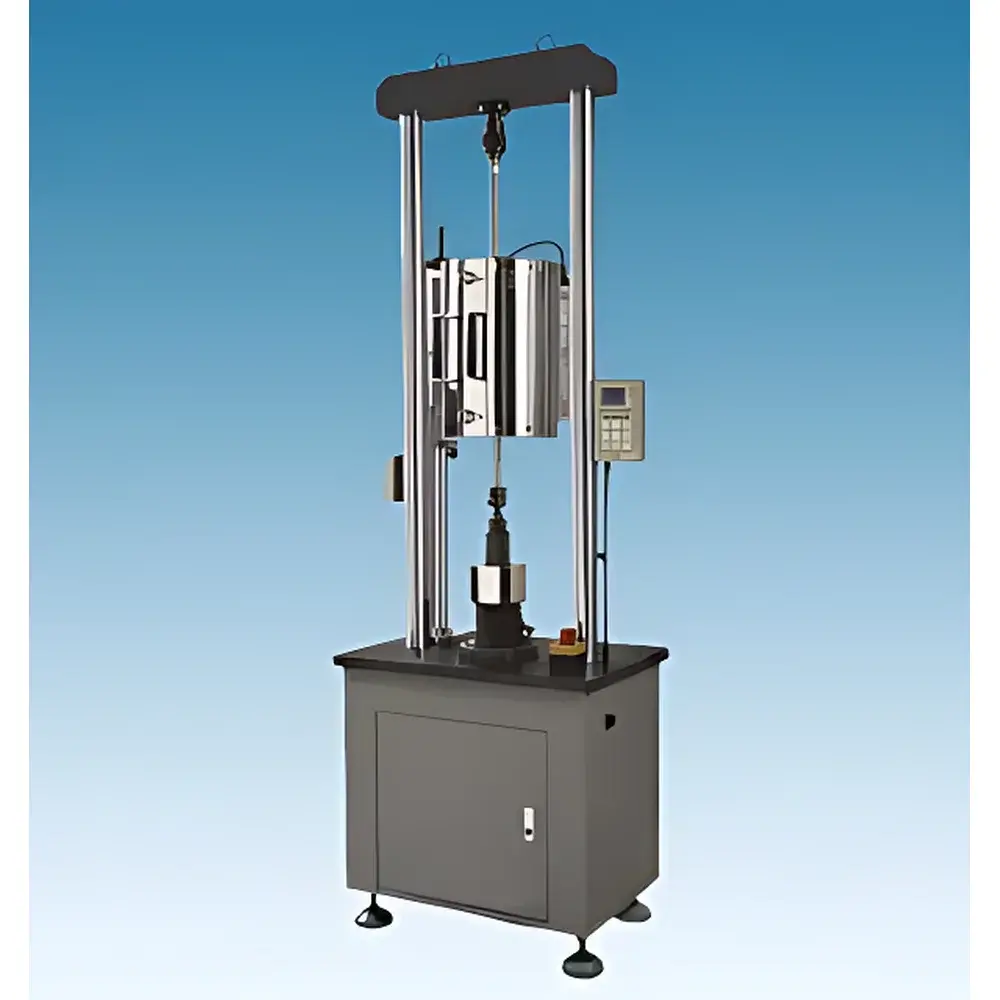
Hengyi HY(RC)1 Electronic High-Temperature Creep and Stress Rupture Testing Machine
| Brand | Hengyi |
|---|---|
| Origin | Shanghai, China |
| Manufacturer Type | Direct Manufacturer |
| Product Category | Domestic |
| Model | HY(RC)1 |
| Price Range | USD 7,000 – 14,000 |
| Instrument Type | Electromechanical |
| Maximum Test Load | 100 kN |
| Maximum Crosshead Travel | 200 mm |
| Dimensions (W×D×H) | 460 × 430 × 1100 mm |
| Machine Weight | 850 kg |
| Load Measurement Accuracy | ±0.5% of reading (from 1% FS) |
| Load Control Stability | ±1% of reading |
| Crosshead Speed Range | 0.01–180 mm/min |
| Deformation Measurement | Imported linear encoder |
| Deformation Range Options | Up to 25 mm |
| Deformation Accuracy | ±0.5% |
| Furnace Internal Diameter | φ50 mm |
| Furnace Length | 450 mm |
| Temperature Range | Ambient to 1200 °C |
| Temperature Control Accuracy | ±0.5 °C |
| Temperature Resolution | 0.1 °C |
| Uniform Temperature Zone Length | >150 mm |
| Load Application System | Imported servo motor with continuous adjustable range (0–10/20/30/50/100 kN) |
| Load Resolution | 0.1 N |
| Furnace Power Rating | 3 kW |
Overview
The Hengyi HY(RC)1 Electronic High-Temperature Creep and Stress Rupture Testing Machine is a precision electromechanical system engineered for long-term mechanical property evaluation of metallic and alloy materials under sustained load and elevated temperature conditions. It operates on the fundamental principles of uniaxial tensile creep testing—measuring time-dependent strain evolution (creep deformation) and time-to-failure (stress rupture) in accordance with standardized thermomechanical loading protocols. Designed for compliance with international metallurgical test standards—including ASTM E139, ISO 204, and GB/T 2039—the HY(RC)1 integrates a high-stability servo-driven loading frame, a programmable high-temperature furnace, and synchronized digital data acquisition to deliver reproducible, traceable results essential for materials qualification in mission-critical applications.
Key Features
- Electromechanical actuation system with imported servo motor and precision ball-screw transmission, enabling precise load application across five selectable capacity ranges (10, 20, 30, 50, and 100 kN), each continuously adjustable from 0% to 100% of full scale.
- High-accuracy dual-channel measurement architecture: load sensing via calibrated load cell (±0.5% accuracy from 1% FS) and axial deformation monitoring via industrial-grade linear encoder (±0.5% accuracy, up to 25 mm travel).
- Integrated high-temperature furnace with cylindrical hot zone (φ50 mm × 450 mm), capable of stable operation from ambient to 1200 °C; uniform temperature zone exceeds 150 mm in length with thermal stability of ±0.5 °C and resolution of 0.1 °C.
- Robust structural design: rigid welded steel frame (850 kg total mass) with optimized stiffness-to-weight ratio, minimizing parasitic deflection during multi-hour or multi-thousand-hour tests.
- Programmable crosshead speed ranging from 0.01 to 180 mm/min, supporting both constant-load creep and constant-rate stress-rupture modes per ASTM E292 and HB 5150.
- Modular control interface supporting real-time load, displacement, temperature, and elapsed time logging at user-defined sampling intervals (down to 1 Hz).
Sample Compatibility & Compliance
The HY(RC)1 accommodates standard tensile specimens per ASTM E8/E21, ISO 6892-2, and GB/T 228.2, including round, flat, and notched geometries with gauge lengths compatible with the furnace’s 50 mm internal diameter. Specimen heating is achieved via resistive three-zone furnace control, ensuring minimal thermal gradient across the gauge section. The system satisfies metrological requirements defined in JJG 276–1988 (Chinese national verification regulation for high-temperature creep testers), as well as methodological alignment with GB/T 2039–1997 (metal tensile creep and stress rupture testing), HB 5151–1996, and HB 5150–1996. All calibration procedures follow ISO/IEC 17025–compliant traceability paths to national standards.
Software & Data Management
The embedded control software provides ISO 17025-aligned test sequence definition, including ramp-hold-ramp temperature profiles, step-load creep stages, and automatic rupture detection. Raw data are stored in timestamped binary files with embedded metadata (operator ID, sample ID, environmental conditions). Export formats include CSV and XML for integration into LIMS or statistical analysis platforms (e.g., Minitab, JMP). Audit trail functionality records all parameter modifications, start/stop events, and calibration actions—supporting GLP and GMP environments where 21 CFR Part 11 compliance is required via optional electronic signature module.
Applications
This instrument serves core mechanical testing needs in aerospace component development (turbine disk alloys, nickel-based superalloys), power generation (boiler tubes, heat exchanger materials), automotive exhaust systems (austenitic stainless steels), nuclear fuel cladding qualification (zirconium alloys), and academic research on dislocation creep, diffusional flow, and grain boundary sliding mechanisms. It supports both short-term accelerated testing and long-duration validation campaigns (up to 10,000 hours), delivering critical inputs for Larson–Miller parameter modeling, Monkman–Grant life prediction, and ASME Section II material design curves.
FAQ
What standards does the HY(RC)1 comply with?
It meets JJG 276–1988, GB/T 2039–1997, HB 5150–1996, HB 5151–1996, and aligns with ASTM E139 and ISO 204 for methodology and reporting.
Can the system perform both creep and stress rupture tests in one setup?
Yes—software-configurable test modes allow seamless switching between constant-load creep, constant-stress rupture, and multi-step thermomechanical protocols.
Is furnace calibration included in the delivery package?
A factory-issued furnace temperature uniformity report and load cell calibration certificate are provided; on-site verification services are available upon request.
What is the typical lead time for custom specimen fixtures?
Standard grips for round and flat specimens ship with the base system; custom high-temperature fixtures (e.g., ceramic-coated collets, refractory anchors) require 4–6 weeks after final drawing approval.
Does the system support remote monitoring during extended tests?
Yes—Ethernet-enabled controller allows secure remote access for real-time data viewing, alarm notification, and emergency stop via authenticated web interface.



