
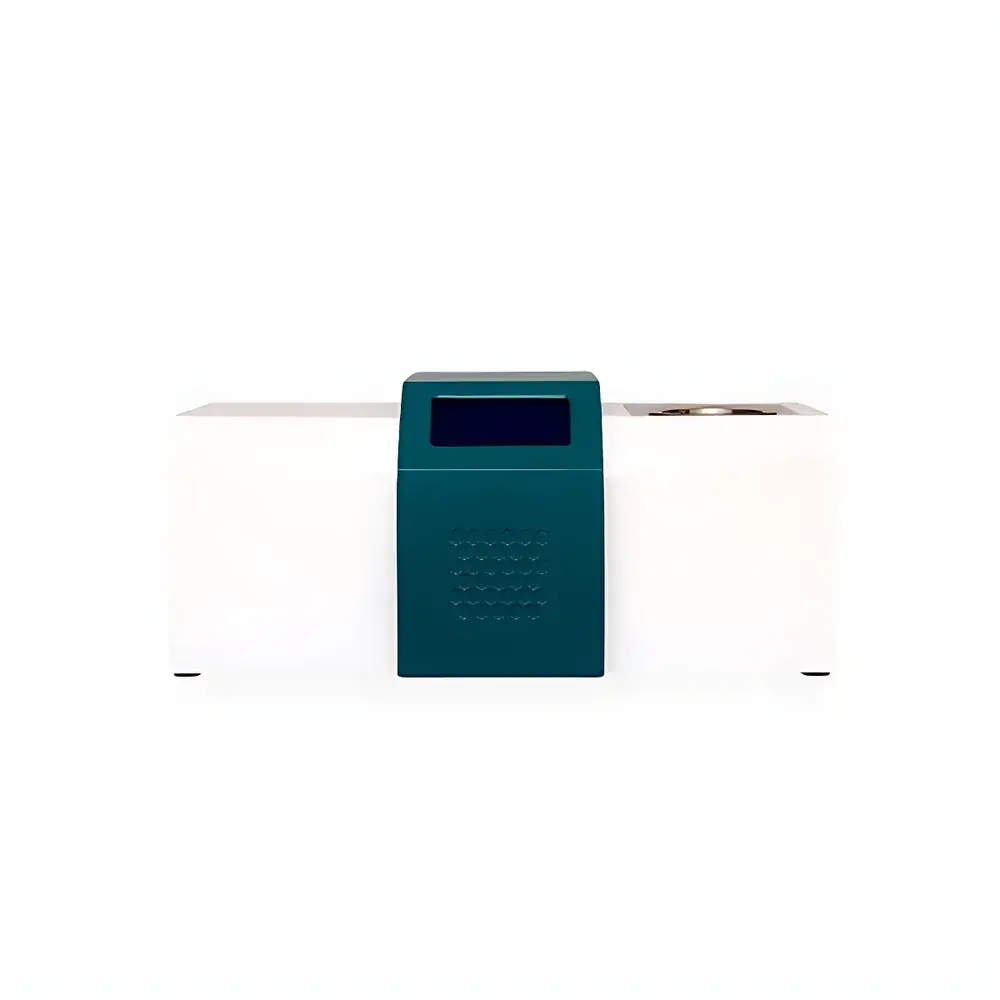
Henven HSC-4 Thermal Flow-Type Differential Scanning Calorimeter
| Brand | Henven |
|---|---|
| Origin | Beijing, China |
| Manufacturer Type | Direct Manufacturer |
| Instrument Type | DSC |
| Model | HSC-4 |
| Sample Capacity | Single |
| Temperature Range | –100 °C to 680 °C (with automated liquid nitrogen cooling) |
| Programmable Temperature Control Accuracy | ±0.1 °C |
| Temperature Accuracy | ±0.1 °C |
| Temperature Precision (Repeatability) | ±0.1 °C |
| Heating/Cooling Rate | 0.1–100 °C/min |
| Scan Modes | Isothermal, Heating Scan, Cooling Scan |
| DSC Signal Range | 0 to ±500 mW |
| DSC Minimum Detectable Heat Flow | ±0.1 µW |
| DSC Power Noise Level | ±0.1 µW |
| DSC Power Accuracy | ±0.1 µW |
| Atmosphere Control | Dual-channel mass flow controlled gas system (10–200 mL/min), auto-switchable |
| Standard Crucibles | Al₂O₃, high-purity aluminum (0.06 mL capacity) |
| Optional Crucibles | Sealed aluminum (solid/liquid), ZrO₂, quartz, graphite, Pt/Rh |
| Display | Large-character LCD with dual thermocouple readout (sample + furnace) |
| Connectivity | RS232, USB interface |
| Software Features | Automated baseline correction, thermal event identification (Tg, Tm, Tc, OIT), enthalpy integration, calibration with certified standards (In, Sn, Pb, Zn, Al), GLP-compliant report generation, remote diagnostics and parameter adjustment via internet |
Overview
The Henven HSC-4 is a high-stability, thermal flow-type differential scanning calorimeter engineered for precise quantification of heat flow differences between a sample and inert reference under controlled temperature programs. Operating on the principle of heat flux DSC—where both sample and reference are placed on a single sensor plate within a symmetric furnace—the instrument delivers high signal-to-noise ratio and excellent thermal reproducibility across wide dynamic ranges. Its design integrates the furnace, temperature controller, and sensor assembly into a monolithic architecture to minimize thermal lag, mechanical drift, and electromagnetic interference. With an operational temperature span from –100 °C (achievable via integrated liquid nitrogen cryogenic cooling) to 680 °C, the HSC-4 supports characterization of phase transitions, reaction kinetics, and thermal stability in diverse material classes including polymers, pharmaceuticals, metals, ceramics, and food matrices.
Key Features
- Thermal flow DSC architecture with dual thermocouple monitoring: one for real-time sample temperature, one for furnace ambient—enabling independent verification of thermal gradients and improved calibration traceability.
- Automated liquid nitrogen cooling system with programmable ramp control, allowing stable sub-ambient operation down to –100 °C without external chiller dependency.
- High-resolution heat flow detection: ±0.1 µW minimum detectable signal, ±0.1 µW power noise floor, and ±0.1 µW absolute accuracy—validated against NIST-traceable reference materials (In, Sn, Pb, Zn, Al).
- Dual-mass-flow-controlled atmosphere system supporting inert (N₂, Ar), oxidative (O₂, air), or reactive gas environments; software-configurable automatic switching between two gas lines during a single run.
- Integrated thermal management: proprietary constant-temperature controller, heated transfer lines (up to 200 °C), and optional GC/MS coupling interfaces for evolved gas analysis (EGA) without condensation artifacts.
- Full GLP/GMP-supportive software suite with electronic signatures, audit trail logging (per FDA 21 CFR Part 11 requirements), and automated report generation—including Tg onset/midpoint, crystallization exotherms, melting enthalpies, oxidation induction time (OIT), and kinetic model fitting (e.g., Ozawa-Flynn-Wall).
Sample Compatibility & Compliance
The HSC-4 accommodates standard and specialty crucibles—including Al₂O₃, high-purity aluminum, sealed aluminum (for volatile or reactive samples), ZrO₂, quartz, graphite, and Pt/Rh—with a nominal volume of 0.06 mL. This enables rigorous thermal analysis of solids, powders, films, gels, and low-viscosity liquids while maintaining compatibility with ASTM E794 (melting point), ASTM E1356 (glass transition), ISO 11357 (polymer thermal behavior), and USP <1151> (pharmaceutical polymorphism). The instrument meets IEC 61000-4 electromagnetic compatibility standards and conforms to CE safety directives. All calibration procedures align with ISO/IEC 17025 metrological traceability requirements when performed using certified reference materials.
Software & Data Management
The embedded HenvenTherm™ software provides full instrument control, real-time visualization, and post-run analysis in a Windows-based environment. It supports multi-step temperature programming (ramp-hold-ramp, modulated DSC-like sequences), user-defined baseline subtraction algorithms, peak deconvolution, and quantitative enthalpy integration with uncertainty estimation. Data export formats include ASCII, CSV, and universal .tdf (thermal data format) for interoperability with third-party modeling tools (e.g., Kinetics Neo, Thermo-Calc). Audit trails record all parameter changes, calibration events, and user actions with timestamps and operator IDs—ensuring compliance with regulatory submissions and internal quality audits.
Applications
- Polymers: Crystallinity assessment, cold crystallization kinetics, degradation onset temperature (Td), crosslink density estimation via residual enthalpy.
- Pharmaceuticals: Solid-state form screening (polymorphs, hydrates, amorphous content), excipient compatibility studies, stability-indicating assay development.
- Metals & Alloys: Solidus/liquidus determination, precipitation heat effects, phase diagram validation.
- Food Science: Fat crystallization profiling, starch gelatinization enthalpy, moisture-induced glass transitions in dried products.
- Batteries: SEI layer formation energy, cathode/anode thermal runaway thresholds, electrolyte decomposition onset.
- Composites & Adhesives: Cure kinetics modeling (Kissinger, Ozawa methods), post-cure exotherms, aging-related enthalpy loss.
FAQ
What calibration standards are included with the HSC-4?
Certified reference materials for temperature (indium, tin, lead, zinc, aluminum) and enthalpy (indium) are supplied as standard equipment, enabling full user-performed calibration across the entire temperature range.
Can the HSC-4 perform modulated DSC (MDSC®) measurements?
No—the HSC-4 implements conventional heat-flux DSC only. It does not support sinusoidal temperature modulation; however, its high sensitivity and low noise floor enable robust quasi-isothermal and step-scan protocols for advanced kinetic analysis.
Is remote maintenance supported?
Yes—via secure internet connection, authorized service engineers can remotely access diagnostic logs, adjust firmware parameters, verify sensor linearity, and validate temperature calibration without on-site intervention.
What is the maximum recommended gas flow rate for oxidative stability testing?
For OIT and oxidative degradation studies, optimal performance is achieved at 50–100 mL/min oxygen or synthetic air flow, balancing purge efficiency with thermal mass stability and signal resolution.
Does the instrument meet FDA 21 CFR Part 11 requirements for electronic records?
Yes—the software includes role-based user authentication, electronic signatures, immutable audit trails, and data integrity safeguards compliant with Part 11 Annex 11 and ALCOA+ principles.



