
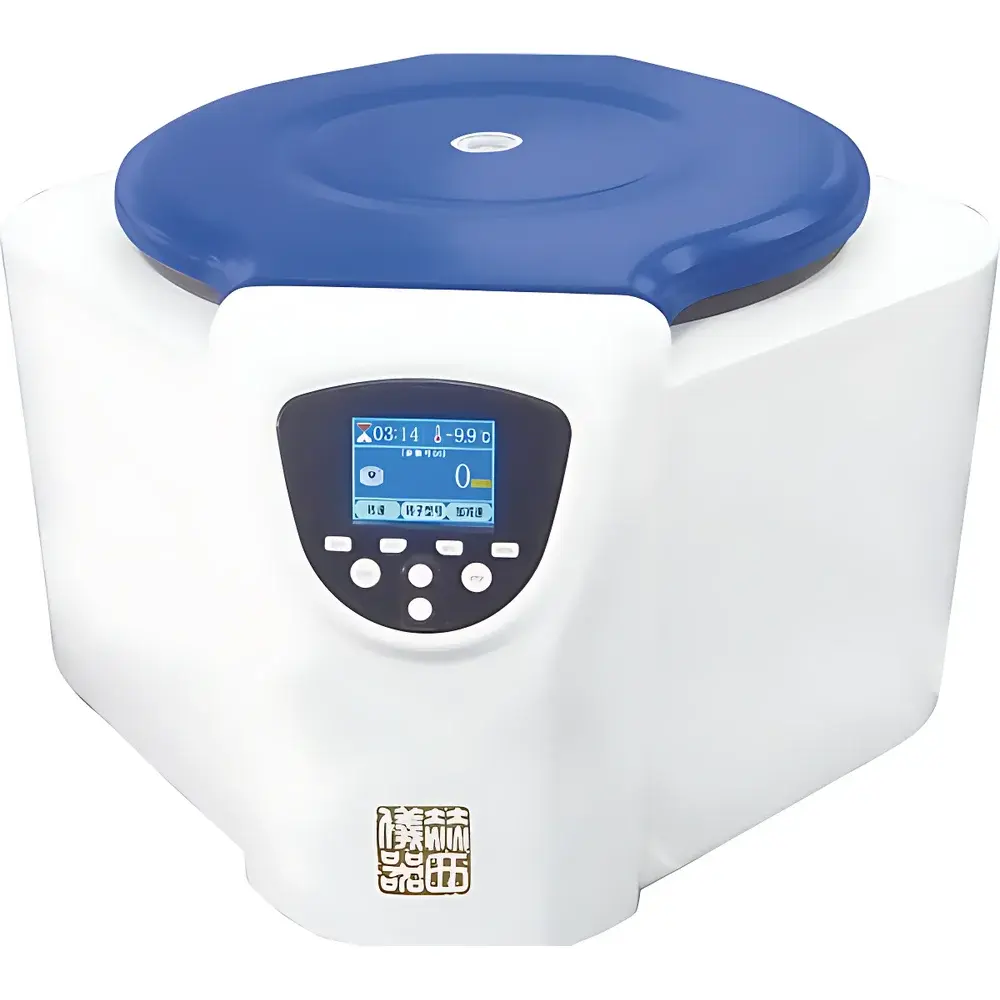
Hesix TD6 Nucleic Acid Detection Dedicated Benchtop Centrifuge
| Brand | Hesix |
|---|---|
| Origin | Hunan, China |
| Instrument Type | Benchtop Centrifuge |
| Maximum Speed | 6000 rpm |
| Maximum RCF | 4800 ×g |
| Maximum Capacity | 4 × 250 mL |
| Acceleration/Deceleration Steps | 10-step adjustable |
| Noise Level | ≤60 dB(A) |
| Power Supply | AC 220 V, 50 Hz |
| Dimensions (L×W×H) | 600 × 540 × 360 mm |
| Weight | 35 kg |
| Certifications | CFDA Registered & Manufactured, ISO 9001:2015, ISO 13485:2016 |
| Rotor Types | Fixed-angle, Horizontal, Microplate (96-well), and Vacuum Blood Tube Configurations |
Overview
The Hesix TD6 Nucleic Acid Detection Dedicated Benchtop Centrifuge is engineered for precision, safety, and reproducibility in molecular diagnostics laboratories. Designed specifically to support nucleic acid extraction workflows—including viral RNA/DNA isolation from nasopharyngeal swabs, serum, plasma, and saliva—the TD6 operates on the principle of sedimentation-based separation under controlled centrifugal force. Its optimized low-speed range (up to 6000 rpm, 4800 ×g) ensures gentle yet effective pelleting of nucleic acid-binding beads, silica membranes, or precipitated nucleic acids without shearing or resuspension—critical for downstream PCR, RT-qPCR, and sequencing applications. The system integrates a high-efficiency brushless DC motor with microprocessor-based closed-loop speed control, delivering stable rotational dynamics essential for consistent nucleic acid yield and purity across batched clinical samples.
Key Features
- Brushless DC motor with intelligent drive module (Infineon power stage + ELM327-compatible MCU) enables precise speed regulation (±50 rpm accuracy) and ultra-low operational noise (≤60 dB[A]), minimizing acoustic interference in shared lab environments.
- Triple-stage damping system—including elastomeric base mounts, asymmetric counterweight balancing, and dynamic rotor suspension—suppresses vibration transmission during acceleration/deceleration, preventing sample remixing and tube leakage.
- TFT-LCD color display with dual-input interface (capacitive touch + physical keys) supports real-time monitoring of both setpoints and actual values (speed, RCF, time, temperature if equipped). Parameter modification is permitted mid-run without rotor stoppage—enhancing protocol flexibility in high-throughput diagnostic settings.
- Biocontainment-compliant fixed-angle rotor features an integrated silicone O-ring seal compliant with EU RoHS Directive 2015/863, effectively containing aerosols generated during nucleic acid pellet disruption or lysis buffer addition.
- Reinforced centrifuge chamber constructed from austenitic 304 stainless steel, enclosed by triple-layer structural steel housing (front face, side panels, and rear shield), meets IEC 61010-2-020 mechanical safety requirements for Class II laboratory equipment.
- Wide-input voltage design (100–230 V AC, 50/60 Hz) accommodates variable power infrastructure across global deployment sites—including mobile testing units and field-deployable biosafety level-2 (BSL-2) laboratories.
Sample Compatibility & Compliance
The TD6 supports broad-format sample handling through interchangeable rotors certified for clinical use: fixed-angle aluminum rotors (aerospace-grade forged 6061-T6), horizontal carriers for 250 mL bottles, and enzyme-linked immunosorbent assay (ELISA) plate adapters accommodating two 96-well plates per run. All rotors accept standard polypropylene, polycarbonate, and PCR-grade tubes (0.2 mL to 250 mL), including evacuated blood collection tubes (EDTA, heparin, SST). Device compliance includes CFDA registration and manufacturing license (Class II medical device), ISO 9001:2015 quality management system certification, and ISO 13485:2016 medical device-specific QMS—ensuring alignment with regulatory expectations for in vitro diagnostic (IVD) support instrumentation under China NMPA and international harmonized frameworks.
Software & Data Management
While the TD6 operates as a standalone instrument without network connectivity, its embedded firmware provides full audit-trail functionality per GLP/GMP principles: all user-defined protocols (up to 20 stored methods), runtime logs (start/stop timestamps, actual RCF, duration), and error events (imbalance detection, overtemperature, door interlock status) are retained in non-volatile memory. The system supports multi-language UI (English, Chinese, Russian, Portuguese) and allows configuration of password-protected parameter locks—facilitating role-based access control in regulated environments. Though not FDA 21 CFR Part 11–compliant out-of-the-box, the TD6’s deterministic behavior and traceable operation history enable integration into validated laboratory information management systems (LIMS) via RS-232 serial output (optional module).
Applications
Primary use cases include nucleic acid purification in SARS-CoV-2, influenza, HIV, and HBV testing pipelines; pre-PCR cleanup of enzymatic reaction mixtures; clarification of lysates prior to column-based extraction; and pelleting of magnetic beads in automated extraction platforms. Secondary applications span hematology (serum/plasma separation), microbiology (bacterial cell harvesting), and biobanking (cryovial aliquoting). The TD6’s 4 × 250 mL horizontal capacity also serves preparative tasks in vaccine development labs—such as adjuvant formulation centrifugation or virus-like particle (VLP) concentration—where thermal stability and mechanical robustness are mandatory.
FAQ
Is the TD6 suitable for BSL-2 laboratory environments?
Yes—the sealed rotor architecture, stainless steel chamber, and RoHS-compliant gasketing meet containment requirements for moderate-risk biological agents when operated with appropriate PPE and procedural controls.
Can the TD6 be validated for GMP-compliant production processes?
Yes—its ISO 13485:2016 certification, deterministic control logic, and built-in event logging support IQ/OQ/PQ documentation per Annex 15 of the EU GMP Guidelines.
Does the TD6 support refrigerated operation?
No—this model is non-refrigerated; however, ambient temperature stability (15–30°C) is maintained within specification during continuous operation up to 99 hours 59 minutes.
What rotor configurations are supplied standard with the TD6?
The base configuration includes a 4-place horizontal rotor (250 mL capacity); optional accessories include fixed-angle rotors (12 × 15 mL), vacuum tube carriers (76 × 2 mL), and 2 × 96-well microplate adapters.
How is rotor imbalance detected and mitigated?
Real-time current draw monitoring detects asymmetrical load distribution; the system automatically decelerates and halts rotation if imbalance exceeds 5% mass differential between opposing positions—preventing mechanical stress and sample loss.



