
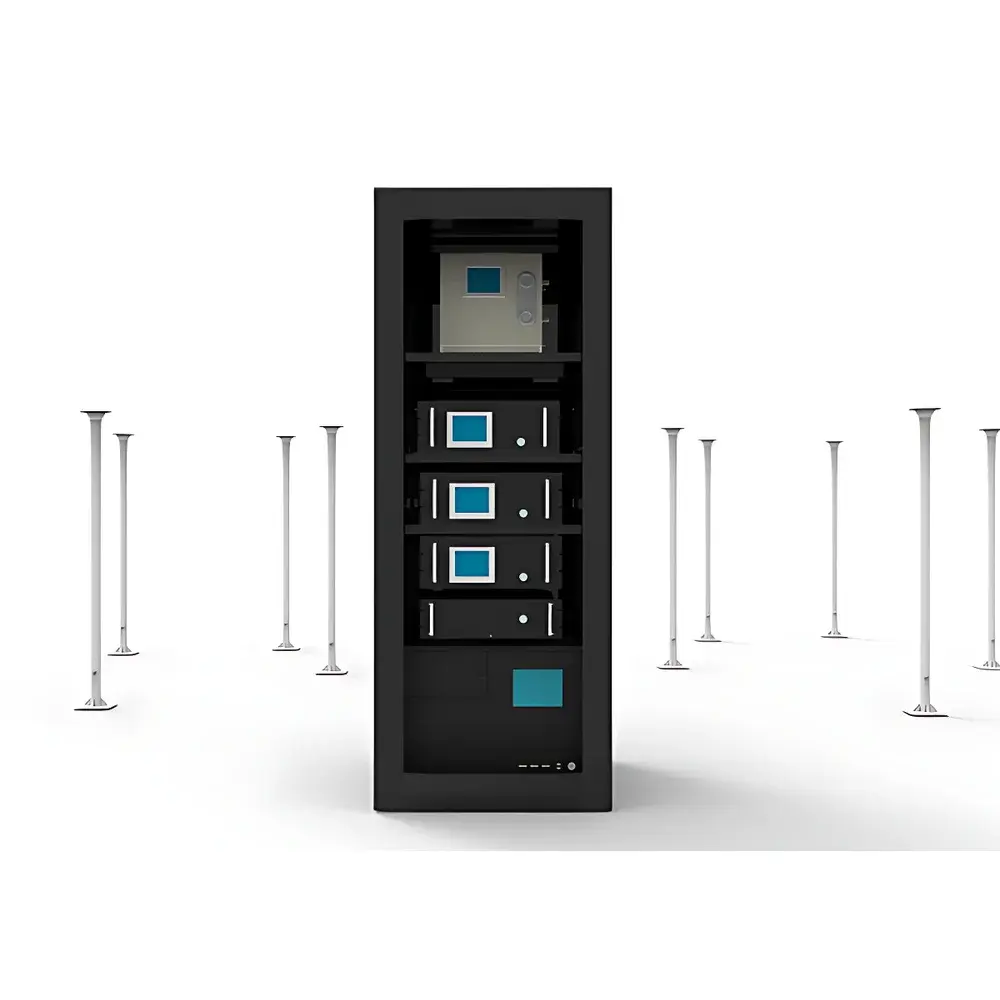
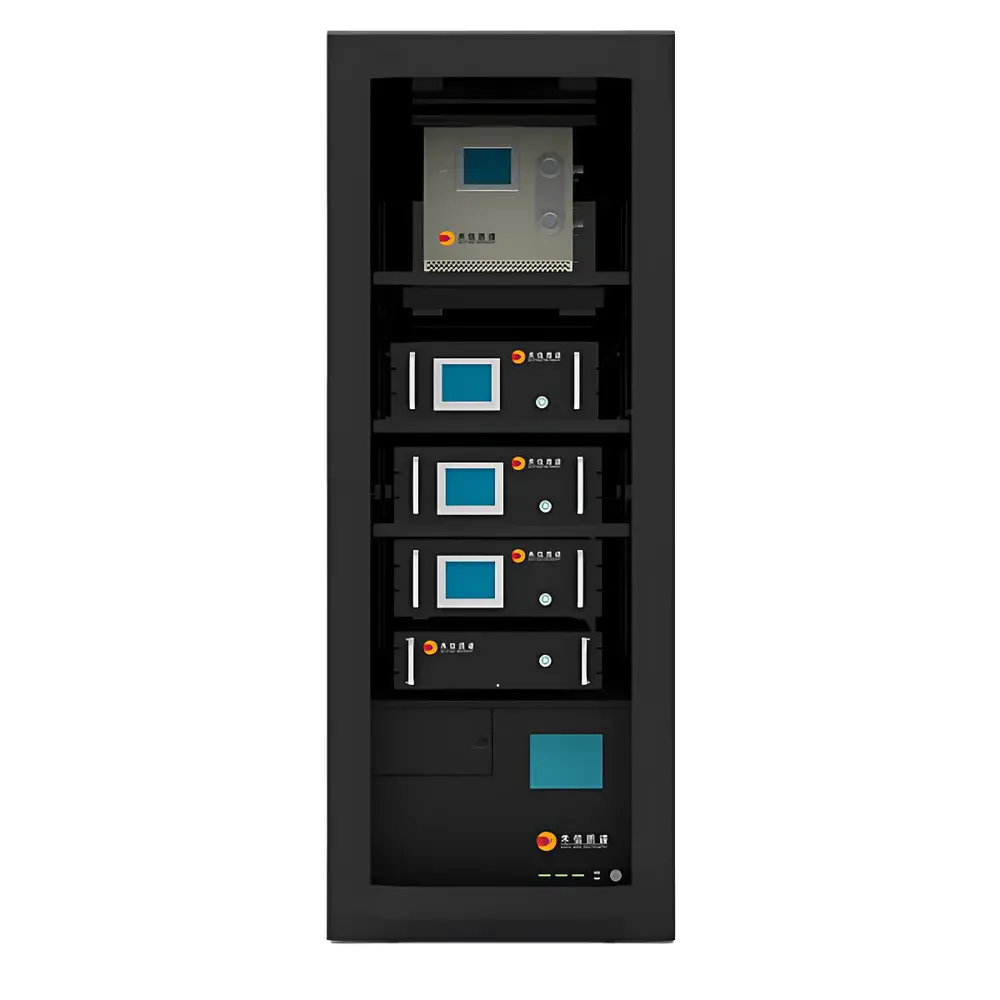
Hexin Mass Spectrometry DMTS-1000 Distributed Multi-Channel Online VOCs Monitoring System
| Brand | Hexin Mass Spectrometry |
|---|---|
| Origin | Guangdong, China |
| Manufacturer Type | Authorized Distributor |
| Product Category | Domestic |
| Model | DMTS-1000 |
| Pricing | Available Upon Request |
| Detection Principle | Real-Time Quadrupole Mass Spectrometry (QMS) |
| Instrument Type | Continuous Online Analyzer |
| Configuration | Multi-Channel Composite VOCs Monitoring System |
| Detection Range | Customizable per Target Compounds (C2–C12 Volatiles) |
| Resolution | Unit Mass Resolution (u) |
| Accuracy | Traceable to NIST-Traceable Calibration Standards |
| Response Time | < 5 seconds per Channel (T90) |
Overview
The Hexin Mass Spectrometry DMTS-1000 is a distributed, multi-channel online volatile organic compounds (VOCs) monitoring system engineered for continuous, real-time ambient and industrial boundary air quality surveillance. Built upon quadrupole mass spectrometry (QMS) architecture, the DMTS-1000 enables high-temporal-resolution (sub-minute), non-targeted detection of hundreds of VOCs—including alkanes, alkenes, aromatics, oxygenates, sulfur-containing species, and halogenated compounds—without pre-concentration or chromatographic separation. Unlike conventional PID or FID-based systems, the DMTS-1000 delivers compound-specific identification and quantification directly from raw mass spectra, supporting both targeted and untargeted screening workflows. Its distributed topology allows centralized data acquisition from up to 16+ remote sampling points via pneumatic multiplexing and heated transfer lines, making it suitable for large-scale industrial parks where spatial heterogeneity, fugitive emissions, and dynamic plume dispersion demand granular source attribution.
Key Features
- Distributed multi-channel architecture: Supports simultaneous real-time monitoring across ≥16 independent sampling locations via a single central QMS analyzer and automated valve manifold.
- High-speed spectral acquisition: Full-scan mass spectra (m/z 10–200) acquired at 1–5 Hz, enabling rapid detection of transient emission events and short-lived intermediates.
- On-site calibration capability: Integrated permeation tube-based calibration module with NIST-traceable standards for daily drift correction and quantitative accuracy verification.
- Heated sample transport: All sampling lines and inlet manifolds maintained at ≥180 °C to prevent condensation, adsorption, and reactive loss of polar or semi-volatile VOCs (e.g., aldehydes, organic acids).
- Robust environmental enclosure: IP65-rated outdoor cabinet with active temperature stabilization (15–35 °C operating range), humidity control, and redundant power supply for unattended 24/7 operation.
- Modular expandability: Scalable channel count via additional sampling modules; compatible with optional add-ons including ozone scrubbers, NOx converters, and particulate filtration units.
Sample Compatibility & Compliance
The DMTS-1000 is validated for ambient air, stack effluent, fence-line, and indoor workplace air matrices. It complies with key regulatory frameworks governing industrial emissions monitoring, including EPA Method TO-15 (modified for real-time QMS), ISO 16000-6 for indoor air VOCs, and China’s HJ 1019–2019 standard for site-specific VOCs monitoring in chemical industrial parks. Data integrity meets GLP/GMP-aligned audit trail requirements: all instrument parameters, calibration logs, spectral acquisitions, and user actions are time-stamped, digitally signed, and stored with immutable metadata. The system supports 21 CFR Part 11-compliant electronic records when deployed with validated LIMS integration.
Software & Data Management
The DMTS-1000 operates with Hexin’s proprietary VOCUS™ Environmental Intelligence Platform—a web-based, role-authorized software suite designed for multi-tiered environmental operations. Core modules include: (1) Real-time spectral visualization with dynamic baseline correction and peak deconvolution; (2) Automated library matching against a curated VOC spectral database (>850 compounds); (3) Source fingerprinting engine leveraging PCA and positive matrix factorization (PMF) for receptor modeling; (4) Plume dispersion simulation interface linked to local meteorological inputs (wind speed/direction, stability class) for backward trajectory analysis; (5) Alert orchestration engine with configurable thresholds, escalation protocols, and GIS-integrated event mapping. All raw and processed data are archived in ACID-compliant PostgreSQL databases with AES-256 encryption and automated offsite backup.
Applications
- Industrial park-wide VOCs source apportionment and tiered enterprise risk classification.
- Odor nuisance investigation through correlation of sensory complaint logs with real-time speciated VOC profiles (e.g., skatole, indole, dimethyl sulfide).
- Emergency response support during chemical spills or process upsets—enabling immediate identification of hazardous release components (e.g., vinyl chloride, benzene, acrolein).
- Long-term trend analysis for regulatory reporting under China’s “Blue Sky Defense Campaign” and regional VOCs reduction targets.
- Validation of abatement system performance (e.g., RTO, carbon adsorption) via concurrent upstream/downstream monitoring.
FAQ
What mass spectrometry technology does the DMTS-1000 employ?
It utilizes a benchtop quadrupole mass spectrometer with electron ionization (EI) source, optimized for ambient pressure sampling and fast duty-cycle scanning.
Can the system detect non-target compounds not included in its spectral library?
Yes—full-scan acquisition enables retrospective analysis and identification of unknowns using high-mass-accuracy libraries and fragmentation pattern interpretation.
Is the system compliant with international data integrity standards?
Yes—audit trails, electronic signatures, and secure data handling align with FDA 21 CFR Part 11 and ISO/IEC 17025 documentation requirements.
How is calibration maintained across multiple channels?
A centralized permeation tube calibration unit introduces certified standards into the manifold prior to each 2-hour measurement cycle, ensuring inter-channel comparability and long-term stability.
Does the platform support integration with third-party SCADA or EMS systems?
Yes—OPC UA and RESTful API interfaces are provided for bidirectional communication with existing industrial control infrastructure.
Related Products







