
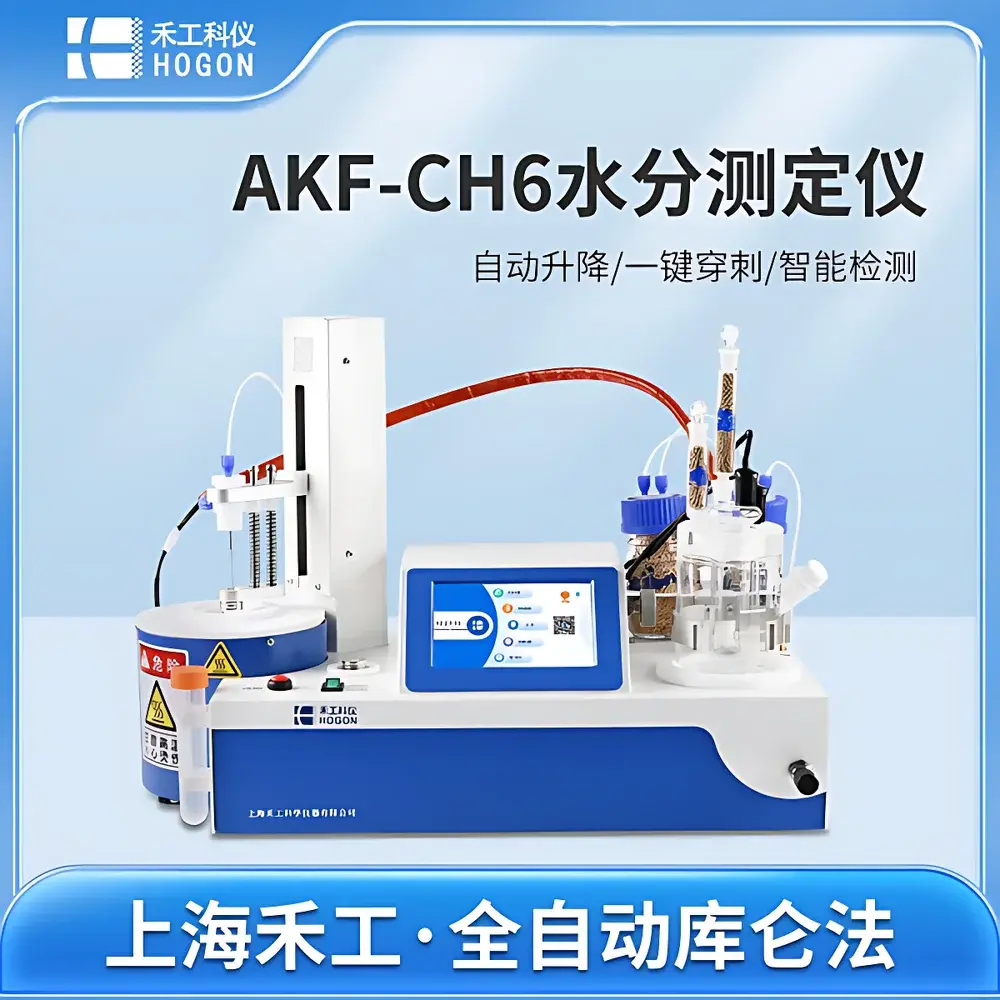
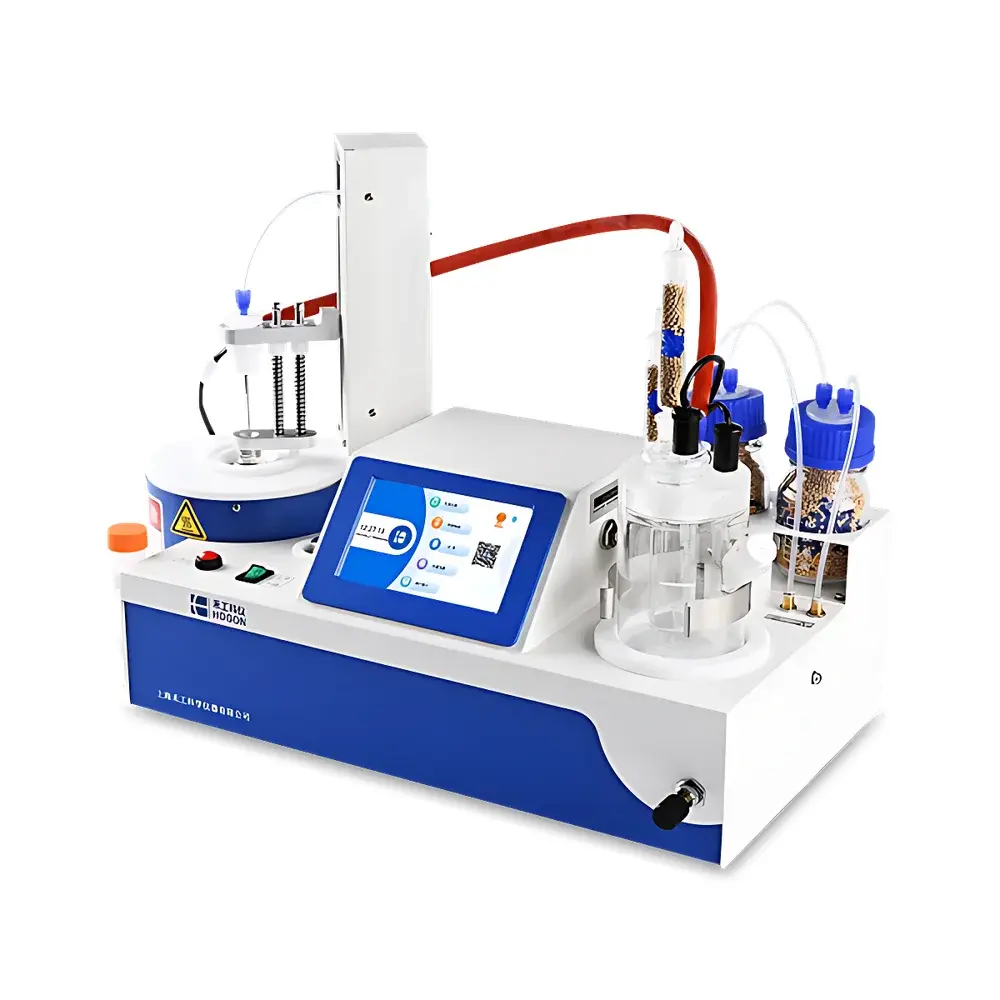
HOGON AKF-CH6 Coulometric Moisture Analyzer for Carbon-Coated Aluminum Foil in Lithium Battery Materials
| Brand | HOGON |
|---|---|
| Origin | Shanghai, China |
| Manufacturer Type | Direct Manufacturer |
| Region of Origin | Domestic (China) |
| Model | AKF-CH6 |
| Detection Principle | Coulometric Karl Fischer Titration |
| Electrode Configuration | Dual Platinum Indicator Electrodes + Membrane Separated Generator Electrode |
| Heating Temperature | 150 °C (programmable, ±0.5 °C stability) |
| Measurement Range | 1 µg – 200 mg H₂O |
| Resolution | 0.1 µg |
| Accuracy | ±0.3% of reading (for samples ≥10 µg H₂O) |
| Repeatability | RSD < 0.5% (n=6, typical carbon-coated Al foil) |
| Sample Throughput | ≤10 min per test (including heating, purging, and titration) |
| Environmental Protection | Sealed titration cell with desiccant-protected reagent reservoir |
| Compliance Support | ASTM E203, ISO 8533, USP <921>, GLP-compliant audit trail (optional software module) |
Overview
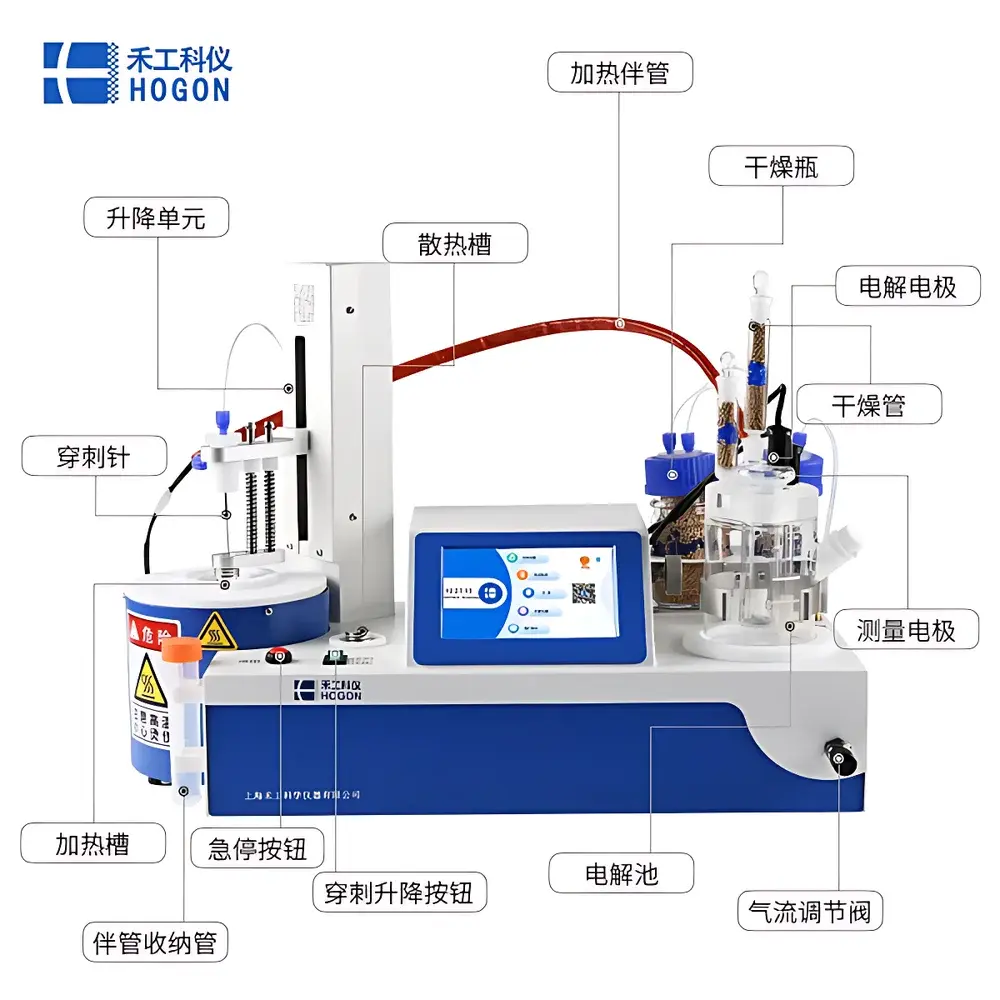
The HOGON AKF-CH6 Coulometric Moisture Analyzer is a purpose-engineered instrument designed specifically for the quantitative determination of trace moisture in carbon-coated aluminum foil used as cathode current collectors in lithium-ion battery manufacturing. It operates on the fundamental principle of coulometric Karl Fischer (KF) titration, where iodine is electrogenerated in situ at the anode of a membrane-separated dual-compartment electrolytic cell. Water in the sample reacts stoichiometrically with iodine, sulfur dioxide, and base in methanol-based KF reagent, and the total charge required to regenerate iodine—measured precisely via coulometry—is directly proportional to the water mass. This method delivers inherent accuracy, high sensitivity (down to 0.1 µg H₂O), and exceptional reproducibility without reliance on volumetric reagent calibration. The AKF-CH6 integrates a programmable 150 °C heating module with inert gas (N₂ or dry air) purge to ensure complete thermal release of bound and adsorbed moisture from the hydrophobic carbon layer and underlying aluminum substrate—critical for avoiding underestimation in low-surface-energy materials.
Key Features
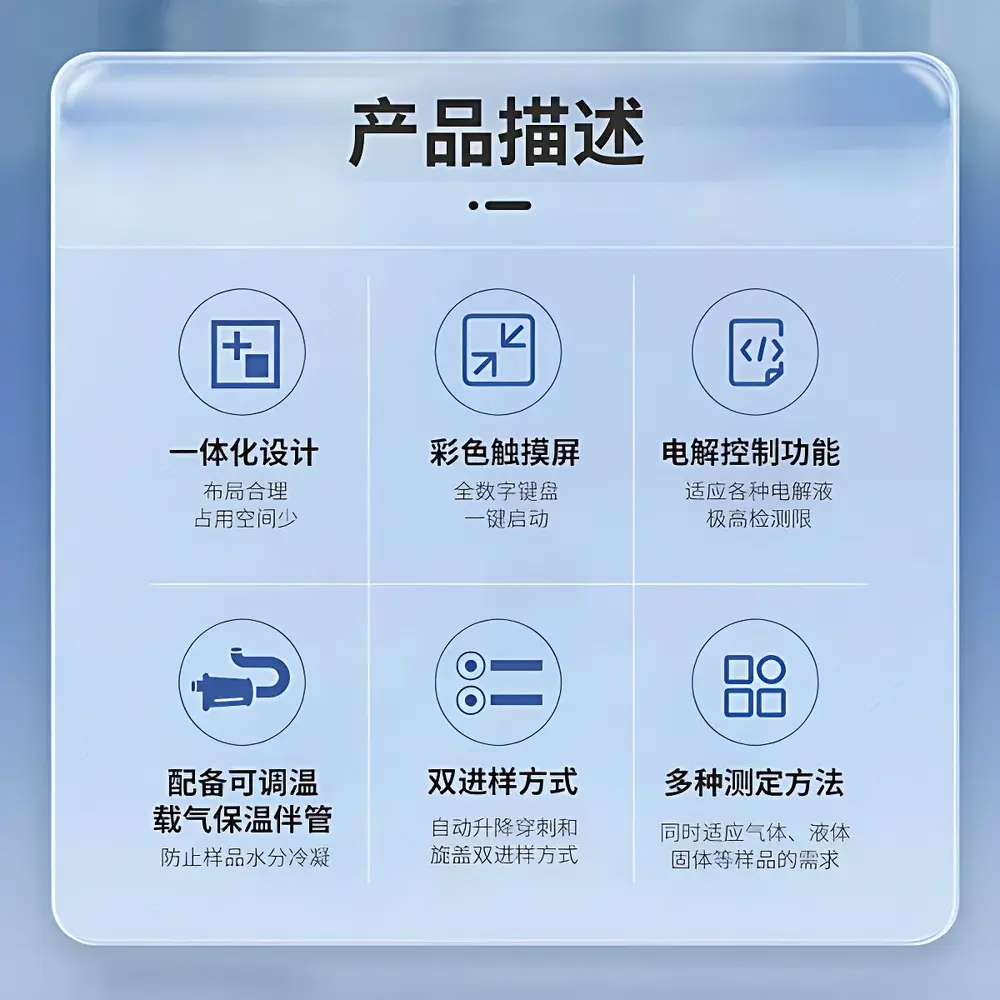
- Optimized thermal extraction system: Precisely controlled 150 °C heating block with PID regulation (±0.5 °C) ensures consistent desorption kinetics across batches of carbon-coated Al foil.
- Dual platinum indicator electrodes with real-time polarization monitoring enable rapid endpoint detection with minimal overshoot, enhancing measurement fidelity for low-moisture samples (e.g., <0.2 wt%).
- Membrane-separated generator electrode architecture minimizes reagent cross-contamination and extends electrolyte service life—reducing operational cost and maintenance frequency.
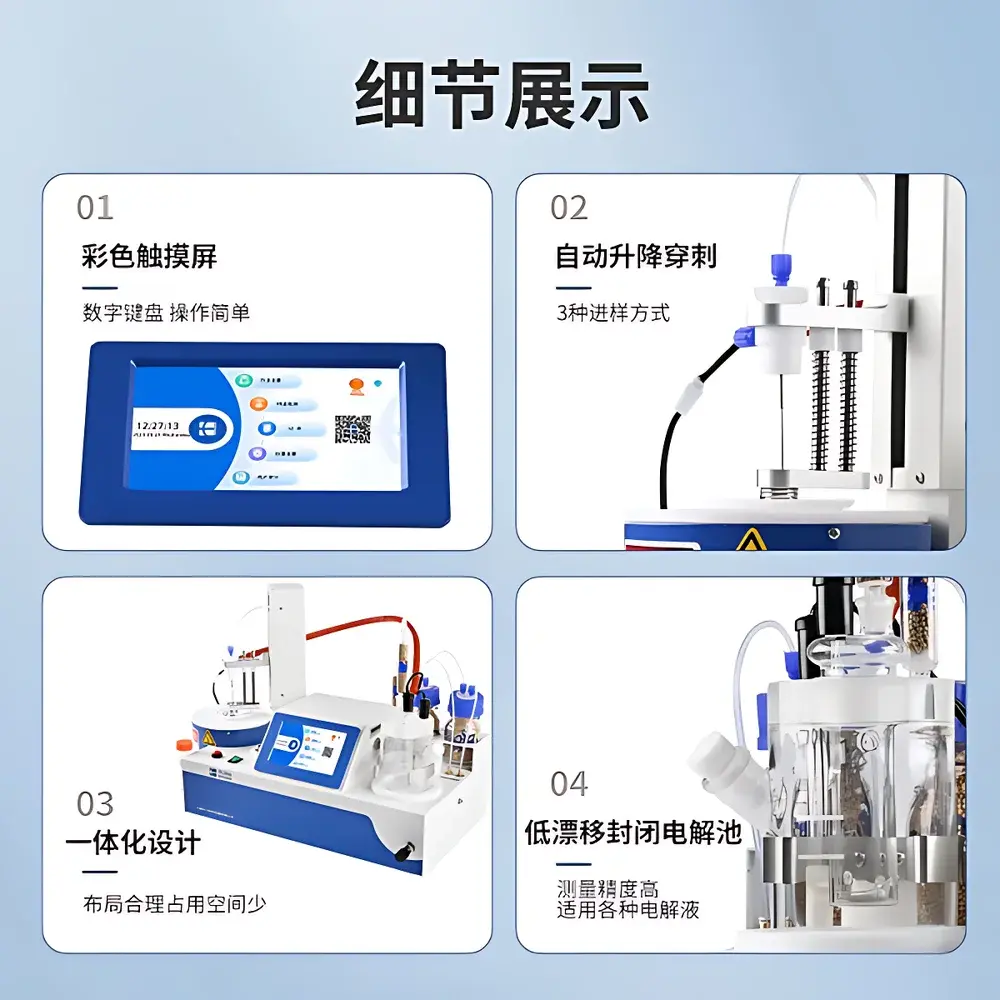
- Hermetically sealed titration cell with integrated desiccant guard and argon-purged reagent reservoir eliminates ambient humidity interference, critical for sub-100 ppm moisture quantification.
- Dynamic blank compensation algorithm continuously monitors and subtracts background drift from reagent and cell components, improving long-term stability and inter-day repeatability.
- Low reagent consumption design (<1.5 mL per 100 tests under standard conditions) aligns with green laboratory practices and reduces hazardous waste generation.
Sample Compatibility & Compliance
The AKF-CH6 accepts solid samples up to 5 g in standard glass vials with septum-capped lids; its optimized heating chamber accommodates both cut foil strips and pressed pellets. Method validation data confirm linearity (r² > 0.9998), recovery (98.7–101.3%), and robustness across foil thicknesses (12–20 µm) and carbon coating weights (0.5–2.0 g/m²). The analyzer supports full compliance with international standards governing moisture analysis in electrochemical materials: ASTM E203 (Standard Test Method for Water Using Volumetric Karl Fischer Titration), ISO 8533 (Determination of Water Content—Coulometric Karl Fischer Titration), and USP “Water Determination”. When equipped with optional 21 CFR Part 11-compliant software, it provides electronic signatures, role-based access control, and immutable audit trails suitable for GMP/GLP-regulated battery material QC laboratories.
Software & Data Management
The embedded HOGON MoistureView™ control interface (Windows-based, USB-connected) enables method creation, real-time titration curve visualization, automatic calculation of moisture content (wt%), and export of raw data (CSV, PDF). All measurements are timestamped and logged with operator ID, sample ID, method parameters, and environmental metadata (ambient T/RH if external sensor connected). Data integrity safeguards include password-protected method editing, forced electronic signature for report finalization, and encrypted local database storage. Optional network integration allows centralized data archiving via LIMS-compatible protocols (e.g., HL7, ASTM E1384).
Applications
- Quality control of incoming carbon-coated aluminum foil from suppliers—ensuring moisture ≤ 0.12 wt% prior to electrode slurry mixing.
- In-process verification after foil drying ovens or vacuum baking steps in cathode production lines.
- Stability studies evaluating moisture uptake during foil storage under varying humidity conditions (e.g., 25 °C/60% RH).
- Root-cause analysis of elevated interfacial resistance or premature capacity fade linked to residual moisture-induced Al₂O₃ growth at the current collector/coating interface.
- Supporting DOE (Design of Experiments) for optimizing carbon coating formulation and drying profiles.
FAQ
What is the minimum detectable moisture level for carbon-coated aluminum foil using the AKF-CH6?
The instrument achieves a lower limit of quantitation (LOQ) of 1 µg H₂O, corresponding to ~0.002 wt% in a 50 mg foil sample.
Can the AKF-CH6 analyze other battery materials besides carbon-coated Al foil?
Yes—it is validated for cathode active materials (e.g., NMC, LFP), anode graphite, separators, and electrolyte solvents when configured with appropriate sampling accessories and method parameters.
How does the AKF-CH6 handle moisture trapped within the carbon layer’s micropores?
The 150 °C heating combined with continuous N₂ purge ensures complete desorption of physisorbed and weakly chemisorbed water; extended hold times (>5 min) may be applied for highly cross-linked carbon matrices.
Is method transfer possible from volumetric KF systems to the AKF-CH6?
Yes—HOGON provides documented equivalence protocols aligned with ICH Q2(R2) guidelines, including comparative precision, accuracy, and ruggedness studies.
Does the system require daily recalibration?
No—coulometric KF is inherently absolute; only periodic verification with certified water standards (e.g., 1.00 mg/g Disodium Tartrate Dihydrate) is recommended per ISO/IEC 17025.



