
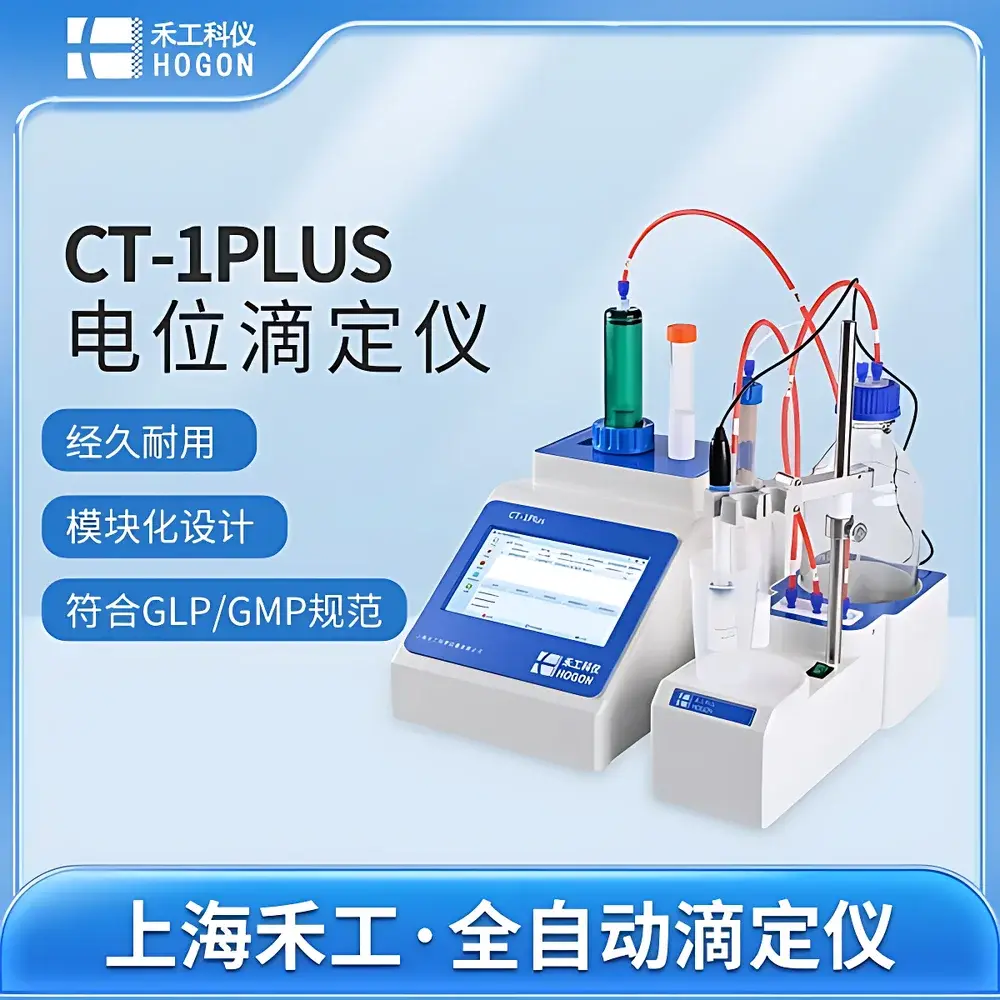
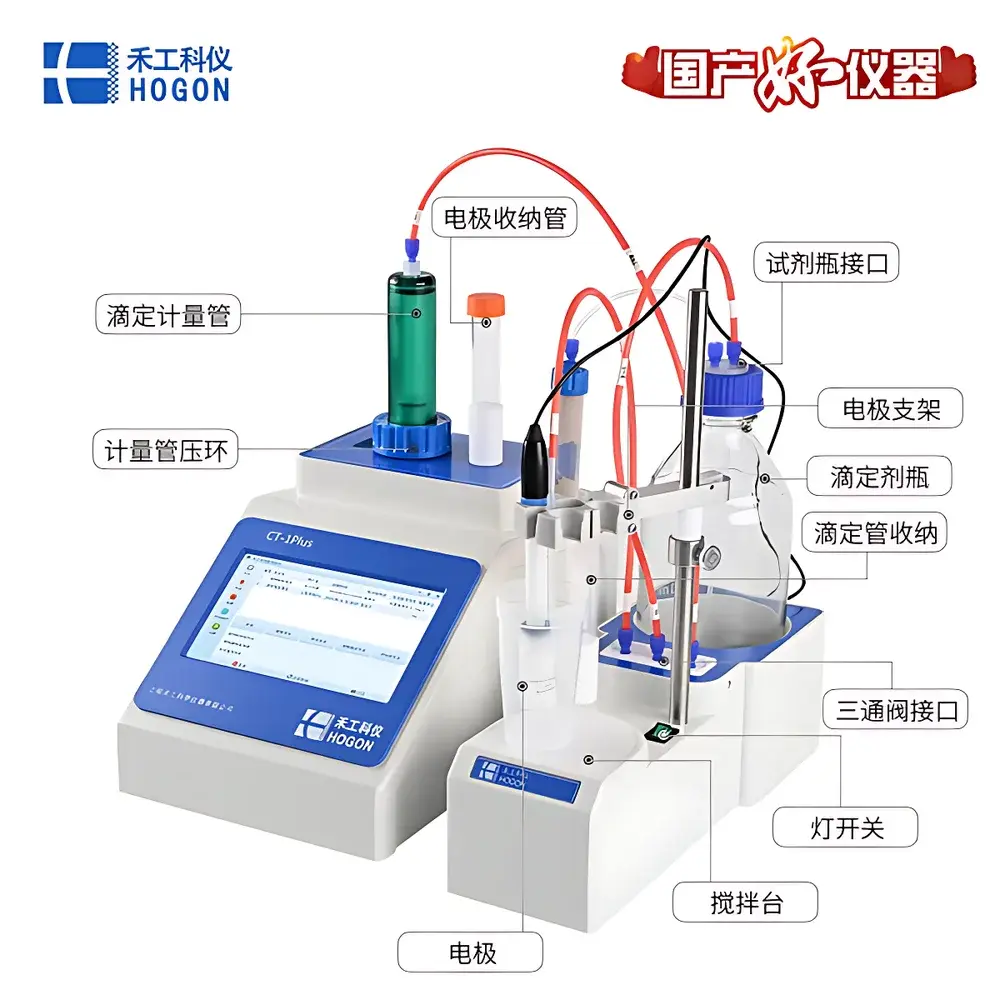
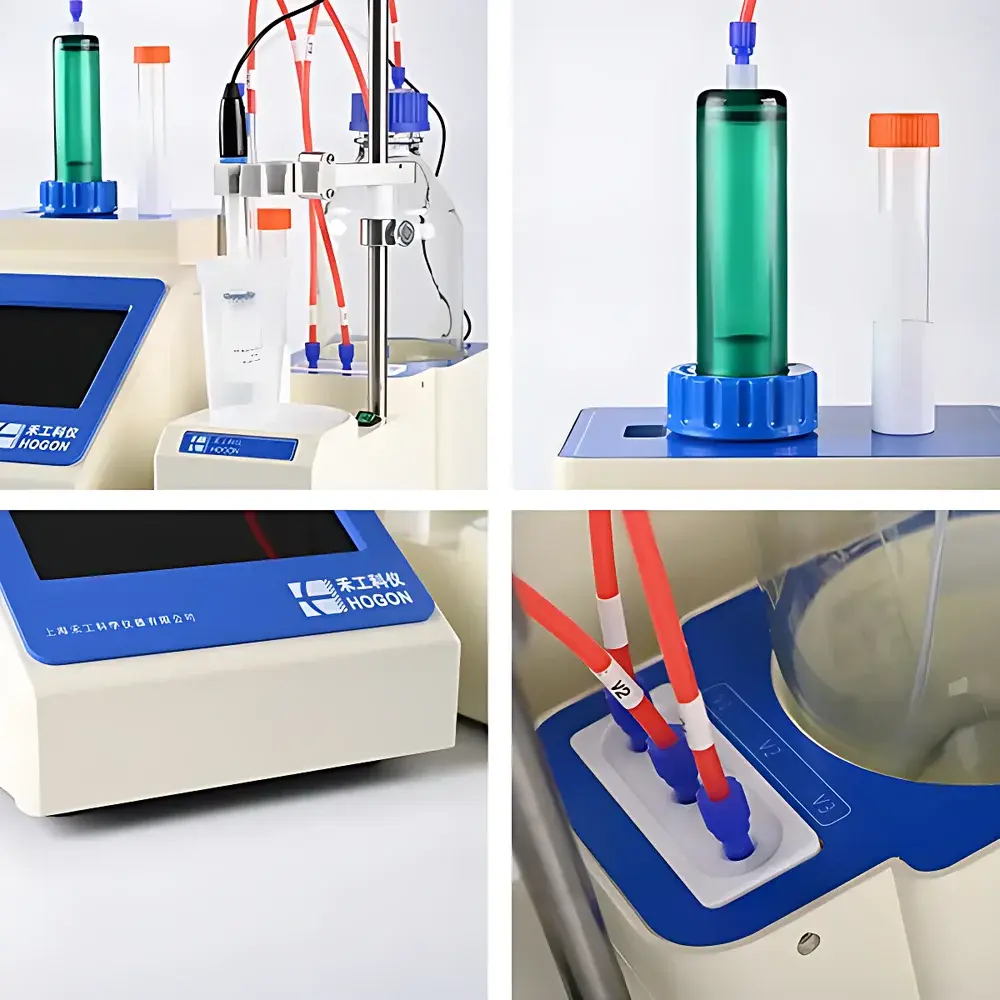
HOGON CT-1Plus Automatic Potentiometric Titrator for Drinking Water Hardness Analysis
| Brand | HOGON |
|---|---|
| Origin | Shanghai, China |
| Manufacturer Type | Direct Manufacturer |
| Product Line | CT Series |
| Instrument Type | General-Purpose Potentiometric Titrator |
| Application Scope | Universal |
| Measurement Ranges | Potential: ±2000 mV |
| pH | 0–14 |
| Temperature | −5 to 125 °C |
| Meter Accuracy | ±0.3% of full scale |
| Meter Resolution | 0.1 mV (potential), 0.001 pH unit, 0.1 °C |
| Titration Accuracy | (±0.3 mV ±1 digit) over 3 h |
| Titration Resolution | ±2000 mV range, 0.1 mV resolution, ±0.2 mV accuracy |
Overview
The HOGON CT-1Plus is a benchtop automatic potentiometric titrator engineered for high-reproducibility quantitative analysis of total hardness in drinking water—primarily through calcium and magnesium ion determination via complexometric titration with EDTA. It operates on the fundamental principle of potentiometric endpoint detection: a calcium-selective electrode (Ca²⁺-ISE) and double-junction reference electrode (outer junction filled with 1 M KNO₃) form a stable electrochemical cell. As EDTA titrant is incrementally added, free Ca²⁺ concentration decreases, inducing a measurable potential shift across the ion-selective membrane. The inflection point of the dE/dV curve—determined by first-derivative analysis—is used to define the stoichiometric endpoint with sub-microliter precision. Designed for compliance-driven laboratories, the CT-1Plus meets foundational requirements for method validation under ISO 9001, ISO/IEC 17025, and USP , supporting traceable, auditable hardness testing per WHO Guidelines for Drinking-water Quality and national standards such as GB/T 5750.4–2023.
Key Features
- Calcium-specific ion-selective electrode paired with a double-junction Ag/AgCl reference electrode (1 M KNO₃ outer fill), minimizing liquid junction potential drift and ensuring long-term baseline stability during sequential sample analysis.
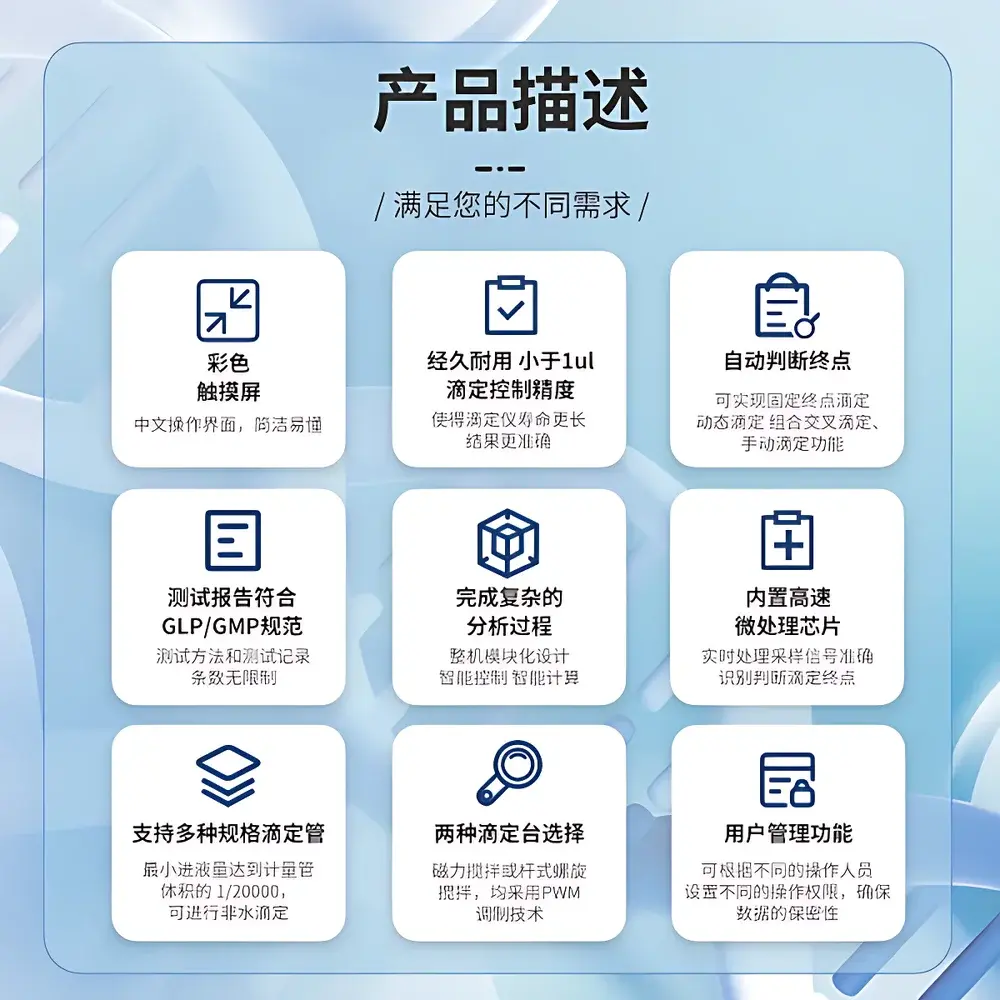
- Micro-dosage titration system with programmable dispensing parameters: minimum step volume 20 µL, maximum single dose 100 µL, adjustable pre- and post-endpoint volume windows (0.5 mL before / 0.3 mL after estimated equivalence point), and user-defined derivative threshold (default 50 mV/mL) for robust endpoint recognition.
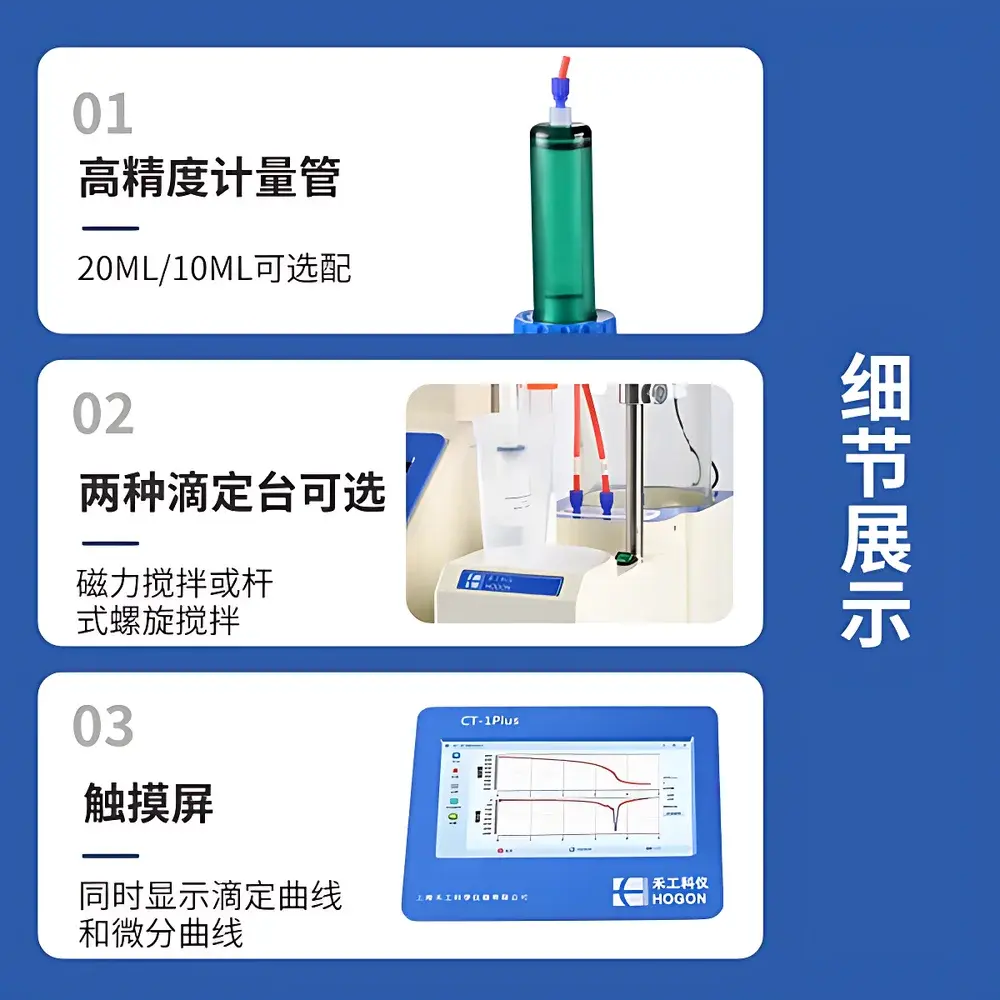
- Integrated magnetic stirring with fixed 200 rpm speed and 2000 ms inter-drop delay—optimized to ensure complete reagent dispersion without inducing bubble formation or electrode surface turbulence that could compromise potential stability.
- Real-time potential, pH, and temperature monitoring with simultaneous display of titration curve (E vs. V), first derivative plot (dE/dV vs. V), and numerical endpoint report—including consumed titrant volume, calculated hardness (as mg/L CaCO₃), and relative standard deviation (RSD) for replicate runs.
- Thermal compensation circuitry enables accurate potential readings across the full operating temperature range (−5 to 125 °C), critical for ambient-variable lab environments and heated sample conditioning protocols.
Sample Compatibility & Compliance
The CT-1Plus accommodates aqueous samples with turbidity ≤5 NTU and suspended solids <10 mg/L—typical of clarified drinking water, groundwater, and low-salinity surface water. It supports direct analysis without filtration when sample clarity permits; for higher particulate loads, optional 0.45 µm membrane filtration is recommended prior to measurement. All hardware components contacting sample or titrant are chemically resistant (PP, PTFE, borosilicate glass), ensuring compatibility with EDTA solutions, buffer standards (e.g., pH 10 NH₃/NH₄Cl), and masking agents (e.g., triethanolamine). The instrument complies with IEC 61010-1 for electrical safety and EMC Directive 2014/30/EU. Data integrity features include timestamped measurement logs, operator ID fields, and non-editable raw data export (CSV), facilitating alignment with GLP documentation practices and internal audit readiness.
Software & Data Management
The embedded firmware provides standalone operation with intuitive menu navigation and context-sensitive prompts—no PC dependency required for routine hardness assays. For advanced reporting and regulatory traceability, optional HOGON TitrSoft v3.2 software (Windows-compatible) enables method library management, multi-user access control, electronic signature support, and audit trail generation compliant with FDA 21 CFR Part 11 requirements. All titration curves, derivative plots, and numeric results are stored with metadata (date/time, operator, method name, calibration status), and can be exported in PDF (with header/footer branding) or CSV for LIMS integration. Calibration records—including electrode slope verification (≥95% theoretical Nernstian response), asymmetry potential checks, and blank correction logs—are retained for ≥12 months.
Applications
- Drinking Water Quality Control: Quantification of total hardness (as CaCO₃) per APHA Standard Methods 2340 C and ISO 6059, supporting daily compliance monitoring at municipal treatment plants and bottled water facilities.
- Environmental Monitoring: Field-deployable analysis of freshwater sources (wells, springs, reservoirs) for calcium/magnesium speciation, aiding in corrosion potential assessment and scaling tendency modeling.
- Food & Beverage QA/QC: Determination of mineral content in dairy products, fortified beverages, and infant formula—aligned with AOAC Official Method 972.37 for calcium titrimetry.
- Pharmaceutical Excipient Testing: Verification of calcium stearate purity and residual metal content in tablet lubricants per EP 2.2.38 and USP .
- Industrial Process Water: In-line hardness verification for boiler feedwater, cooling tower makeup, and semiconductor rinse water where Ca²⁺/Mg²⁺ levels directly impact equipment fouling and product yield.
FAQ
What electrode configuration is required for drinking water hardness analysis?
A calcium-selective electrode (Ca²⁺-ISE) and double-junction reference electrode with 1 M KNO₃ outer electrolyte are mandatory to minimize interference from chloride, sulfate, and alkalinity—ensuring selectivity and stability in low-ionic-strength drinking water matrices.
Can the CT-1Plus perform back-titration or multi-step titrations?
Yes—the firmware supports up to three sequential titration steps within a single method, including direct, back-, and precipitation titrations, provided appropriate electrodes and reagents are selected.
Is temperature compensation applied automatically during measurement?
Yes—integrated Pt1000 sensor continuously feeds temperature data to the potential calculation algorithm, correcting Nernst equation output in real time across the −5 to 125 °C range.
How often must the calcium electrode be calibrated?
Calibration is recommended before each analytical batch using two standard solutions (e.g., 10⁻³ M and 10⁻⁵ M Ca²⁺); slope verification should yield 27–30 mV/decade at 25 °C.
Does the system support GLP-compliant data archiving?
When used with TitrSoft v3.2, full audit trails—including method version history, user login/logout timestamps, and immutable raw data files—are generated and exportable in encrypted ZIP format meeting ISO/IEC 17025 documentation requirements.
Related Products





