
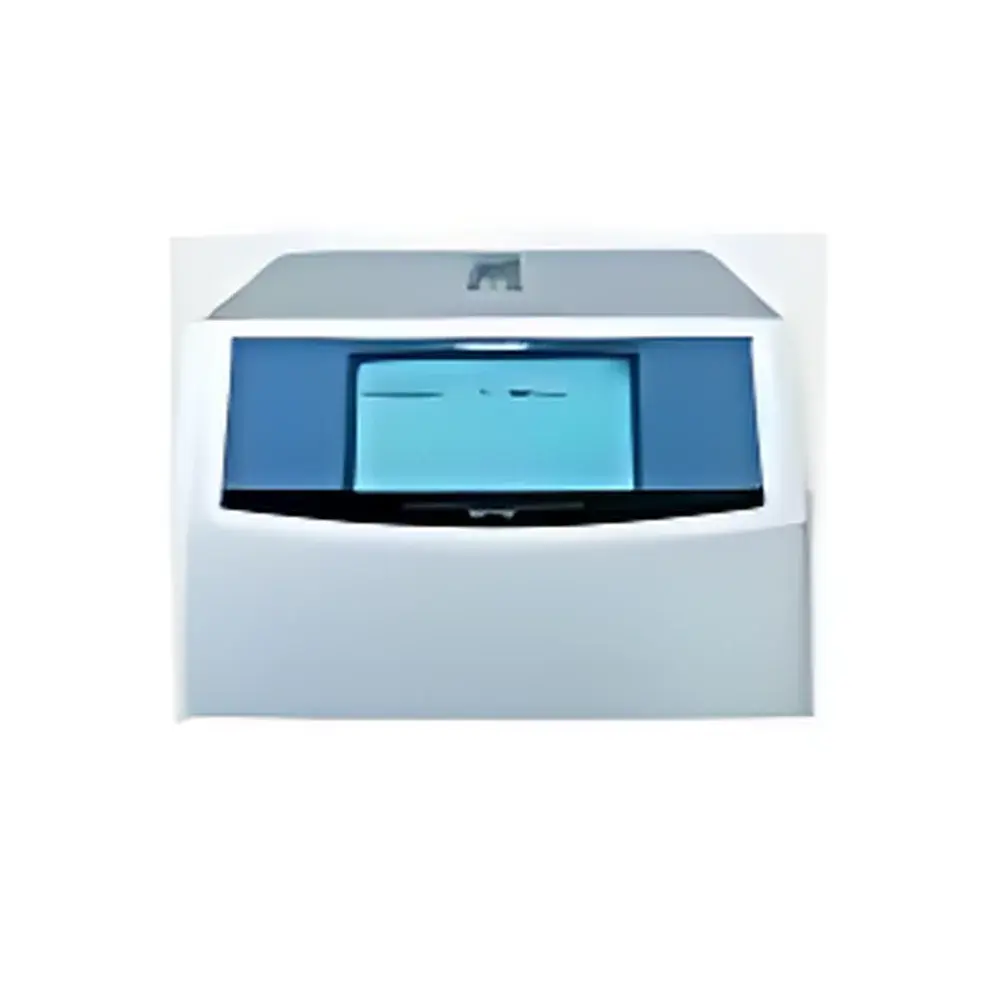
HORIBA FV-250 Portable Total Volatile Organic Compounds (TVOC) Analyzer
| Brand | HORIBA |
|---|---|
| Origin | Japan |
| Model | FV-250 |
| Instrument Type | Portable |
| Detection Principle | Flame Ionization Detection (FID) |
| Measurement Range | 0–10 / 20 / 50 / 100 / 200 / 500 / 1,000 / 2,000 / 5,000 / 10,000 ppmC |
| Resolution | ±1.0% FS |
| Accuracy | ±1.0% FS |
| Response Time (T90) | < 2.0 seconds |
| Drift | ±1.0% FS / 8 hours |
| Linearity | ±1.0% FS |
| Sampling Flow Rate | ~600 mL/min |
| Warm-up Time | ~1 hour |
| Operating Temperature | 5–35 °C |
| Operating Humidity | < 85% RH |
| Output Signals | DC 0–1 V, RS-232C |
| Power Supply | AC 100 V, 50/60 Hz |
| Power Consumption | 50 VA |
| Dimensions | 260(W) × 260(H) × 510(D) mm |
| Data Storage | CompactFlash (CF) card |
| Safety Feature | Automatic H₂ shutoff and alarm upon flame-out |
Overview
The HORIBA FV-250 is a portable, laboratory-grade total volatile organic compounds (TVOC) analyzer engineered for high-fidelity, real-time field monitoring and industrial hygiene applications. It employs the flame ionization detection (FID) principle—a well-established, universally accepted method for hydrocarbon quantification in ambient air, workplace environments, and emission source testing. Unlike photoionization detectors (PID) or metal oxide semiconductor (MOS) sensors, FID delivers exceptional linearity, wide dynamic range, and compound-independent response for most organic vapors (expressed as ppmC), making it ideal for regulatory-compliant VOC screening where quantitative accuracy and trace-level sensitivity are critical. The FV-250 is designed to meet the performance expectations of environmental consultants, occupational safety officers, and industrial hygienists requiring rapid deployment, on-site calibration verification, and reliable data acquisition under variable ambient conditions.
Key Features
- True FID-based detection with <2.0 s T90 response time—enabling near-instantaneous concentration tracking during dynamic sampling scenarios.
- Auto-ranging capability across ten programmable full-scale ranges (0–10 to 0–10,000 ppmC), eliminating manual scale switching and reducing operator error.
- Integrated automatic zero and span calibration function—supports routine field verification without external gas standards for daily QC checks.
- High-resolution capacitive touchscreen interface with intuitive menu navigation, real-time trend graphing, and on-device data review—optimized for glove-compatible operation in industrial settings.
- Compact, ruggedized chassis (260 × 260 × 510 mm) with ergonomic carrying handle; total mass under 12 kg—designed for extended handheld or tripod-mounted use.
- Fail-safe hydrogen management system: continuous flame monitoring with immediate H₂ supply cutoff and audible/visual alarm upon flame extinction—fully compliant with IEC 60079-0 and NFPA 56 safety protocols.
- Low power consumption (50 VA) enables stable operation from standard AC mains or compatible uninterruptible power supplies (UPS) during mobile surveys.
Sample Compatibility & Compliance
The FV-250 is optimized for gaseous samples drawn directly from ambient air, ducts, or enclosed spaces via its built-in sampling pump (~600 mL/min). It responds quantitatively to aliphatic and aromatic hydrocarbons (e.g., benzene, toluene, xylene, hexane, propane), ketones, esters, and other FID-active organics—but remains insensitive to CO, CO₂, NOₓ, H₂O vapor, and halogenated compounds unless pre-concentrated or catalytically converted. Its performance aligns with ASTM D6348–21 (standard test method for determining gaseous compounds by FID), ISO 16000-6 (indoor air—determination of VOCs), and OSHA Method 1005 (hydrocarbon analysis in workplace air). While not intrinsically rated for Class I Division 1 hazardous locations, its flame-out protection and sealed electronics support safe use in non-explosive zones per ATEX Zone 2 guidance.
Software & Data Management
Data logging is performed internally onto removable CompactFlash (CF) cards with timestamped records (date/time, concentration, range, status flags). Each CF card supports >1 million data points and retains file integrity during power interruption. Raw output includes analog DC 0–1 V signals for integration with SCADA or PLC systems, and bidirectional RS-232C serial communication for direct PC connection. HORIBA-supplied PC software (Windows-compatible) enables post-acquisition visualization of time-series trends, statistical summaries (min/max/avg/std dev), export to CSV or Excel, and report generation aligned with GLP documentation requirements—including user audit trails and calibration log archiving. All data files include embedded metadata (instrument ID, firmware version, operator ID, location tag) to support FDA 21 CFR Part 11–compliant workflows when configured with electronic signatures.
Applications
- Workplace exposure assessment per OSHA PELs and ACGIH TLVs for total hydrocarbons in manufacturing, painting, printing, and solvent-handling facilities.
- Indoor air quality (IAQ) audits in offices, schools, hospitals, and residential buildings following ISO 16000-22 protocols.
- Leak detection and repair (LDAR) programs at petrochemical sites, refineries, and storage terminals—particularly for fugitive emission screening.
- Post-remediation verification after soil vapor extraction (SVE) or thermal desorption projects.
- Calibration validation and cross-checking of fixed continuous emission monitoring systems (CEMS) using portable reference-grade instrumentation.
- Field research in atmospheric chemistry studies requiring high-temporal-resolution VOC profiling.
FAQ
What detection principle does the FV-250 use, and why is FID preferred for TVOC measurement?
The FV-250 utilizes flame ionization detection (FID), which provides superior linearity, low detection limits (~0.1 ppmC), and consistent molar response across diverse hydrocarbons—unlike PID, whose sensitivity varies significantly by compound ionization potential.
Does the instrument require external calibration gases for routine operation?
No—its auto-calibration function allows periodic zero and span verification using ambient air (zero) and a single certified span gas (e.g., 1,000 ppmC methane); however, annual factory recalibration against NIST-traceable standards is recommended for regulatory reporting.
Can the FV-250 operate continuously for extended periods?
Yes—designed for unattended operation up to 8 hours on AC power; warm-up stabilization takes approximately 60 minutes, after which drift remains within ±1.0% FS over 8 hours.
Is the CF card data format compatible with third-party analysis tools?
Yes—data is stored as plain-text ASCII files with tab-delimited columns, enabling direct import into MATLAB, Python (pandas), R, or commercial data analytics platforms without proprietary conversion.
What maintenance intervals are required for sustained accuracy?
Monthly inspection of the FID jet and collector electrode; quarterly replacement of the hydrogen filter and sample inlet particulate filter; annual replacement of the ceramic igniter and full optical/electronic verification at an authorized HORIBA service center.
Related Products







