
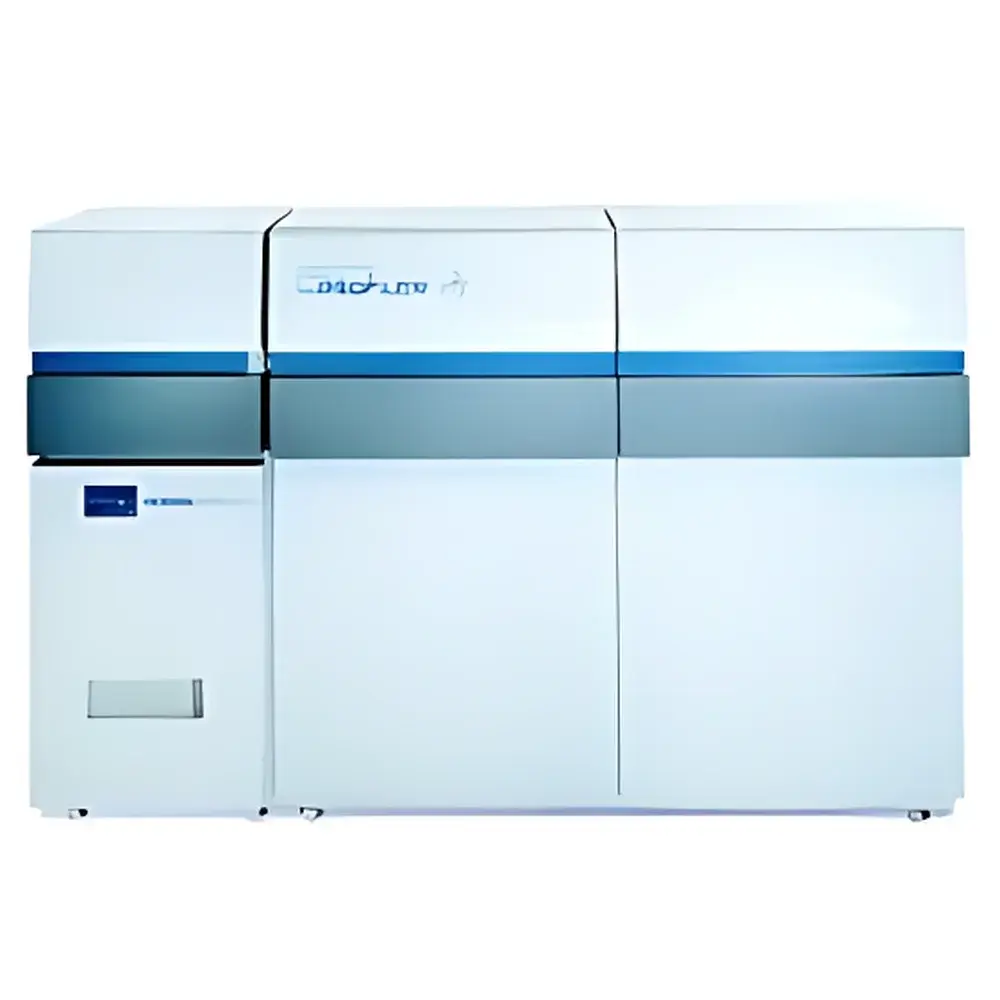
HORIBA JY Profiler HR Radiofrequency Glow Discharge Optical Emission Spectrometer
| Brand | HORIBA |
|---|---|
| Origin | France |
| Model | Profiler HR |
| Spectral Range | 110–800 nm |
| Resolution (Polyscan) | 14 pm |
| Resolution (Optional Monochromator) | 9 pm |
| Dynamic Detection Range | 5 × 10¹⁰ |
| Simultaneous Elements | Up to 60 |
| Compliant Standards | ISO 14707, ISO 16962 |
| Detector Type | High Dynamic Detector (HDD) |
| RF Generator | Standard RF Source with D-Class Amplifier Architecture |
| Sample Chamber | Large-volume, modular design for heterogeneous sample loading |
| Software | Quantum v5.x with GLP-compliant audit trail and report export (PDF, CSV, XML) |
Overview
The HORIBA JY Profiler HR is a high-resolution radiofrequency glow discharge optical emission spectrometer (RF-GD-OES) engineered for quantitative depth profiling and bulk compositional analysis of conductive and non-conductive solid materials. Unlike DC-GD systems, the RF excitation mode enables stable plasma generation on insulating substrates—such as oxides, nitrides, polymers, and multilayer dielectric coatings—without requiring conductive backing or matrix-matching standards. The instrument operates on the principle of sputter-driven atomization in a low-pressure argon plasma, followed by optical emission detection across the vacuum ultraviolet to near-visible range (110–800 nm). Its 1-meter focal length Polyscan polychromator delivers intrinsic spectral resolution down to 14 pm at 200 nm, enabling precise separation of closely spaced analytical lines (e.g., Fe I 238.204 nm / Cr I 238.208 nm), critical for complex alloy and thin-film characterization in aerospace, semiconductor, and coating R&D environments.
Key Features
- RF generator with D-class amplifier architecture ensures exceptional plasma stability (<0.1% RMS power fluctuation), minimal sputter crater topography distortion, and sub-second plasma ignition reproducibility—essential for high-precision depth resolution.
- Pulsed RF mode (1–10 kHz, duty cycle adjustable) mitigates thermal load during analysis of low-thermal-conductivity or brittle layers (e.g., SiO₂ on Si, DLC coatings, polymer laminates), preserving interfacial integrity and enabling accurate interface quantification.
- Polyscan polychromator with full spectral coverage from 110 nm to 800 nm supports direct detection of light elements including H, C, N, O, and Cl—key for corrosion layer, passivation film, and hydrogen embrittlement studies.
- Holographic ion-etched grating fabricated in-house by HORIBA guarantees >35% optical throughput in VUV region, significantly improving signal-to-noise ratio for trace element detection (ppm-level sensitivity).
- High Dynamic Detector (HDD) combines CCD and PMT technologies in a single acquisition system, delivering linear response over 10 orders of magnitude (5 × 10¹⁰ dynamic range) without gain switching—enabling simultaneous quantification of major matrix constituents and trace dopants in one scan.
- Modular sample chamber accommodates specimens up to Ø100 mm × 50 mm height, with motorized XYZ stage, optional cryo-cooling (-120°C), and integrated viewport for real-time crater monitoring via external microscope.
Sample Compatibility & Compliance
The Profiler HR accepts flat, irregular, and curved conductive/non-conductive solids—including metals, ceramics, glasses, painted panels, printed circuit boards, and coated foils—without metallization. Its RF plasma maintains consistent sputter rates across varying secondary electron yields, eliminating matrix-dependent bias common in DC-GD. The system complies with ISO 14707 (metallic coatings — glow discharge optical emission spectrometry) and ISO 16962 (analysis of surface-treated parts), and supports full traceability under GLP/GMP frameworks. Quantum software includes 21 CFR Part 11–compliant electronic signatures, audit trails, and user-access controls required for regulated QA/QC laboratories.
Software & Data Management
Quantum v5.x provides end-to-end workflow automation—from method setup and calibration curve generation (using certified reference materials per ISO/IEC 17025) to depth profile deconvolution, interfacial stoichiometry mapping, and multi-layer thickness calculation. All raw spectra, sputter time stamps, and detector gain settings are stored in vendor-neutral HDF5 format. Reporting modules generate customizable PDF/CSV/XML outputs compliant with internal SOPs or external submission requirements (e.g., ASTM E3061, EN 10293). Optional network licensing allows concurrent access across multiple instruments within a centralized lab infrastructure.
Applications
- Depth-resolved analysis of PVD/CVD coatings (TiN, Al₂O₃, DLC) on tool steels and turbine blades
- Quantification of oxygen ingress and chromium depletion in oxide scales on Ni-based superalloys
- Hydrogen profiling in Zr-alloy cladding tubes for nuclear fuel applications
- Interdiffusion kinetics at Cu/Sn solder joint interfaces in microelectronics packaging
- Verification of conformal ALD film uniformity on high-aspect-ratio MEMS structures
- Failure analysis of delaminated automotive paint systems using elemental gradient mapping
FAQ
Can the Profiler HR analyze non-conductive samples without conductive coating?
Yes—the RF plasma sustains stable discharge on insulators such as glass, alumina, and polymer films, eliminating the need for carbon or gold sputtering that may contaminate surface chemistry.
What is the minimum detectable thickness for ultra-thin layers?
With optimized pulse parameters and HDD integration, sub-nanometer depth resolution (<0.3 nm/s) is achievable for monolayer-sensitive applications like self-assembled monolayers (SAMs) and atomic layer deposition (ALD) nucleation studies.
Is calibration transfer possible between different Profiler HR units?
Yes—Quantum’s standardized spectral library and intensity normalization protocols (based on internal Ar I 419.83 nm reference line) ensure cross-instrument reproducibility within ±3% RSD for certified reference materials.
Does the system support automated batch analysis?
Yes—via Quantum’s scriptable macro engine and LabVIEW-compatible API, users can schedule unattended runs for up to 96 samples with auto-stage positioning, parameter recall, and pass/fail decision logic based on predefined concentration thresholds.
Related Products




