
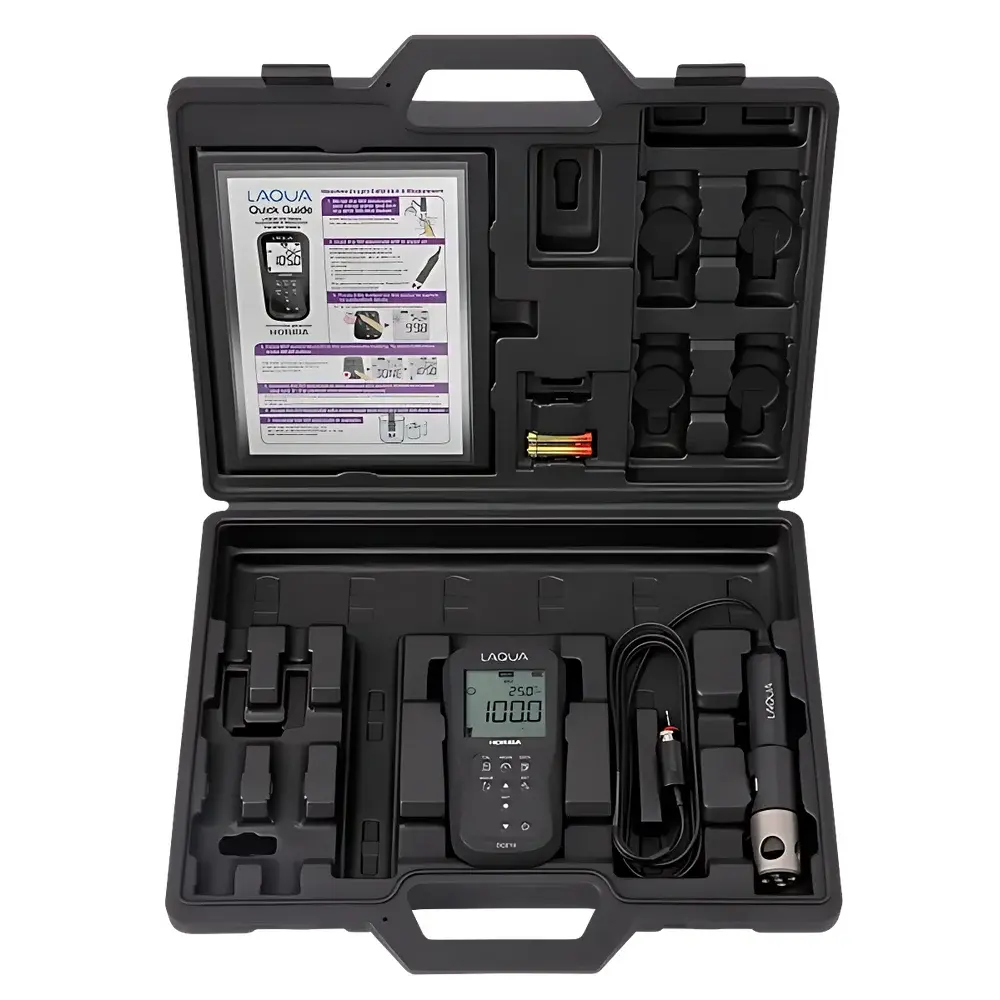
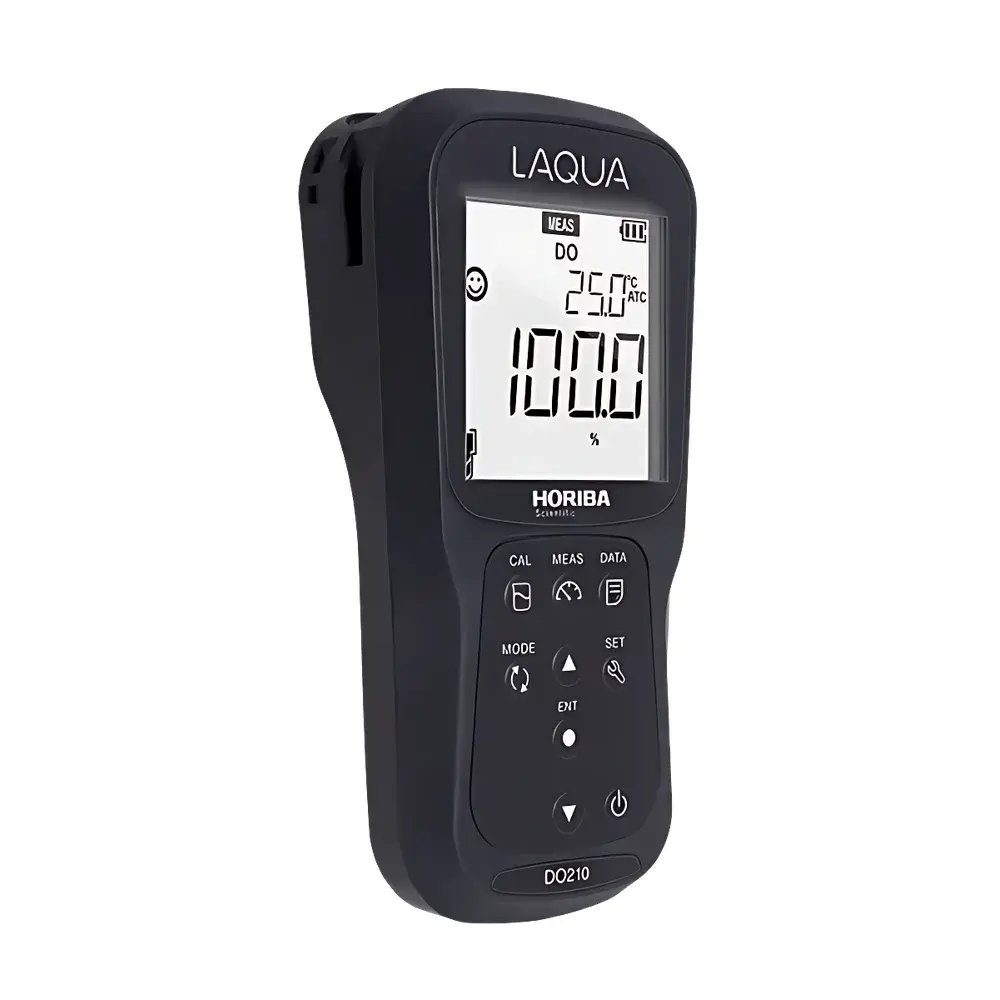
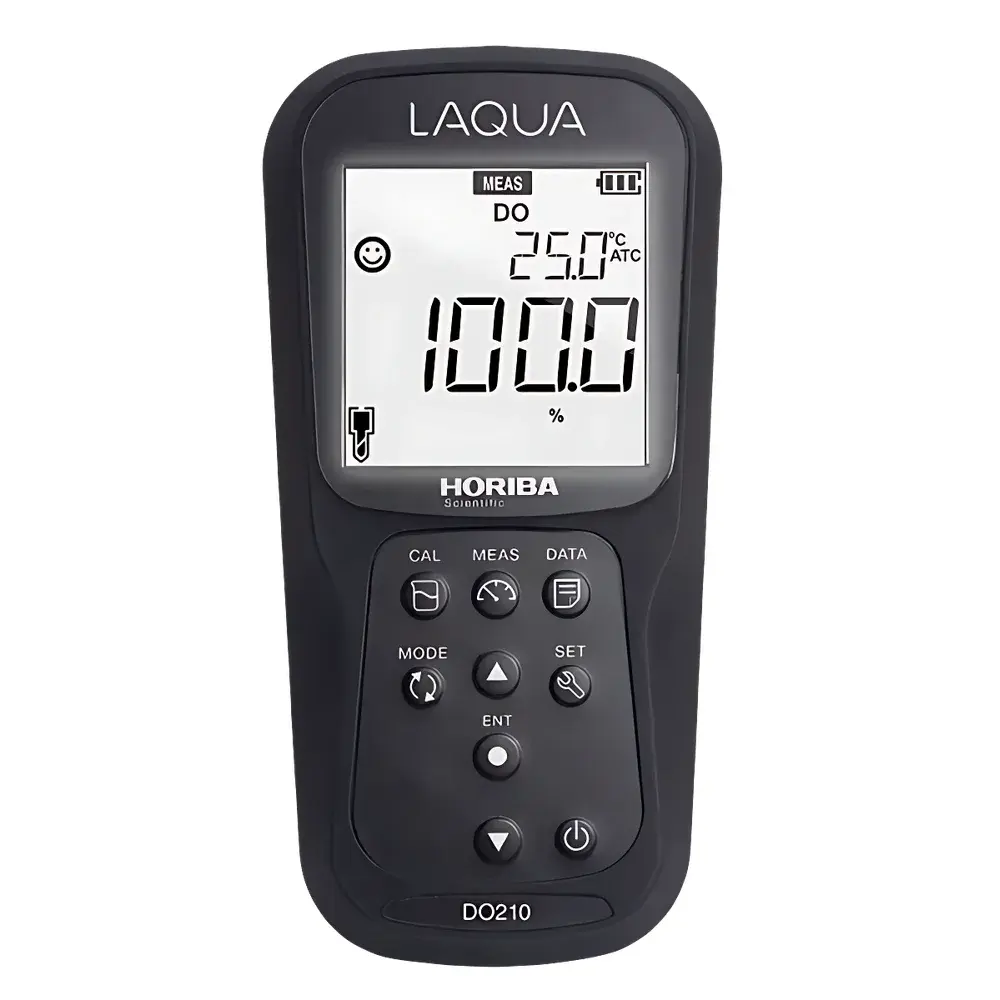
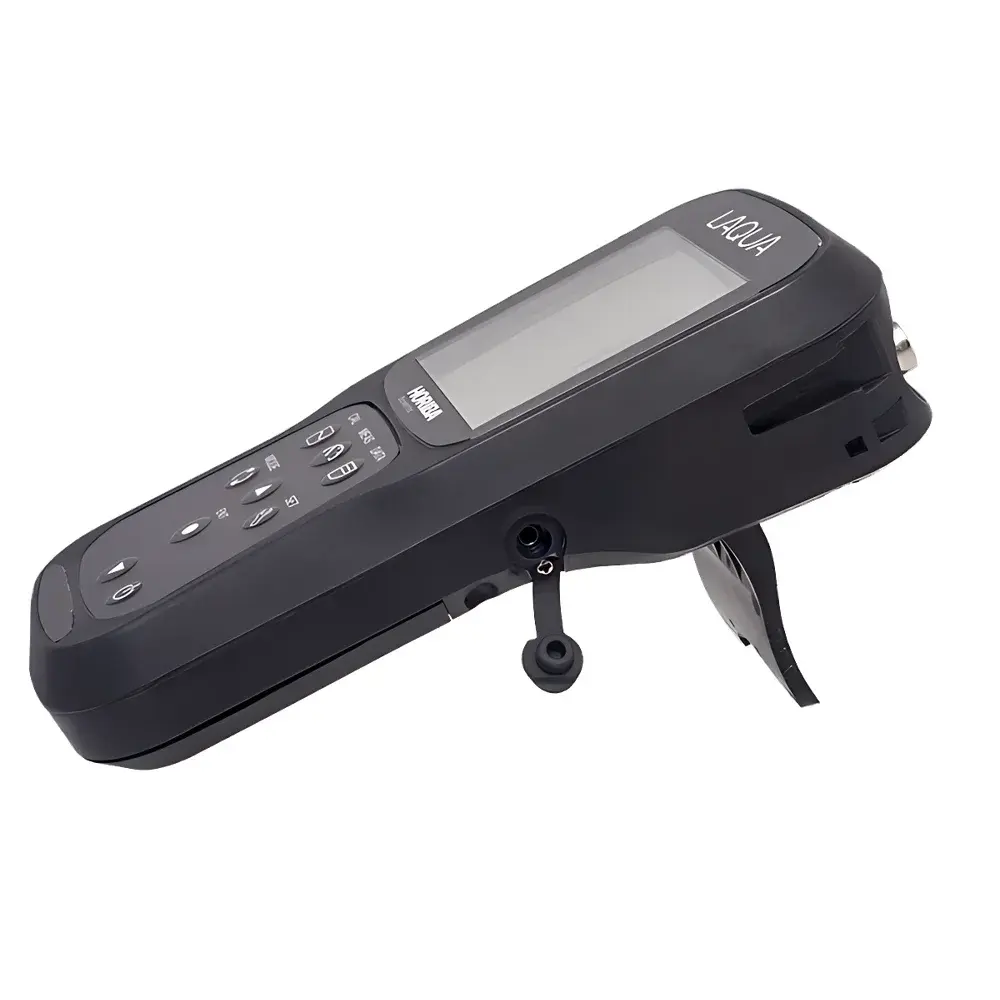
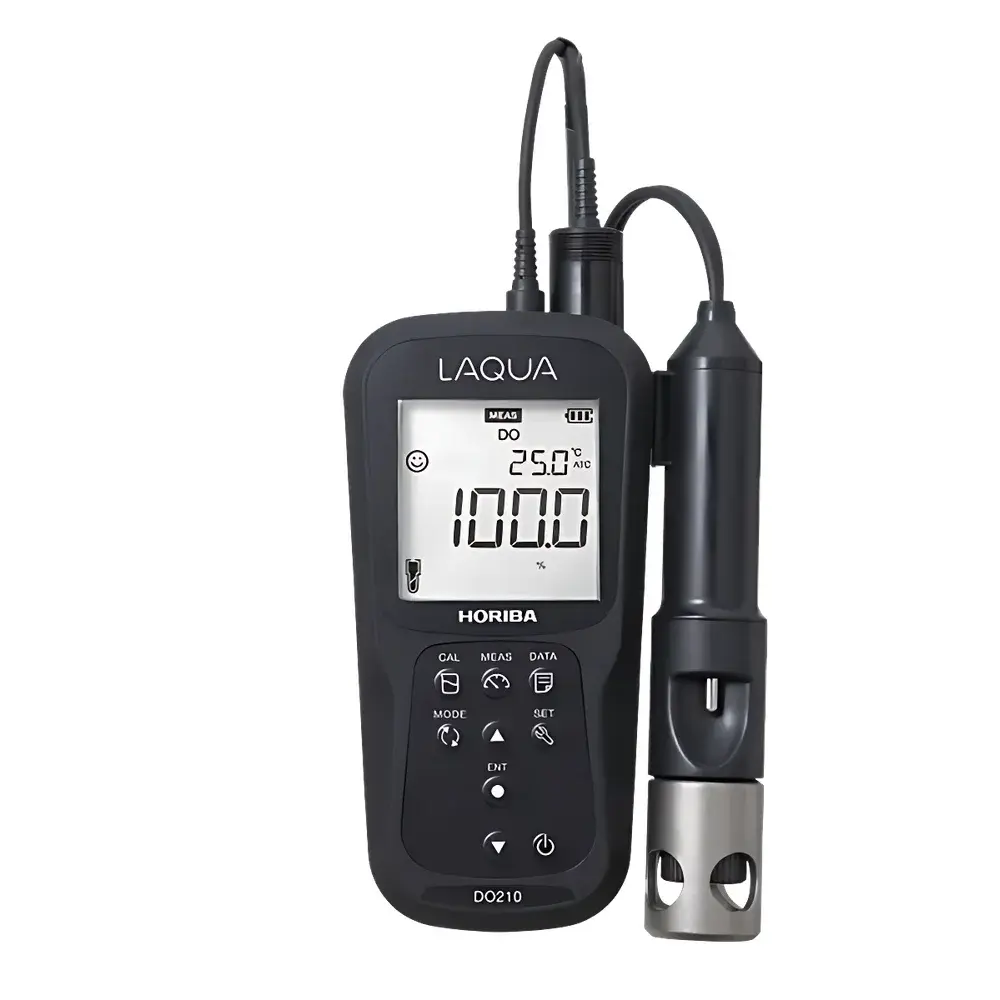
HORIBA LAQUA DO210 Portable Dissolved Oxygen Meter
| Brand | HORIBA |
|---|---|
| Origin | Japan |
| Model | DO210 |
| Instrument Type | Portable |
| Measurement Principle | Galvanic Cell Electrochemical Probe |
| Measurement Range | 0.0 to 20.00 mg/L |
| Accuracy | ±0.1 mg/L |
| Resolution | 0.01 mg/L (DO), 0.1 °C/°F (Temperature) |
| Salinity Compensation | 0.0–40.0 ppt |
| Atmospheric Pressure Compensation | Yes |
| Temperature Compensation | Yes |
| Data Storage Capacity | 500 readings |
| IP Rating | IP67 |
| Power Supply | 2 × AA batteries |
| Battery Life | >500 hours |
| Dimensions | 160 × 80 × 40.6 mm |
| Weight | 260 g (with batteries) |
Overview
The HORIBA LAQUA DO210 Portable Dissolved Oxygen Meter is an engineered field-deployable instrument designed for precise, real-time measurement of dissolved oxygen (DO) concentration in aqueous environments using a galvanic cell electrochemical probe. Unlike polarographic sensors requiring polarization time and external power, the DO210’s self-powered galvanic electrode delivers rapid response, stable baseline performance, and minimal maintenance—ideal for routine water quality assessment across freshwater, wastewater, aquaculture, and environmental monitoring applications. The instrument simultaneously measures temperature (−30.0 to 130.0 °C) and computes DO in both concentration units (mg/L or ppm) and saturation percentage (%DO), applying automatic compensation for salinity (0.0–40.0 ppt), atmospheric pressure, and temperature—ensuring metrological traceability under variable field conditions. Its ruggedized, IP67-rated housing meets IEC 60529 specifications for dust-tight and immersion-resistant operation up to 1 m for 30 minutes, supporting compliance with ASTM D888, ISO 5814, and EPA Method 360.5 protocols for field DO determination.
Key Features
- Galvanic DO probe (model 9552-20D) with integrated Pt1000 temperature sensor and 2 m cable—eliminates separate temperature measurement error and reduces thermal lag
- Triple-parameter compensation engine: automatic real-time correction for salinity, barometric pressure, and temperature per ISO 5814 Annex B algorithms
- High-resolution display: monochrome LCD (50 × 50 mm) with white LED backlight, optimized for outdoor readability under direct sunlight or low-light conditions
- Three operational modes: Auto-Stabilize (locks reading when drift <0.02 mg/L over 3 s), Auto-Hold (freezes stable value), and Real-Time (continuous updating at 1 Hz)
- Programmable auto-power-off (5, 10, 20, or 30 minutes) and intelligent battery management—>500 hours typical runtime on two AA alkaline cells
- Built-in diagnostics: electrode status indicator, low-battery warning, calibration due alert, and probe integrity check via internal impedance monitoring
- Dual-input architecture: BNC connector for DO probe + phono jack for optional external temperature amplifier (not included)
Sample Compatibility & Compliance
The DO210 is validated for use with natural waters (rivers, lakes, groundwater), treated effluents, process streams, and recirculating aquaculture systems. It complies with key international standards governing DO measurement methodology and instrumentation reliability: ISO 5814:2012 (water quality — determination of dissolved oxygen — electrochemical probe method), ASTM D888-22 (standard test methods for dissolved oxygen in water), and EN 25814 (water quality — determination of dissolved oxygen — amperometric method). Its IP67 enclosure satisfies NEMA 6P requirements for outdoor deployment, while its non-sterile design aligns with GLP-compliant field sampling workflows where instrument validation follows SOPs per ISO/IEC 17025:2017 Clause 6.4. The device does not require FDA 21 CFR Part 11 compliance, as it lacks electronic signature or audit-trail functionality—making it suitable for non-regulated environmental surveys and academic research.
Software & Data Management
Data acquisition is fully autonomous: up to 500 measurement records—including DO (mg/L and %), temperature (°C/°F), date/time stamp, and probe ID—are stored internally with timestamp precision of ±2 seconds per IEC 60870-5-101. Data export is performed exclusively via USB-based firmware upgrade utility (PN 3200779639), which supports Windows OS and enables batch download to CSV format for post-processing in LIMS or statistical software (e.g., R, Python pandas, or Excel). No cloud connectivity, Bluetooth, or mobile app integration is provided—consistent with HORIBA’s focus on data sovereignty and field instrument security. Calibration history (up to two-point DO calibration with air-saturated water and zero-oxygen solution) is retained in non-volatile memory and retrievable via display navigation.
Applications
- Field-based wastewater treatment plant (WWTP) monitoring: aeration basin DO profiling, return activated sludge (RAS) optimization, and effluent compliance verification against local discharge limits
- Aquaculture operations: pond and raceway DO mapping to prevent hypoxia-induced mortality; correlation with feed scheduling and aerator control logic
- Environmental impact assessments (EIA): longitudinal DO profiling along river transects, seasonal hypolimnetic monitoring in stratified lakes, and sediment-water interface flux estimation
- Educational laboratories: undergraduate water chemistry labs emphasizing sensor principles, compensation theory, and field method validation per APHA Standard Methods 4500-O G
- Drinking water distribution system audits: residual DO verification at storage tank outlets and booster station inflows
FAQ
What calibration standards are recommended for the DO210?
Air-saturated water (at local temperature and pressure) and sodium sulfite solution (0 mg/L DO) are the two accepted primary standards per ISO 5814. Calibration must be performed in situ or under ambient lab conditions matching sample temperature.
Can the DO210 measure DO in high-salinity seawater (>35 ppt)?
Yes—the built-in salinity compensation covers 0.0–40.0 ppt, enabling accurate DO reporting in estuarine and marine environments without manual correction factors.
Is the 9552-20D DO probe replaceable, and what is its typical service life?
Yes—the probe is user-replaceable with standard BNC termination. Under normal field use (≤4 hrs/day, cleaned after each deployment), expected functional life exceeds 18 months before electrolyte depletion or membrane fouling necessitates replacement.
Does the DO210 support GLP-compliant data logging for regulated testing?
No—it lacks electronic signature capability, audit trail, or user access control. For GLP/GMP environments, it serves as a field screening tool; final compliance data must be acquired using validated, 21 CFR Part 11–compliant benchtop systems.
How is atmospheric pressure entered for compensation?
The instrument includes a built-in barometric pressure sensor (range: 60–110 kPa) that auto-detects ambient pressure—no manual input required. Alternatively, users may manually enter local station pressure if sensor calibration is unavailable.
Related Products







