
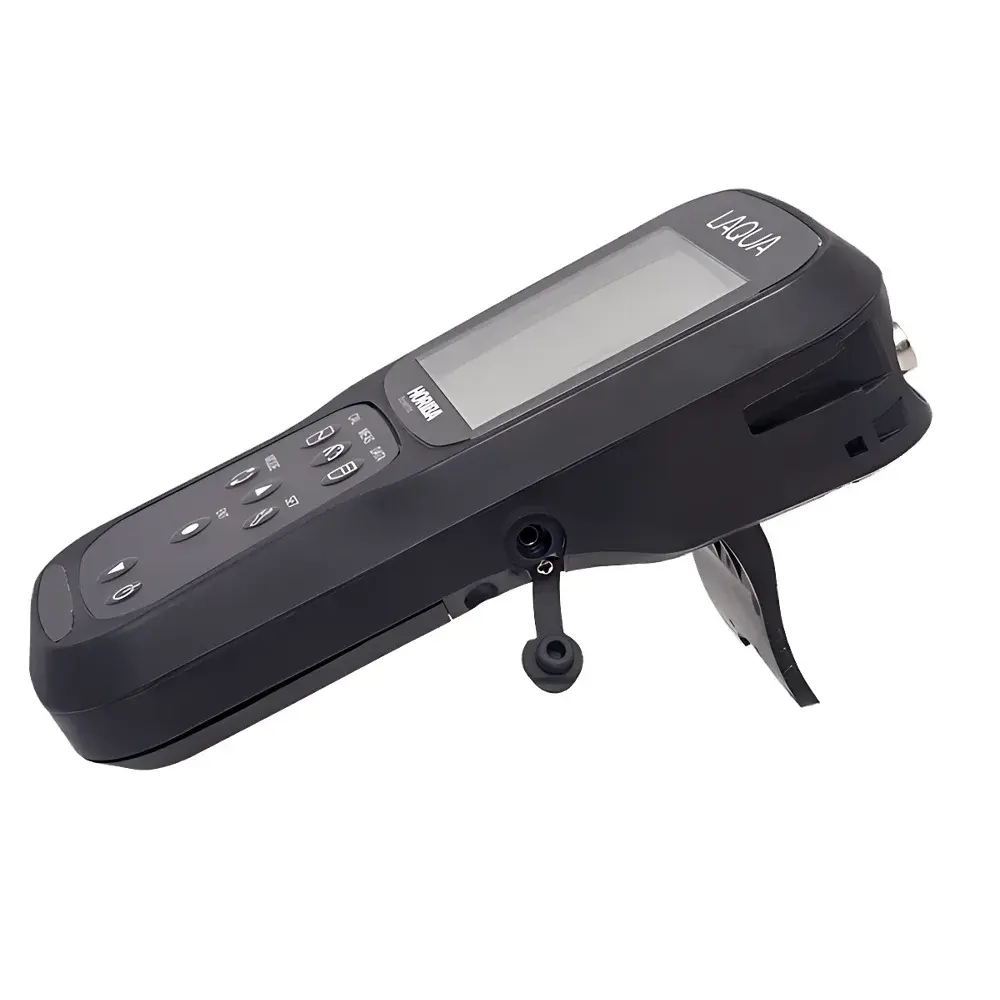
HORIBA LAQUA PC210 Dual-Channel Multiparameter Water Quality Analyzer
| Brand | HORIBA |
|---|---|
| Origin | Japan |
| Model | PC210 |
| pH Range | –2.00 to 16.00 |
| pH Resolution | 0.01 pH |
| pH Accuracy | ±0.01 pH |
| ORP Range | ±2000 mV |
| ORP Resolution | 0.1 mV (<±1000 mV), 1 mV (≥±1000 mV) |
| ORP Accuracy | ±0.3 mV (<±1000 mV), ±0.3% of reading (≥±1000 mV) |
| Conductivity Range | 0 μS/cm to 200.0 mS/cm (k = 1.0) |
| Conductivity Accuracy | ±0.6% FS (≤18.0 mS/cm), ±1.5% FS (>18.0 mS/cm) |
| TDS Range | 0 ppm to 100 ppt (TDS factor = 0.5) |
| TDS Accuracy | ±0.1% FS |
| Resistivity Range | 0.000 Ω·cm to 20.0 MΩ·cm |
| Resistivity Accuracy | ±0.6% FS (≤18.0 MΩ·cm), ±1.5% FS (>18.0 MΩ·cm) |
| Salinity Range | 0.0–100.0 ppt / 0.00–10.00% |
| Salinity Accuracy | ±0.2% FS |
| Temperature Range | –30.0 to 130.0 °C |
| Temperature Accuracy | ±0.5 °C |
| Data Storage | 500 measurements |
| IP Rating | IP67 |
| Power | 2 × AA batteries (>500 h life) |
| Dimensions | 160 × 80 × 40.6 mm |
| Weight | 260 g (with batteries) |
Overview
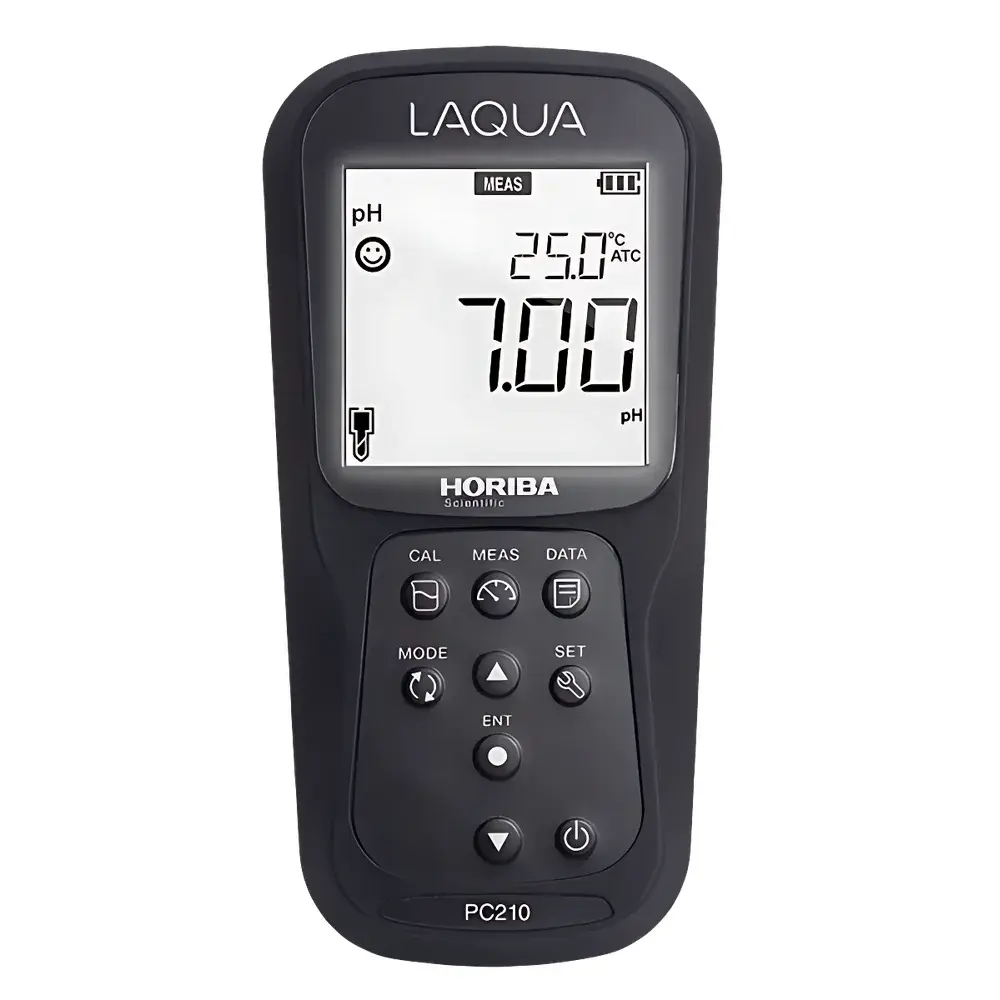
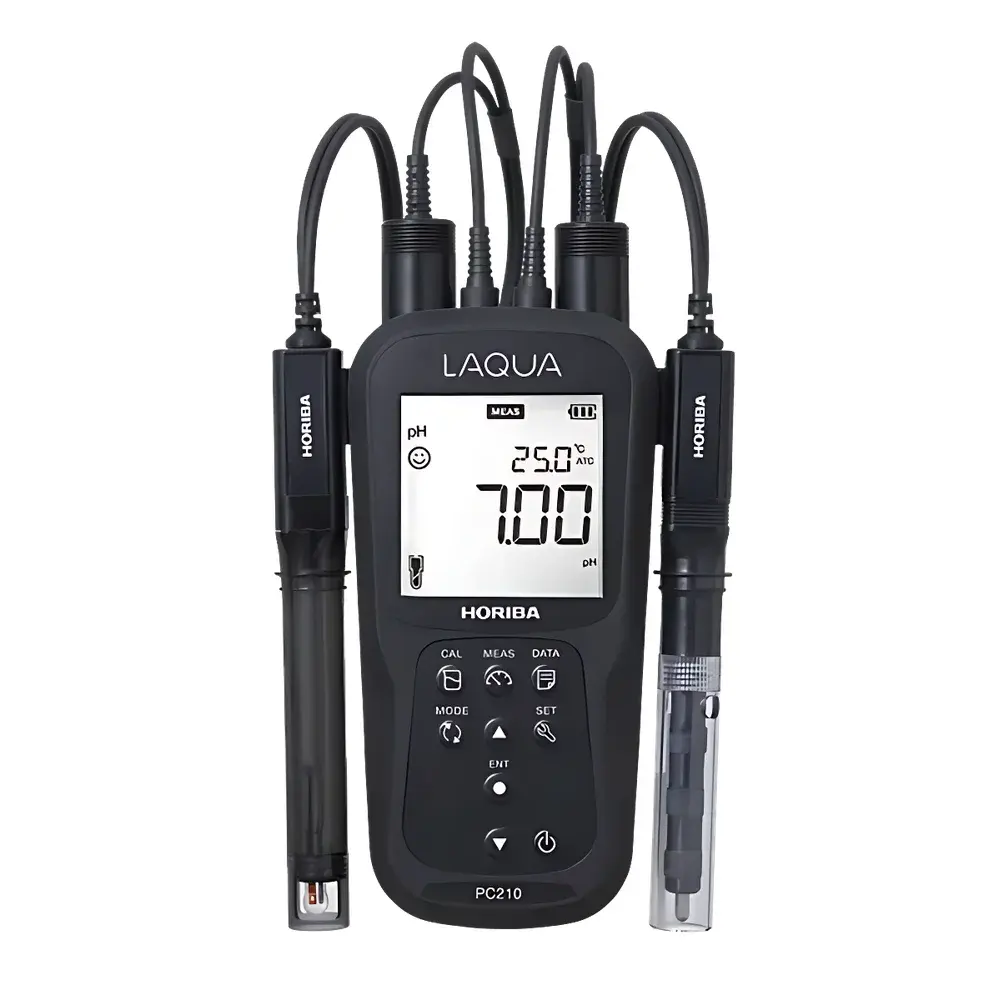
The HORIBA LAQUA PC210 Dual-Channel Multiparameter Water Quality Analyzer is a field-deployable, ruggedized electrochemical instrument engineered for high-reproducibility measurement of critical water quality parameters in environmental monitoring, wastewater treatment, aquaculture, and industrial process control. It employs potentiometric (pH, ORP), conductimetric (EC, TDS, salinity, resistivity), and thermometric (temperature) principles—each calibrated and compensated per internationally recognized metrological frameworks. The dual-channel architecture enables simultaneous, independent measurement of pH/ORP on one channel and conductivity/resistivity/TDS/salinity on the second, with temperature sensed either via integrated Pt1000 or external probe—ensuring traceable thermal compensation across all electrochemical readings. Designed for compliance-critical workflows, the PC210 supports configurable calibration schedules, audit-ready calibration logs, and real-time electrode diagnostics—including slope, offset, and stability indicators—aligning with GLP documentation requirements.
Key Features
- Dual-channel architecture supporting concurrent pH/ORP and conductivity-family measurements (EC, TDS, salinity, resistivity)
- High-resolution pH measurement (0.01 pH) with ±0.01 pH accuracy; up to 5-point NIST/US or 6-point DIN calibration
- ORP measurement with selectable calibration options and resolution optimized for low- and high-range potentials
- Conductivity measurement from 0 μS/cm to 200.0 mS/cm (k = 1.0 cell); programmable reference temperature (15–30 °C), temperature coefficient (0.00–10.00 %/°C), and cell constant (0.1, 1.0, 10.0)
- Four built-in TDS conversion curves (EN27888, Linear, 442, NaCl) and two salinity curves (NaCl, seawater) for application-specific reporting
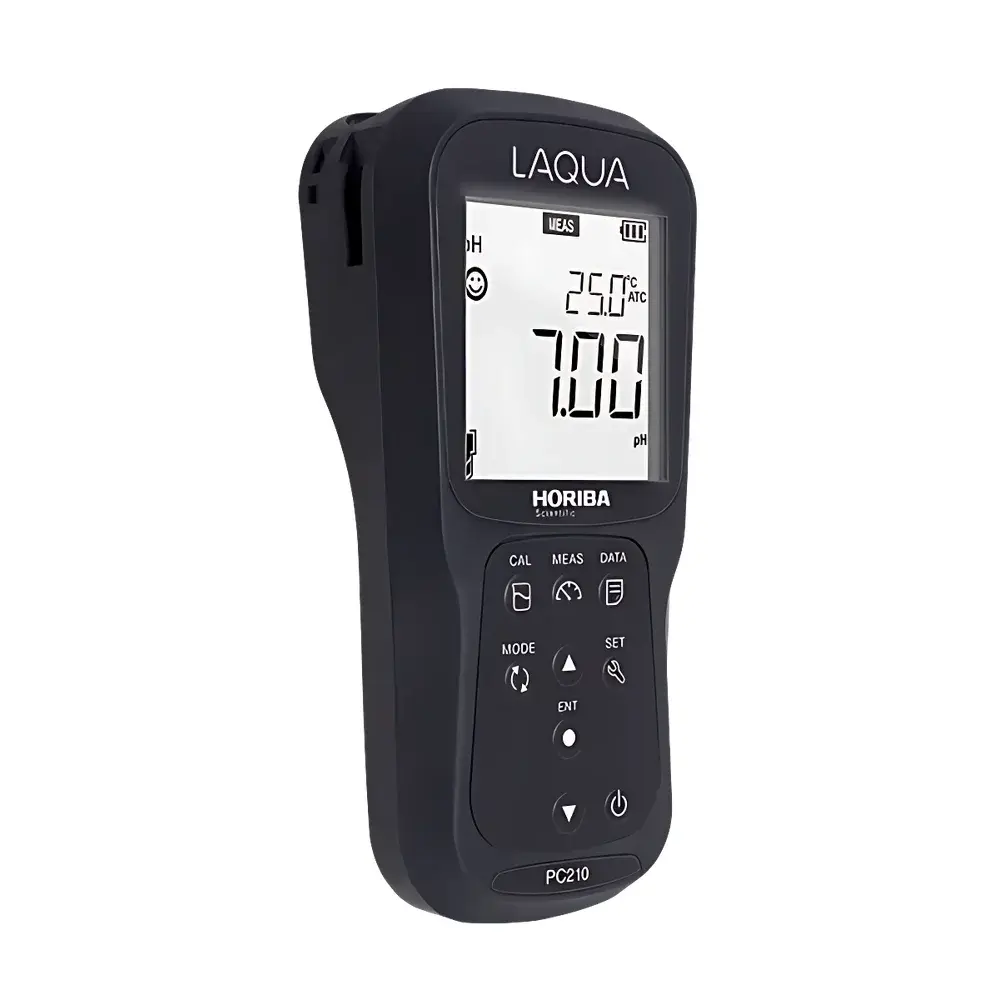
- IP67-rated housing: fully dust-tight and submersible to 1 m for 30 minutes; impact- and scratch-resistant polycarbonate body with ergonomic anti-slip grip
- Integrated data management: 500-measurement internal memory with timestamped storage, auto-stability detection, auto-hold, and real-time display modes
- Programmable calibration alerts (up to 90 days), auto-power-off (up to 30 min), and electrode health status shown directly on-screen
Sample Compatibility & Compliance
The PC210 is validated for use with aqueous samples across a broad physicochemical spectrum—from ultrapure water (resistivity up to 20.0 MΩ·cm) to highly conductive industrial effluents (EC up to 200.0 mS/cm). Its electrode interface accommodates standard BNC pH/ORP probes and conductivity cells with k = 0.1, 1.0, or 10.0, including gel-filled pH electrodes (e.g., model 9652-10D) and titanium/platinum conductivity sensors (e.g., 9383-10D). All measurement algorithms implement automatic temperature compensation per ISO 7888 and ASTM D1125 for conductivity, and per IUPAC recommendations for pH. The instrument meets EN 61326-1 (EMC) and EN 61010-1 (safety) standards. While not FDA 21 CFR Part 11–certified out-of-the-box, its calibration log structure, user-accessible timestamps, and non-volatile memory support retrospective verification in regulated environments under GLP/GMP protocols.
Software & Data Management
Data acquisition and instrument configuration are managed exclusively via the LAQUA software suite (v3.x or later), installed on Windows-based PCs. Firmware updates are performed through a dedicated USB-to-Phono cable (PN 3200779639), ensuring secure, version-controlled upgrades without external network exposure. The software enables export of CSV-formatted datasets containing parameter values, timestamps, calibration history, electrode diagnostics, and user-defined metadata. All stored measurements retain full context—including sensor ID, calibration date, temperature at time of reading, and measurement mode (auto-stable/auto-hold/real-time)—facilitating traceability in QA/QC audits. No cloud connectivity or remote telemetry is implemented, preserving data sovereignty in sensitive operational settings.
Applications
- Field-based environmental monitoring: river, lake, and groundwater quality assessment per EPA Method 150.1 (pH), 150.2 (conductivity), and ISO 5667 series
- Wastewater treatment plant operations: influent/effluent characterization, membrane system performance tracking, and disinfection byproduct precursor evaluation
- Aquaculture and hydroponics: real-time optimization of pH, salinity, and nutrient ion strength in recirculating systems
- Pharmaceutical water systems: routine checks of purified water (PW) and water for injection (WFI) conductivity per USP and EP 2.2.38
- Industrial cooling tower management: corrosion potential (ORP) and scaling risk (Ca²⁺-adjusted TDS/resistivity) monitoring
- Educational laboratories: hands-on instruction in electrochemical fundamentals, calibration theory, and uncertainty propagation in multi-parameter analysis
FAQ
Does the PC210 support GLP-compliant calibration logging?
Yes—the instrument stores calibration dates, buffer IDs, measured slopes/offsets, and user-entered notes for each parameter. These logs are retrievable via LAQUA software and include timestamps with millisecond precision.
Can the conductivity cell constant be adjusted in-field?
Yes—cell constant (k = 0.1, 1.0, or 10.0) is fully configurable via the instrument menu and persists across power cycles.
Is temperature measurement required for all parameters?
Yes—temperature is used for automatic compensation of pH, ORP, EC, TDS, salinity, and resistivity. A separate temperature probe (Pt1000) or integrated sensor must be connected for valid compensated results.
What is the battery life under typical field use?
With alkaline AA batteries and default backlight settings, operational life exceeds 500 hours—equivalent to approximately 21 days of continuous 8-hour daily use.
Are calibration standards included with the PC210-K kit?
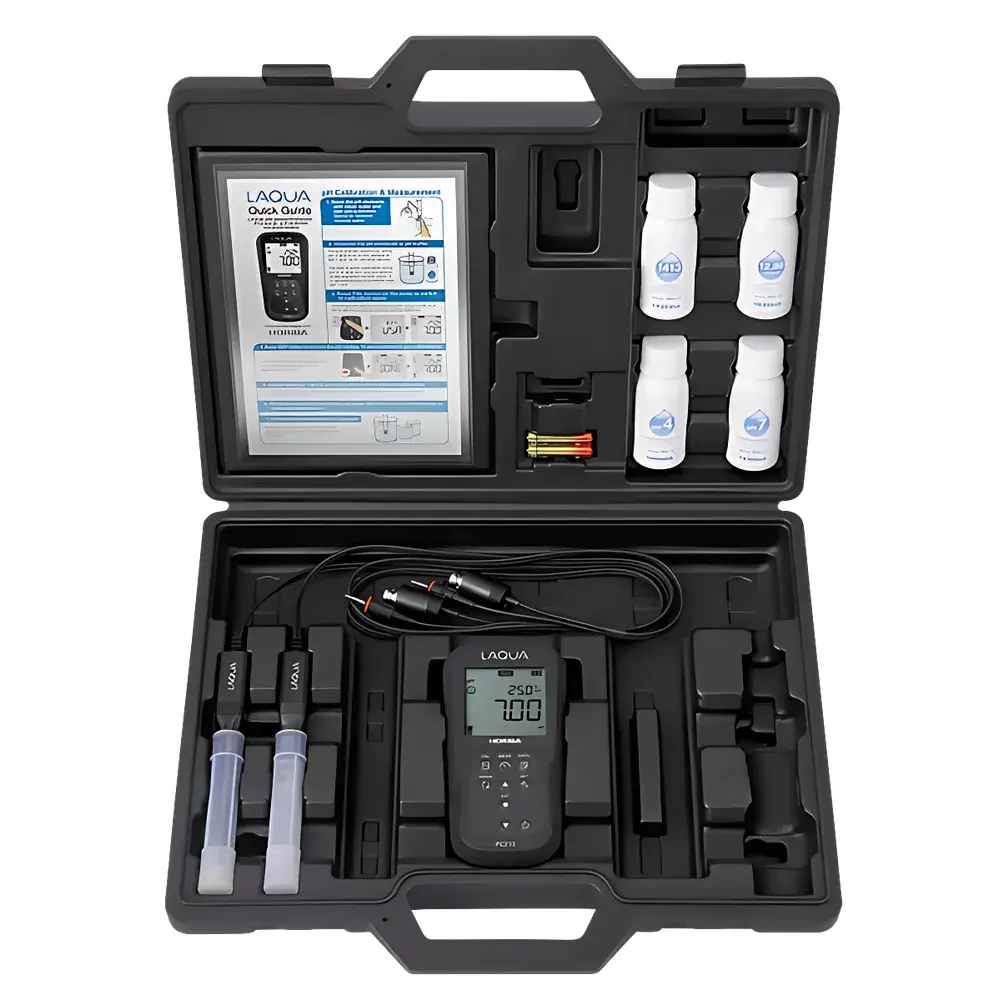
Yes—the PC210-K configuration includes 60 mL each of pH 4.01 and 7.00 buffers (NIST-traceable), plus 60 mL each of 1413 μS/cm and 12.88 mS/cm conductivity standards, certified to ISO/IEC 17025-accredited reference materials.





