
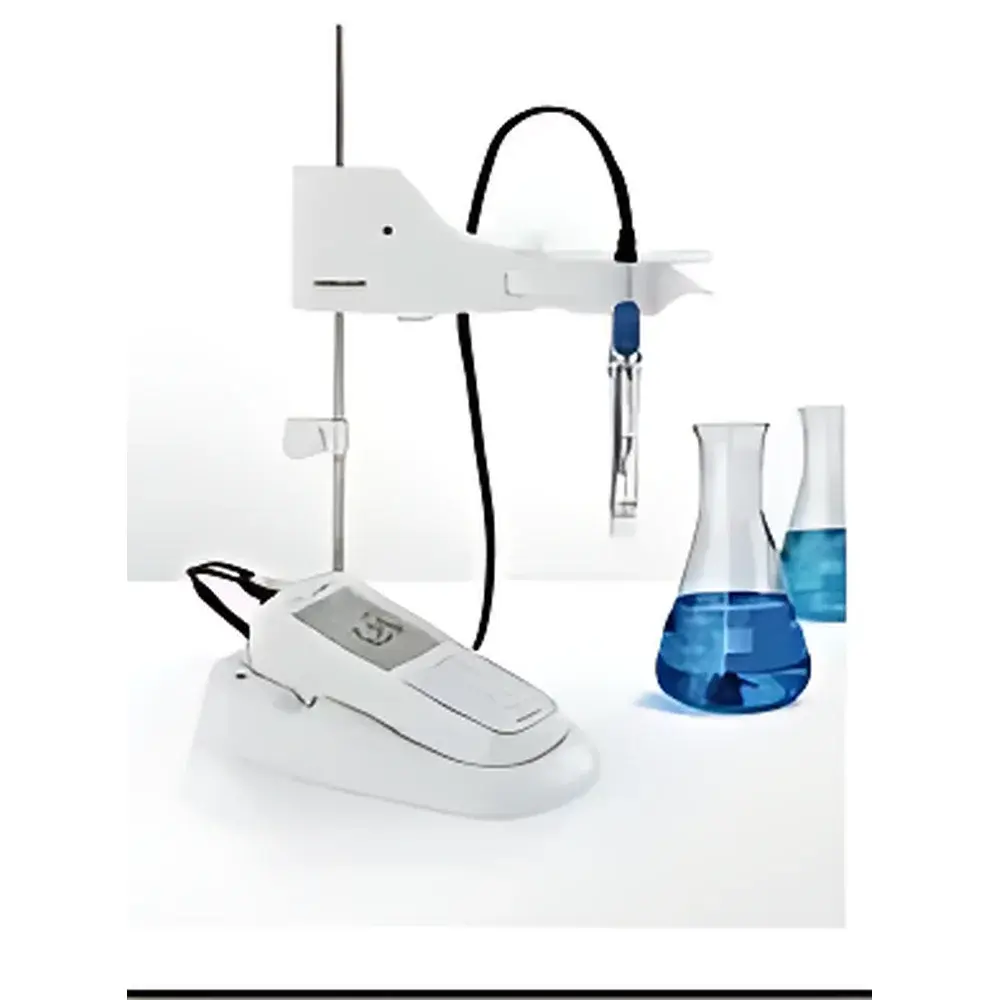
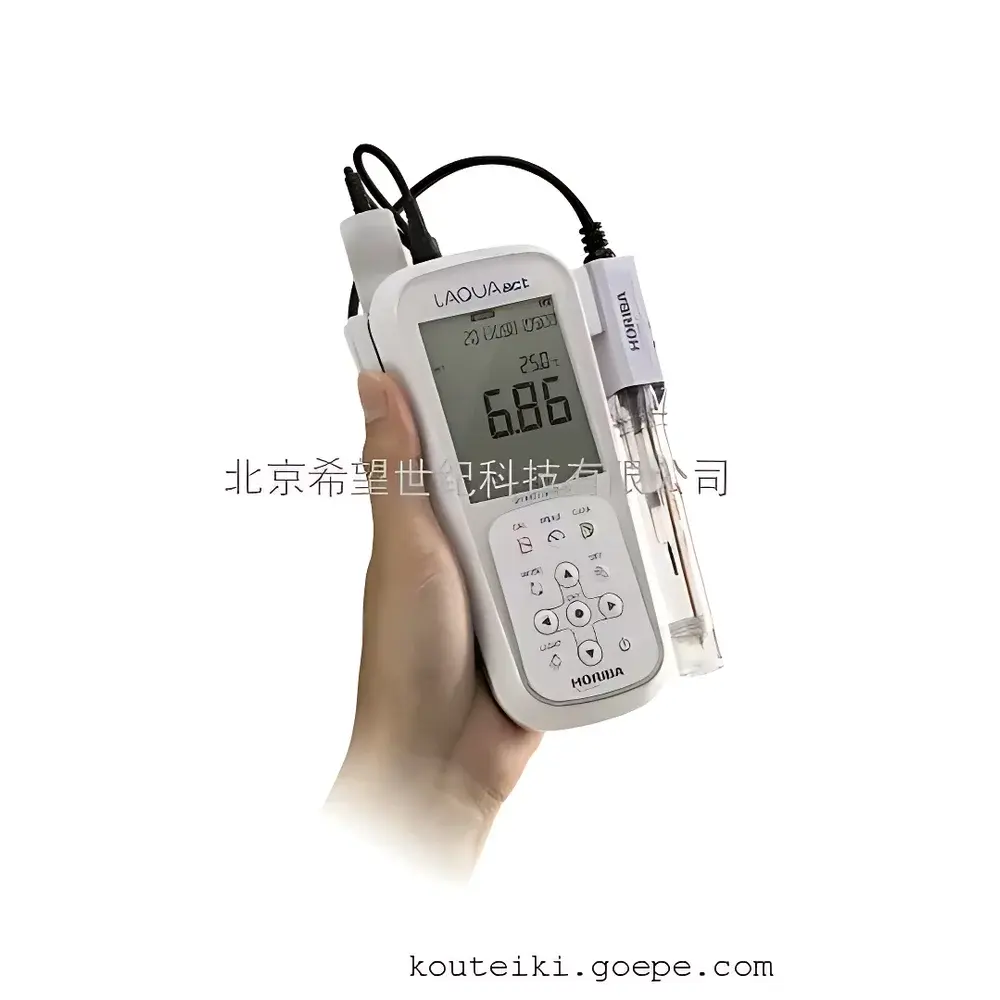
HORIBA LAQUAact D-71 Portable Multi-parameter Water Quality Analyzer
| Brand | HORIBA |
|---|---|
| Origin | Japan |
| Model | D-71 |
| Instrument Type | Portable/Handheld Water Quality Analyzer |
| Measurable Parameters | pH, mV (ORP), Ion Concentration, Conductivity, Resistivity, Salinity, TDS, Dissolved Oxygen (DO), Saturation DO, Oxygen Concentration |
| Display | Backlit Monochrome LCD |
| Protection Rating | IP67 |
| Data Storage | 1000 records |
| Power | 2 × AAA alkaline or Ni-MH batteries (≈1000 h battery life) |
| Dimensions | 67 × 28 × 170 mm (W × D × H) |
| Weight | ~270 g (without batteries) |
| Compliance | Supports GLP/GMP data integrity requirements |
Overview
The HORIBA LAQUAact D-71 is a rugged, field-deployable multi-parameter water quality analyzer engineered for high-reliability in situ and laboratory-grade measurements. Built on HORIBA’s legacy of electrochemical sensor excellence, the D-71 implements proven potentiometric (glass electrode), galvanic cell (membrane-based DO), and AC two-electrode conductivity measurement principles to deliver traceable, reproducible results across eight core water quality parameters. Its compact, IP67-rated enclosure ensures operational integrity in humid, dusty, or splash-prone environments—including riverside sampling, wastewater outfalls, aquaculture ponds, and municipal distribution networks. Unlike benchtop-only analyzers, the D-71 maintains metrological continuity between field acquisition and lab reporting—enabling seamless integration into regulated environmental monitoring programs compliant with EPA Method 150.1 (pH), Standard Methods 2510B (conductivity), and ISO 5815-1 (dissolved oxygen).
Key Features
- Ruggedized portable architecture: Impact-resistant housing with alcohol-resistant surface finish and full IP67 ingress protection (submersible to 1 m for 30 min)
- Dual-channel simultaneous display: Real-time side-by-side readouts for any two parameters (e.g., pH + DO, conductivity + salinity)
- Intelligent electrode diagnostics: On-screen status indicators for electrode slope, offset, response time, and calibration validity—supporting proactive maintenance planning
- Five-point automated pH calibration with auto-buffer recognition (USA/NIST standards); configurable alarm-driven calibration reminders aligned with internal QC schedules
- Temperature-compensated measurements across all parameters: Automatic 25 °C conductivity conversion, salinity correction (0–40 ppt), barometric pressure adjustment for DO, and linear/nonlinear temperature compensation modes
- GLP/GMP-ready data management: Time-stamped, user-ID-tagged records stored internally (1000 entries); USB interface supports audit-trail-capable export to CSV or proprietary .laq files compatible with HORIBA’s LAQUA Software Suite
- Field-optimized human interface: Backlit monochrome LCD with high-contrast characters; capacitive touch navigation (static-dissipative glass surface resistant to chemical fogging and abrasion)
Sample Compatibility & Compliance
The D-71 is validated for use with natural waters (freshwater, estuarine, seawater), treated effluents, drinking water, and process streams within temperature ranges of 0–45 °C and relative humidity up to 80% non-condensing. Its pH module conforms to ASTM D1293 and ISO 10523; conductivity measurements meet ASTM D5391 and ISO 7888 performance criteria; dissolved oxygen quantification satisfies ISO 5814 and EN 25814 requirements. All measurement algorithms incorporate built-in uncertainty estimation per ISO/IEC 17025 Annex A.3 guidelines. The device supports traceable calibration via NIST-traceable buffer solutions and certified conductivity standards. Data export functionality aligns with FDA 21 CFR Part 11 expectations when used with validated software and access-controlled user accounts.
Software & Data Management
LAQUAact D-71 data are structured for regulatory traceability: each record includes timestamp (RTC-synced), operator ID, electrode serial number, calibration history snapshot, ambient temperature, and measurement-specific metadata (e.g., pressure for DO, salinity for conductivity-derived TDS). Exported datasets retain native precision—pH to 0.01 unit, DO to 0.01 mg/L, conductivity to 0.05% FS—and embed digital signatures when transferred via HORIBA’s LAQUA Software (v3.2+). The software enables batch validation reports, trend analysis across sampling campaigns, and automated generation of EPA-compliant QA/QC summary sheets. Audit trails log all configuration changes, calibration events, and data deletions—meeting GLP documentation requirements per OECD Principles and internal SOPs governing environmental compliance testing.
Applications
- Regulatory field monitoring: EPA NPDES permit compliance, watershed health assessments, and stormwater runoff characterization
- Drinking water safety verification: Rapid verification of disinfection residual impact (via ORP), pH stability in distribution systems, and conductivity-based total dissolved solids screening
- Aquaculture and hydroponics management: Real-time DO saturation tracking, pH drift detection, and salinity control in recirculating systems
- Industrial pretreatment verification: Effluent pH neutralization checks, conductivity-based chloride ingress detection, and DO profiling in cooling towers
- Educational and research deployments: Undergraduate environmental science labs requiring portable, standards-aligned instrumentation with minimal consumables
FAQ
What calibration standards are supported for pH measurement?
The D-71 auto-recognizes five standard pH buffers (1.68, 4.01, 6.86, 7.00, 9.18, 10.01) per both USA and NIST reference material specifications. Calibration certificates for traceable standards can be supplied upon request.
Can the D-71 measure dissolved oxygen without manual salinity input?
Yes—the instrument applies automatic salinity compensation using its integrated conductivity sensor when measuring DO, eliminating manual entry errors in estuarine or coastal applications.
Is the internal data storage encrypted or password-protected?
While the D-71 does not perform on-device encryption, all exported data files include embedded metadata required for 21 CFR Part 11 compliance when managed through validated LAQUA Software with role-based user authentication.
How often does the DO membrane require replacement?
Under typical field use (≤4 hrs/day exposure), the galvanic DO sensor membrane and electrolyte should be replaced every 6 months or after 500 measurement cycles—whichever occurs first—to maintain ±0.1 mg/L accuracy.
Does the D-71 support custom ion calibration curves?
Yes—up to five-point ion-selective electrode calibrations can be stored per ion type (e.g., NH₄⁺, NO₃⁻, F⁻), with slope and intercept values retained for post-measurement concentration back-calculation.
Related Products







