
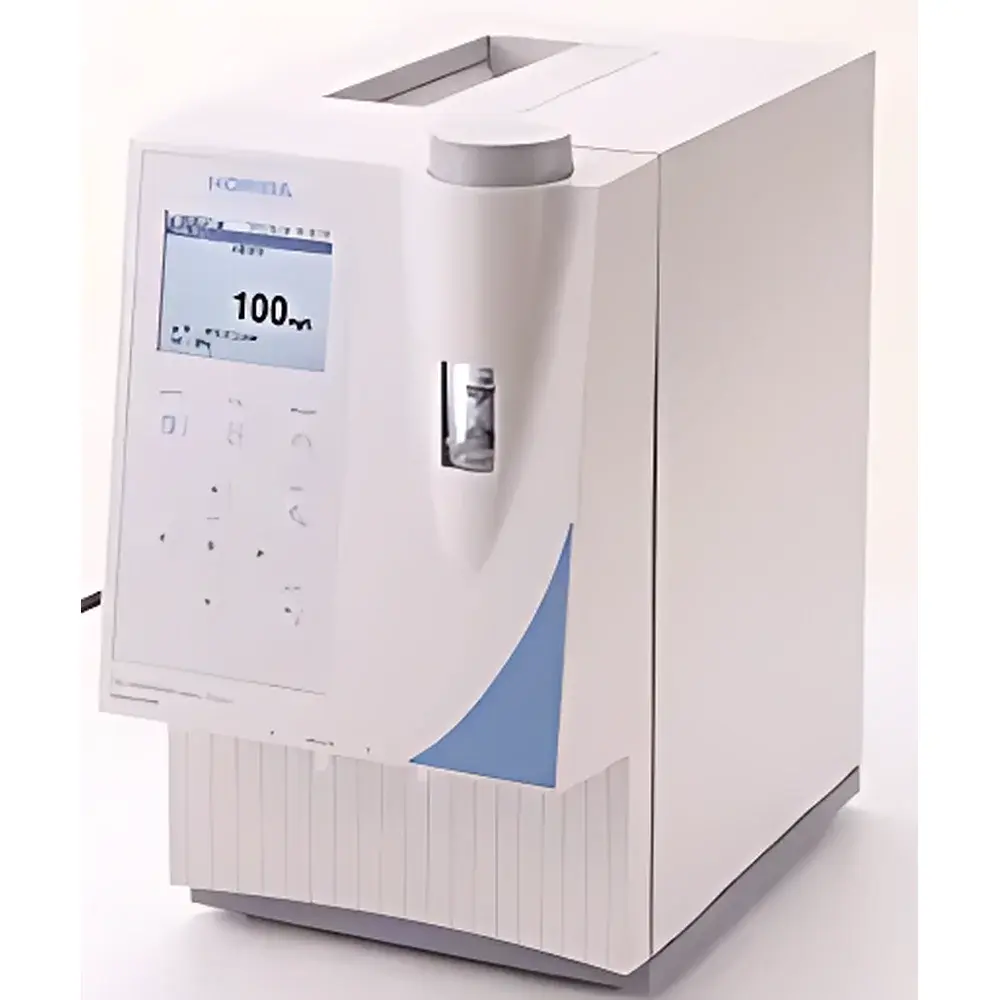
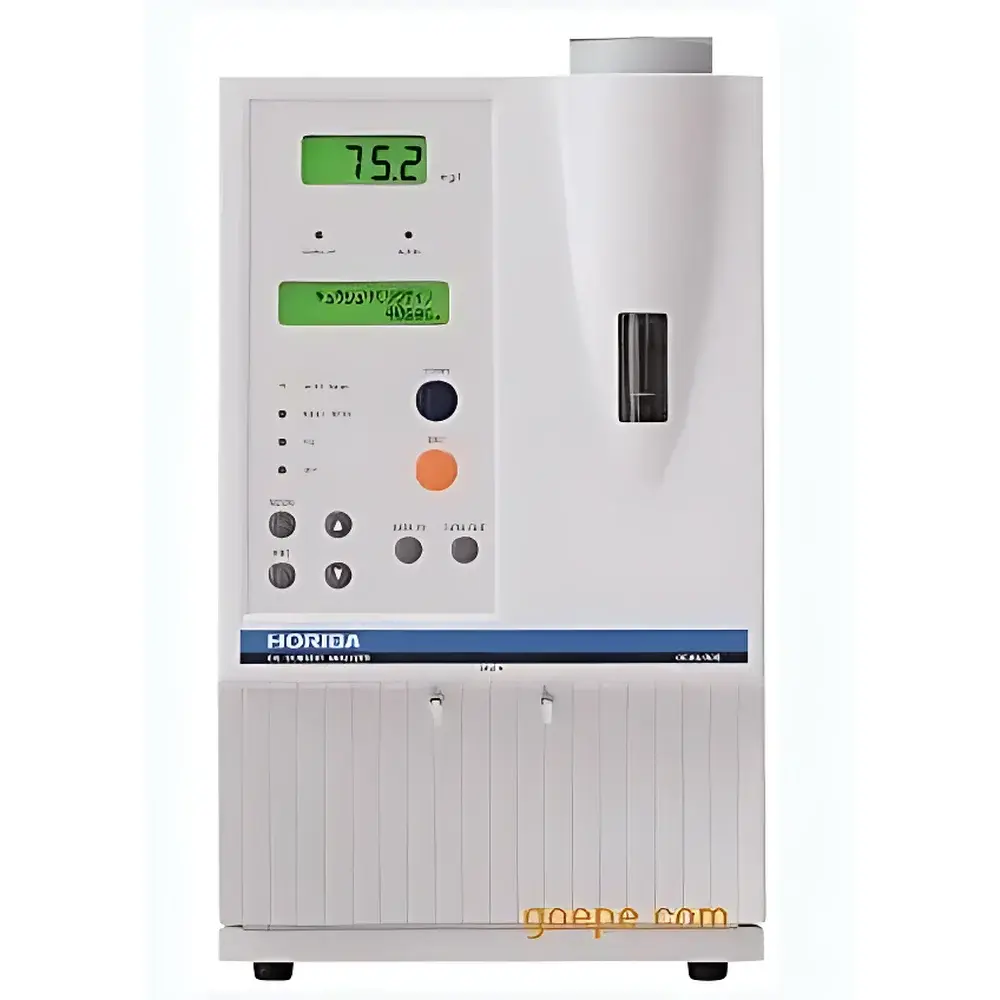
HORIBA OCMA-500 Oil Content Analyzer
| Brand | HORIBA |
|---|---|
| Origin | Japan |
| Model | OCMA-500 / OCMA-555 |
| Instrument Type | Laboratory Benchtop Analyzer |
| Measurement Principle | Non-Dispersive Infrared (NDIR) Spectrophotometry |
| Measurement Range | 0–200 mg/L (dynamic, single-range) |
| Accuracy | ±0.2 mg/L (0–10 mg/L), ±2 mg/L (10–100 mg/L), ±4 mg/L (100–200 mg/L) |
| Resolution | 0.1 mg/L |
| Extraction Solvent | S-316 (trichloroethylene-free, certified for oil-in-water analysis) |
| Sample Throughput | Fully automated extraction + NDIR quantification per cycle |
| Compliance | Designed to support EPA Method 1664A (modified), ISO 9377-2, and JIS K 0102 reference frameworks |
Overview
The HORIBA OCMA-500 Oil Content Analyzer is a fully integrated, benchtop laboratory instrument engineered for precise, reproducible quantification of hydrocarbon-based oil and grease in aqueous matrices—including freshwater, seawater, wastewater effluents, and industrial process water. It operates on the principle of non-dispersive infrared (NDIR) absorption spectroscopy, specifically targeting the C–H stretching vibration band near 2930 cm⁻¹, which provides selective detection of aliphatic hydrocarbons characteristic of petroleum-derived contaminants. Unlike conventional gravimetric or fluorescence-based methods, the OCMA-500 incorporates an on-board solvent extraction module that automatically delivers a precisely metered volume of S-316 extraction solvent (a high-purity, low-interference alternative to traditional CCl₄ or Freon-based solvents) into the sample, followed by phase separation, solvent transfer, and infrared measurement—all within a closed, operator-safe workflow. Its fixed 0–200 mg/L dynamic range eliminates manual range switching, ensuring consistent calibration traceability and minimizing operator-induced variability across low- and high-concentration samples.
Key Features
- Fully automated solvent extraction and NDIR analysis cycle—initiated with a single button press
- Integrated precision syringe pump system enabling accurate, repeatable volumetric delivery of both sample and S-316 solvent (±1% volumetric accuracy)
- Self-contained solvent handling architecture with sealed reagent reservoirs and waste collection—no external fume hood required for routine operation
- Digital display interface supporting English-language system status, real-time measurement traceability, and diagnostic error codes (e.g., “Solvent Low”, “Phase Separation Failure”, “IR Sensor Drift Alert”)
- Robust optical path design featuring temperature-stabilized NDIR detector and quartz flow cell optimized for long-term signal stability
- Compliance-ready firmware architecture supporting audit trail logging and user access control—facilitating alignment with GLP and internal QA/QC documentation requirements
Sample Compatibility & Compliance
The OCMA-500 is validated for direct analysis of raw and filtered water samples up to 500 mL volume, including municipal wastewater, cooling tower water, harbor seawater, and surface runoff. It accommodates turbid and moderately suspended samples without pre-filtration, provided emulsion stability permits clean phase separation. The instrument conforms to the analytical intent of EPA Method 1664A (for n-hexane extractable material, modified for S-316 compatibility), ISO 9377-2:2000 (Water quality — Determination of hydrocarbon oil index — Part 2: Infrared spectrometric method), and JIS K 0102 (Testing methods for industrial wastewater). While not FDA 21 CFR Part 11–certified out-of-the-box, its data export functionality (CSV via USB) supports integration into validated LIMS environments where electronic records are governed by 21 CFR Part 11 or EU Annex 11 policies.
Software & Data Management
The OCMA-500 operates via embedded firmware with no external PC dependency. All measurement data—including date/time stamp, sample ID (user-entered alphanumeric code), raw absorbance values, calculated concentration (mg/L), and system diagnostics—are stored internally (up to 1,000 records). Data export is performed via USB flash drive in comma-separated value (CSV) format, preserving full metrological context for offline review or regulatory submission. Optional SR-305 Solvent Regenerator integration enables continuous S-316 reuse through dual-stage adsorption (activated carbon + activated alumina), reducing solvent consumption by >85% and lowering operational cost per analysis—particularly valuable in high-throughput environmental labs conducting daily compliance monitoring.
Applications
- Regulatory compliance testing for oil and grease discharge limits under NPDES permits
- Performance verification of oil-water separators and dissolved air flotation (DAF) units in WWTPs
- Baseline and trend monitoring of hydrocarbon contamination in coastal and estuarine ecosystems
- In-process quality control of cooling water systems in power generation and manufacturing facilities
- Method validation and reference analysis for laboratories accredited to ISO/IEC 17025
- Research-grade quantification of weathered vs. fresh hydrocarbon fractions when paired with standardized extraction protocols
FAQ
What extraction solvent does the OCMA-500 use, and is it compliant with current environmental regulations?
The OCMA-500 uses S-316—a proprietary, non-ozone-depleting chlorinated solvent developed by HORIBA specifically for oil-in-water analysis. It meets EPA’s criteria for “acceptable alternatives” under SNAP (Significant New Alternatives Policy) and replaces legacy CCl₄ and Freon-113 in accordance with global phase-out mandates.
Can the OCMA-500 analyze emulsified or surfactant-laden samples?
It can quantify total extractable hydrocarbons in emulsified samples; however, stable emulsions may require acidification (pH ≤2) or addition of coagulants (e.g., MgSO₄) prior to analysis to ensure efficient phase separation. Method optimization is recommended for highly stabilized industrial emulsions.
Is calibration verification required between samples?
A single-point calibration check using a mid-range standard (e.g., 50 mg/L) is recommended every 10 analyses or at start-of-shift to confirm system linearity and detector stability—consistent with ISO/IEC 17025 clause 7.7.1.
Does the OCMA-500 support remote data transfer or network connectivity?
No native Ethernet or Wi-Fi capability is included; data retrieval is USB-driven. However, third-party middleware solutions can be deployed to automate CSV ingestion into enterprise LIMS or cloud-based dashboards.
What maintenance intervals are specified for the optical and fluidic modules?
The IR sensor requires annual factory recalibration; the syringe pump and solvent manifold should undergo preventive maintenance—including seal replacement and flow verification—every 6 months or after 500 cycles, whichever occurs first.







