
HQJY Indoor Artificial Rainfall Simulator
| Origin | Beijing |
|---|---|
| Manufacturer Type | Distributor |
| Origin Category | Domestic |
| Model | HQJY |
| Quotation | Upon Request |
| Instrument Type | Soil Moisture / Water Potential Analyzer |
Overview
The HQJY Indoor Artificial Rainfall Simulator is a precision-engineered environmental simulation system designed for controlled, repeatable rainfall experiments in laboratory and semi-field settings. Based on the physical principles of gravity-driven droplet generation and calibrated hydraulic distribution, the system replicates natural rainfall dynamics—including drop size distribution, intensity gradients, spatial uniformity, and temporal continuity—within enclosed or semi-enclosed experimental plots. Unlike field-based sprinkler systems or open-air rain simulators, the HQJY integrates structural rigidity, programmable flow control, and modular scalability to support rigorous hydrological, pedological, and eco-hydraulic research under GLP-aligned experimental conditions. Its core architecture enables standardized evaluation of soil erosion, infiltration kinetics, surface runoff generation, sediment transport, and vegetation–rainfall interaction mechanisms—critical parameters required for ASTM D422 (particle size analysis), ISO 11274 (soil water retention), and USDA-NRCS erosion prediction model validation.
Key Features
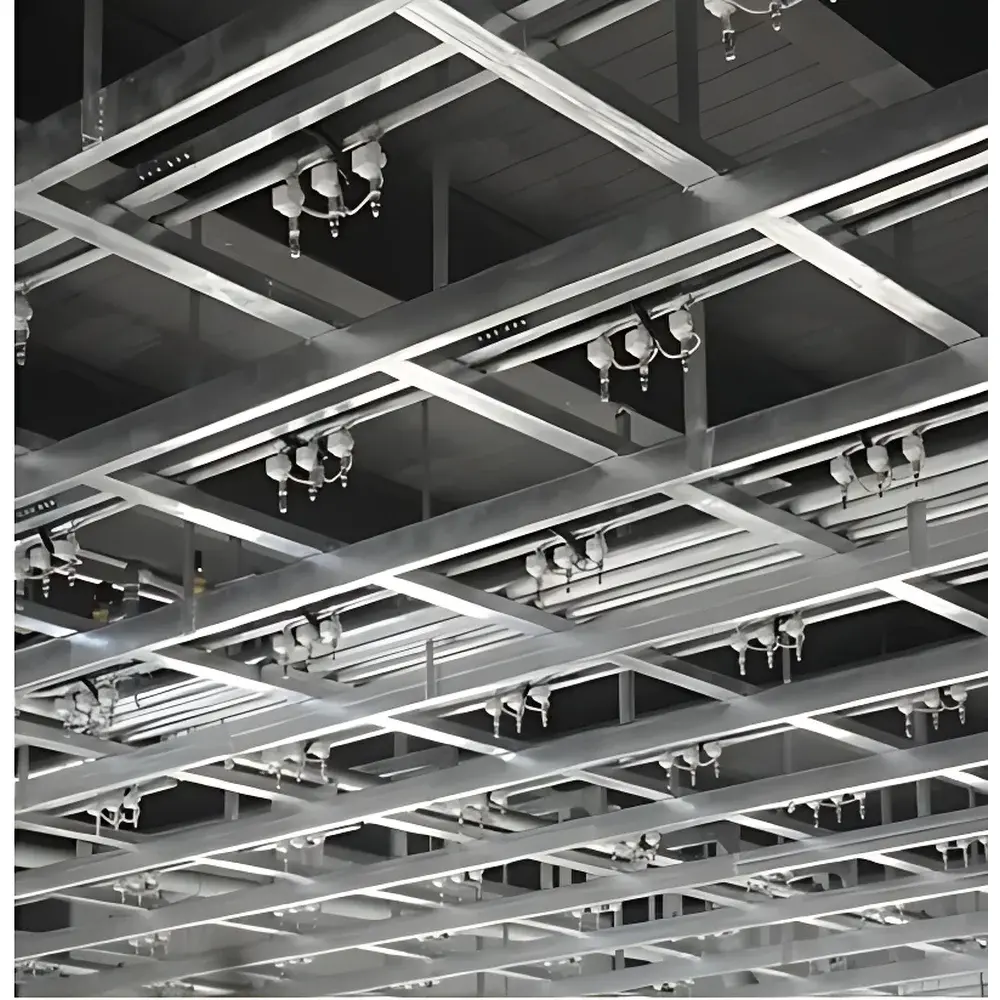
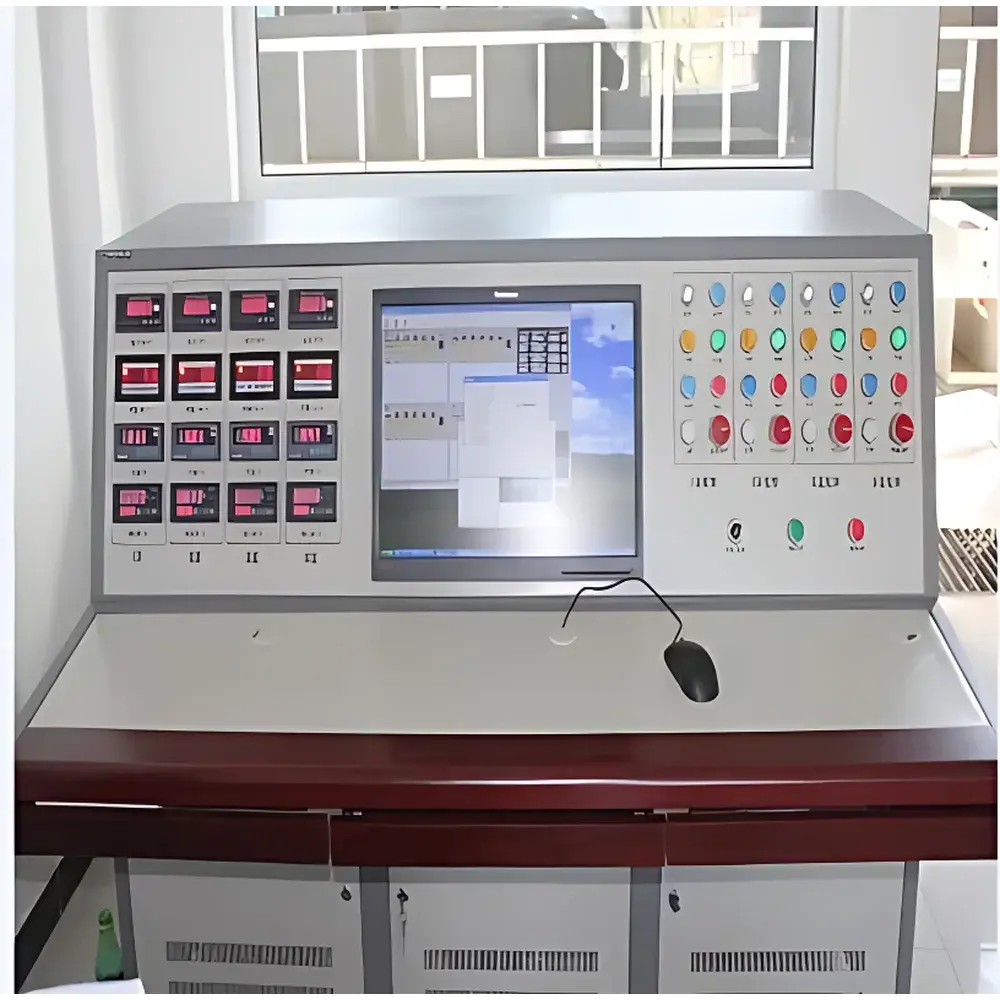
- Modular three-subsystem architecture: stainless-steel storage reservoir, pressure-regulated piping network, and microprocessor-based automated control unit with real-time feedback loop
- Adjustable rainfall height ranging from 2 to 20 m—engineered to accommodate variable boundary layer development and terminal velocity attainment for realistic droplet impact energy simulation
- Continuously variable rainfall intensity from 20 to 150 mm/h, with ±7 mm/h regulation accuracy—validated via gravimetric collection and tipping-bucket verification per ISO 9276-2
- Droplet diameter controllability between 1.7 and 2.8 mm—achieved through interchangeable nozzles and differential pressure modulation, aligning with Marshall–Palmer distribution benchmarks for moderate-intensity storms
- Uniformity coefficient ≥0.86 across defined test area (standard configuration: 4 m × 1000 m; custom layouts available)—measured using the Christiansen Uniformity Coefficient (CUC) protocol
- Structural steel framework with six load-bearing vertical columns (3 m height), hot-dip galvanized piping throughout, and corrosion-resistant fasteners—designed for >25 years service life under continuous indoor operational loads
Sample Compatibility & Compliance
The HQJY simulator accommodates diverse substrates including undisturbed soil monoliths, repacked soil columns, vegetated lysimeters, engineered geotextiles, and urban pavement analogues. Its non-invasive delivery mechanism preserves surface microtopography and initial moisture profiles prior to initiation. The system complies with methodological requirements for ISO/IEC 17025-accredited laboratories performing soil erosion studies, and supports traceable calibration against NIST-traceable flow meters and certified rain gauges. While not an analytical instrument per se, its output data (runoff volume, sediment concentration, infiltration rate) feed directly into USGS, RUSLE2, WEPP, and EUROSEM model inputs—making it integral to regulatory compliance workflows for watershed management plans and environmental impact assessments.
Software & Data Management
The integrated control software provides GUI-based scheduling of multi-phase rainfall events (e.g., antecedent moisture conditioning → storm onset → recovery period), with timestamped logging of flow rate, pressure, duration, and actuator status. All operational logs are stored in CSV and SQLite formats, supporting export to MATLAB, Python (pandas), or GIS platforms. Audit trails include user login ID, parameter modification history, and system error codes—meeting documentation rigor expected under FDA 21 CFR Part 11 for research integrity in federally funded projects. Optional OPC UA integration allows synchronization with external climate chambers or soil moisture sensor networks for closed-loop experimental protocols.
Applications
- Quantification of interrill and rill erosion rates under controlled antecedent moisture and slope conditions
- Calibration and validation of physically based infiltration models (e.g., Green–Ampt, Horton, Philip)
- Evaluation of biochar, polymer amendments, and cover crop effects on surface sealing and crust formation
- Assessment of green infrastructure performance (bioswales, permeable pavements, rain gardens) under design-storm scenarios
- Soil–plant–atmosphere continuum (SPAC) studies linking rainfall partitioning to transpiration dynamics
- Training platform for hydrology and soil physics curricula requiring reproducible, classroom-safe rainfall replication
FAQ
What is the minimum required ceiling height for installation?
A clear vertical clearance of ≥2.5 m is recommended for standard 2–3 m rainfall height configurations; custom high-ceiling variants up to 20 m are supported with reinforced anchoring.
Can the system operate with reclaimed or treated wastewater?
Yes—provided suspended solids <5 mg/L and chlorine residual <0.5 mg/L to prevent nozzle clogging; inline filtration (5 µm) and pH stabilization modules are available as accessories.
Is third-party calibration certification available?
Calibration reports conforming to ISO/IEC 17025 are issued by authorized metrology partners upon request, covering flow rate linearity, uniformity mapping, and timing accuracy.
How is raindrop size verified during operation?
Drop size distribution is periodically validated using high-speed shadowgraph imaging (≥10,000 fps) and laser diffraction (Malvern Spraytec), with results archived alongside each experimental run.
Does the system support remote monitoring and control?
Standard Ethernet/IP connectivity enables secure remote access via VPN; optional LTE module enables off-grid deployment with cloud-based data backup.







