
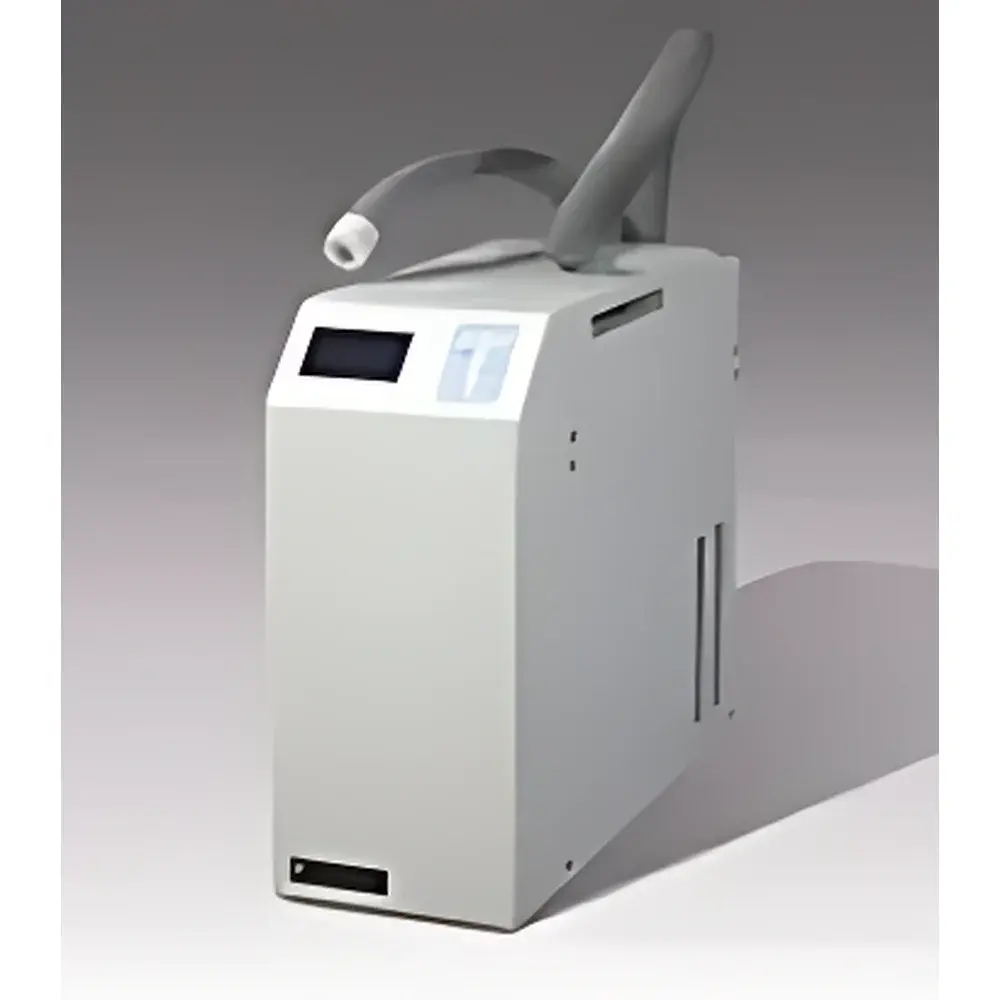
HS-2 Automated Static Headspace Sampler
| Origin | Beijing, China |
|---|---|
| Manufacturer Type | Authorized Distributor |
| Origin Category | Domestic (PRC) |
| Model | HS-2 |
| Pricing | Upon Request |
| Instrument Type | Static Headspace Sampler |
| Sample Heating Range | 40–200 °C (±1 °C accuracy) |
| Valve Heating Range | 40–200 °C (±1 °C) |
| Transfer Line Heating Range | 40–200 °C (±1 °C) |
| Sampling Time | 0–20 min |
| Pressurization Time | 0–30 s |
| Loop Volume | 1 mL |
| Vial Capacity | 10 mL or 20 mL vials |
| Sample Position Capacity | 10 positions |
| RSD | ≤1.5% (measured in 200 ppm ethanol in water) |
| Power Consumption | 220 W |
| Dimensions (W×H×D) | 500×180×400 mm |
| Net Weight | ~15 kg |
Overview
The HS-2 Automated Static Headspace Sampler is a precision-engineered sample introduction system designed for seamless integration with gas chromatography (GC) platforms. It operates on the static headspace principle—equilibrating volatile analytes between a sealed sample matrix (liquid or solid) and its overlying vapor phase at controlled temperature and pressure, followed by quantitative transfer of the equilibrated headspace gas into the GC injector via a pressurized loop injection mechanism. Engineered for reproducibility and robustness in regulated laboratory environments, the HS-2 delivers consistent thermal management across all critical zones—including sample incubation, valve actuation, and transfer line conduction—ensuring minimal analyte loss, no cold spots, and high-fidelity representation of volatile composition. Its design complies with fundamental requirements for method validation under ISO/IEC 17025 and supports workflows aligned with USP , ASTM D3699, and EPA Method 502.2 for residual solvent analysis, environmental VOC profiling, and forensic toxicology screening.
Key Features
- 10-position heated sample carousel with matrix-aligned heater layout—optimized for uniform thermal distribution, reduced footprint, and energy efficiency (220 W typical draw).
- Fully heated flow path: independently controlled heating zones for sample vials (40–200 °C), six-port valve (40–200 °C), and fused-silica transfer tubing (40–200 °C), eliminating condensation and adsorption artifacts.
- High-inertness fluidic pathway: de-activated silica-lined tubing and loop components minimize surface activity, ensuring negligible carryover and cross-contamination—even for reactive or polar volatiles such as aldehydes, ketones, and low-molecular-weight amines.
- Low-dead-volume injection architecture: motor-driven six-way valve coupled with a 1 mL fixed-volume sampling loop enables precise, repeatable injections without reliance on external pneumatic drivers—enhancing operational safety and simplifying lab infrastructure.
- Positive-pressure headspace transfer: eliminates baseline disturbance during GC injection; compatible with both liquid matrices (aqueous, organic, viscous) and solid-phase samples (polymers, soils, pharmaceutical tablets) following appropriate equilibration protocols.
- Integrated microprocessor control with backlit Chinese-language LCD interface—supports programmable methods for equilibration time, pressurization duration, sampling interval, and thermal ramping sequences.
- Standard TTL/RS-232 trigger interface enables synchronized start of GC oven ramp and data acquisition software—fully compatible with Agilent ChemStation, Thermo Chromeleon, Shimadzu GC Solutions, and OpenLab CDS.
Sample Compatibility & Compliance
The HS-2 accommodates standard 10 mL and 20 mL crimp-top or screw-cap headspace vials, supporting common septa types (PTFE/silicone, BTO) and automated vial handling accessories. Its thermal stability and inert flow path meet performance criteria for pharmacopeial applications, including USP residual solvents testing and ICH Q3C guidelines. The instrument’s repeatability (RSD ≤1.5% at 200 ppm ethanol/water) satisfies internal QC thresholds for GLP-compliant laboratories and supports audit readiness per FDA 21 CFR Part 11 when paired with validated chromatography data systems featuring electronic signatures and audit trail functionality.
Software & Data Management
While the HS-2 operates autonomously via front-panel programming, it natively integrates with third-party GC control software through hardware-level triggers and status feedback signals. No proprietary acquisition software is required. All method parameters—including vial position mapping, temperature setpoints, timing sequences, and run logs—are stored locally and exportable via USB or serial dump for traceability. When deployed in networked analytical environments, the HS-2 supports time-stamped event logging synchronized to GC timestamps—enabling full chain-of-custody documentation for regulatory submissions.
Applications
- Residual solvent quantification in APIs and excipients (ICH Q3C Class 1–3)
- VOC emissions profiling from packaging materials, adhesives, and automotive interiors
- Alcohol content determination in beverages and forensic blood samples
- Monomer release testing in polymer manufacturing (e.g., styrene, vinyl chloride)
- Environmental analysis of chlorinated hydrocarbons in soil/water extracts (EPA 502.2, 8260)
- Flavor and fragrance compound screening in food and cosmetic matrices
FAQ
Is the HS-2 compatible with all major GC brands?
Yes—the HS-2 uses industry-standard TTL-level start/stop signals and RS-232 communication for bidirectional handshake with Agilent, Thermo Fisher, Shimadzu, PerkinElmer, and Bruker GC systems.
What maintenance is required for long-term reliability?
Routine maintenance includes quarterly inspection of septa integrity, annual calibration verification of temperature sensors (using NIST-traceable probes), and periodic replacement of transfer line ferrules and valve rotor seals—typically every 6–12 months depending on usage frequency.
Can the HS-2 perform dynamic headspace or purge-and-trap sampling?
No—the HS-2 is engineered exclusively for static headspace analysis. For dynamic applications, a dedicated purge-and-trap concentrator or thermal desorption unit is recommended.
Does the system support method transfer from other headspace platforms?
Yes—method parameters (equilibration temperature/time, pressurization, loop fill volume) are directly translatable from comparable static headspace instruments; minor optimization may be needed due to differences in thermal mass and valve kinetics.
Is 21 CFR Part 11 compliance built-in?
The HS-2 itself does not include user authentication or electronic signature capabilities; however, it fully supports audit-ready operation when integrated into a validated CDS environment that implements Part 11 controls for data integrity and operator accountability.
Related Products





