
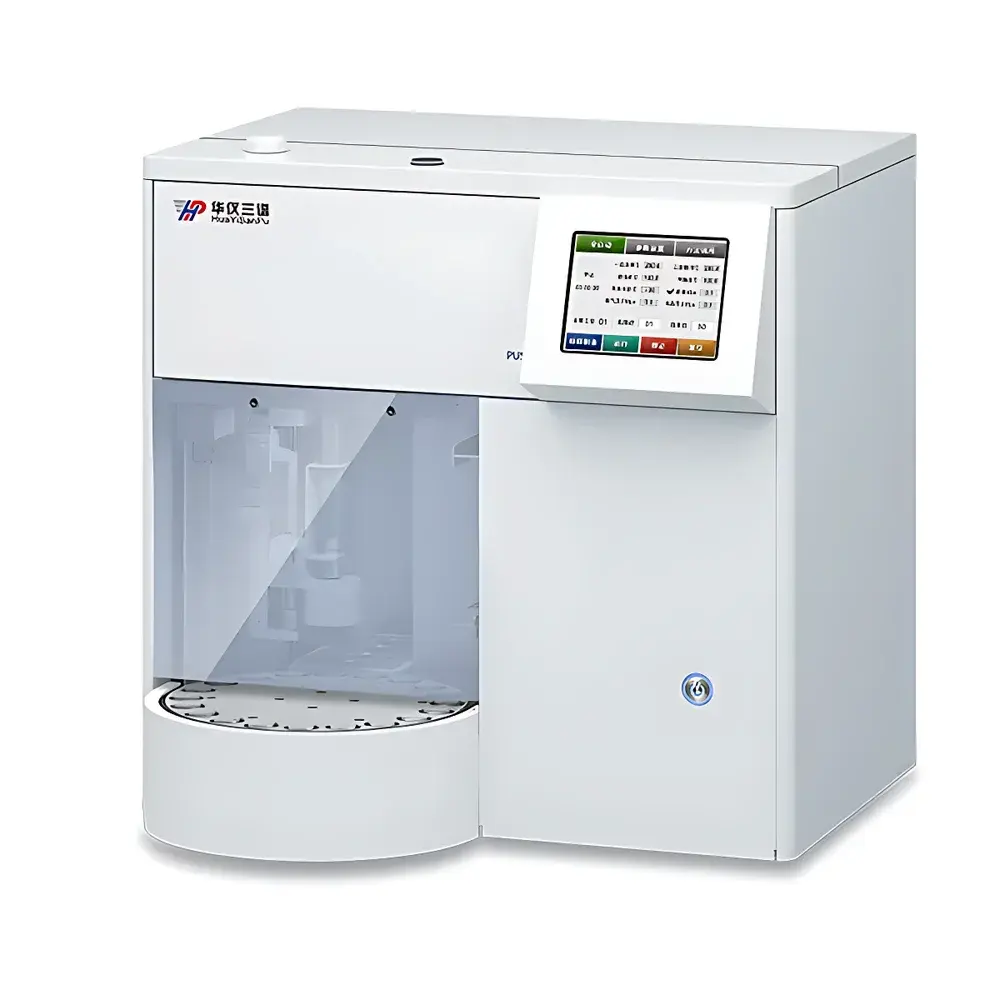
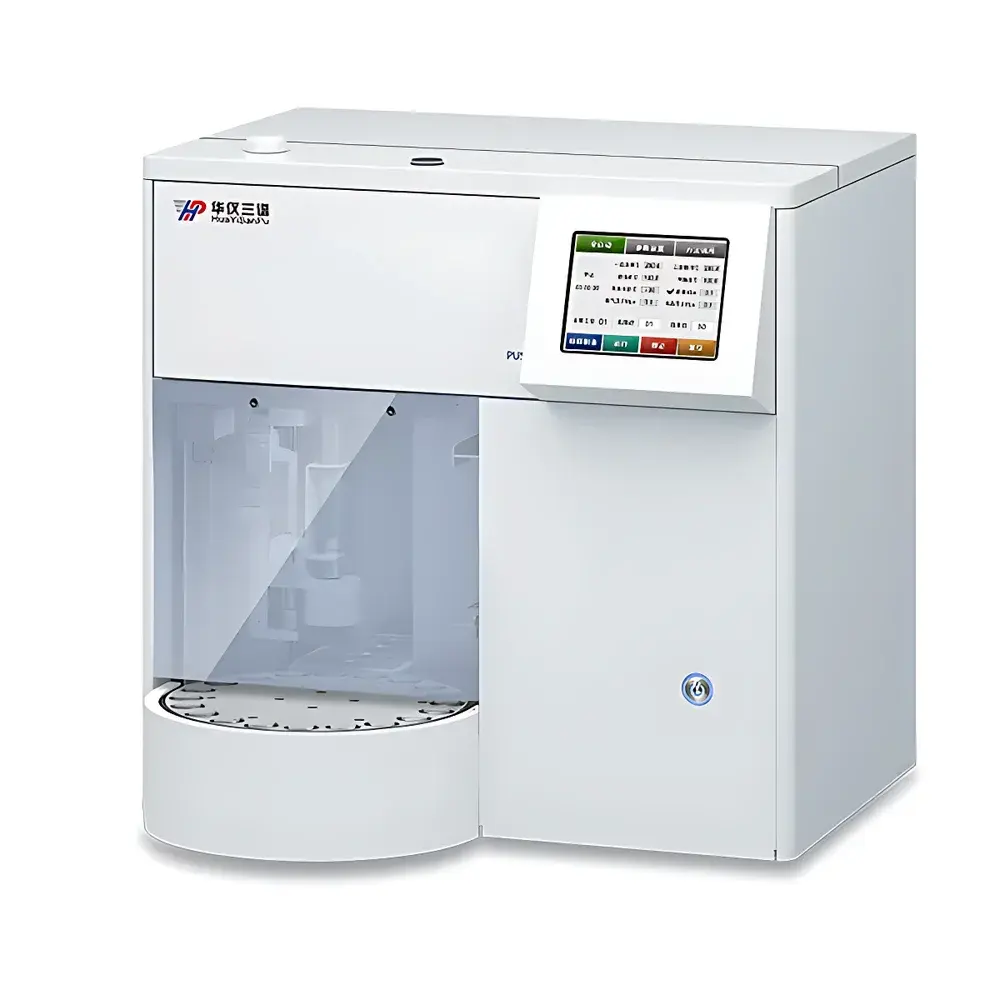
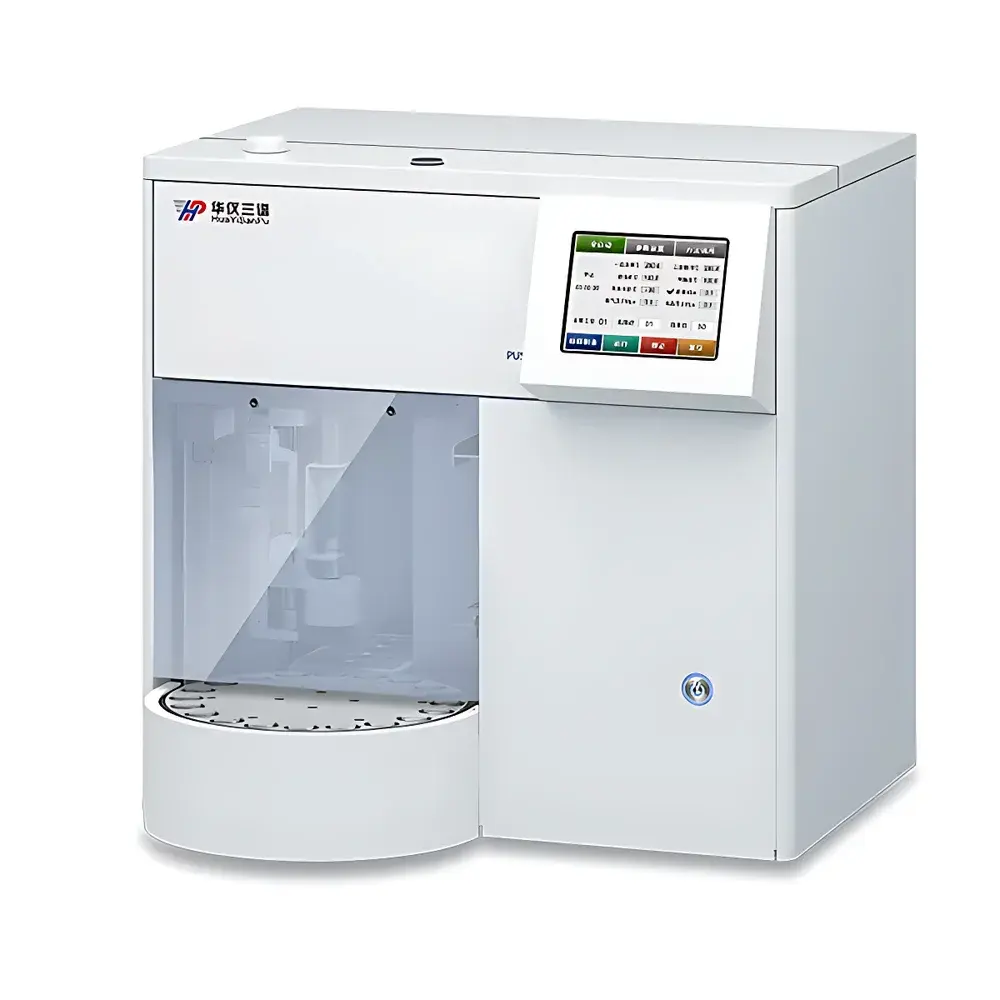
Huayisanpu AHS-20 Automated Static Headspace Sampler
| Brand | Huayisanpu |
|---|---|
| Origin | Beijing, China |
| Model | AHS-20 |
| Instrument Type | Static Headspace Sampler |
| Automation Level | Fully Automatic |
| Sample Vial Capacity | 20 positions |
| Vial Sizes Supported | 10 mL and 20 mL |
| Oven Temperature Range | Ambient to 380 °C (±0.5 °C accuracy, 1 °C increment) |
| Valve & Transfer Line Temperature Range | Ambient to 260 °C (±1 °C accuracy, 1 °C increment) |
| Loop Volume | 20 mL standard |
| Temperature Control Stability | ±0.5 °C |
Overview
The Huayisanpu AHS-20 is a fully automated static headspace sampler engineered for precise, reproducible analysis of volatile and semi-volatile organic compounds (VOCs and SVOCs) in complex solid, liquid, and heterogeneous matrices. It operates on the principle of phase equilibrium partitioning: samples are heated in sealed vials to establish thermodynamic equilibrium between the condensed phase (liquid or solid) and the vapor phase (headspace). A precisely metered volume of equilibrated headspace gas is then transferred—via a thermostatted sampling valve and transfer line—directly into a gas chromatograph (GC) or GC–mass spectrometer (GC–MS) for separation and detection. Designed for routine laboratory environments requiring high throughput and method robustness, the AHS-20 integrates tightly with standard GC autosampler interfaces (e.g., Agilent, Thermo Fisher, Shimadzu), supporting both split and splitless injection modes. Its modular thermal architecture ensures minimal carryover and consistent equilibration kinetics across diverse sample types—from aqueous environmental extracts to viscous pharmaceutical suspensions.
Key Features
- Fully automated operation with 20-position vial carousel, enabling unattended batch processing of up to 20 samples per sequence.
- Independent, dual-zone temperature control: programmable vial oven (ambient to 380 °C, ±0.5 °C stability) and separately regulated valve/transfer line zone (ambient to 260 °C, ±1 °C stability), minimizing condensation and ensuring quantitative transfer.
- Standard 20 mL pressurized sampling loop with inert internal surface (typically fused silica or SilcoNert®-treated stainless steel), optimized for high recovery of polar and reactive VOCs including aldehydes, ketones, halocarbons, and low-boiling solvents.
- User-configurable equilibration time, agitation (optional vial shaker module), pressurization, and purge cycles—supporting method development per ASTM D7699, ISO 15640, and USP residual solvents guidelines.
- Robust mechanical design with corrosion-resistant housing, integrated leak-check diagnostics, and hardware-level interlocks for pressure and temperature safety compliance.
Sample Compatibility & Compliance
The AHS-20 accommodates standard 10 mL and 20 mL crimp-top or screw-cap headspace vials, compatible with industry-standard septa (e.g., PTFE/silicone) and vial racks. It supports direct analysis of untreated or minimally prepared samples—including water, wastewater, blood, serum, soil slurries, food homogenates, polymer extracts, and pharmaceutical formulations—without derivatization or solvent extraction. The system meets essential requirements for GLP and GMP-regulated environments: full audit trail capability (when paired with compliant GC data systems), electronic signature support (aligned with FDA 21 CFR Part 11 principles), and traceable calibration logs. Method validation parameters—including precision (RSD <3% for replicate injections), linearity (r² ≥0.999 over 3 orders of magnitude), and limit of quantitation (LOQ <10 ppb for chloroform in water)—are routinely achievable under optimized conditions.
Software & Data Management
Control is executed via PC-based software with intuitive graphical interface, supporting method creation, sequence definition, real-time monitoring of temperature/pressure profiles, and event logging. All instrument parameters—including vial ID tracking, equilibration timestamps, valve actuation history, and thermal deviation alerts—are timestamped and exportable in CSV or XML format. The software architecture allows integration with LIMS platforms via OPC UA or custom API endpoints. Raw method files include embedded metadata (operator ID, instrument serial number, calibration date), facilitating 21 CFR Part 11-compliant workflows when deployed with validated electronic record systems.
Applications
- Environmental testing: Quantification of volatile halogenated hydrocarbons (e.g., chloroform, carbon tetrachloride) in drinking water per EPA Method 502.2 and 524.4.
- Pharmaceutical quality control: Residual solvent analysis in APIs and finished dosage forms per ICH Q3C and USP .
- Food safety: Determination of ethylene oxide residues in spices, acetaldehyde in PET-packaged beverages, and hexane in edible oils.
- Clinical toxicology: Ethanol, acetone, and isopropanol profiling in whole blood and urine specimens.
- Materials science: VOC emission screening from packaging films, adhesives, and coated substrates per ISO 16000-9.
- Forensic chemistry: Detection of ignitable liquid residues in fire debris and post-mortem volatile biomarkers.
FAQ
What sample matrices are compatible with the AHS-20?
Liquid, solid, and semi-solid samples—including aqueous solutions, soils, tissues, polymers, and food products—provided they generate measurable headspace vapor at controlled temperatures.
Does the AHS-20 support dynamic headspace (purge-and-trap) mode?
No. The AHS-20 is designed exclusively for static headspace analysis. Dynamic headspace functionality requires separate purge-and-trap instrumentation.
Can the system be used with GC–MS instruments?
Yes. The AHS-20 delivers consistent, low-dead-volume injections compatible with both single-quadrupole and triple-quadrupole GC–MS systems.
Is calibration verification required before each analytical run?
While daily system suitability checks (e.g., retention time stability, peak area RSD) are recommended, full calibration is performed per established SOPs—typically before batch analysis or after maintenance.
What safety certifications does the instrument meet?
The AHS-20 complies with IEC 61010-1 for electrical safety and incorporates pressure-relief mechanisms aligned with EN 82300-series guidelines for enclosed heating systems.
Related Products





