
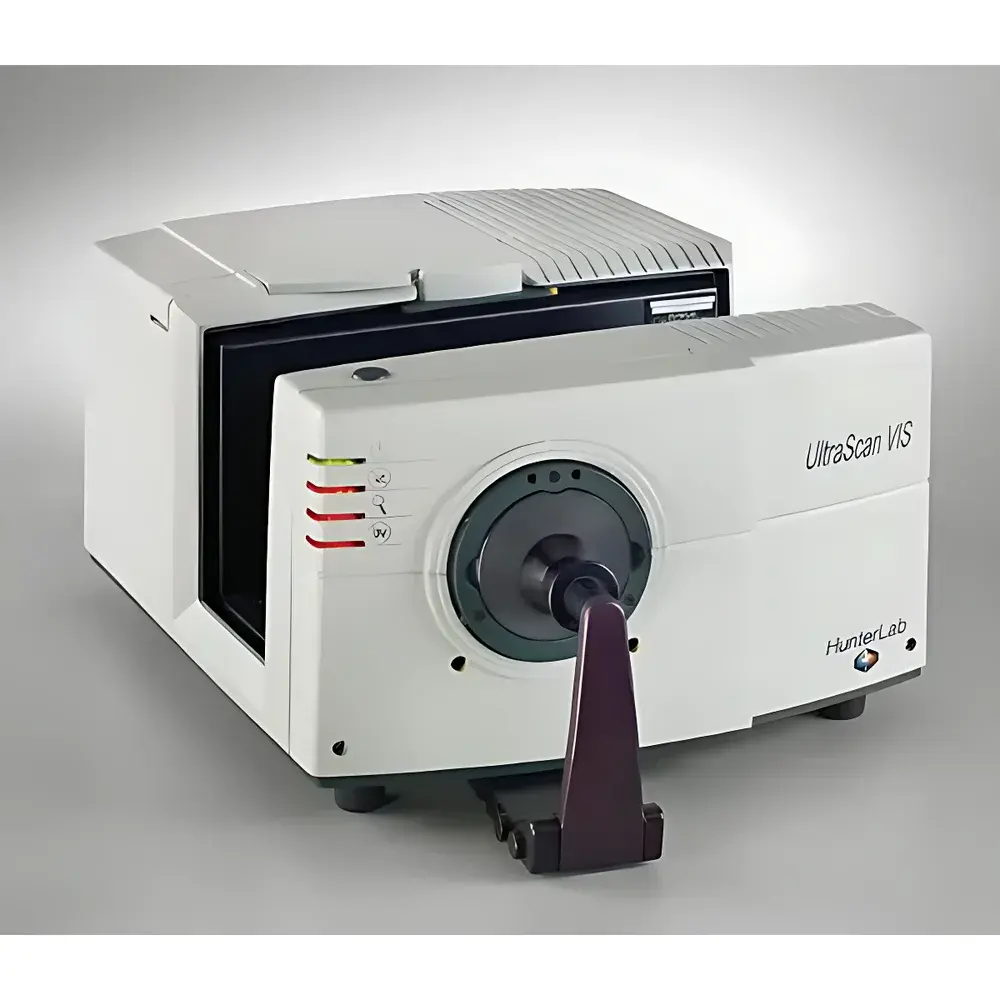
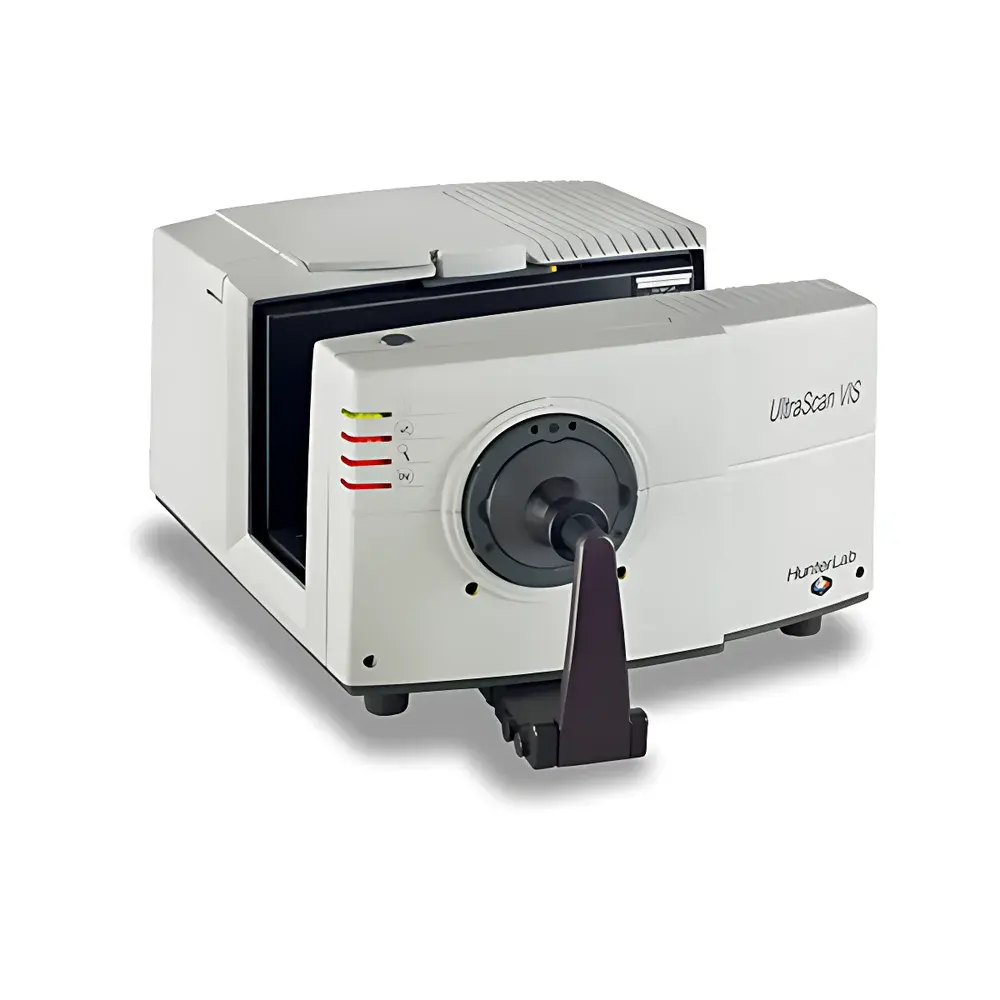
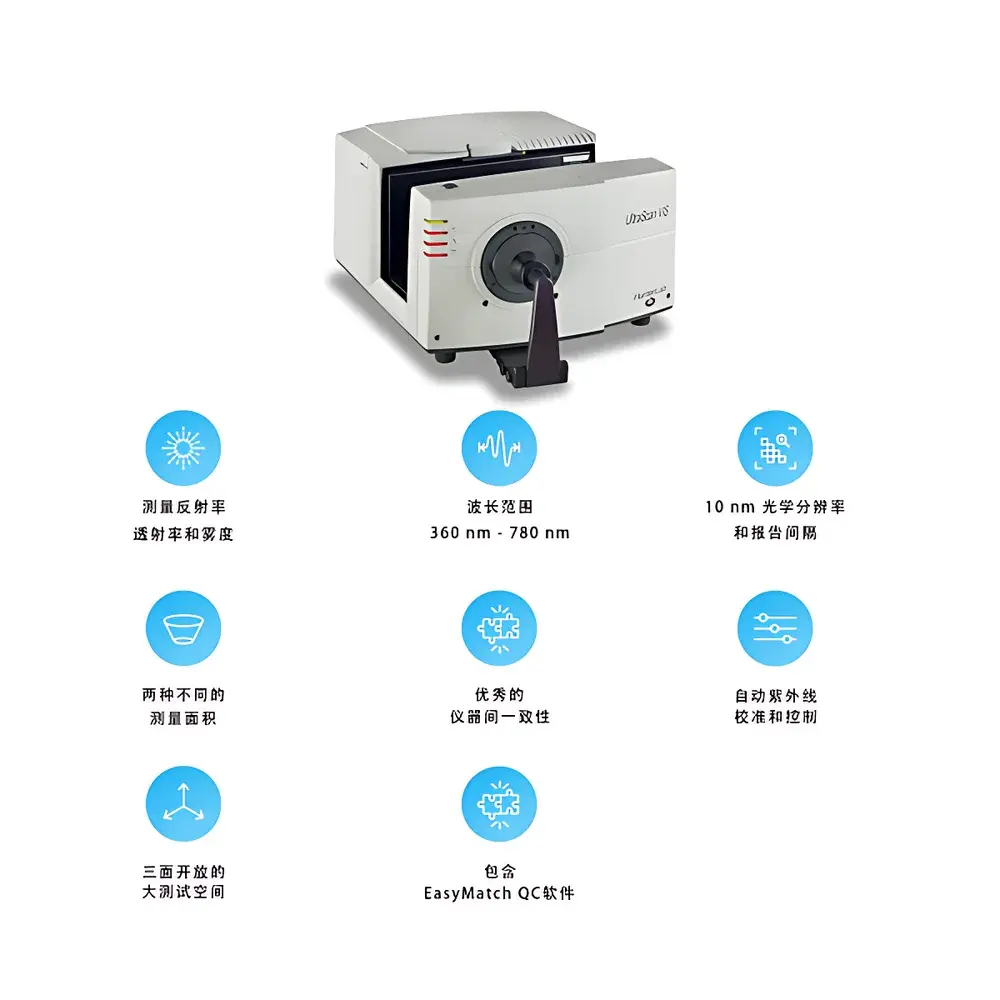
HunterLab UltraScan VIS (USVIS) Benchtop Spectrophotometer
| Brand | HunterLab |
|---|---|
| Origin | USA |
| Model | UltraScan VIS |
| Product Type | Benchtop Spectrophotometer |
| Optical Geometry | d/8° integrating sphere with specular component included/excluded (SCI/SCE) |
| Light Source | Pulsed xenon lamp |
| Spectral Range | 360–780 nm |
| Optical Resolution | 10 nm |
| Repeatability | ΔE*ab ≤ 0.03 |
| Measurement Apertures | 19 mm (0.75") and 6.3 mm (0.25") |
| UV Control | Adjustable |
| Interface | USB and RS-232C |
| Viewing Mode | Retroview small-area observation lens |
| Compliance | ASTM E308, ISO 11664-4, CIE No. 15, USP <1061>, FDA 21 CFR Part 11 (with optional software configuration) |
Overview
The HunterLab UltraScan VIS (USVIS) is a high-precision benchtop spectrophotometer engineered for absolute color measurement accuracy across reflective and transmissive samples in industrial quality control, R&D, and regulatory-compliant environments. Operating on the CIE-defined d/8° geometry with dual-mode SCI (Specular Component Included) and SCE (Specular Component Excluded) measurement capability, the instrument delivers traceable, reproducible spectral data under standardized illuminants—including D65, A, C, F2, and custom UV-adjusted spectra. Its pulsed xenon lamp provides stable, flash-based illumination across the full visible spectrum (360–780 nm), eliminating thermal drift and enabling rapid, non-destructive acquisition of full reflectance/transmittance curves in under one second. Designed for compliance-critical applications, the UltraScan VIS meets foundational colorimetric standards including ASTM E308 (computation of tristimulus values), ISO 11664-4 (CIE colorimetric observers), and CIE Publication No. 15 (colorimetry fundamentals). Its optical architecture supports both diffuse transmission and directional reflection measurements, making it suitable for opaque solids, translucent films, liquids, and powdered media.
Key Features
- Automated dual-mode d/8° optical geometry with motorized SCI/SCE switching—no manual port covers or alignment adjustments required
- Pulsed xenon light source with >1 million flashes lifetime, delivering consistent spectral output without warm-up delay or intensity decay
- 10 nm optical resolution across 360–780 nm range, enabling precise detection of metamerism and narrow-band spectral features
- Dual aperture selection (19 mm and 6.3 mm) controlled via software; macro button enables one-touch measurement initiation at either aperture
- Retroview observation lens integrated adjacent to the sample port, allowing real-time visual confirmation of sample placement and measurement area coverage
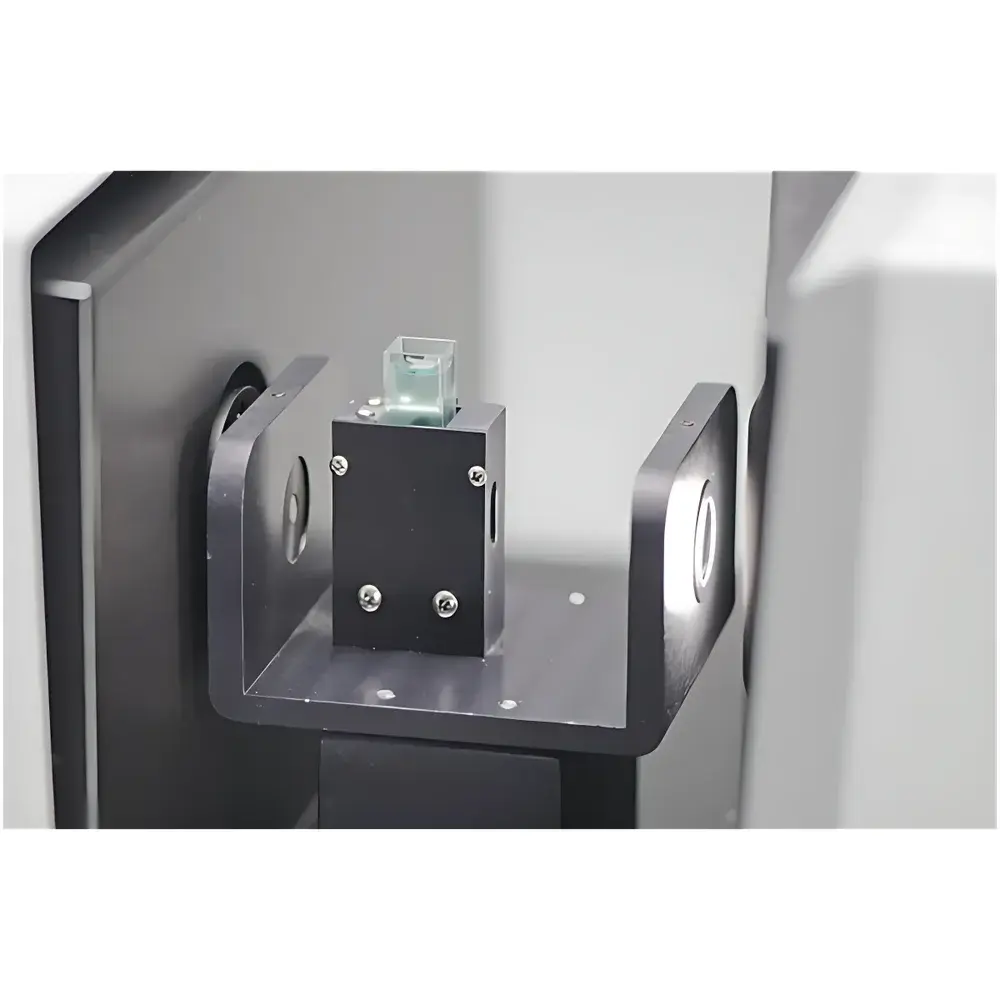
- Ergonomic sample stage with textile-compatible fixture and oversized transmission compartment (up to 50 mm × 50 mm) for rigid or flexible transparent materials
- UV energy control system with programmable filter positioning—critical for accurate measurement of optically brightened textiles, paper, and plastics
Sample Compatibility & Compliance
The UltraScan VIS accommodates diverse physical forms: flat or curved opaque surfaces (e.g., painted panels, plastic housings), translucent films (PET, PVC), liquid cuvettes (10 mm pathlength standard), and granular or powdered samples in standardized holders. Its large transmission chamber accepts samples up to 50 mm square with thicknesses up to 25 mm, while the 6.3 mm aperture enables targeted analysis of printed text, small batch coatings, or micro-patterned substrates. The instrument conforms to ISO/IEC 17025 requirements for measurement uncertainty estimation when operated within calibrated environmental conditions (23 ± 2°C, 50 ± 10% RH). Software validation packages support GLP/GMP workflows, including audit trails, electronic signatures, and 21 CFR Part 11 compliance (when configured with HunterLab’s EasyMatch QC Enterprise software). All spectral data are stored in vendor-neutral .qtx format, ensuring long-term archival integrity and third-party interoperability.
Software & Data Management
Controlled exclusively through HunterLab’s EasyMatch QC platform, the UltraScan VIS supports multi-user role-based access, customizable SOP-driven measurement sequences, and automated pass/fail evaluation against user-defined tolerances (ΔL*a*b*, ΔE00, CMC, or DIN99). Raw spectral data are captured at 1 nm intervals (interpolated from native 10 nm resolution), enabling post-acquisition re-computation under alternate illuminants or observers without re-measurement. The software includes built-in tools for whiteness/yellowness index calculation (ASTM E313, ISO 11475), haze correction (ASTM D1003), and spectral difference mapping. Data export options include CSV, XML, and PDF reports with embedded spectral plots and metadata (operator ID, timestamp, instrument serial number, calibration history). Network deployment allows centralized database management across multiple instruments in distributed manufacturing sites.
Applications
- Paint & Coatings: Batch-to-batch color consistency verification, formulation matching, and weathering stability assessment per ASTM D2244
- Plastics & Polymers: Detection of pigment dispersion uniformity, UV stabilizer efficacy, and fluorescence interference in recycled resin streams
- Textiles & Apparel: Shade sorting of dyed fabrics, whiteness evaluation of bleached cotton, and metamerism screening under retail lighting conditions
- Food & Pharmaceuticals: Color stability monitoring of tablets, capsules, and liquid suspensions per USP ; browning index tracking in fruit concentrates
- Paper & Packaging: Brightness (ISO 2470-1), opacity (TAPPI T425), and print contrast ratio (ISO 13655) quantification
FAQ
What is the difference between SCI and SCE measurement modes?
SCI mode captures total reflectance—including both diffuse and specular components—and is ideal for appearance-matching applications where surface texture should not influence color value. SCE mode excludes specular reflection, yielding values more closely aligned with human visual perception of color on textured or glossy surfaces.
Can the UltraScan VIS measure fluorescent samples?
Yes—the instrument includes programmable UV energy control, allowing precise adjustment of UV content in the illumination spectrum to match standard illuminants (e.g., CIE F11 for daylight fluorescence) or suppress UV excitation when measuring non-fluorescent references.
Is calibration traceable to NIST standards?
All factory calibrations are performed using NIST-traceable ceramic tile standards (certified SRM 2036, 2037, and 2038), with documented uncertainty budgets provided in the Certificate of Calibration shipped with each instrument.
How often does the instrument require recalibration?
HunterLab recommends annual performance verification using supplied calibration tiles; however, routine daily verification with the white tile is mandatory for regulated environments operating under ISO 9001 or IATF 16949 quality systems.
Does the system support integration with LIMS or MES platforms?
Yes—EasyMatch QC provides ODBC-compliant database connectivity and RESTful API endpoints for bidirectional data exchange with laboratory information management systems (LIMS) and manufacturing execution systems (MES), supporting structured query and automated report push functionality.




