
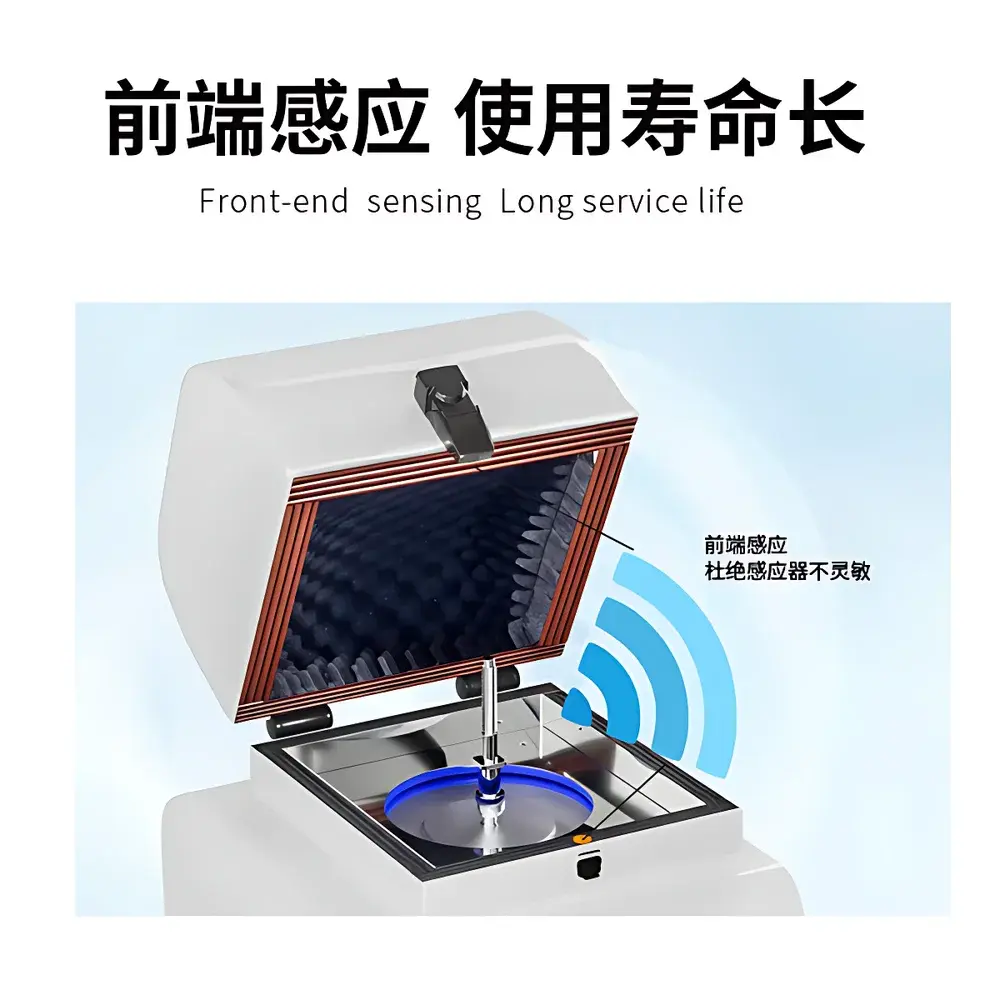
HUXI HM-LD96S Vertical Cryogenic Ball Mill
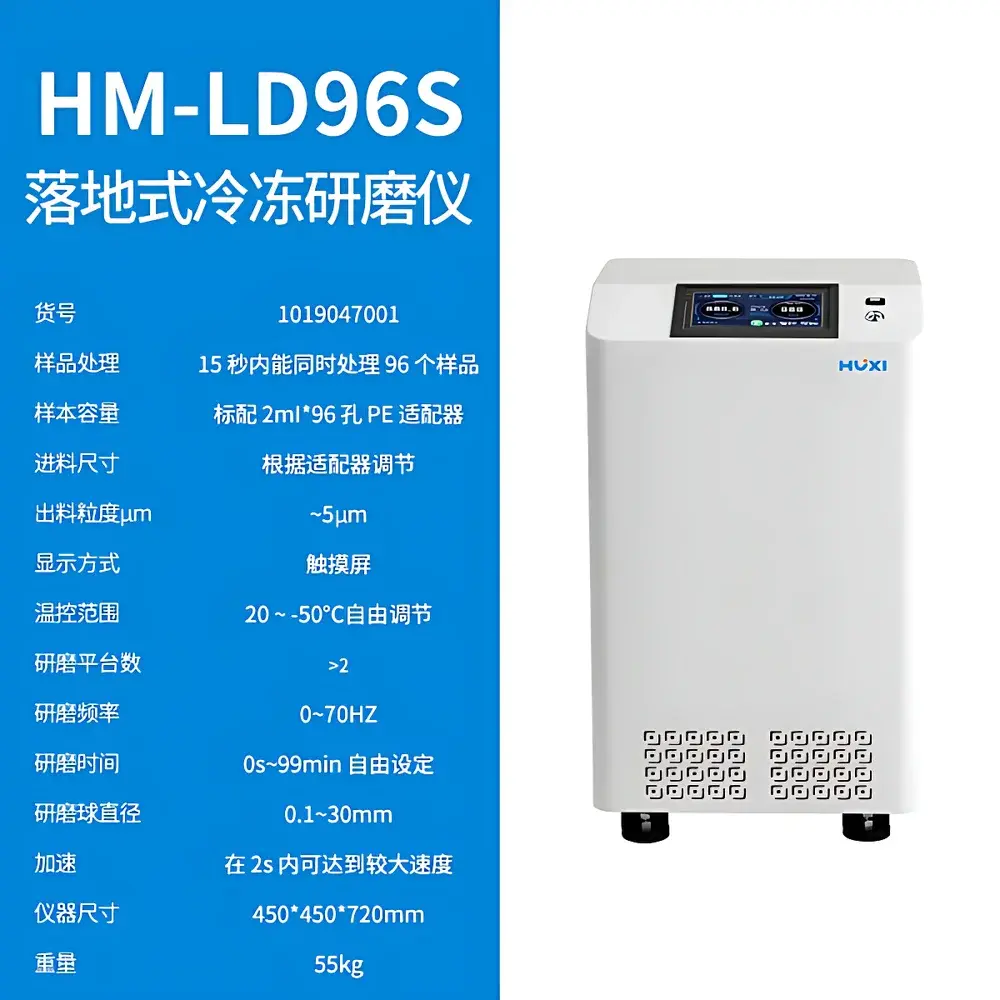
| Brand | HUXI |
|---|---|
| Origin | Shanghai, China |
| Manufacturer Type | Direct Manufacturer |
| Country of Origin | China |
| Model | HM-LD96S |
| Price | USD 7,400 (approx.) |
| Throughput | 96 × 2 mL samples in ≤15 s |
| Max Frequency | 70 Hz |
| Vertical Stroke | 34 mm |
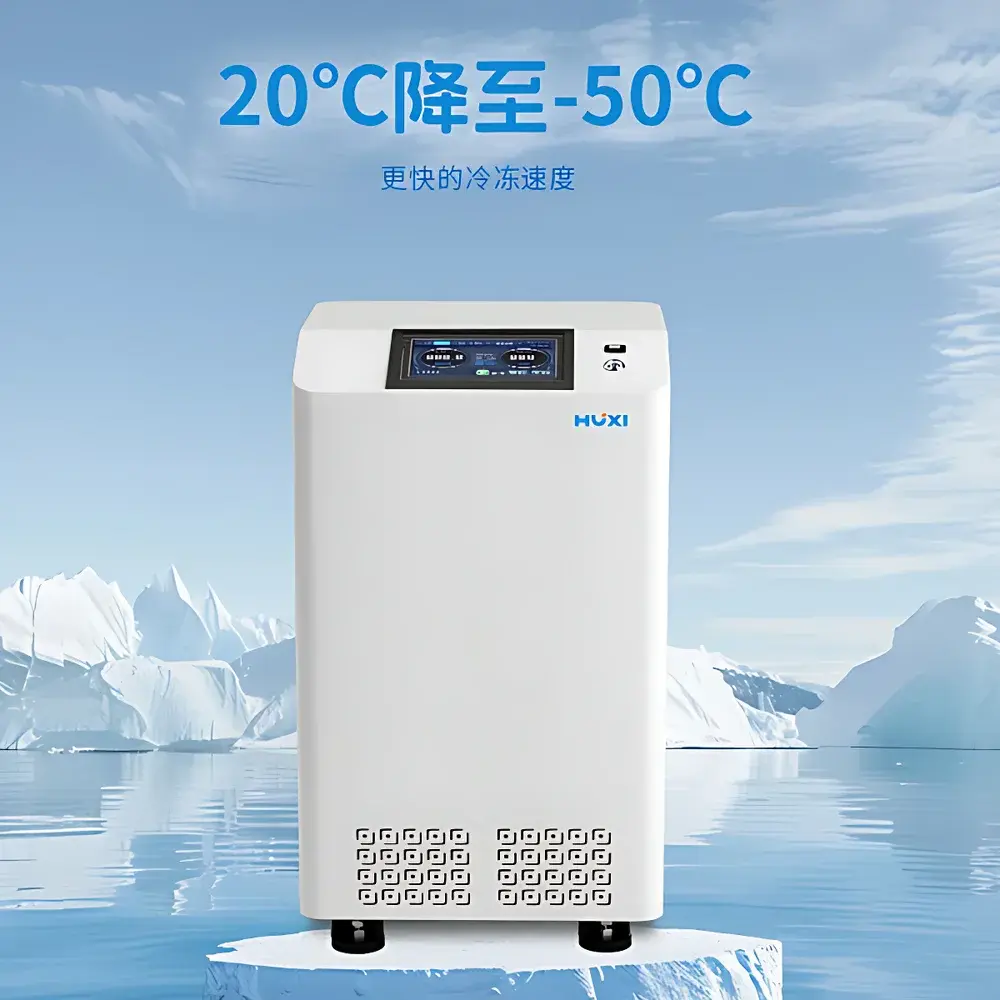
| Cooling Range | −50 °C to +20 °C |
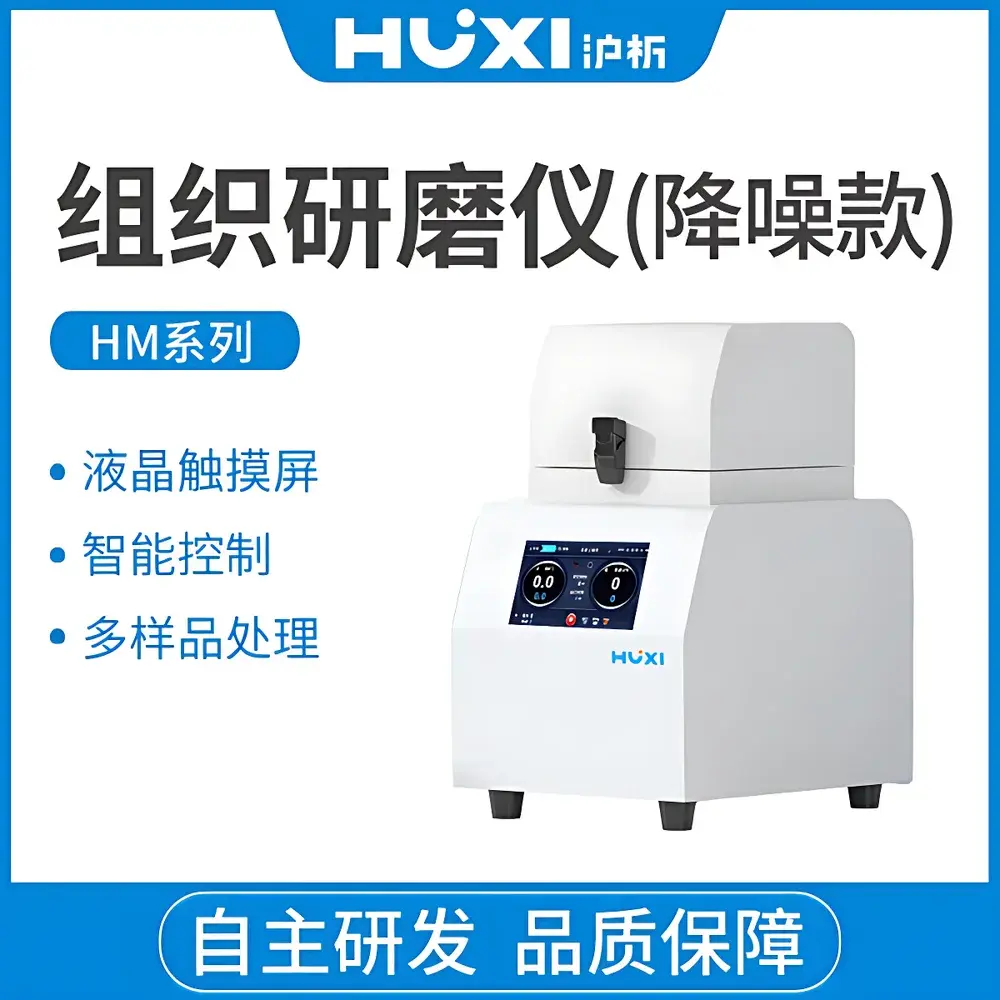
| Noise Level | <55 dB(A) |
| Display | 5-inch LED touchscreen |
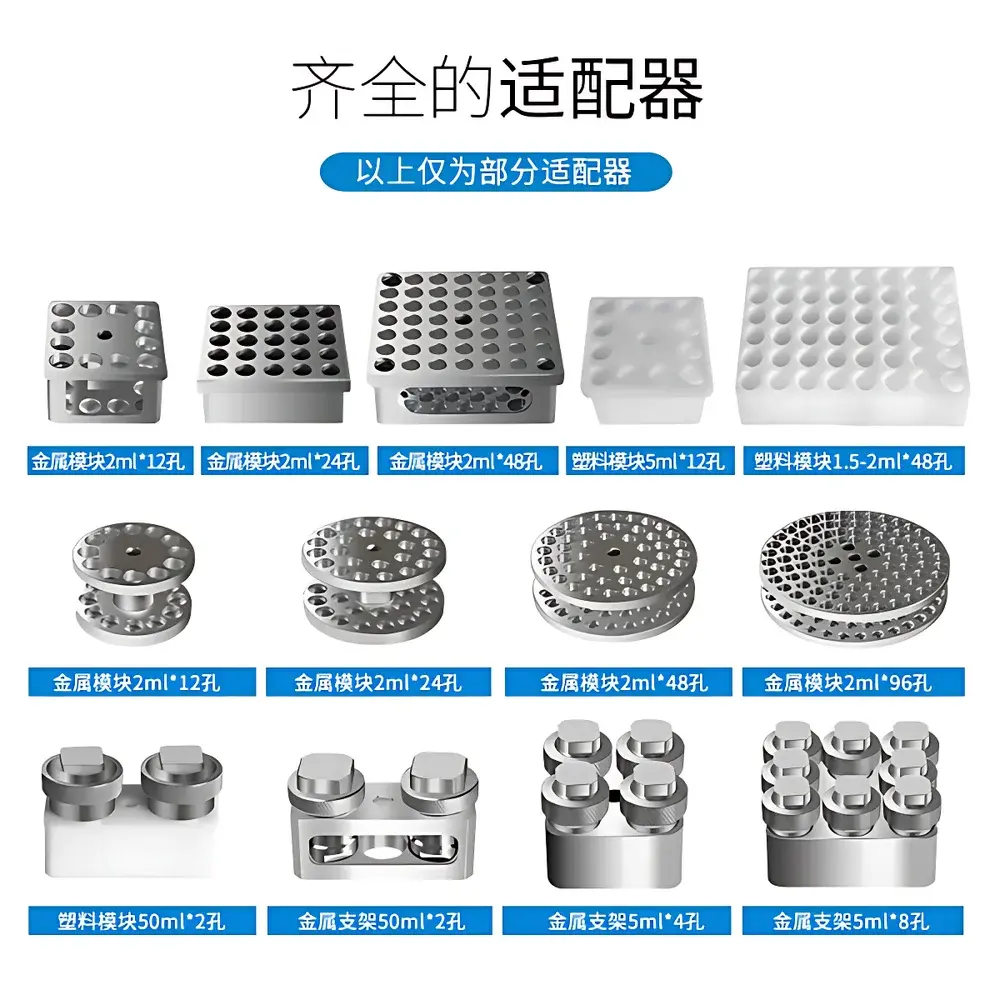
| Sample Tube Compatibility | 2 mL (48-well PE adapter standard), optional 5/10/25/50 mL adapters |
| Grinding Media Diameter | 0.1–30 mm |
| Media Materials | Stainless steel, chromium steel, zirconia, tungsten carbide, quartz |
| Grinding Mode | Vertical bead-based oscillation (dry, wet, cryogenic) |
| Refrigeration Ramp | ~40 min from 20 °C to −50 °C |
| Dimensions (L×W×H) | 450 × 450 × 720 mm |
| Weight | 55 kg |
| Data Storage | ≥20 user-defined protocols with tissue-specific presets (e.g., heart, spleen, lung, kidney, bone, hair) |
Overview
The HUXI HM-LD96S Vertical Cryogenic Ball Mill is an engineered high-throughput sample preparation system designed for reproducible, contamination-free mechanical lysis of biological and soft-hard materials under controlled low-temperature conditions. Operating on the principle of vertical reciprocating oscillation, the instrument drives grinding beads—such as zirconia, stainless steel, or tungsten carbide—through rapid, high-frequency impacts and shear forces within sealed sample tubes. This vertical bead-milling mechanism ensures uniform energy transfer across all wells simultaneously, minimizing inter-sample variability and thermal accumulation. Unlike horizontal shaker mills, the HM-LD96S’s vertically aligned motion delivers consistent acceleration profiles and superior kinetic coupling between the drive shaft and sample plate, resulting in higher homogenization efficiency per unit time. Integrated active refrigeration maintains sample integrity during processing by suppressing enzymatic degradation, nucleic acid shearing, and protein denaturation—critical for downstream applications including RNA-seq, proteomics, and metabolite extraction.
Key Features
- High-throughput capability: Processes up to 96 × 2 mL samples in ≤15 seconds with sub-5 µm final particle size distribution under optimized conditions.
- Cryogenic operation: Built-in compressor-based cooling system enables precise temperature control from +20 °C to −50 °C; achieves −50 °C from ambient in approximately 40 minutes.
- Sealed-tube processing: All samples remain fully enclosed in disposable centrifuge tubes or reusable grinding vials—eliminating cross-contamination and external aerosol exposure.
- Vertical oscillation architecture: 34 mm stroke length with programmable frequency (0–70 Hz) and duration (0 s–99 min); achieves target speed within 2 seconds for repeatable kinetic input.
- Robust mechanical design: Full-metal chassis with safety-interlocked chamber door and vibration-damping base; noise emission <55 dB(A) at 1 m distance.
- Intuitive operation: 5-inch LED touchscreen interface supports protocol storage (≥20 user-defined methods), tissue-specific presets (e.g., heart, bone, hair), and real-time parameter monitoring.
Sample Compatibility & Compliance
The HM-LD96S accommodates a broad spectrum of biological matrices—including mammalian tissues (liver, brain, muscle), plant material (leaves, seeds), microbial pellets, and fibrous samples—when paired with appropriate grinding media and tube formats. Standard configuration includes a 48-position 2 mL polyethylene adapter; optional adapters support 5 mL, 10 mL, 25 mL, and 50 mL vessels for scalable workflow integration. The system complies with general laboratory safety standards for enclosed mechanical equipment (IEC 61000-6-2/6-4, EN 61000-3-2). While not certified to ISO 13485 or FDA 21 CFR Part 11 out-of-the-box, its audit-trail-capable protocol storage and locked parameter settings support GLP/GMP-aligned documentation practices when deployed with validated SOPs.
Software & Data Management
The embedded controller firmware enables persistent storage of ≥20 experimental protocols, each configurable with independent time, frequency, cooling setpoint, and ramp parameters. Tissue-specific presets (e.g., “Kidney – High Yield DNA”, “Hair – Keratin Disruption”) provide starting points for method development. All runs are timestamped and associated with selected protocols; no external PC or proprietary software is required for routine operation. Data export functionality is limited to manual screen capture via HDMI output (optional accessory); users requiring CSV log export or networked data aggregation must integrate via external environmental monitoring systems or third-party Lab Information Management Systems (LIMS) using RS-232 or analog signal outputs (available upon request).
Applications
- Routine nucleic acid isolation: Delivers longer DNA fragments and higher RNA integrity numbers (RIN >8.5) compared to rotor-stator homogenizers, especially for lipid-rich or RNase-abundant tissues.
- Proteomic sample prep: Enables efficient cell lysis and organelle disruption while preserving post-translational modifications under cryoconditions.
- Metabolomics: Minimizes ex vivo metabolic turnover through rapid, sub-zero comminution—particularly valuable for unstable intermediates (e.g., acyl-CoAs, NADPH).
- Pharmaceutical QA/QC: Supports uniform powder blending and particle size reduction of excipients or lyophilized biologics prior to dissolution testing.
- Environmental analysis: Homogenizes soil, sediment, or biofilm samples for subsequent heavy metal extraction or microbial community profiling.
FAQ
What types of grinding media are compatible with the HM-LD96S?
Stainless steel, chromium steel, zirconium oxide, tungsten carbide, and quartz beads ranging from 0.1 mm to 30 mm in diameter may be used—selection depends on sample hardness, desired particle size, and downstream compatibility (e.g., zirconia for RNA work to avoid metal ion interference).
Can the instrument operate without active cooling?
Yes—the refrigeration system is independently controllable; the mill functions in ambient-mode for dry or room-temperature wet grinding applications.
Is validation documentation available for regulatory submissions?
HUXI provides basic technical specifications and CE-conformity declarations; IQ/OQ/PQ protocols and 21 CFR Part 11-compliant electronic records require site-specific implementation with qualified third-party vendors.
How is sample temperature monitored during grinding?
The system regulates chamber temperature via internal thermistor feedback but does not measure individual tube temperatures; users should validate thermal performance with calibrated fiber-optic probes for critical low-temperature applications.
What maintenance is required for long-term reliability?
Recommended quarterly inspection of drive belt tension, refrigerant pressure, and adapter seating integrity; annual calibration of temperature sensor and frequency encoder is advised for GxP environments.



