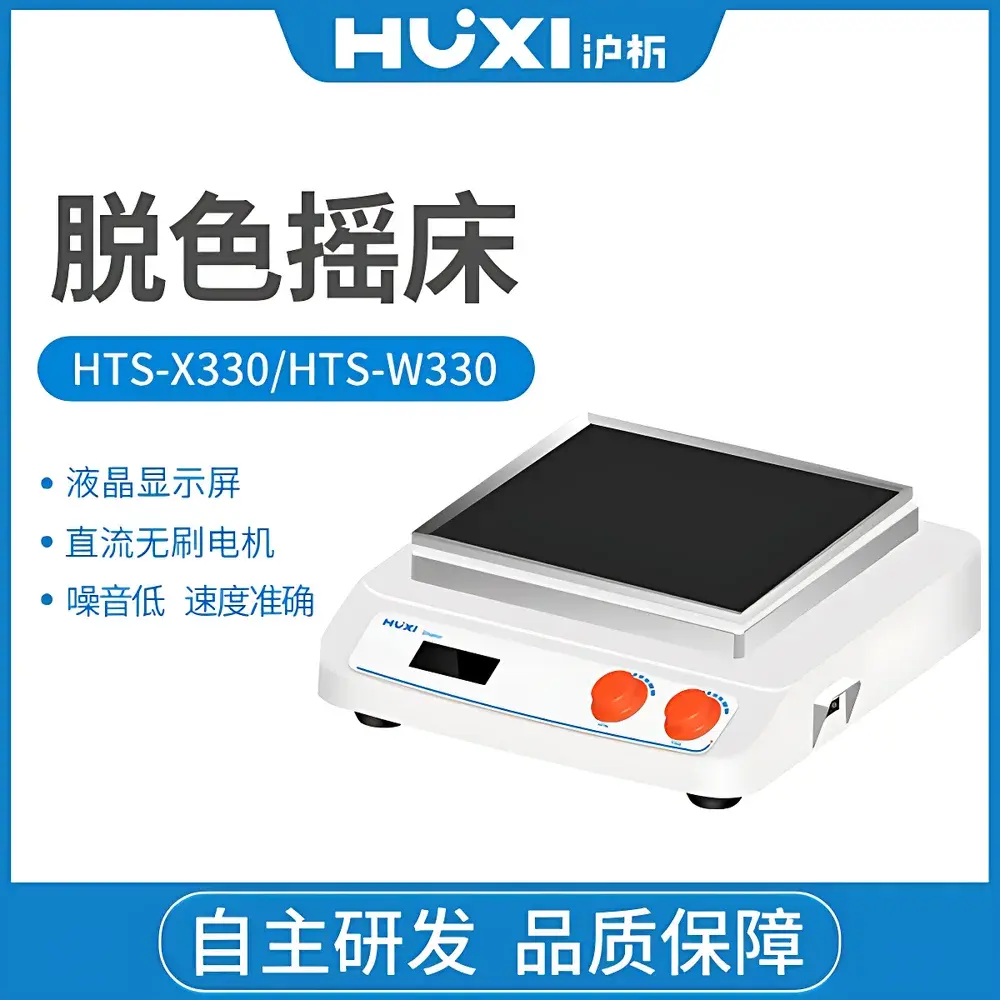
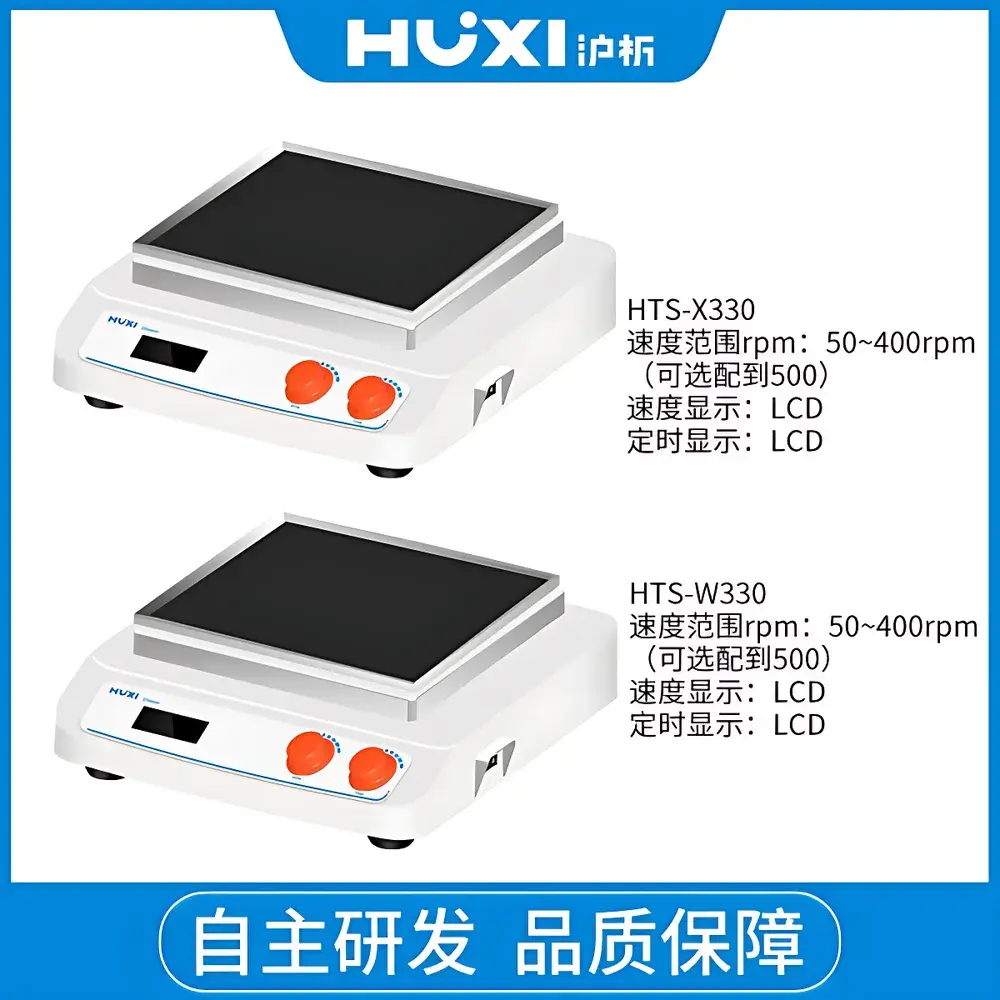
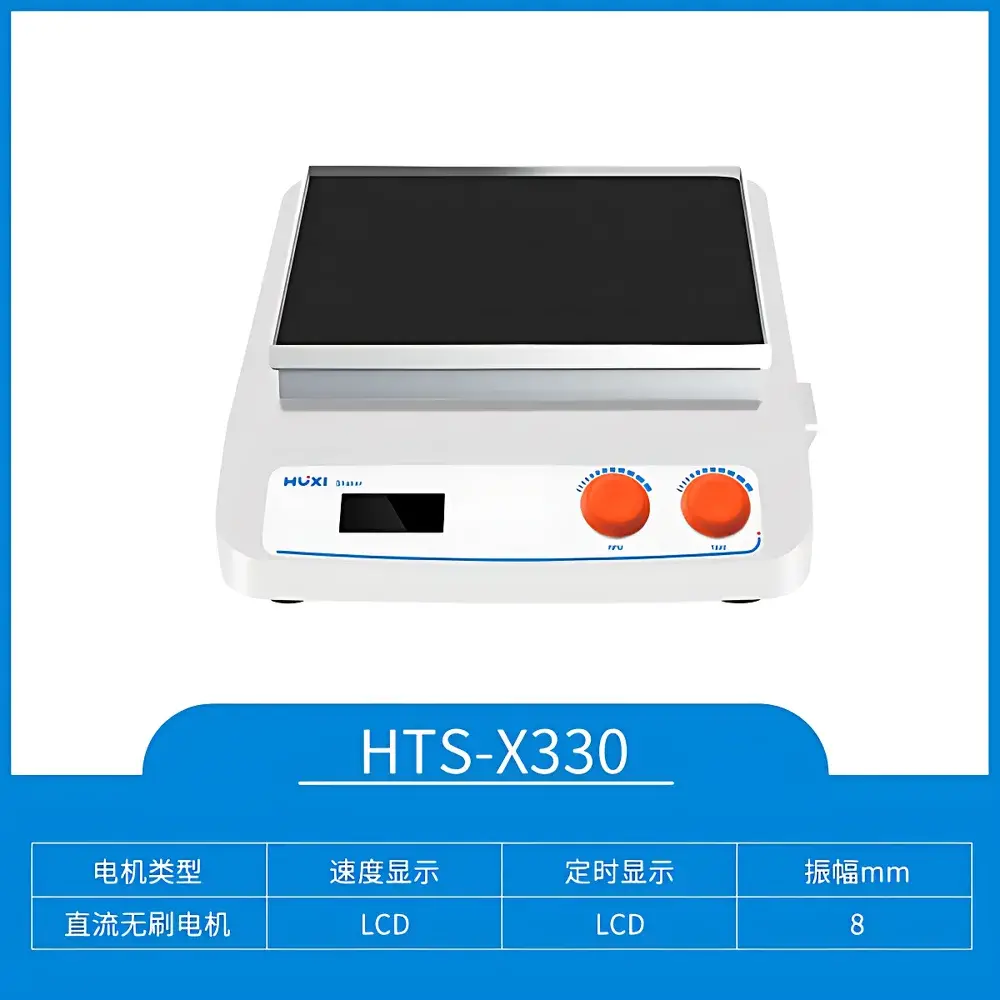
HUXI HTS-X330 Orbital Shaker for Destaining and Electrophoresis Applications
| Brand | HUXI |
|---|---|
| Origin | Shanghai, China |
| Manufacturer Type | Direct Manufacturer |
| Region of Origin | Domestic (China) |
| Model | HTS-X330 |
| Instrument Category | Mixing & Homogenization Equipment |
| Timer Range | 1–99 h 59 min |
| Oscillation Speed | 50–400 rpm |
| Orbit Diameter | 8 mm |
| Temperature Control Range | 5–40 °C |
| Platform Quantity | 1 |
| Power Supply | 100–240 VAC, 50–60 Hz |
| Motor Type | Brushless DC Motor |
| Input Power | 35 W |
| Output Power | 25 W |
| Max Load Capacity | 7.5 kg |
| Net Weight | 8.5 kg |
| Gross Weight | 10 kg |
| Dimensions (L×W×H) | 330 × 370 × 130 mm |
| Enclosure Rating | IP21 |
| RS232 Interface | Optional |
Overview
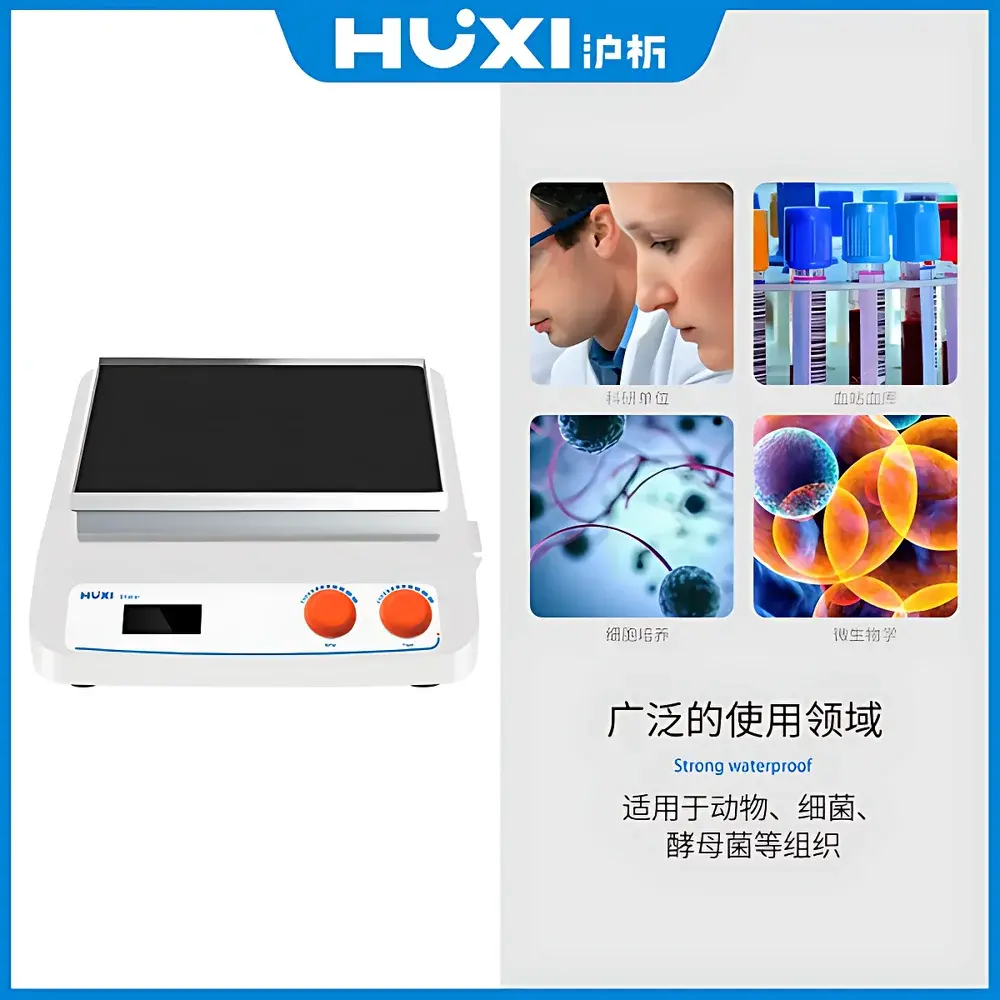
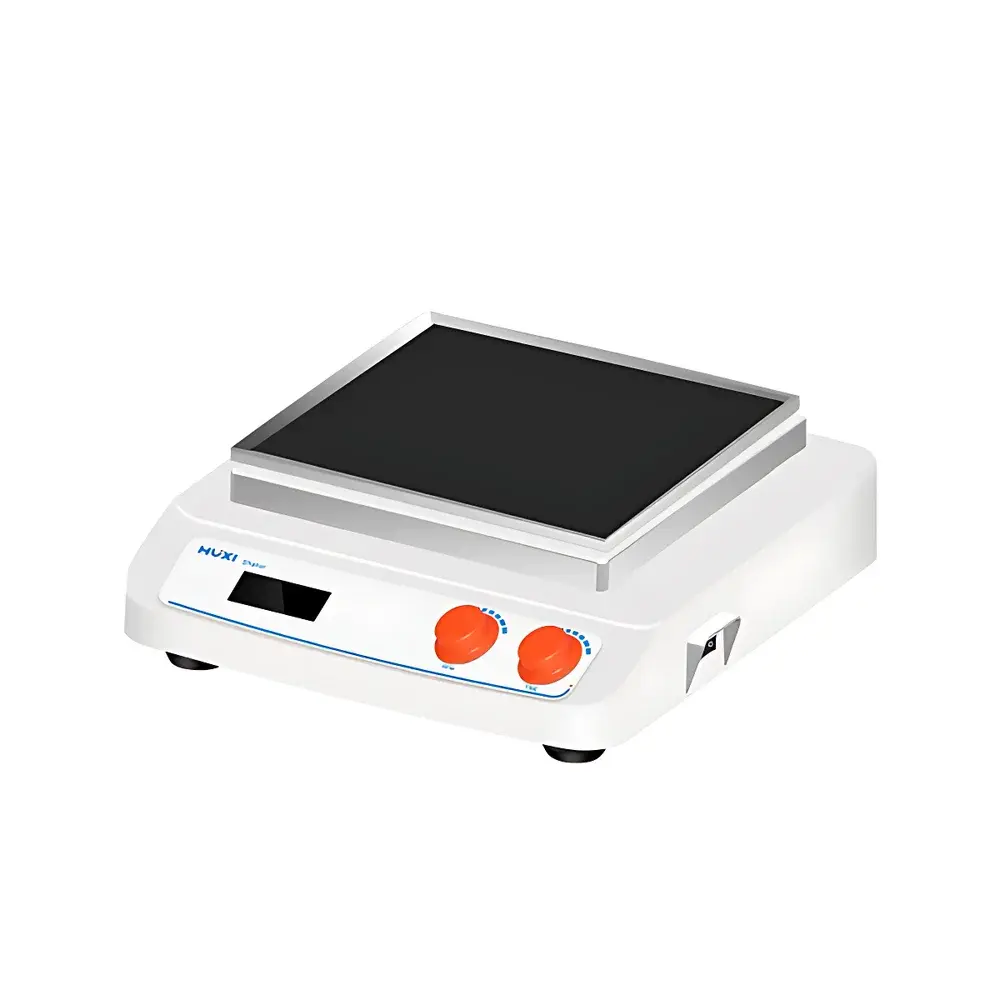
The HUXI HTS-X330 Orbital Shaker is an engineered platform designed specifically for reproducible, low-shear mixing in post-electrophoretic workflows—including gel fixation, Coomassie Blue staining and destaining, silver staining (fixation, sensitization, development), autoradiography film processing (development and fixation), and membrane-based assays such as Southern/Northern/Western blotting, antigen-antibody incubations, and hybridization steps. Its orbital motion—characterized by a consistent 8 mm circular trajectory—ensures uniform agitation across the entire sample surface without vortexing or splashing, making it ideal for delicate biological matrices including polyacrylamide gels, nitrocellulose membranes, and PVDF membranes. The unit operates within a precisely regulated temperature range of 5–40 °C, enabling compatibility with cold-room environments and ambient-controlled incubation chambers. Unlike generic shakers, the HTS-X330 integrates thermal stability, mechanical robustness, and protocol fidelity into a compact footprint (330 × 370 × 130 mm), supporting both benchtop use and integration into temperature-controlled enclosures.
Key Features
- Brushless DC motor drive ensures speed accuracy (±1 rpm repeatability), ultra-low acoustic emission (20,000 hours MTBF.
- Soft-start acceleration profile minimizes initial torque surge, preventing sample displacement or buffer overflow during initiation—critical for thin-gel handling and low-volume membrane incubations.
- Chemically resistant molded natural rubber platform resists corrosion from common electrophoresis reagents (e.g., acetic acid, methanol, formaldehyde, sodium thiosulfate) and allows rapid decontamination using 70% ethanol or 0.5% SDS solutions.
- Large backlit LCD interface displays real-time speed (rpm), elapsed time, and remaining timer duration; intuitive keypad navigation supports single-hand operation while wearing gloves.
- Lockable control mode prevents accidental parameter changes during multi-hour protocols—essential for unattended overnight destaining or hybridization runs.
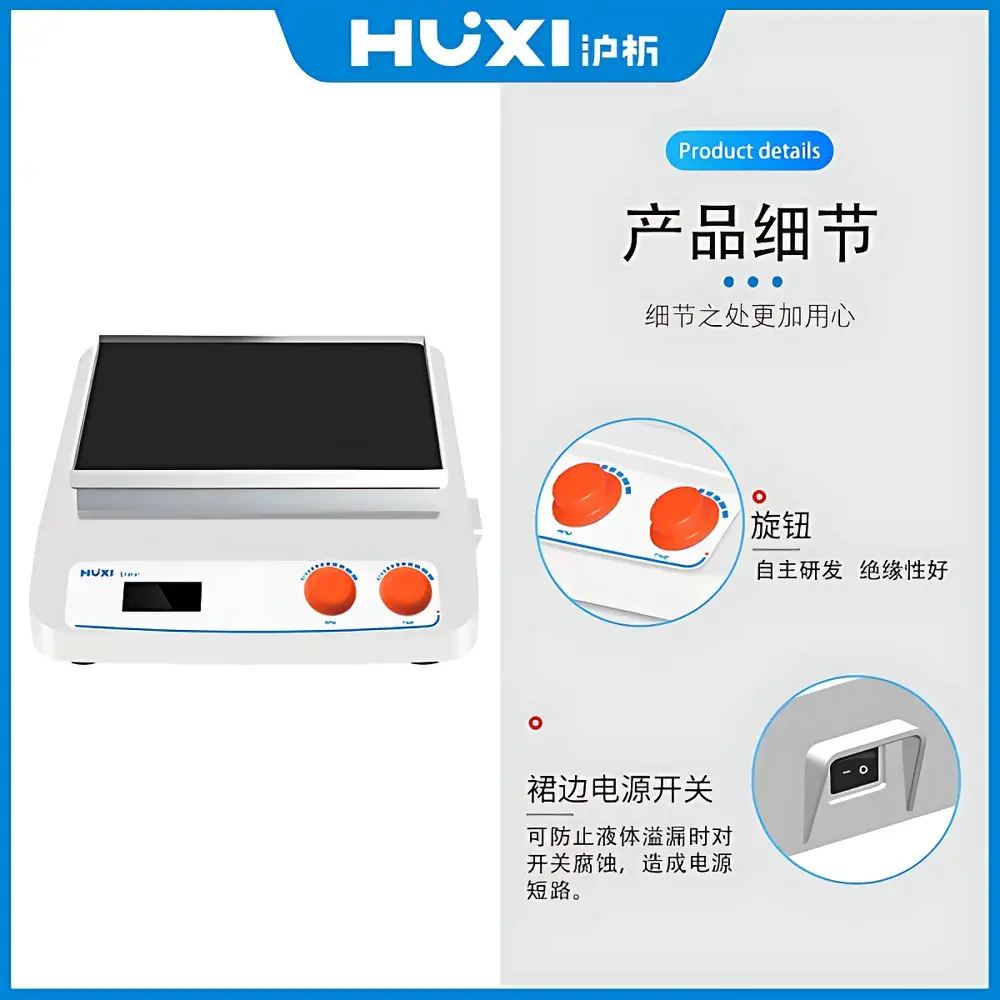
- IP21-rated enclosure provides protection against vertically falling drips and solid objects >12.5 mm, meeting IEC 60529 requirements for laboratory-grade electrical safety.
Sample Compatibility & Compliance
The HTS-X330 accommodates standard electrophoresis trays (up to 20 × 20 cm), mini-gel cassettes, hybridization bottles (50–500 mL), and membrane support frames. Its 7.5 kg load capacity supports stacked configurations (e.g., dual-gel racks or multi-well membrane holders) without resonance-induced drift. The shaker complies with IEC 61010-1:2010 for laboratory electrical equipment safety and meets electromagnetic compatibility (EMC) requirements per EN 61326-1:2013. While not certified for GLP/GMP production environments, its stable speed control, audit-ready timer logs (when RS232 module is installed), and traceable operational parameters support documentation practices aligned with ISO/IEC 17025:2017 clause 7.7 (equipment management) and USP analytical instrument qualification guidelines.
Software & Data Management
The HTS-X330 operates as a standalone instrument with embedded firmware controlling all timing and motor functions. Optional RS232 serial interface enables connection to external PCs or LIMS systems for remote start/stop commands, real-time speed monitoring, and timestamped event logging (e.g., “Timer started at 14:22:05”, “Speed stabilized at 120 rpm”). When integrated with compliant laboratory software (e.g., LabArchives ELN or Thermo Fisher SampleManager), the device supports 21 CFR Part 11–compatible electronic records when paired with user-authenticated terminal access and digital signature workflows. No proprietary software installation is required; ASCII-based command protocols are documented in the technical manual for custom API integration.
Applications
- Electrophoretic gel processing: Coomassie R-250 and G-250 staining/destaining, silver nitrate sensitization/development, glutaraldehyde fixation.
- Molecular blotting workflows: Pre-hybridization blocking, probe hybridization (DNA/RNA), antibody incubation (primary/secondary), chemiluminescent substrate equilibration.
- Radioisotope handling: Autoradiographic film development and fixation under controlled darkroom conditions.
- Cell biology: Gentle suspension of adherent cells during detachment protocols, low-shear resuspension of transfected cell pellets prior to lysis.
- Quality control: Reproducible buffer exchange on membrane strips during diagnostic assay validation per CLSI EP12-A2 guidelines.
FAQ
Can the HTS-X330 be operated inside a refrigerated incubator or cold room?
Yes—the unit is rated for continuous operation between 5 °C and 40 °C, and its brushless motor design eliminates condensation-related failure risks typical of brushed alternatives.
Is speed calibration traceable to national standards?
While the device does not ship with NIST-traceable calibration certificates, its closed-loop motor controller maintains speed deviation ≤ ±1% across the full 50–400 rpm range, and users may perform in-house verification using ISO 16269-6–compliant tachometers.
What is the maximum volume of solution it can agitate uniformly?
For optimal mixing homogeneity, we recommend ≤300 mL per standard 20 × 20 cm gel tray or ≤500 mL in cylindrical hybridization bottles—exceeding these volumes may reduce shear uniformity at lower speeds (<100 rpm).
Does the RS232 option support Modbus or other industrial protocols?
No—the RS232 interface uses a proprietary ASCII command set detailed in the communication protocol appendix; it does not implement Modbus RTU, TCP, or EtherNet/IP.
How often does the rubber platform require replacement?
Under normal lab use with routine cleaning, the platform exhibits no measurable degradation after 5+ years; replacement is only necessary if physical tearing, permanent chemical swelling, or loss of grip texture is observed.