
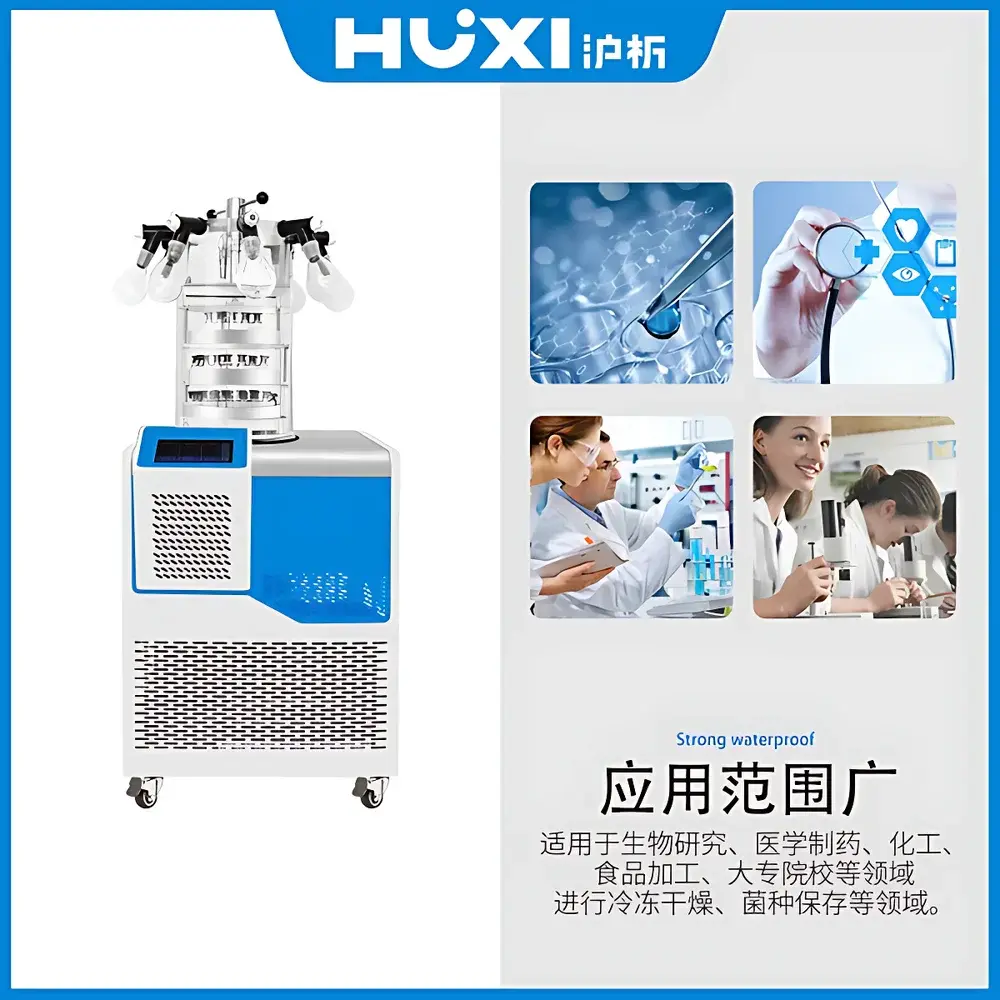
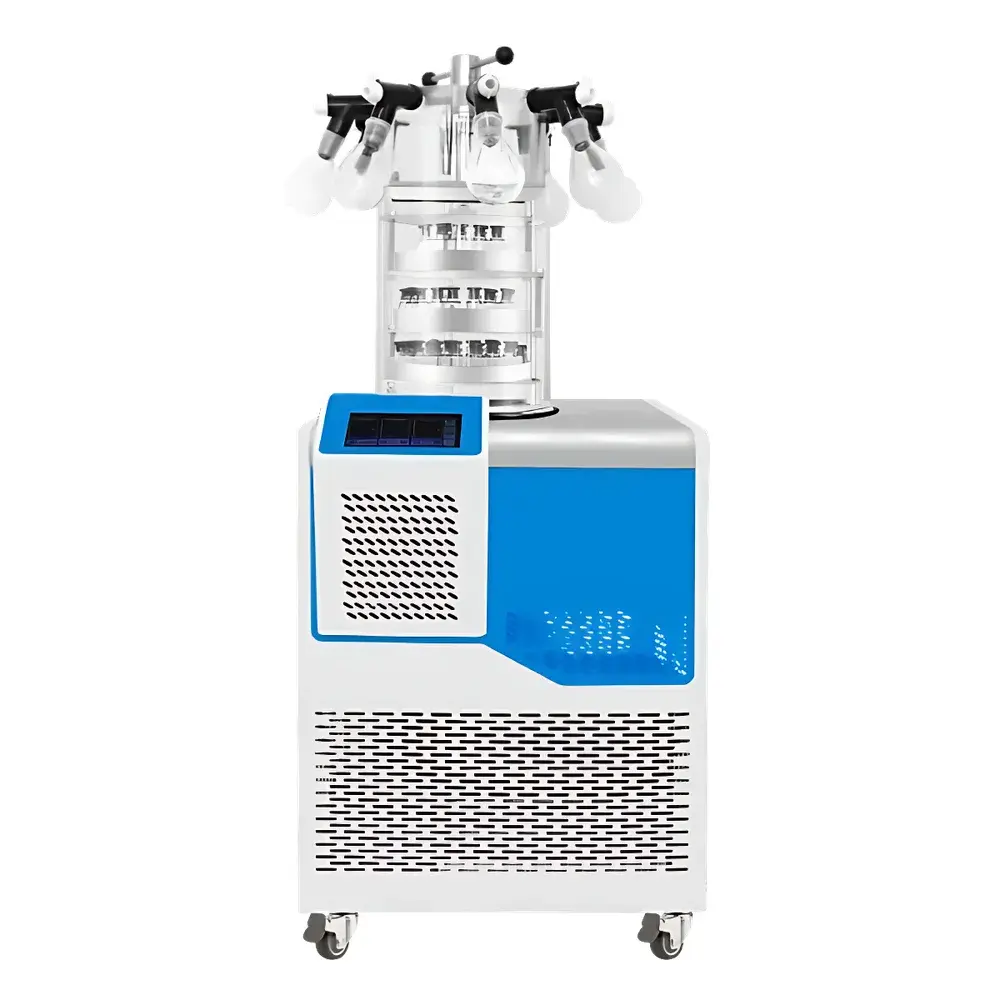
HUXI HXLG-12-50DG Manifold-Type Lyophilizer with Stoppering Function
| Brand | HUXI |
|---|---|
| Origin | Shanghai, China |
| Manufacturer | HUXI Scientific Instrument Co., Ltd. |
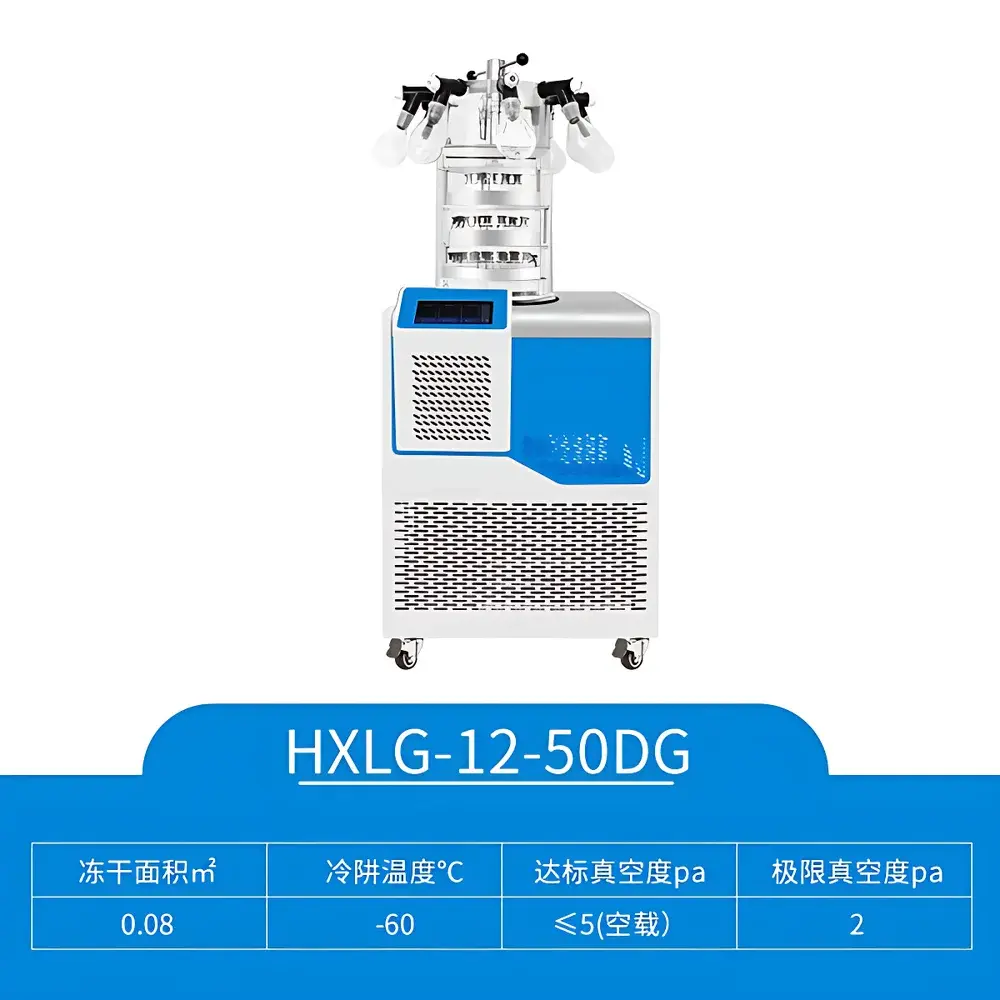
| Model | HXLG-12-50DG |
| Type | Manifold-type lyophilizer with hydraulic stoppering |
| Freeze-drying area | 0.08 m² |
| Ultimate vacuum | 2 Pa |
| Condenser temperature | −60 °C |
| Condensate capacity | 4 kg/batch (24 h) |
| Dimensions (W×D×H) | 685 × 560 × 760 mm |
| Weight | 100 kg |
| Power supply | AC 220 V, 50 Hz, 25 A |
| Rated power | 1050 W |
| Noise level | ≤55 dB(A) |
| Ambient operating temperature | ≤30 °C |
Overview
The HUXI HXLG-12-50DG is a benchtop manifold-type lyophilizer engineered for precise, reproducible freeze-drying of heat-sensitive biological and pharmaceutical samples in research and quality control laboratories. It operates on the principle of sublimation—where frozen water is removed directly from the solid phase to vapor under controlled low-pressure conditions—preserving structural integrity, enzymatic activity, and immunogenicity of labile compounds. Unlike shelf-based systems, the HXLG-12-50DG features a multi-port manifold configuration with independent valve control per port, enabling simultaneous processing of diverse sample types (e.g., serum, enzymes, vaccines, microbial cultures) in vials or flasks while maintaining batch-specific process isolation. Its integrated hydraulic stoppering mechanism allows for in-situ sealing of vials under vacuum post-drying—critical for sterile, moisture-sensitive formulations requiring terminal aseptic closure without exposure to ambient atmosphere.
Key Features
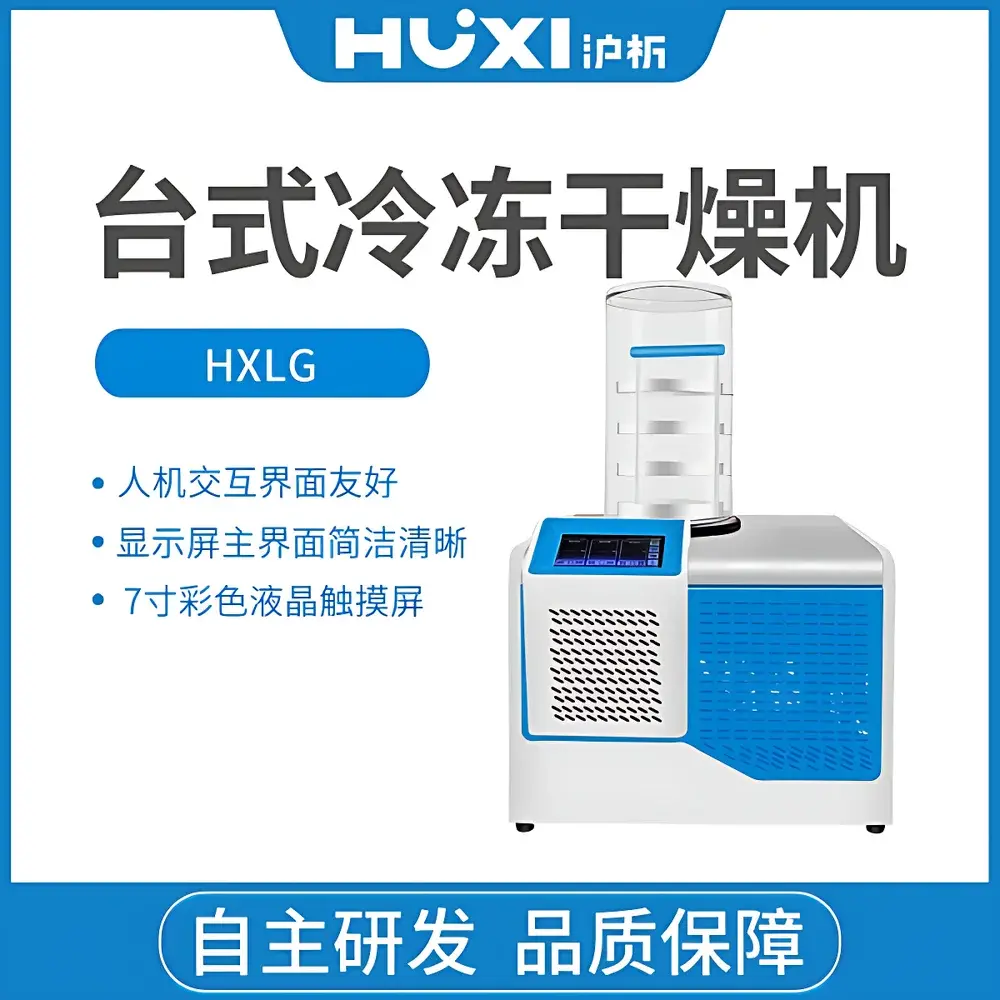
- Microprocessor-based control system with color TFT touchscreen interface (lockable screen mode), supporting real-time monitoring and remote supervision via Ethernet or Wi-Fi-enabled devices (PC/mobile)
- Continuous data logging of chamber pressure (vacuum), condenser temperature, and shelf/vial temperature; graphical freeze-drying curve generation with timestamped export (CSV/Excel format) via USB port
- Hermetically sealed, imported semi-hermetic compressor using R404A/R23 mixed refrigerant blend—compliant with EU F-Gas Regulation (EC No. 517/2014)—enabling rapid cooldown to −60 °C and high ice-capture efficiency
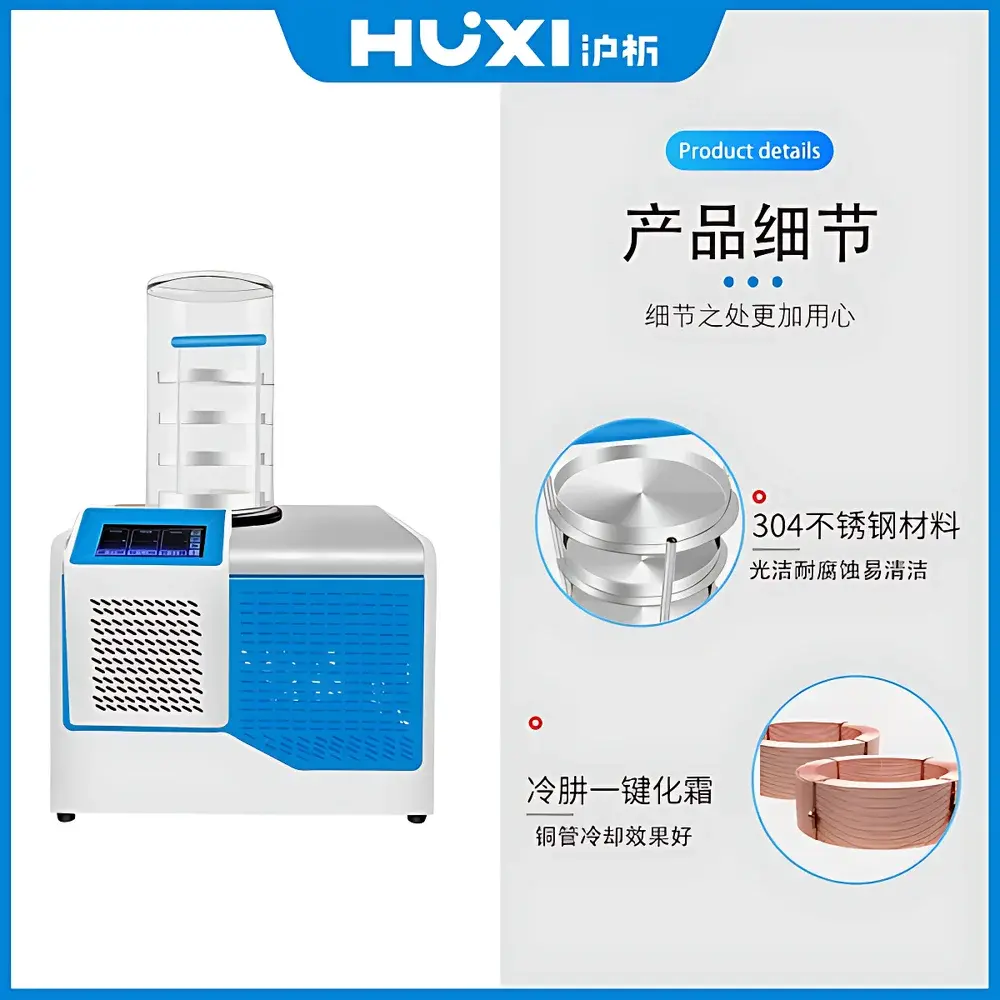
- Condenser chamber fabricated from electropolished 304 stainless steel with smooth, crevice-free interior surface (no embedded cooling coils); facilitates cleaning validation and meets ISO 14644-1 Class 8 cleanroom compatibility requirements
- Pre-freezing capability within the condenser chamber eliminates dependency on external ultra-low temperature freezers or liquid nitrogen, reducing operational complexity and cross-contamination risk
- KF25 quick-release flange connection between main unit and oil-free, anti-backstreaming vacuum pump ensures reliable vacuum integrity and simplifies maintenance
- Optical-grade acrylic drying chamber (aviation-grade PMMA) rated for −40 °C to +60 °C, offering full visual observation of sublimation progression and cake morphology development
- One-touch automatic defrost function with condensate drainage management minimizes downtime between batches
Sample Compatibility & Compliance
The HXLG-12-50DG accommodates standard pharmaceutical vials (φ12 mm: 560 units; φ16 mm: 285 units; φ22 mm: 165 units) mounted on three-tier stainless steel trays (180 mm diameter). Its design supports lyophilization of aqueous solutions, suspensions, and emulsions across life science applications—including monoclonal antibody formulations, diagnostic reagents, probiotic powders, and reference standards. The system complies with core elements of ISO 22042 (lyophilization equipment), ASTM F2476 (sterility testing of lyophilized products), and aligns with Good Manufacturing Practice (GMP) Annex 1 expectations for equipment qualification (IQ/OQ/PQ). While not inherently 21 CFR Part 11–compliant out-of-the-box, audit trails, user access controls, and electronic signature support can be implemented through optional validated software modules meeting FDA and EMA data integrity requirements.
Software & Data Management
Embedded firmware records all critical process parameters at configurable intervals (1–60 s resolution) with time-stamped metadata. Data files are stored internally and exported via USB to external media for offline analysis. Exported datasets include vacuum trend logs, condenser load profiles, and thermal histories—enabling correlation with residual moisture analysis (e.g., Karl Fischer titration) and stability studies. Optional PC-based software provides advanced curve fitting, deviation alerts, comparative batch analysis, and PDF report generation compliant with ALCOA+ principles (Attributable, Legible, Contemporaneous, Original, Accurate, Complete, Consistent, Enduring, Available).
Applications
- Stabilization of thermolabile biologics (e.g., plasmid DNA, CRISPR-Cas9 ribonucleoproteins, viral vectors)
- Preparation of calibration standards and certified reference materials (CRMs) for analytical chemistry labs
- Routine dehydration of bacterial/fungal cultures for long-term cryoarchiving
- Development of lyophilized assay kits in IVD manufacturing environments
- Small-batch formulation optimization under GxP-aligned workflows
- Academic research involving protein crystallization, nanocarrier drying, or tissue engineering scaffold preservation
FAQ
What is the maximum allowable sample volume per vial during primary drying?
The system does not impose fixed volume limits; however, optimal sublimation rates require fill depths ≤10 mm for aqueous solutions to ensure uniform ice nucleation and efficient vapor escape.
Can the HXLG-12-50DG be integrated into a centralized laboratory automation network?
Yes—via Modbus TCP or optional OPC UA gateway, enabling interoperability with LIMS, SCADA, or MES platforms for automated batch record generation and alarm forwarding.
Is validation documentation (DQ/IQ/OQ protocols) provided by the manufacturer?
HUXI supplies generic protocol templates aligned with ISO/IEC 17025 and ASTM E2500; site-specific execution and performance qualification must be conducted by the end user or qualified third-party service provider.
Does the unit meet electromagnetic compatibility (EMC) requirements for CE marking?
Yes—the device conforms to EN 61326-1:2013 (measurement/control lab equipment) and EN 55011:2016 (industrial radio-frequency emission limits), verified per CE self-declaration.
What maintenance intervals are recommended for the vacuum pump and refrigeration system?
Vacuum pump oil should be replaced every 500 operating hours or annually; compressor oil and filter inspection is advised every 2,000 hours or biannually, contingent on ambient dust levels and usage frequency.



