
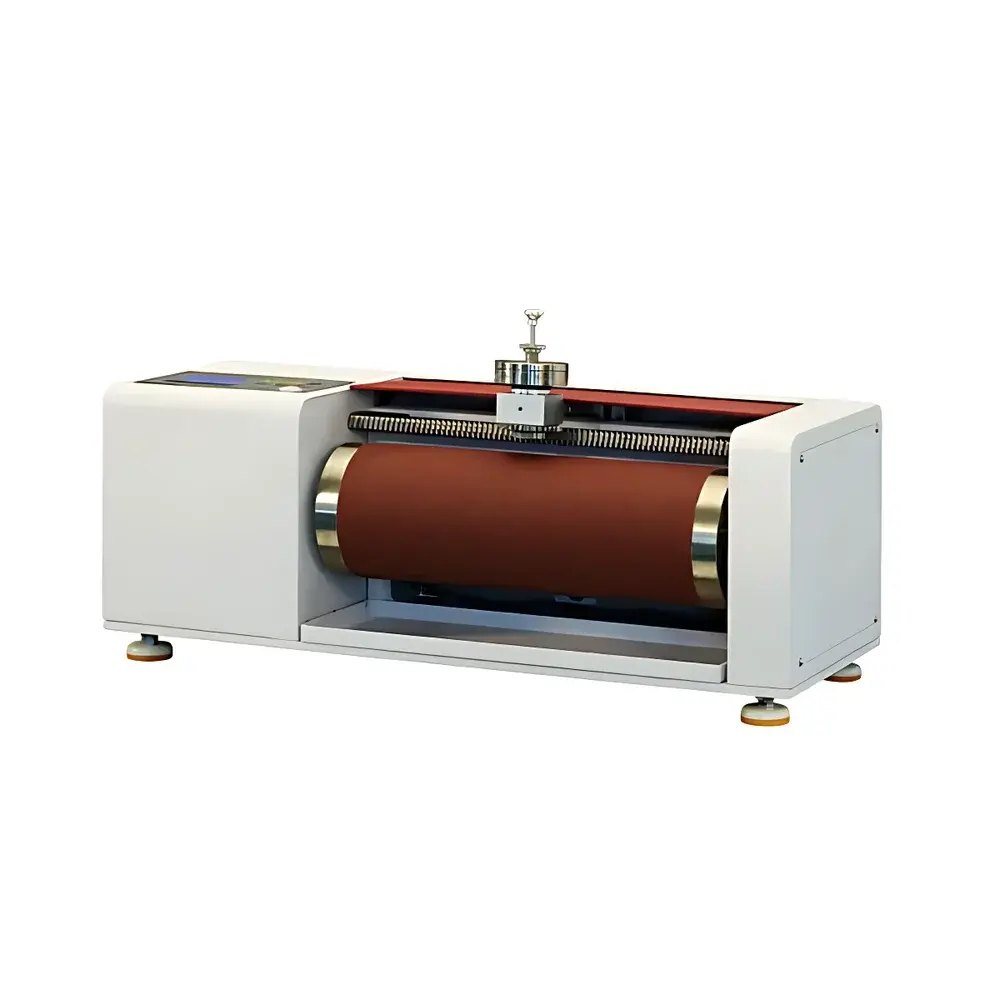
HY-766 DIN Rubber Abrasion Tester
| Origin | Tianjin, China |
|---|---|
| Manufacturer Type | Authorized Distributor |
| Origin Category | Domestic (China) |
| Model | HY-766 |
| Pricing | Upon Request |
| Roller Diameter | 150.0 ± 0.2 mm |
| Roller Length | ~500 mm |
| Lateral Traverse per Revolution | 4.2 ± 0.04 mm |
| Test Loads | 2.0 ± 0.1 N, 5.0 ± 0.1 N, 10.0 ± 0.2 N |
| Roller Speed | 40 ± 1 rpm |
| Abrasion Distance | 20.0 ± 0.1 m or 40.0 ± 0.2 m |
| Specimen Holder ID Range | 15.5–16.3 mm (adjustable) |
| Specimen Protrusion | 2.0 ± 0.2 mm |
| Holder Axis Tilt | 3° from vertical |
| Holder-to-Roller Longitudinal Offset | ±1 mm |
| Sandpaper Butt Joint Gap | ≤2 mm |
Overview
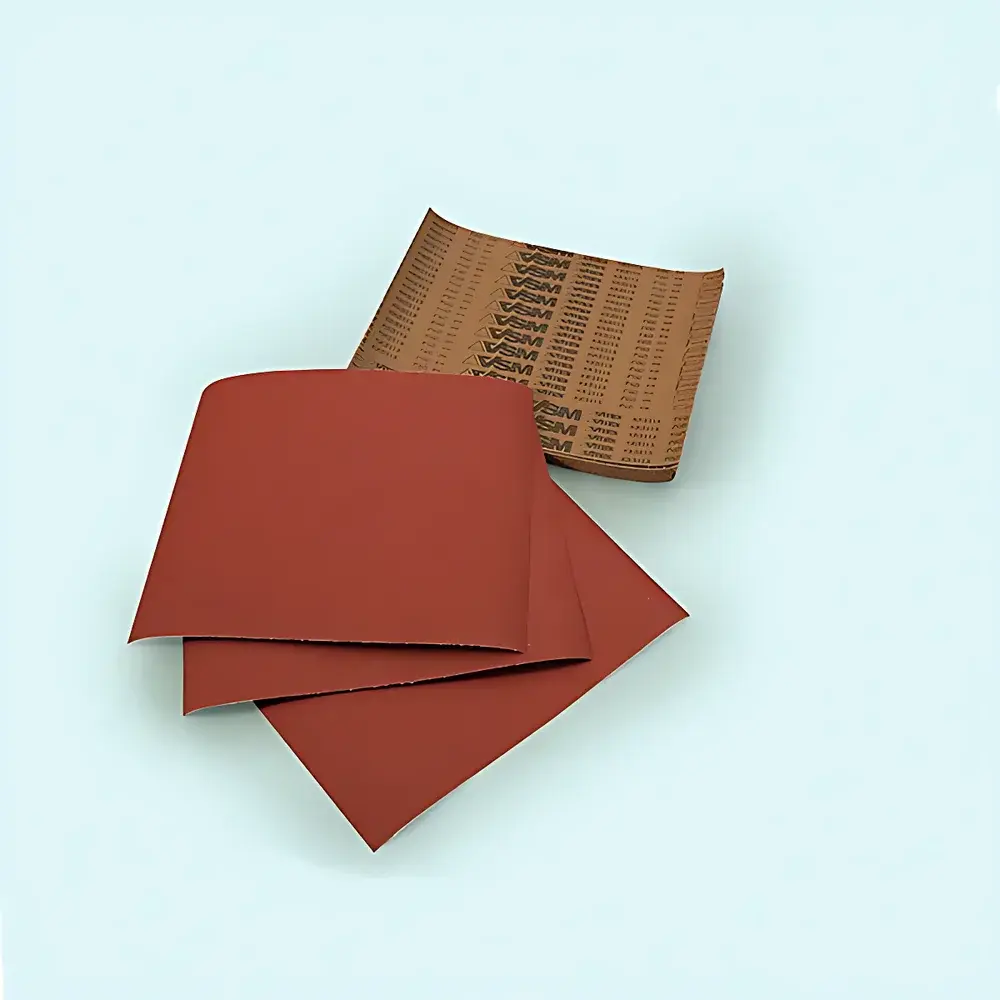
The HY-766 DIN Rubber Abrasion Tester is a precision-engineered mechanical property tester designed to quantify the abrasive wear resistance of elastomeric materials under standardized sliding contact conditions. Based on the principle of controlled rotary abrasion—where a conditioned rubber specimen is pressed against a moving abrasive surface (typically VSM P60 sandpaper) while undergoing lateral oscillation—the instrument replicates real-world wear mechanisms observed in footwear soles, conveyor belts, automotive tires, and industrial rubber components. The test method conforms rigorously to internationally recognized standards including ISO 4649, DIN 53516, GB/T 9867, GB/T 20991–2007 Clause 8.3, and QB/T 2884–2007, ensuring data comparability across global R&D laboratories, quality control departments, and third-party certification bodies.
Key Features
- High-precision roller assembly with a 150.0 ± 0.2 mm diameter and ~500 mm active length, manufactured from hardened steel to maintain dimensional stability and surface uniformity over extended operation cycles.
- Calibrated load application system offering three selectable test forces—2.0 ± 0.1 N, 5.0 ± 0.1 N, and 10.0 ± 0.2 N—each independently verified via traceable dead-weight calibration.
- Stable rotational drive maintaining 40 ± 1 rpm with low-speed torque consistency, minimizing speed-induced variability in wear volume measurement.
- Adjustable specimen holder accommodating cylindrical samples with internal diameters from 15.5 to 16.3 mm; protrusion depth fixed at 2.0 ± 0.2 mm for consistent contact geometry.
- Controlled angular alignment: holder axis inclined at exactly 3° from vertical, with longitudinal positioning maintained within ±1 mm relative to the roller’s central axis—critical for reproducing the defined shear stress profile.
- Vibration-damped sliding arm mechanism ensuring stable specimen engagement without resonance artifacts during 20 m or 40 m abrasion行程 (±0.1 m / ±0.2 m tolerance).
- Sandpaper mounting interface engineered to limit butt-joint gaps to ≤2 mm, preventing localized edge wear and ensuring uniform abrasive exposure across the specimen footprint.
Sample Compatibility & Compliance
The HY-766 accommodates cured rubber and thermoplastic elastomer specimens prepared as cylindrical plugs (typically 16 mm nominal diameter), cut using the included standard punch tool. Compatibility extends to vulcanized compounds, sponge rubbers (with density correction), and composite laminates where surface integrity remains intact during testing. All mechanical tolerances—including traverse amplitude, load accuracy, roller geometry, and angular alignment—are validated against the metrological requirements of ISO/IEC 17025-accredited calibration protocols. The instrument supports full compliance documentation packages, including optional factory-issued calibration certificates traceable to BAM (Bundesanstalt für Materialforschung und -prüfung) reference standards (Type No.1 or No.2) and VSM-certified P60 abrasive paper.
Software & Data Management
While the HY-766 operates as a benchtop electromechanical system without embedded microprocessor control, it is fully compatible with external digital mass measurement workflows. When paired with an optional high-resolution analytical balance (e.g., 120 g capacity, 0.001 g readability, including density kit), users can implement GLP-compliant data capture via spreadsheet-based or LIMS-integrated templates. The instrument’s deterministic mechanical design ensures repeatable test execution—enabling robust statistical analysis (e.g., coefficient of variation <3% across triplicate runs per ASTM D394–18 guidance). For regulated environments, raw mass loss values, operator IDs, environmental conditions (temperature/humidity logs), and calibration status records may be archived to satisfy FDA 21 CFR Part 11 audit trail requirements when managed through validated electronic systems.
Applications
- Formulation development of tread compounds for passenger and commercial vehicle tires.
- Quality assurance of outsole rubber in athletic and safety footwear manufacturing.
- Comparative wear screening of reclaimed vs. virgin elastomer blends in conveyor belt production.
- Validation of surface-modified rubber coatings for improved abrasion resistance in mining and material handling applications.
- Technical due diligence for supplier qualification under ISO 9001:2015 and IATF 16949 automotive QMS frameworks.
- Academic research on polymer-filler interaction effects on wear kinetics under DIN-specified kinematic boundary conditions.
FAQ
What standards does the HY-766 DIN Abrasion Tester support?
It is configured to meet ISO 4649, DIN 53516, GB/T 9867, GB/T 20991–2007 (Clause 8.3), and QB/T 2884–2007. Optional calibration documentation aligns with ISO/IEC 17025 requirements.
Is the instrument supplied with certified reference materials?
Standard configuration includes one BAM reference rubber (Type No.1 or No.2, user-selectable) and two sheets of VSM P60 sandpaper. Traceable calibration reports and additional reference standards are available as optional add-ons.
Can test results be exported for statistical analysis?
Yes—mass loss data obtained via external analytical balance can be imported into statistical software (e.g., Minitab, JMP) or LIMS platforms. The mechanical repeatability of the HY-766 supports ANOVA-based inter-laboratory study designs per ISO 5725.
What maintenance is required to ensure long-term accuracy?
Routine verification includes periodic roller surface inspection, load cell validation using calibrated weights, sandpaper joint gap measurement, and holder alignment check using optical leveling tools. Full preventive maintenance is recommended every 12 months or after 500 test cycles.




