
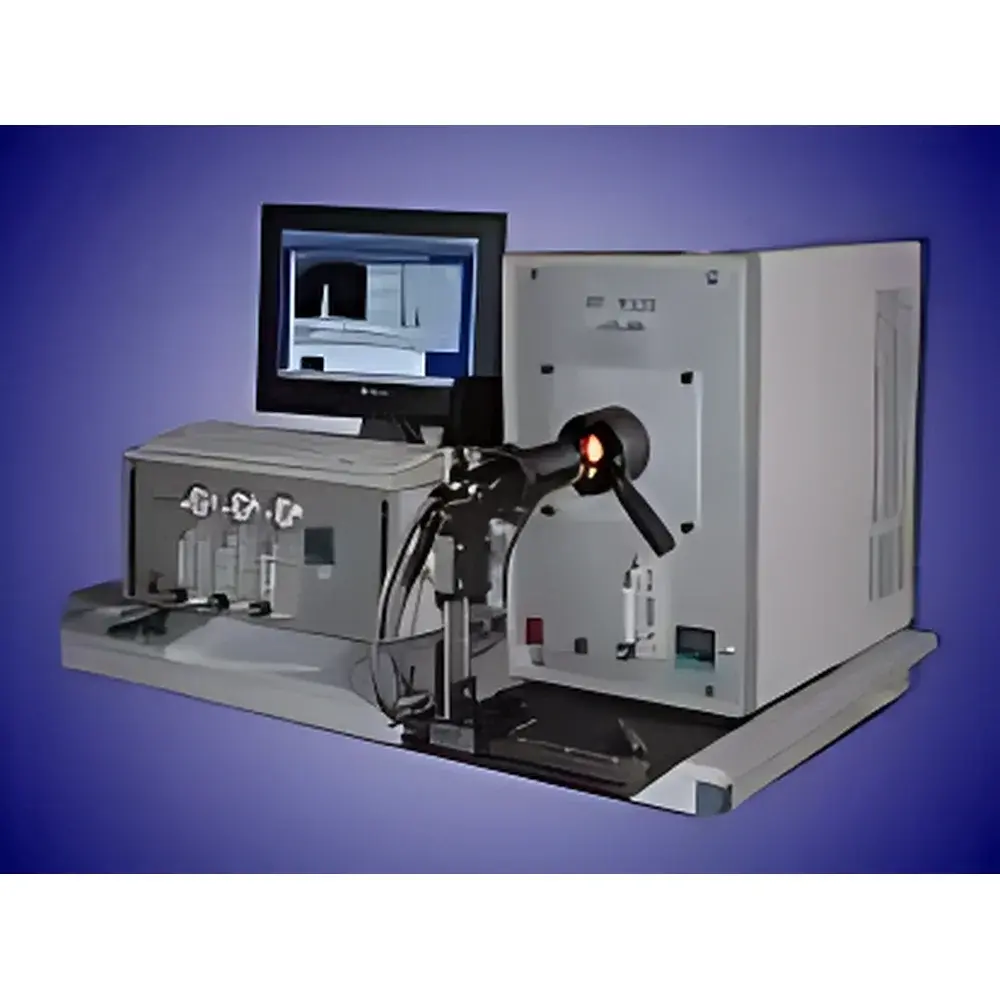
IF2000 Ash Fusion Temperature Tester
| Origin | France |
|---|---|
| Manufacturer Type | Authorized Distributor |
| Origin Category | Imported Instrument |
| Model | IF2000 |
| Pricing | Available Upon Request |
| Max Furnace Temperature | 1600 °C (Peak: 1650 °C) |
| Operating Temp Range | 200–1550 °C |
| Atmosphere Control | Oxidizing or Reducing |
| Sample Capacity | 2 crucibles per run |
| Temperature Resolution | 4 °C |
| Image Capture Interval | 5 °C |
| Compliance | ASTM D1857, ISO 540, DIN 51730, AFNOR M03-003, AS 1038.19 |
Overview
The IF2000 Ash Fusion Temperature Tester is a fully automated, image-based thermal analysis system engineered for precise determination of ash fusion characteristics in solid fuels and inorganic materials. It operates on the principle of high-temperature optical monitoring under controlled atmospheric conditions—measuring four critical fusion temperatures: initial deformation temperature (IDT), softening temperature (ST), hemispherical temperature (HT), and fluid temperature (FT)—in accordance with internationally recognized standard test methods. Designed for laboratories requiring regulatory-grade reproducibility and traceable documentation, the IF2000 integrates a programmable high-stability furnace (rated to 1600 °C continuous, 1650 °C peak), dual-sample capability, and real-time digital imaging calibrated to ±4 °C resolution. Its architecture supports both oxidizing and reducing atmospheres, enabling accurate simulation of combustion and gasification environments encountered in coal-fired power generation, biomass co-firing, metallurgical processing, and glass formulation.
Key Features
- Fully automated operation from sample loading to final report generation—no manual intervention required after initiation
- Dual independent crucible holders permitting concurrent analysis of two reference or comparative samples per cycle
- High-resolution digital imaging system capturing morphological changes at 5 °C intervals across the full 200–1550 °C range
- Computer-vision algorithms for objective classification of ash morphology transitions: columnar growth, pyramidal expansion, pyramidal collapse, filament formation, and spheroidization
- Quantitative geometric parameter extraction per frame—including width, height, circularity, aspect ratio, and vertex angle deviation relative to baseline geometry
- Integrated thermal profile logging synchronized with image capture; all raw data and metadata stored in a timestamped, audit-ready database
- Configurable ramp rates (0.5–20 °C/min) and dwell times at user-defined temperature plateaus for method flexibility
Sample Compatibility & Compliance
The IF2000 accommodates standardized ash cones prepared per ASTM D1857 (coal and coke), ISO 540 (solid mineral fuels), DIN 51730 (German coal standards), AFNOR M03-003 (French industrial fuels), and AS 1038.19 (Australian coal specifications). It is equally applicable to biomass ash (CEN/TS 15148, ISO 18122), metallurgical fluxes, ceramic frits, slag simulants, and glass batch materials. All test procedures are structured to meet GLP requirements, with full traceability of instrument calibration certificates, operator ID, environmental chamber logs, and furnace thermocouple validation records. The system supports optional integration with LIMS and complies with data integrity expectations under FDA 21 CFR Part 11 when configured with electronic signature and audit trail modules.
Software & Data Management
The proprietary IF2000 Control Suite provides a Windows-based interface for method setup, real-time visualization, post-run analysis, and report generation. Each test produces a comprehensive dataset including: time-stamped thermal curve (°C vs. time), derivative curve (d°C/dt), annotated image sequence, classified morphology timeline, and tabulated fusion temperatures with uncertainty estimates. Reports are exportable in PDF, CSV, and XML formats, and support customizable templates aligned with laboratory QA documentation protocols. Image sequences may be compiled into time-lapse animations (.AVI or .MP4) for process review or training. Database structure adheres to relational schema principles, enabling cross-test queries by material type, date range, operator, or compliance standard.
Applications
- Coal quality assessment for boiler design, slagging/fouling prediction, and blending optimization in thermal power plants
- Biomass ash behavior evaluation during co-firing trials—particularly for agricultural residues, wood pellets, and energy crops
- Metallurgical flux development and performance validation in foundry and steelmaking applications
- Glass batch formulation studies where low-melting eutectics influence melting efficiency and refractory wear
- R&D of alternative solid fuels including tire-derived fuel (TDF), sewage sludge ash, and municipal solid waste incineration residues
- Academic and regulatory research requiring inter-laboratory comparability under ISO/IEC 17025-accredited conditions
FAQ
What standards does the IF2000 explicitly support?
ASTM D1857, ISO 540, DIN 51730, AFNOR M03-003, AS 1038.19, CEN/TS 15148, and ISO 18122—all implemented via pre-configured method templates with embedded calculation logic.
Can the system operate under inert or reducing atmospheres?
Yes—gas inlet ports support continuous flow of N₂, CO/CO₂ mixtures, or H₂/N₂ blends; optional oxygen sensor and pressure regulator modules enable precise redox control.
Is remote monitoring or network integration possible?
The IF2000 Control Suite supports TCP/IP communication and OPC UA server configuration for integration into plant-wide SCADA or centralized lab informatics systems.
How is measurement uncertainty addressed in reporting?
Each fusion temperature includes expanded uncertainty (k=2) derived from furnace uniformity mapping, thermocouple calibration history, image segmentation repeatability, and inter-operator variability studies conducted per ISO/IEC 17025 guidelines.
What sample preparation requirements apply?
Standardized ash cones (2×2×6 mm pyramids) must be prepared from laboratory ash per relevant standard; the IF2000 accepts both pressed and sintered cones, with automatic detection of cone base alignment prior to heating.





