
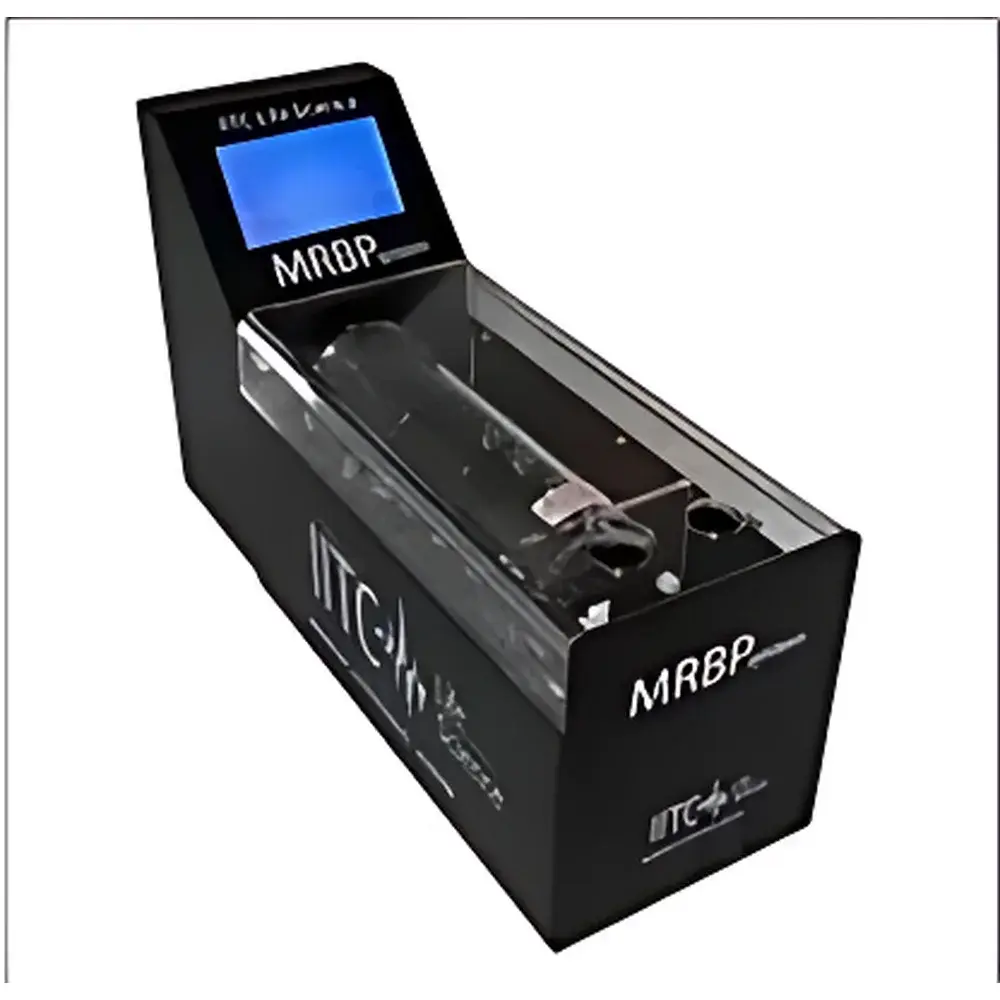
IITC Non-Invasive Blood Pressure Measurement System for Rodents
| Brand | IITC |
|---|---|
| Origin | USA |
| Model | NIBP Series (Configurable 1–24 Channels) |
| Measurement Principle | Photoplethysmographic Tail-Cuff Method |
| Operating Temperature Range | 26–30 °C (awake, unrestrained rodents) |
| Animal Weight Range | 25–1000 g |
| Compliance | ASTM F2985-15 (Standard Guide for Noninvasive Blood Pressure Measurement in Rodents), GLP-Compatible Data Logging, FDA 21 CFR Part 11–Ready Software Architecture |
| Output Interface | Analog ±5 V DC, USB 2.0, RS-232 |
| Warranty | Lifetime unconditional hardware warranty on sensor electronics and cuff actuation modules |
Overview
The IITC Non-Invasive Blood Pressure Measurement System is an engineered platform for high-fidelity, awake-rodent systolic and diastolic arterial pressure assessment using a validated photoplethysmographic tail-cuff methodology. Unlike piezoelectric or thermally dependent pulse detection systems, this instrument operates at physiologically permissive ambient temperatures (26–30 °C), eliminating thermal stress-induced hemodynamic artifacts. The system adheres to the core biophysical principle that tail arterial pulsatility—modulated by systolic expansion and diastolic recoil of the caudal artery—is optically resolvable via infrared light absorption changes correlated with volumetric blood flow. This approach avoids mechanical compression artifacts, thermal vasodilation bias, and anesthesia-related confounders. Designed specifically for longitudinal preclinical hypertension, pharmacology, and cardiovascular safety studies, the platform supports ISO/IEC 17025-aligned validation protocols and integrates seamlessly into GLP-compliant laboratory workflows.
Key Features
- Patented photoplethysmographic pulse detection: Eliminates reliance on tail heating ≥36 °C; enables measurements at 26–30 °C—within the thermoneutral zone for rats and mice.
- Modular channel architecture: Scalable from single-channel (1 animal) to 24-channel (parallel acquisition) without obsolescence of prior hardware investments.
- Integrated touchscreen control interface: Fully embedded microcontroller manages thermal chamber setpoint, cuff inflation/deflation sequencing, pulse acquisition timing, and real-time waveform display.
- GLP-ready analog output (+/−5 V DC): Compatible with standard polygraph recorders (e.g., Grass, ADInstruments PowerLab) and custom DAQ systems without signal conditioning.
- Animal restraint ergonomics: Adjustable, low-stress holders accommodate 25–1000 g subjects—including guinea pigs, rabbits, dogs, cats, and non-human primates—with optional large-animal cuffs and mounting fixtures.
- Lifetime unconditional warranty on photodetector assemblies, analog front-end circuitry, and pneumatic actuation modules—reflecting >38 years of field-proven reliability.
Sample Compatibility & Compliance
The system is validated for conscious, unrestrained rodent models including Sprague-Dawley, Wistar, SHR, C57BL/6, BALB/c, and DBA/2 strains. It complies with ASTM F2985-15 guidance for noninvasive BP measurement in small animals and supports audit-ready data integrity under FDA 21 CFR Part 11 when used with IITC’s optional compliant software suite (version 4.2+). All firmware and calibration routines are traceable to NIST-traceable pressure standards. Thermal chamber temperature stability is maintained within ±0.3 °C over 60-minute acquisition windows. No modification to animal housing or acclimation protocols is required beyond standard IACUC-approved 3-day thermal adaptation at 28 °C.
Software & Data Management
Data acquisition is managed through IITC’s proprietary NIBP Control Suite (v5.1), a Windows-based application supporting automated session scheduling, multi-channel synchronization, raw waveform export (CSV, HDF5), and batch analysis of systolic/diastolic/mean arterial pressure, heart rate, and pulse pressure. Audit trails log user identity, timestamp, parameter edits, and calibration events. Exported datasets include metadata headers compliant with MIAME and ISA-TAB standards. For regulatory submissions, the software optionally generates ALCOA+–compliant PDF reports with electronic signatures, version-controlled configuration files, and checksum-verified raw binary archives.
Applications
This system is routinely deployed in academic, pharmaceutical, and contract research laboratories for: chronic antihypertensive drug efficacy screening; circadian BP rhythm profiling; neurovascular coupling studies under MRI-compatible conditions; perioperative cardiovascular monitoring during inhalational anesthesia; toxicology endpoints in repeat-dose GLP studies; and phenotyping of genetically modified rodent models (e.g., ACE2-knockout, eNOS-deficient). Its compatibility with simultaneous behavioral assays—including hot-plate, tail-flick, and von Frey testing—enables multimodal functional phenotyping without inter-assay transfer stress.
FAQ
How does the photoplethysmographic method differ from piezoelectric tail-cuff systems?
Photoplethysmography detects volumetric arterial pulsation via optical absorption shifts, requiring no mechanical coupling or elevated tail temperature. Piezoelectric sensors rely on thermal vasodilation to amplify mechanical pulse amplitude—introducing systematic bias above 32 °C (rats) or 34 °C (mice).
Can the system be used during MRI scanning?
Yes—fully non-magnetic construction (aluminum chassis, fiber-optic pulse path, shielded analog outputs) permits operation inside 3T and 7T scanner bores with no RF interference or image artifact.
Is anesthesia required for measurement?
No—measurements are performed on fully conscious, acclimated animals. Anesthesia is neither necessary nor recommended, as it alters autonomic tone and vascular resistance.
What is the minimum and maximum animal weight supported?
Standard configurations support 25–500 g rodents. Optional large-animal accessories extend compatibility to 1000 g (e.g., miniature swine, beagle dogs) using calibrated high-volume cuffs and extended-range transducers.
Does the system meet FDA 21 CFR Part 11 requirements?
When deployed with IITC’s validated software package (v5.1+), full electronic signature, audit trail, and data integrity controls satisfy Part 11 criteria for regulated submissions. Validation documentation packages are available upon request.






