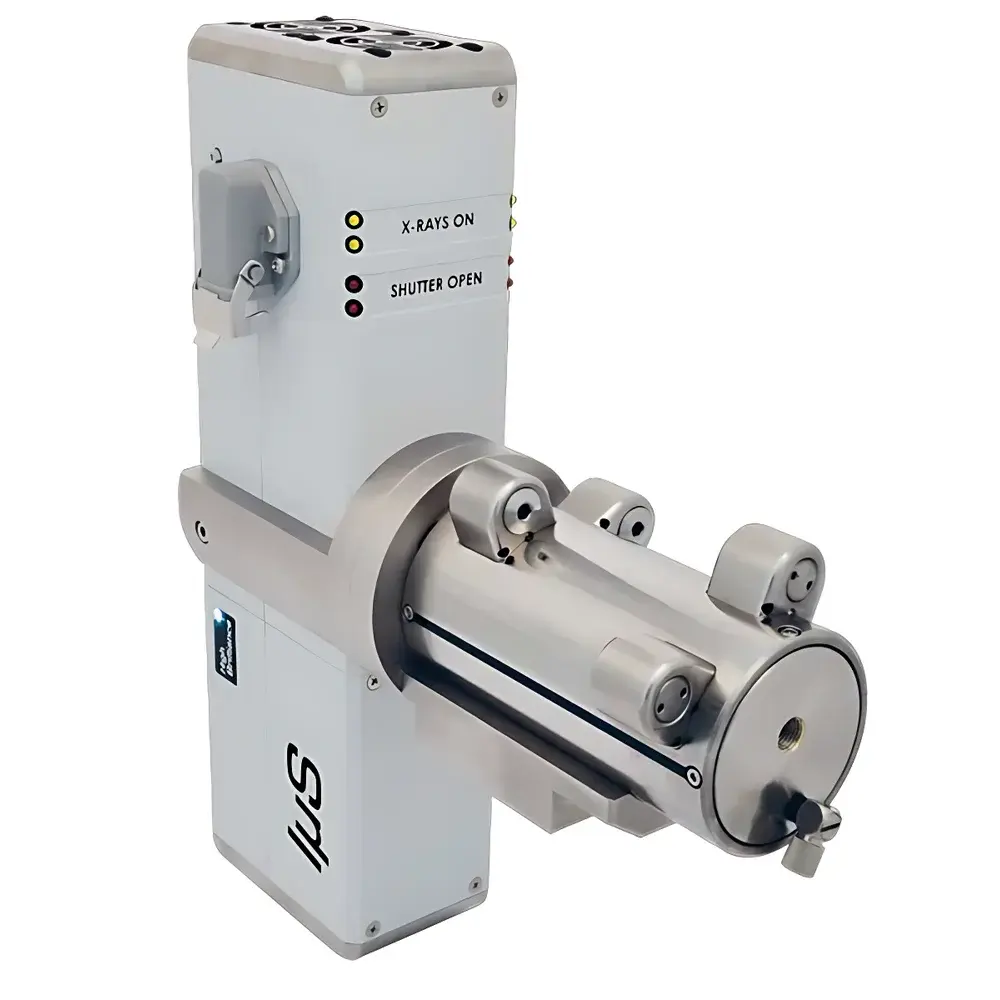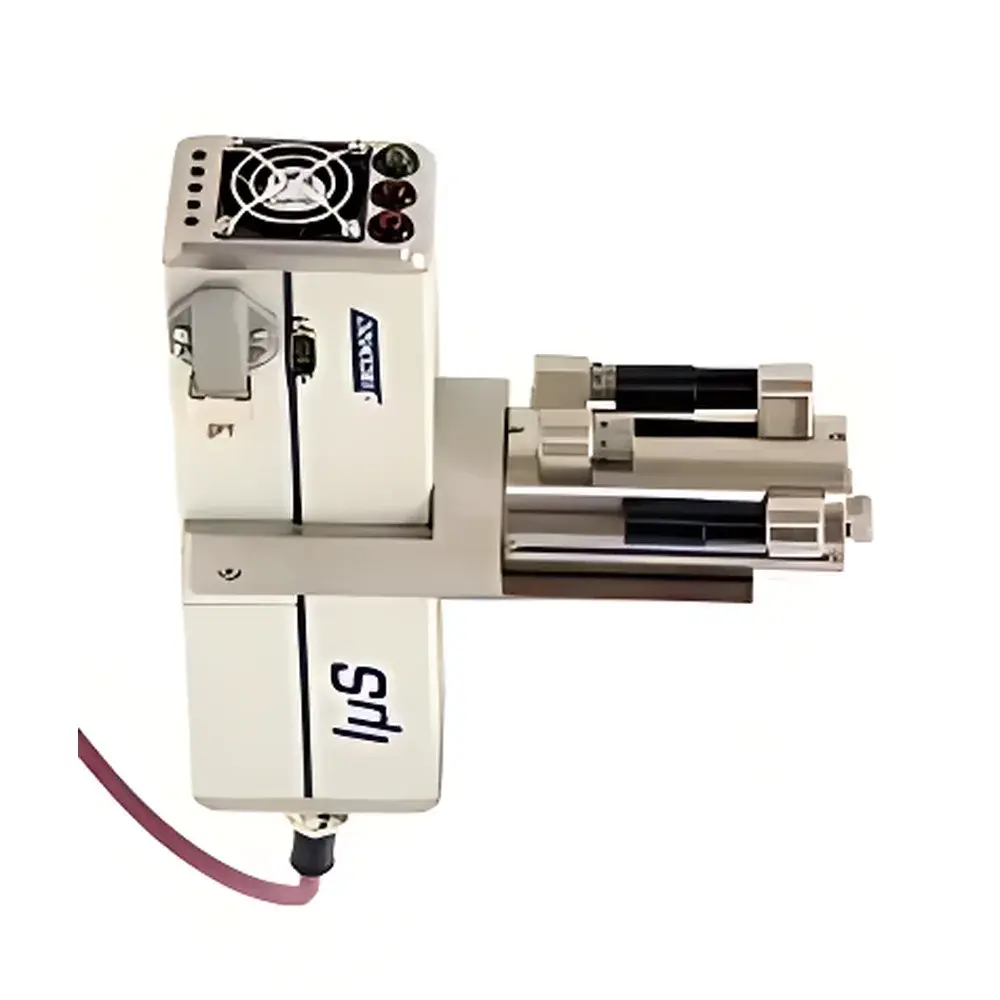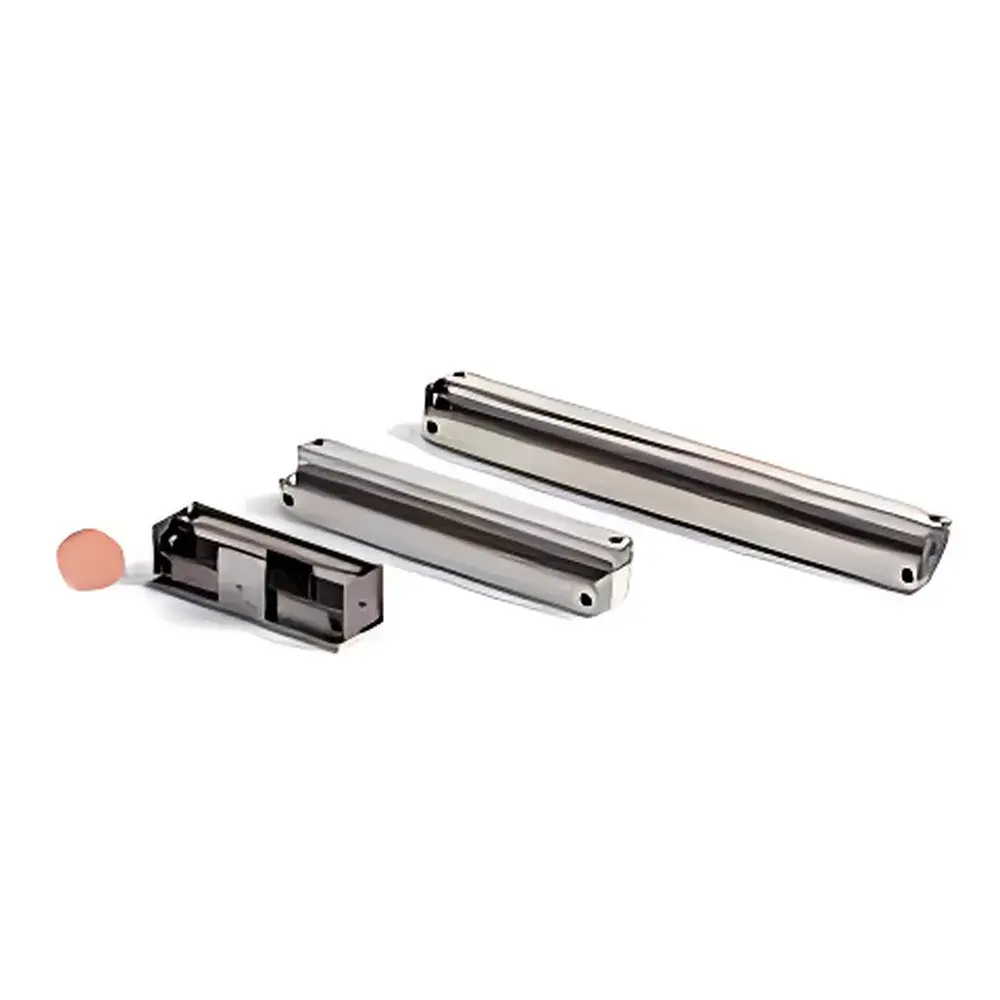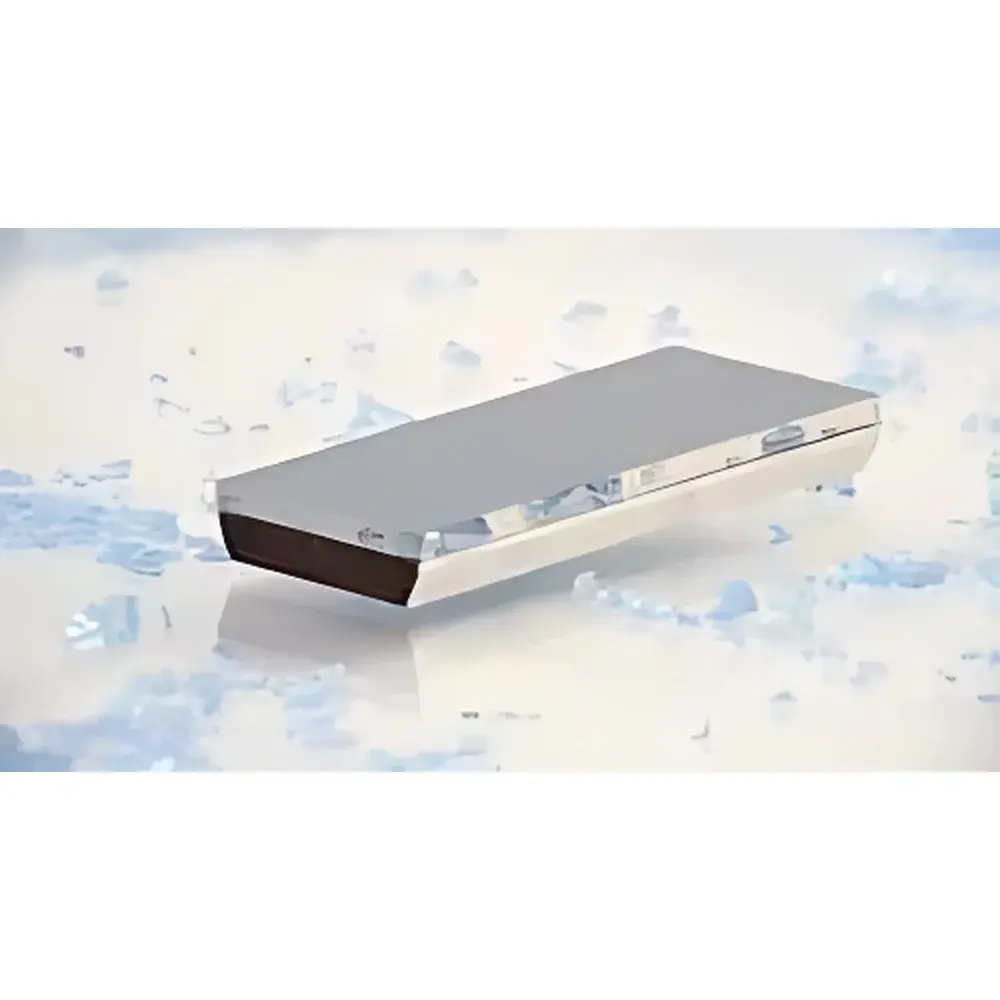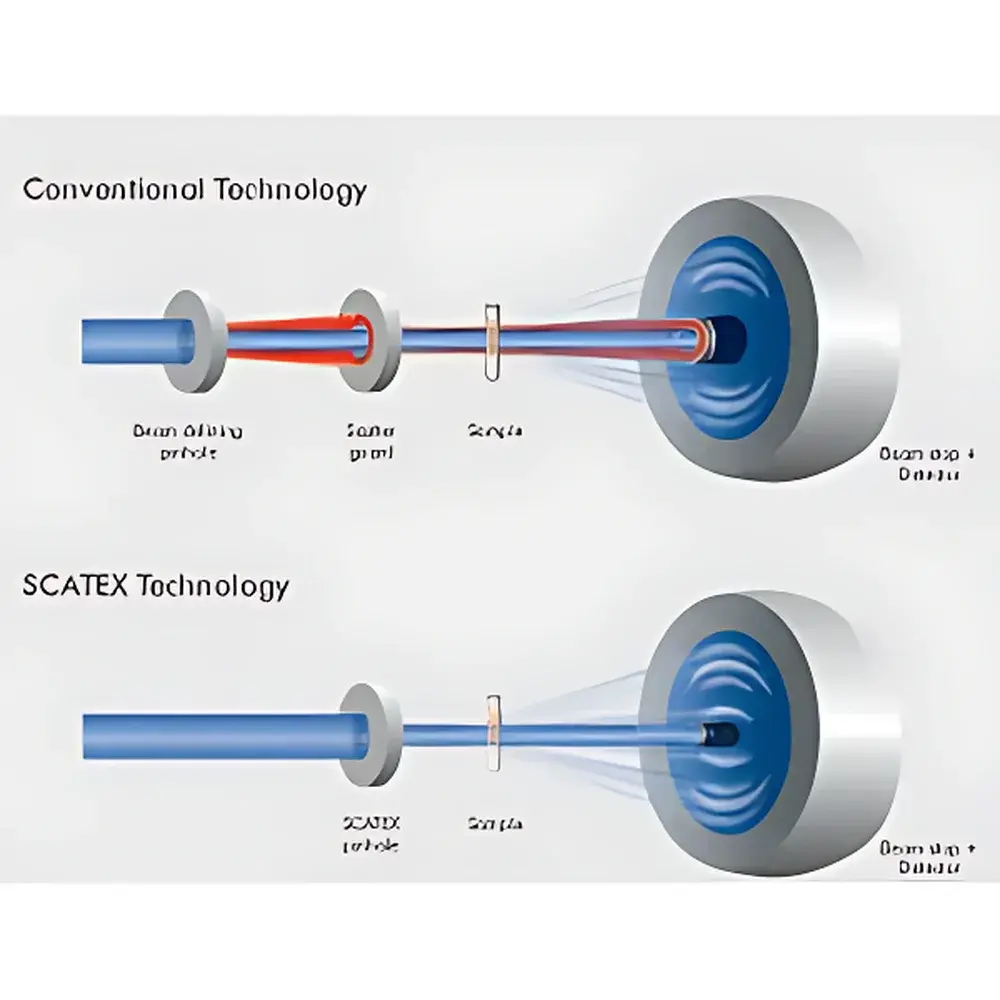
Incoatec SCATEX Ge-Based Scatter-Free Pinhole Collimator

| Brand | Incoatec |
|---|---|
| Origin | Germany |
| Model | SCATEX |
| Component Type | X-ray Optical Element |
| Material | High-Purity Germanium (Ge) |
| Diameter Options | 300 µm, 500 µm |
| Compliance | Designed for SAXS/WAXS beamlines and laboratory-scale X-ray scattering systems |
| Application Domain | Synchrotron & Lab-Based Small-Angle X-ray Scattering (SAXS), Wide-Angle X-ray Scattering (WAXS), X-ray Beam Conditioning |
Ask about pricing, availability and specifications.
Overview
The Incoatec SCATEX is a precision-engineered germanium (Ge)-based pinhole collimator designed to eliminate parasitic scattering in small-angle X-ray scattering (SAXS) and wide-angle X-ray scattering (WAXS) instrumentation. Unlike conventional pinholes fabricated from high-Z metals such as platinum/iridium (Pt/Ir) or copper, which generate significant Compton and fluorescence-induced parasitic scattering due to photon–material interactions, the SCATEX leverages the unique X-ray attenuation and low-fluorescence properties of single-crystal germanium. Its monolithic, ultra-smooth aperture geometry—produced via advanced lithographic and etching processes—ensures minimal edge diffraction and near-zero off-axis scatter. This enables true two-pinhole SAXS configurations without the need for a third anti-scatter pinhole, thereby shortening beam path length, increasing photon flux at the sample, improving spatial resolution, and enhancing signal-to-noise ratio (SNR) across the full Q-range (0.001–5 nm⁻¹). The device operates optimally at X-ray energies between 6–12 keV—covering standard Cu-Kα (8.04 keV), Mo-Kα (17.48 keV), and synchrotron-tuned beams—and is compatible with both microfocus lab sources and high-brilliance synchrotron beamlines.
Key Features
- Scatter-free aperture design: Germanium’s low fluorescence yield (<0.1% at 8 keV) and favorable mass attenuation coefficient suppress parasitic scattering by 2–3 orders of magnitude versus Pt/Ir or Cu pinholes.
- Monolithic single-crystal Ge substrate: Eliminates interfacial scattering and ensures mechanical stability under vacuum and thermal cycling.
- Precision aperture fabrication: Sub-micron edge roughness (<50 nm RMS) and circularity tolerance <±0.5 µm guarantee reproducible beam definition and minimal wavefront distortion.
- Plug-and-play integration: Compatible with standard SMA- or CF-flanged pinhole holders; no recalibration required when replacing conventional pinholes.
- Optimized for both lab and synchrotron use: Validated on BESSY II (PTB beamline) at 8 keV with >10¹⁰ ph/s flux and on benchtop SAXS systems using sealed-tube microfocus sources.
- Diameter options: Standard apertures available at 300 µm and 500 µm; custom diameters and mounting configurations supported upon request.
Sample Compatibility & Compliance
The SCATEX pinhole is suitable for use with all standard SAXS/WAXS sample environments—including capillary cells, flow cells, humidity-controlled stages, and cryo-cooled holders—without introducing measurable background artifacts. It meets essential requirements for quantitative scattering experiments under ISO 13694 (optical elements for X-ray applications), ASTM E2850 (standard practice for SAXS data acquisition), and supports GLP/GMP-compliant workflows when integrated into validated instrument platforms. While not an active electronic device, its passive optical performance is traceable to NIST-calibrated reference standards via angular calibration using certified silver behenate or polystyrene latex spheres. No regulatory certification (e.g., CE, FDA) applies, as it is classified as a non-powered optical component under IEC 61000-6-3 and EU Directive 2014/30/EU.
Software & Data Management
As a passive optical component, the SCATEX requires no embedded firmware, drivers, or software interface. However, its impact on data quality is fully quantifiable within standard SAXS analysis pipelines including ATSAS (EMBL-Hamburg), ScatterBrain (Dectris), and PyFAI (ESRF). Users benefit from reduced background subtraction complexity: raw 2D detector images exhibit clean annular scattering patterns with negligible halo artifacts, enabling more robust azimuthal integration and improved uncertainty propagation in I(Q) curves. When used in conjunction with beamline control systems (e.g., SPEC, Sardana, or Tango), the SCATEX simplifies alignment protocols—eliminating iterative anti-scatter pinhole positioning—and reduces total experiment setup time by up to 40%. Audit trails for pinhole installation and configuration are maintained in instrument log files per 21 CFR Part 11-compliant LIMS integrations.
Applications
- High-throughput SAXS screening of proteins, polymers, colloids, and nanomaterials in academic and industrial labs.
- Time-resolved SAXS studies requiring maximum photon flux and minimal dead time—e.g., rapid mixing, temperature jumps, or shear-induced structural transitions.
- Synchrotron-based structural biology beamlines where background suppression directly impacts detection limits for weakly scattering systems (e.g., membrane proteins in nanodiscs).
- Compact lab-scale SAXS instruments aiming to achieve synchrotron-like data fidelity without beamline access.
- Calibration and validation of scattering models for advanced X-ray optics simulations (e.g., ray-tracing in SHADOW or wave-optics in SRW).
FAQ
What X-ray energies is the SCATEX optimized for?
The SCATEX performs optimally between 6 keV and 12 keV, with peak scatter suppression demonstrated at 8 keV (Cu-Kα) and 10 keV (synchrotron white-beam filtering). Performance remains effective up to 17.5 keV (Mo-Kα), though geometric absorption increases slightly.
Can SCATEX replace all three pinholes in a conventional SAXS setup?
No—it replaces only the final anti-scatter pinhole. The first two pinholes (source-defining and collimating) remain necessary for beam divergence control. SCATEX enables removal of the third (anti-scatter) pinhole while preserving or improving resolution and flux.
Is germanium radiation-damage resistant?
Yes. Single-crystal Ge exhibits negligible radiation damage under typical SAXS exposure conditions (5,000 hours of operation at BESSY II and multiple commercial lab installations.
How does SCATEX compare to multilayer mirrors or capillaries for beam conditioning?
Unlike reflective or guiding optics, SCATEX is a purely absorptive collimator. It provides superior angular definition and zero harmonic contamination—critical for absolute intensity calibration—whereas capillaries introduce vignetting and mirror systems suffer from wavelength-dependent reflectivity and surface roughness effects.
Does SCATEX require special handling or storage?
Standard inert-gas or desiccated storage is recommended to prevent surface oxidation; routine cleaning with IPA and nitrogen purge is sufficient. No special shielding or grounding is required.