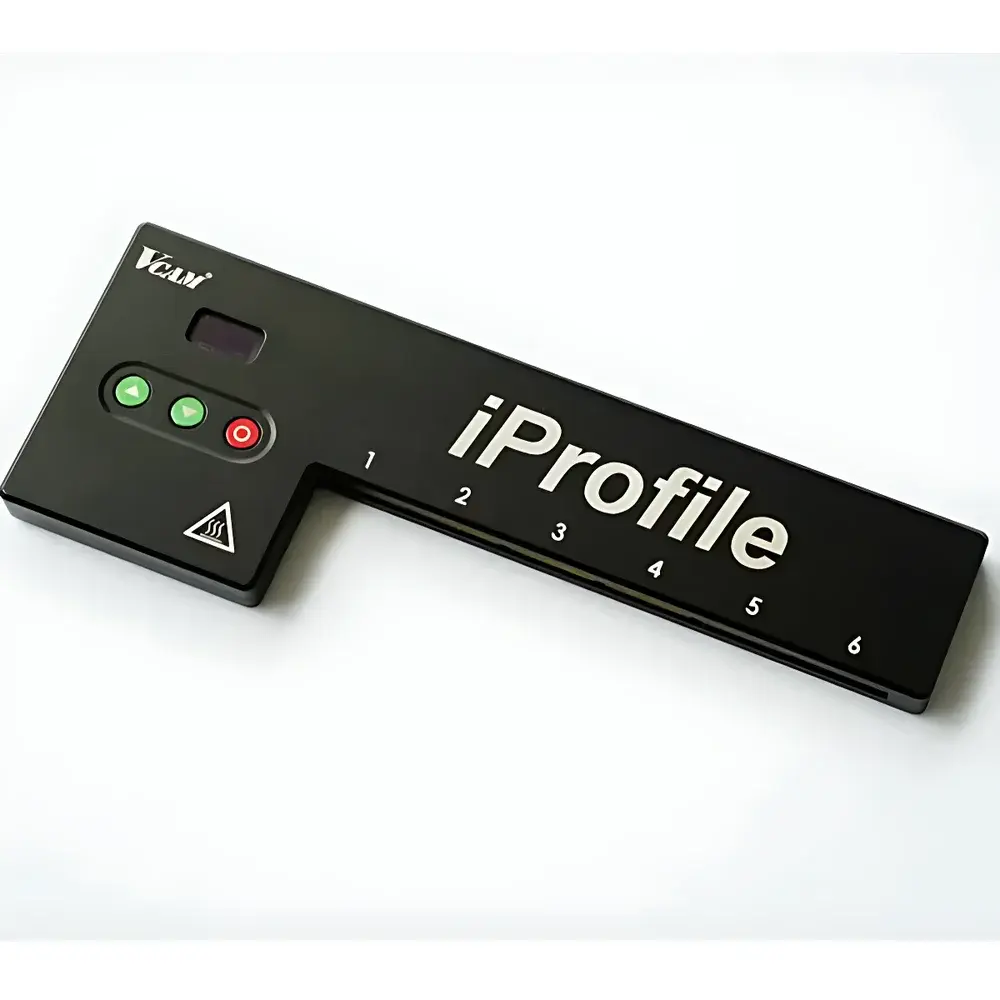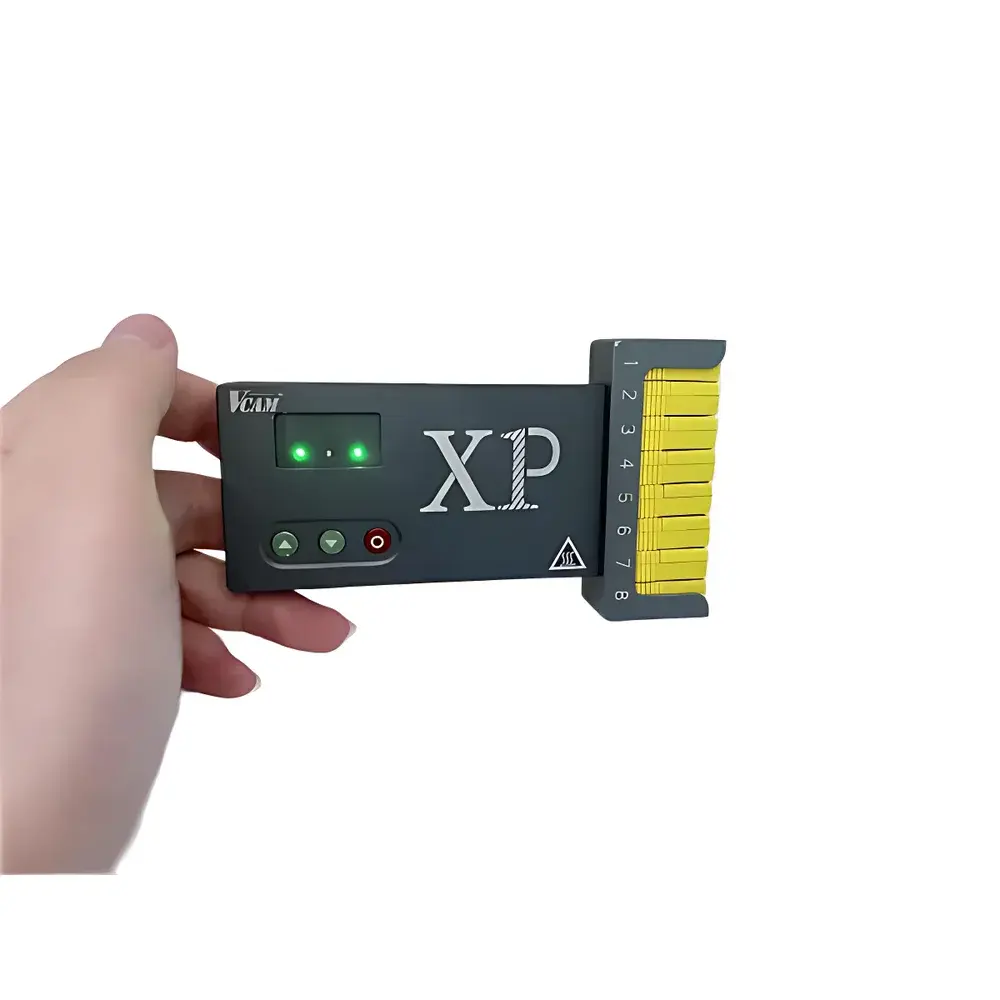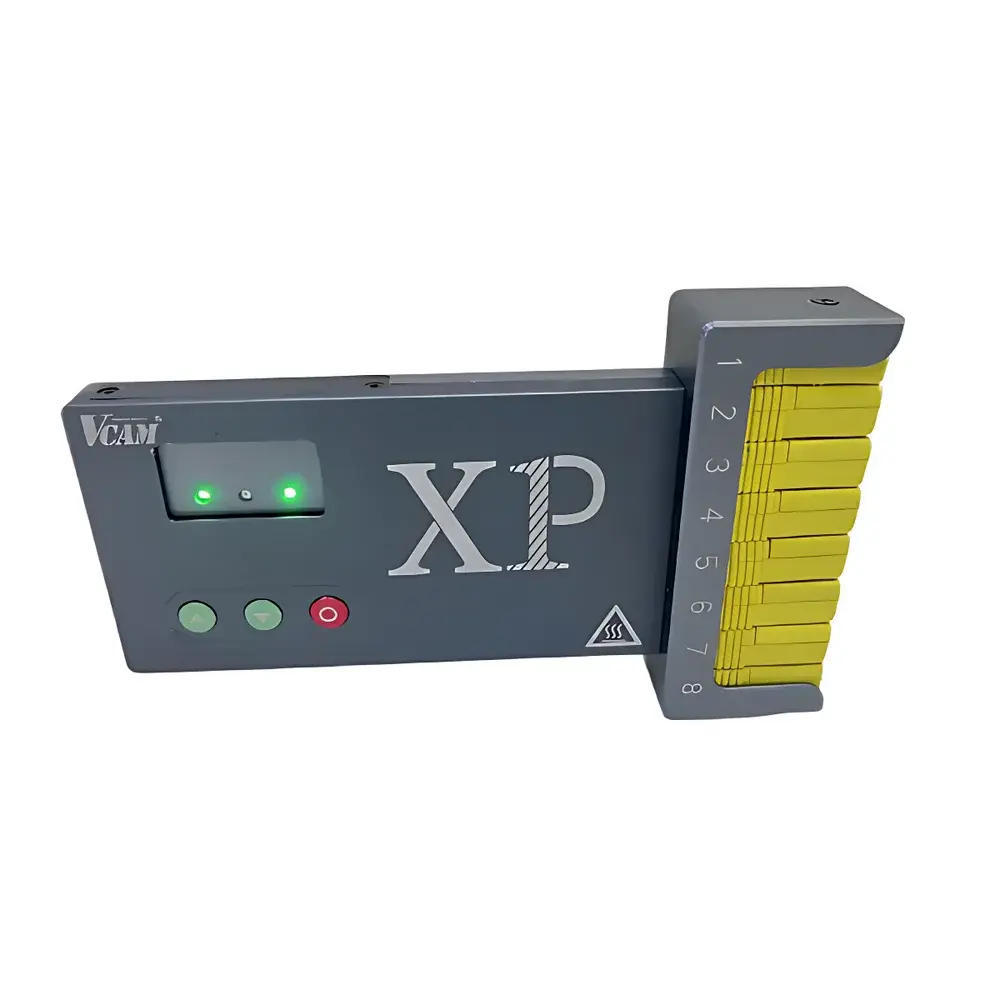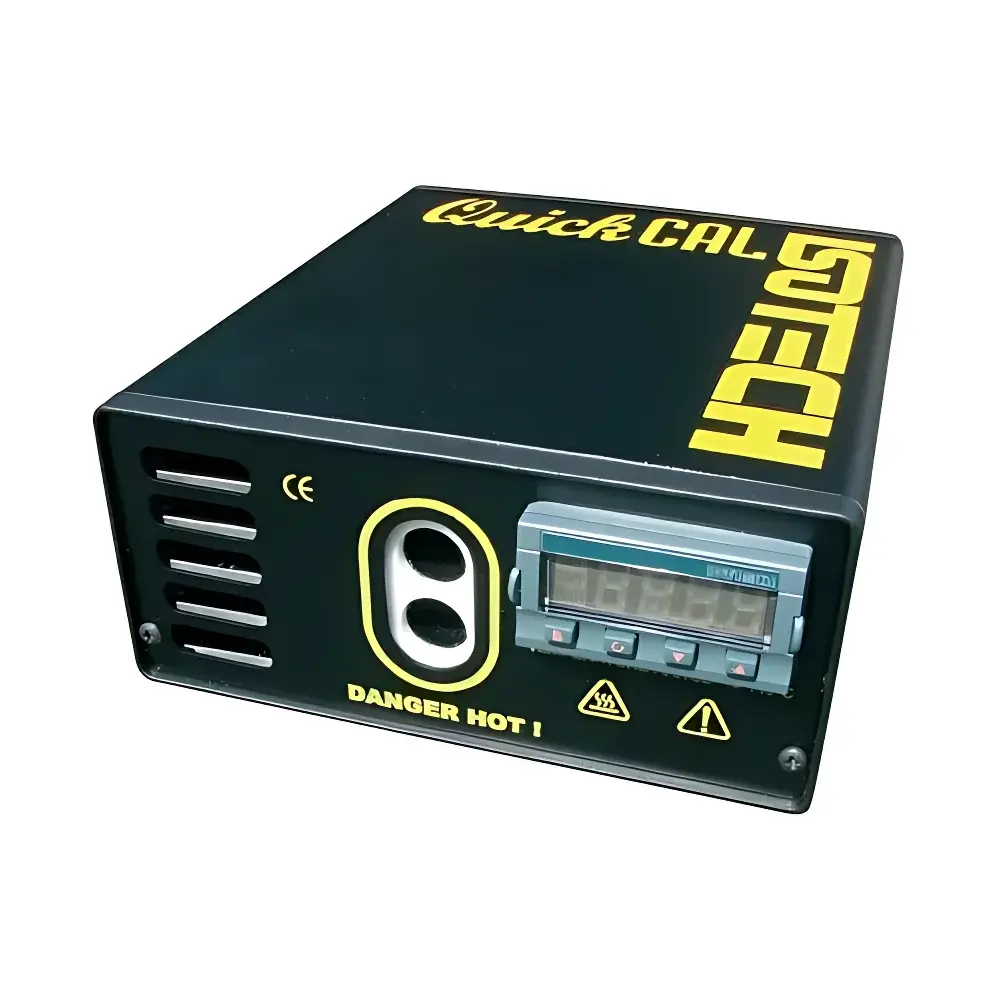
ISOTECH LTQC560/HTQC550 Compact Dry-Block Calibrators
| Brand | ISOTECH |
|---|---|
| Origin | United Kingdom |
| Model | LTQC560 / HTQC550 |
| Temperature Range | −12 °C to 140 °C (LTQC560) / 30 °C to 350 °C (HTQC550) |
| Resolution | 0.1 °C (full scale) |
| Accuracy | ±0.1 °C to ±0.4 °C (comparative measurement) |
| Stabilization Time | 5 min |
| Heating Time | 9 min (0 °C → 100 °C for LTQC560 |
| Calibration Well Dimensions | Ø13 mm × 120 mm (LTQC560) / Ø25 mm × 120 mm (HTQC550) |
| Power Supply | 15 V DC or 100–240 V AC, 50/60 Hz (LTQC560) |
| Dimensions (H×W×D) | 65 mm × 152 mm × 175 mm |
| Weight | 1.5 kg |
| Interchangeable Well Inserts | LTQC560 — single Ø6.8 mm × 120 mm bore |
| HTQC550 — multi-bore | Ø8 mm × 115 mm, two Ø6.5 mm × 115 mm, two Ø4.5 mm × 115 mm |
Overview
The ISOTECH LTQC560 and HTQC550 are compact, portable dry-block calibrators engineered for high-reproducibility temperature verification of contact sensors—including RTDs, thermistors, and liquid-in-glass thermometers—in field, workshop, and laboratory environments. Unlike fluid-based calibration baths, these units employ precision-machined aluminum blocks with embedded PTC heating elements and integrated Pt100 reference sensors, operating on the principle of thermal conduction and active electronic feedback control. The LTQC560 covers a low-to-moderate range from −12 °C to 140 °C, optimized for refrigeration, HVAC, and pharmaceutical cold-chain applications. The HTQC550 extends to 350 °C, supporting calibration of industrial thermocouples (Types K, J, T, N, S, R, B) and high-temperature process sensors. Both models deliver stable, uniform axial temperature gradients within their wells—critical for minimizing stem conduction errors—and meet the thermal homogeneity requirements specified in ISO/IEC 17025:2017 Annex A.3 for accredited calibration laboratories.
Key Features
- Ultra-portable design: 1.5 kg mass and footprint under 160 mm × 180 mm enable transport in standard instrument cases without dedicated carriers.
- Rapid thermal response: Achieves full-scale stabilization in ≤5 minutes and heats from ambient to 350 °C in just 9 minutes—reducing downtime during on-site metrology audits.
- Interchangeable well inserts: LTQC560 accepts a single precision-bored Ø6.8 mm × 120 mm insert; HTQC550 supports five independent bores (Ø8 mm, dual Ø6.5 mm, dual Ø4.5 mm), each depth-matched to 115 mm for simultaneous multi-sensor comparison.
- Dual power architecture: Operates from universal AC input (100–240 V) or low-voltage DC (15 V), permitting use with vehicle inverters or battery packs in remote locations.
- Reference-grade stability: Integrated Pt100 sensor with 0.01 °C resolution and real-time PID control ensures drift <0.02 °C/h over rated temperature ranges.
Sample Compatibility & Compliance
The calibrators accommodate probes up to 120 mm immersion depth and diameters matching the supplied inserts. Standard compatibility includes 1/4″, 3/16″, and 1/8″ diameter sensors—common in industrial RTDs and miniature thermocouples. All models comply with IEC 61000-4-3 (radiated immunity) and IEC 61000-4-6 (conducted immunity) for electromagnetic robustness in factory-floor deployments. While not standalone certified to ASTM E2877 or ISO 17025, they serve as primary transfer standards when used with traceable reference thermometers (e.g., Fluke 1523/1524, Hart 1590) and documented uncertainty budgets per GUM (JCGM 100:2008). Their mechanical construction meets IP20 environmental rating for indoor non-condensing use.
Software & Data Management
These units operate autonomously via front-panel controls but integrate seamlessly with ISOTECH’s optional CalSoft Pro software (Windows-based) for automated calibration sequences, data logging, and certificate generation. Software-supported features include: programmable ramp/soak profiles, real-time deviation plotting against reference sensors, automatic pass/fail evaluation per user-defined tolerances, and export to CSV, PDF, or XML formats compliant with FDA 21 CFR Part 11 requirements (when deployed with electronic signature and audit trail modules). Raw temperature readings retain full 0.1 °C resolution and timestamping at 1 Hz sampling rate—enabling retrospective analysis of thermal transients and long-term stability assessment.
Applications
- Field verification of temperature sensors in pharmaceutical cleanrooms, bioreactor monitoring systems, and environmental chambers.
- Periodic calibration of handheld thermometers and data loggers prior to GxP-critical measurements.
- Supporting ISO 13485 quality system audits for medical device manufacturers requiring documented sensor traceability.
- Thermal validation of sterilization cycles (e.g., autoclaves, depyrogenation tunnels) where intermediate-point checks are needed between full chamber validations.
- Education and training labs—providing hands-on exposure to dry-block principles, uncertainty budgeting, and comparison calibration methodology.
FAQ
What is the recommended minimum immersion depth for accurate calibration?
For optimal accuracy, immersion depth must exceed 15 × probe diameter or reach the bottom of the well—whichever is greater. For example, a 3 mm-diameter probe requires ≥45 mm immersion; both models provide 115–120 mm depth to satisfy this requirement across common sensor sizes.
Can these units be used for calibrating infrared thermometers?
No—dry-block calibrators are designed exclusively for contact temperature sensors. Non-contact IR thermometer calibration requires a blackbody source with emissivity >0.99 and controlled cavity geometry.
Is external reference sensor connection supported?
Yes—both models feature a dedicated Pt100 input port for connecting an external reference probe, enabling three-terminal comparison (unit reference + external reference + DUT) to further reduce systematic error.
Do the LTQC560 and HTQC550 support GLP/GMP-compliant recordkeeping?
When paired with CalSoft Pro and configured with user authentication, electronic signatures, and enabled audit trails, they meet core documentation requirements for GLP (OECD Principles) and GMP (ICH Q7, Annex 15) environments.
What maintenance is required to sustain metrological performance?
Annual verification against a national-standard dry-well or fixed-point cell is recommended. No routine lubrication or consumables are required—the solid-state heater and sensor architecture ensures >10,000 operating hours without degradation.