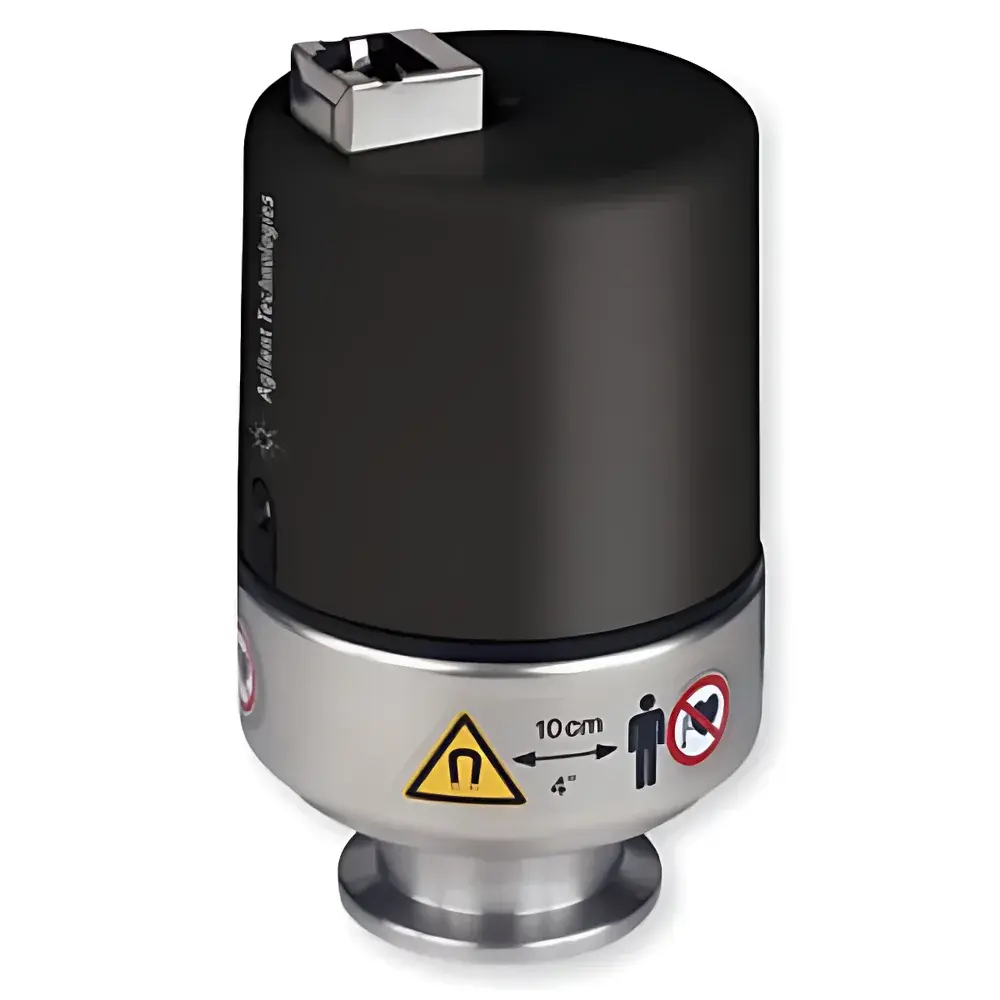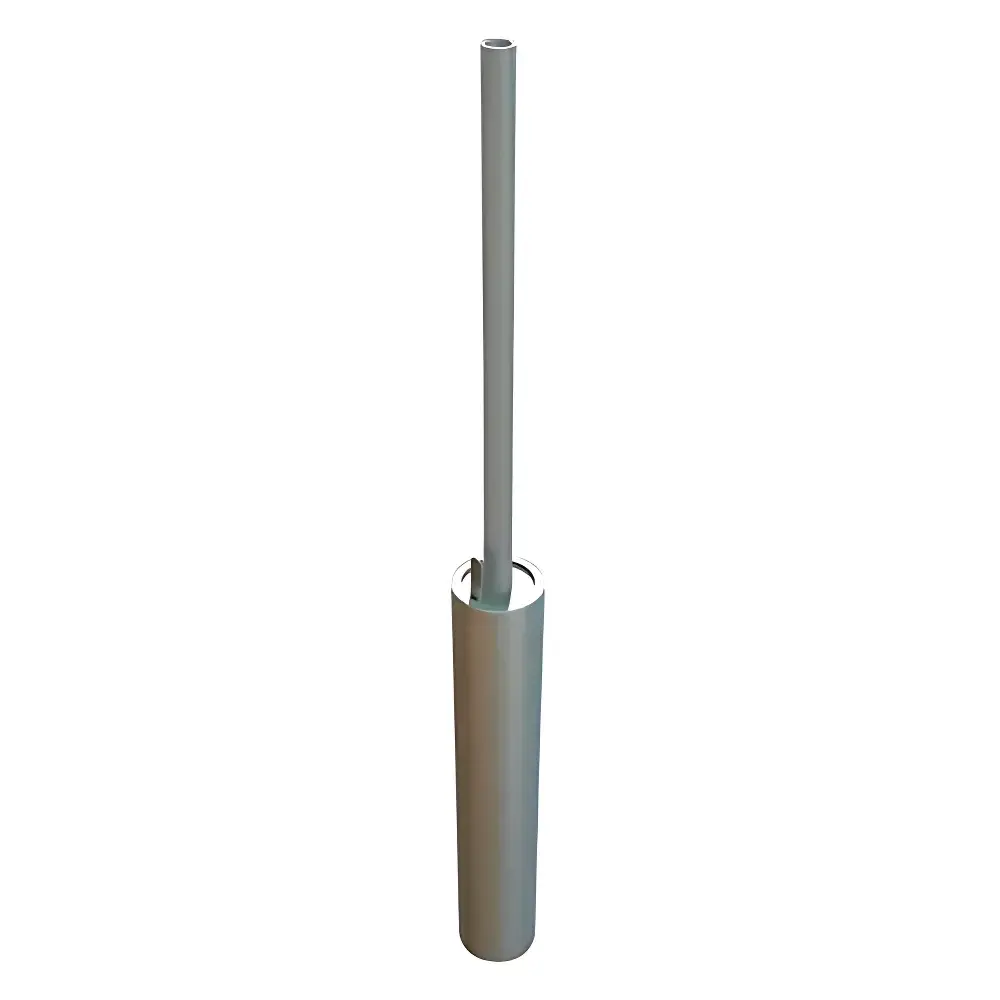
ISOTECH Mercury Triple Point Cell Model 17724
| Brand | ISOTECH |
|---|---|
| Origin | United Kingdom |
| Model | 17724 |
| Certified Uncertainty | ±0.000220 °C |
| Purity | ≥99.99999% (7N) Mercury |
| Housing | Austenitic Stainless Steel (316L) |
| Thermometer Well Depth | Adjustable (Standard Depth: 150 mm, Customizable per ITS-90 Calibration Protocol) |
| Compliance | Fully Traceable to NPL and BIPM Standards |
Overview
The ISOTECH Mercury Triple Point Cell Model 17724 is a primary standard reference device engineered for the precise realization and dissemination of the International Temperature Scale of 1990 (ITS-90) at the mercury triple point (−38.8344 °C). This cell operates on the thermodynamic principle that a pure substance coexists in solid, liquid, and vapor phases simultaneously at a unique, invariant temperature and pressure—provided the material meets stringent purity and isotopic composition requirements. The Model 17724 employs ultra-high-purity mercury (≥7N, i.e., 99.99999% minimum) sealed within a hermetically welded, vacuum-jacketed austenitic stainless steel (316L) enclosure. Its design conforms to the geometric and thermal stability specifications outlined in CCT-WG3 guidelines and supports reproducible immersion depths for standard platinum resistance thermometers (SPRTs) used in national metrology institutes and accredited calibration laboratories.
Key Features
- Ultra-high-purity mercury (≥7N) with certified isotopic composition compliant with ISO/IEC 17025:2017 Annex A.3 requirements for primary fixed-point cells
- Austenitic stainless steel (316L) housing providing mechanical robustness, corrosion resistance, and long-term dimensional stability under repeated thermal cycling
- Adjustable thermometer well depth (standard 150 mm, configurable up to ±10 mm tolerance) to accommodate SPRT stem lengths while maintaining optimal immersion correction per ITS-90 Clause 4.2
- Hermetic double-wall construction with high-vacuum interstitial space minimizing axial heat conduction and ensuring radial thermal uniformity across the mercury freeze zone
- Individually calibrated and certified by ISOTECH’s UKAS-accredited laboratory (ISO/IEC 17025:2017), with full uncertainty budget documentation traceable to the National Physical Laboratory (NPL) and Bureau International des Poids et Mesures (BIPM)
Sample Compatibility & Compliance
The Model 17724 is intended exclusively for use with standard platinum resistance thermometers (SPRTs) meeting IEC 60751 Class AA or equivalent ITS-90 compliance. It is not suitable for direct immersion of industrial-grade RTDs or thermocouples. All units are manufactured under controlled cleanroom conditions (ISO Class 5) to prevent particulate contamination and oxide formation during sealing. Each cell undergoes rigorous leak testing (helium mass spectrometry, ≤1×10⁻¹⁰ mbar·L/s), thermal hysteresis evaluation (<5 mK over 5 freeze-thaw cycles), and plateau shape analysis per ASTM E1137/E1137M Annex A1. Documentation includes full metrological history, impurity assay reports (ICP-MS verified), and conformity statement to Directive 2014/32/EU (Measuring Instruments Directive, MID) where applicable.
Software & Data Management
While the Model 17724 is a passive physical standard requiring no embedded electronics or firmware, its integration into automated calibration systems is supported via compatible data acquisition platforms (e.g., Fluke 1560, Hart 1590, or ASL F18). ISOTECH provides digital calibration certificates in PDF/A-1b format compliant with ISO/IEC 17025:2017 §7.8.2, including machine-readable uncertainty budgets (XML schema aligned with EURAMET cg-18). Audit trails, certificate version control, and electronic signature authentication meet FDA 21 CFR Part 11 requirements when deployed with validated LIMS environments.
Applications
- Primary calibration of SPRTs in national metrology institutes (NMIs) and designated institutes (DIs) accredited to ISO/IEC 17025
- Validation and verification of low-temperature blackbody sources and cryogenic environmental chambers (−40 °C to −30 °C range)
- Interlaboratory comparison studies coordinated by the Consultative Committee for Thermometry (CCT)
- Establishment of traceability chains for pharmaceutical cold chain monitoring systems operating near −38.8 °C
- Reference standard in GLP-compliant stability testing facilities for biologics and mRNA vaccine storage validation
FAQ
What is the typical re-freezing time required after a melt cycle?
Typically 4–6 hours under controlled still-air conditions at −45 °C ambient; full thermal equilibration requires ≥12 hours prior to plateau measurement.
Can this cell be used for in-house verification without external recalibration?
Yes—provided the laboratory maintains documented procedures for plateau shape assessment, immersion depth verification, and drift monitoring per ISO/IEC 17025 §6.4.10; however, formal recalibration is recommended every 5 years or after 50 freeze-thaw cycles.
Does the adjustable well depth affect the realized temperature value?
No—the ITS-90 defines the mercury triple point temperature independently of immersion depth; however, proper depth selection is critical to minimize stem conduction errors during SPRT measurement.
Is the cell compatible with automated freezing apparatuses?
Yes—it interfaces with commercial freezing systems (e.g., Isotech FP90, Hart 2550) equipped with programmable ramp profiles and plateau detection algorithms compliant with CCT-WG3 recommendations.