
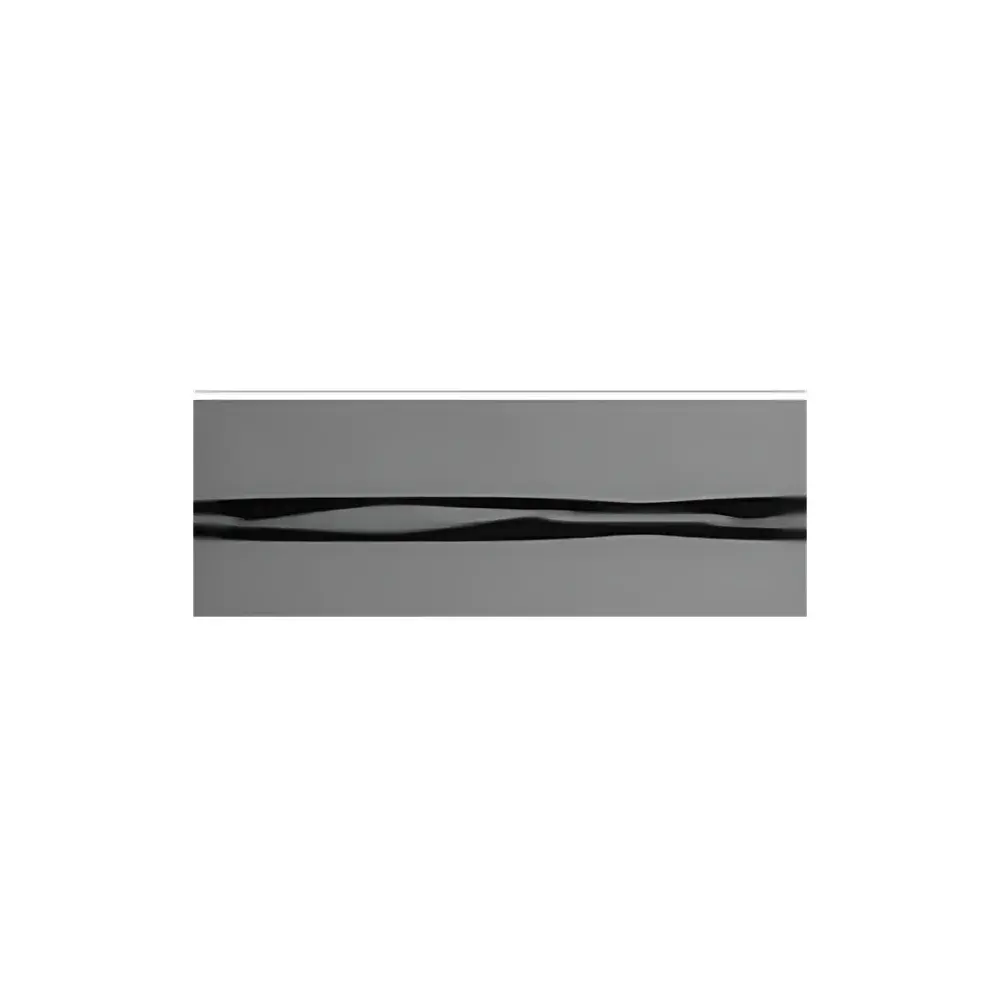
Ixblue Spun Fiber – Circular Polarization-Maintaining Optical Fiber
| Brand | Ixblue |
|---|---|
| Origin | France |
| Manufacturer Type | Authorized Distributor |
| Category | Imported Optical Component |
| Model | Custom Spun Fiber |
| Core Structure | Elliptical Core / Tiger Core |
| Cladding Diameter | 80 µm or 125 µm |
| Operating Wavelengths | 1310 nm & 1550 nm |
| Polarization Maintenance Type | Circular (via Preform Spinning) |
| Compliance | Designed for FOCT-grade environmental stability (thermal & mechanical vibration resilience) |
Overview
Ixblue Spun Fiber is a specialized circular polarization-maintaining optical fiber engineered for high-fidelity transmission of circularly polarized light under demanding environmental conditions. Unlike conventional linear polarization-maintaining (PM) fibers—such as those based on stress-applying parts (e.g., PANDA or Bow-tie)—spun fiber achieves circular polarization preservation through a deterministic geometric modification: the preform is rotated at precisely controlled angular velocity during the fiber draw process. This spinning induces a helical birefringence profile along the fiber axis, effectively averaging out linear birefringence and enabling robust propagation of circular eigenmodes. The resulting fiber exhibits intrinsically low polarization coupling between left- and right-handed circular states, making it uniquely suited for applications where polarization purity must be preserved across wide temperature ranges (–40 °C to +85 °C) and under mechanical perturbation—key requirements in high-accuracy fiber-optic current transducers (FOCTs) compliant with IEC 60044-8 and IEEE C37.118 standards.
Key Features
- Helically structured birefringence via controlled preform spinning—enabling intrinsic circular polarization eigenmode support
- Optimized spinning rate and thermal profile to minimize thermally induced polarization drift (typical <0.05 dB/°C polarization extinction ratio variation)
- Dual-core structural variants: elliptical core geometry and tiger-core design—both enhance thermal stability and reduce sensitivity to lateral stress
- Standard cladding diameters of 80 µm and 125 µm, compatible with industry-standard PM fiber splicing and connectorization protocols
- Low numerical aperture (NA ≈ 0.12) and dispersion-optimized waveguide design for 1310 nm and 1550 nm operation bands
- Hermetically coated variants available for long-term reliability in high-humidity or corrosive environments
Sample Compatibility & Compliance
This spun fiber is designed for integration into interferometric and resonant fiber-optic sensor platforms requiring strict polarization fidelity. It is routinely deployed in Class 0.2 and Class 0.5 FOCT systems certified per IEC 61850-9-2 and verified under GLP-compliant calibration workflows. The fiber’s mechanical robustness supports coil winding densities up to 250 turns/m without degradation in circular polarization extinction ratio (CPER > 25 dB over full operational bandwidth). All production batches undergo 100% polarization characterization—including Jones matrix mapping and wavelength-dependent CPER profiling—at 1310 nm and 1550 nm using NIST-traceable instrumentation. Documentation includes full test reports aligned with ISO/IEC 17025 laboratory accreditation requirements.
Software & Data Management
While spun fiber itself is a passive component, its performance validation and system-level integration rely on standardized optical test methodologies supported by Ixblue’s proprietary Polarization Characterization Suite (PCS v3.2). This software enables automated measurement of CPER, differential group delay (DGD), and polarization mode dispersion (PMD) across temperature sweeps (–40 °C to +85 °C) and vibration spectra (10 Hz–2 kHz). Exported datasets conform to HDF5 format and include embedded metadata compliant with ASTM E2500-18 for instrument qualification records. For OEM integrators, Ixblue provides API-accessible calibration databases supporting traceable polarization modeling in Lumerical MODE, OptiSystem, and VPItransmissionMaker environments.
Applications
- Fiber-optic current transducers (FOCTs) for high-voltage substations and smart grid monitoring
- Interferometric fiber gyroscopes (IFOGs) requiring bias stability below 0.001°/h
- Polarization-sensitive quantum key distribution (QKD) receivers operating in decoy-state protocols
- High-power circularly polarized laser delivery systems for ultrafast material processing
- Reference arms in fiber-based optical coherence tomography (OCT) systems targeting axial resolution <5 µm
- Calibration standards for polarization-resolved spectroscopy and ellipsometry setups
FAQ
What distinguishes spun fiber from conventional PM fiber?
Spun fiber maintains circular polarization eigenstates via helical birefringence; standard PM fibers preserve linear polarization using asymmetric stress fields.
Can spun fiber be fusion-spliced to standard PM fiber?
Yes—with optimized arc parameters and core-alignment techniques; however, polarization extinction ratio may degrade by 3–5 dB at the splice interface unless mode-field adaptors are used.
Is temperature cycling data available for long-term deployment?
Yes—accelerated aging reports (MIL-STD-810G compliant) covering 1,000 thermal cycles are provided with each batch certificate.
Do you offer custom cut lengths with end-face polishing and connectorization?
Yes—FC/APC, SC/APC, and bare-fiber pigtails are available with IEC 61300-2-4 compliant finish specifications.
Are radiation-hardened versions available for nuclear or space applications?
Yes—titanium-doped silica variants with total ionizing dose (TID) tolerance >100 krad(Si) are offered under Ixblue’s Space-Qualified Fiber Program (SQFP-22).




