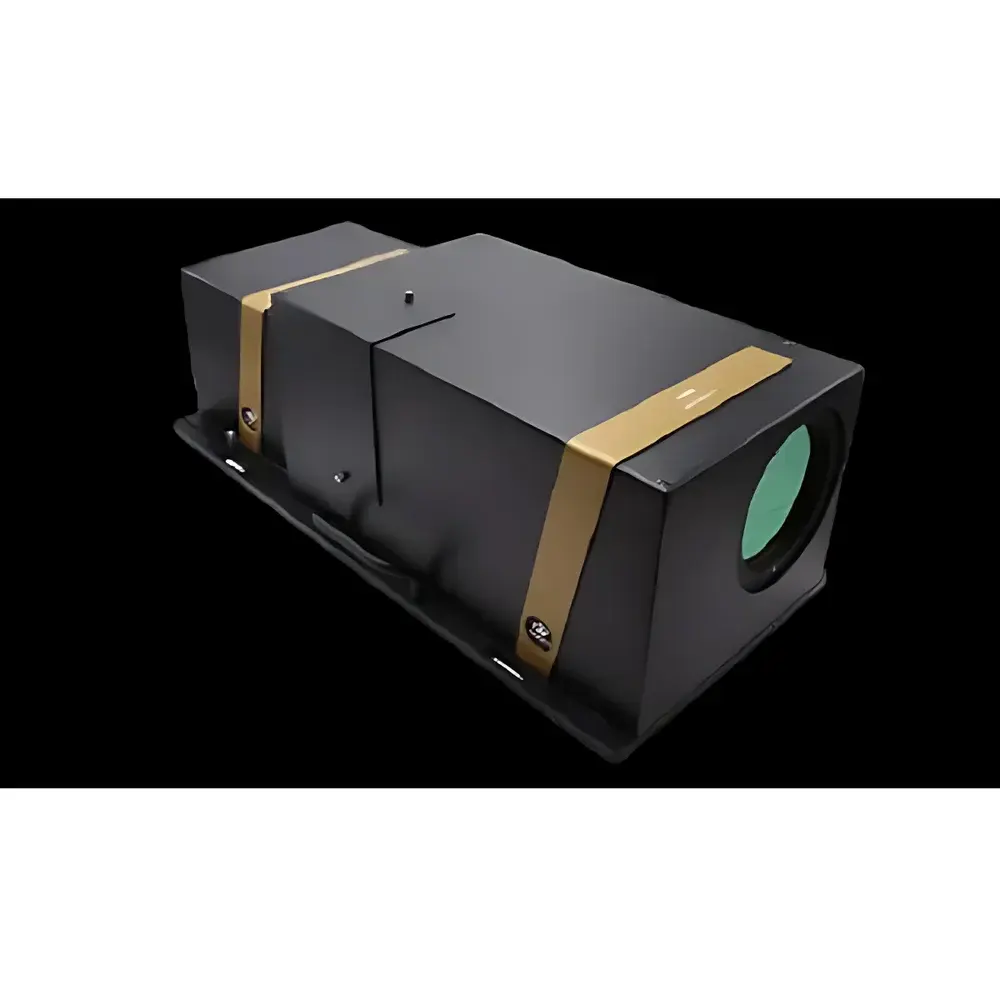
Phasics KALAS Large-Aperture Laser Metrology System
| Brand | Phasics |
|---|---|
| Origin | France |
| Model | KALAS System |
| Aperture | Up to 127 mm (customizable) |
| Sensor Resolution | 512 × 512 pixels |
| Spectral Range | 400–1700 nm (visible to short-wave infrared) |
| Measurement Principle | Quadri-Wave Lateral Shearing Interferometry (QWLSI) |
| Output Parameters | Wavefront, Intensity Distribution, M², Beam Divergence, Waist Dimensions, PSF Simulation, ISO 11146-compliant beam widths (D4σ major/minor/angle), Centroid, Ellipticity, Eccentricity, Roundness, Enclosed Energy (84%/90%), Gaussian Fit (FWHM, 1/e²) |
| Software | Phase Studio Beam Analysis Module |
| Compliance | Supports GLP/GMP-aligned data traceability, audit-ready measurement logs, export formats compliant with ASTM E2912 and ISO 10110-5 for optical surface characterization |
| Integration | Modular architecture, AO-loop ready, OEM integration support |
Overview
The Phasics KALAS Large-Aperture Laser Metrology System is an engineered solution for quantitative, single-shot characterization of high-energy and large-diameter laser beams under demanding operational conditions. Built upon Quadri-Wave Lateral Shearing Interferometry (QWLSI), KALAS eliminates the vibration sensitivity and temporal asynchrony inherent in conventional Twyman–Green or Mach–Zehnder interferometers. Unlike scanning or multi-exposure techniques, QWLSI enables simultaneous acquisition of wavefront phase, intensity distribution, and derived beam quality metrics—including M², divergence, beam waist dimensions, and point-spread function (PSF)—within a single camera frame. This capability is critical in environments where mechanical stability cannot be guaranteed: inertial confinement fusion facilities, airborne or satellite-based laser communication terminals, and adaptive optics testbeds operating under thermal drift or acoustic excitation. With a standard input pupil diameter of 127 mm—scalable per application requirement—and spectral coverage from 400 nm to 1700 nm, KALAS bridges metrology gaps across visible, near-infrared, and short-wave infrared laser systems used in defense, fundamental physics, and space infrastructure.
Key Features
- Single-Shot Multimetric Acquisition: Measures wavefront aberration (Zernike decomposition optional), irradiance profile, and beam propagation parameters—including M², Rayleigh range, divergence angle, and waist location—in one exposure without beam splitting or scanning.
- Vibration-Insensitive Architecture: QWLSI’s common-path design ensures sub-nanometer phase stability even on non-isolated optical tables or in mobile platforms, eliminating reliance on active damping or environmental enclosures.
- High Spatial Fidelity: 512 × 512 pixel sensor resolution delivers >10⁵ independent spatial sampling points across the full aperture, enabling detection of localized wavefront features (e.g., segment misalignments in segmented mirrors) while preserving global beam topology.
- Real-Time Closed-Loop Compatibility: Native integration with adaptive optics systems via TCP/IP or TTL-triggered feedback protocols; supports dynamic wavefront correction at frame rates up to 30 Hz (dependent on camera configuration).
- Modular & Integratable Platform: Comprises interchangeable optical modules (collimation adapters, spectral filters, pupil masks) and a core SID4 wavefront sensor unit. Designed for OEM integration into laser amplifiers, beam transport lines, or vacuum-compatible experimental chambers.
- Broadband Operational Flexibility: Standard calibration covers 400–1700 nm; custom calibration kits available for extended UV or mid-IR bands upon request.
Sample Compatibility & Compliance
KALAS accommodates continuous-wave (CW) and pulsed lasers (ns–fs regimes) with peak intensities up to 10⁸ W/cm² (with appropriate attenuation). Its non-contact, non-perturbative measurement principle preserves beam integrity and avoids thermal loading artifacts common in thermal or knife-edge sensors. The system complies with international standards governing laser beam characterization: ISO 11146-1/2 (determination of beam widths, divergence, and M²), ISO 10110-5 (interferometric surface specification), and ASTM E2912 (standard practice for laser beam parameter measurements). Phase Studio software generates timestamped, metadata-embedded reports with digital signatures and configurable audit trails—fully aligned with FDA 21 CFR Part 11 requirements for regulated laboratories conducting GLP or GMP validation of laser delivery systems.
Software & Data Management
Phase Studio Beam Analysis Module provides a deterministic, standards-based computational pipeline. All beam parameters are calculated using ISO 11146-defined algorithms: second-moment (D4σ) beam widths, centroid position (first-order moment), ellipticity (ratio of minor/major axes), and enclosed energy diameters (84% and 90%). Gaussian fitting routines yield FWHM and 1/e² widths for comparative analysis. PSF simulation employs rigorous Fourier propagation from measured wavefront and intensity, enabling accurate far-field prediction without physical re-imaging. Data export supports HDF5, CSV, and MATLAB .mat formats; batch processing scripts allow automated analysis of time-series acquisitions. For integration into larger control ecosystems, RESTful API and LabVIEW/ViSoft drivers enable bidirectional communication with PLCs, motion controllers, and AO deformable mirror drivers.
Applications
- Inertial Confinement Fusion (ICF) Diagnostics: Real-time monitoring of wavefront distortion across multi-beam laser arrays during amplifier staging and target chamber injection; verification of focal spot symmetry and Strehl ratio prior to shot execution.
- Free-Space Optical Communication: Far-field PSF modeling and M² validation of ground-to-satellite uplinks; closed-loop compensation of atmospheric turbulence-induced phase errors using real-time KALAS feedback to deformable mirrors.
- High-Power Laser System Commissioning: Rapid quantification of thermal lensing in rod/slab amplifiers, alignment-induced coma in beam expanders, and spatial mode degradation in fiber-coupled sources—reducing commissioning time by >60% versus sequential metrology tools.
- Adaptive Optics Testbeds: Reference-grade wavefront sensing for calibrating DM influence functions, validating reconstruction algorithms, and characterizing residual error after correction cycles.
FAQ
What is the maximum supported beam diameter?
Standard configuration supports 127 mm input pupil; custom optics extend this to ≥250 mm upon engineering review.
Can KALAS measure ultrafast laser pulses?
Yes—when paired with gated or intensified cameras synchronized to pulse timing; minimum measurable pulse duration is ~10 ps with appropriate detector selection.
Is calibration traceable to national standards?
All factory calibrations are NIST-traceable; wavelength-dependent phase calibration certificates are provided with each system.
Does Phase Studio support automated pass/fail reporting per ISO 11146?
Yes—threshold-based reporting engine allows user-defined limits for M², divergence, and centroid stability; results exported as PDF with embedded compliance statements.
How is thermal drift managed during long-duration measurements?
KALAS incorporates passive thermal stabilization and real-time background subtraction algorithms; optional active temperature control modules maintain sensor ΔT < ±0.1°C over 8-hour runs.